

The Infrastructure Play That Could Decide AI's Next Decade
How record deployment speeds, orbital power constraints, and runaway token demand are forcing a complete rethink of who can actually deliver abundant intelligence at scale.
The real bottlenecks in advanced AI have shifted from model architecture to physical execution. Legal maneuvers around major labs have exposed governance friction without resolving underlying questions about long-term stewardship. At the same time, the ability to stand up massive compute clusters in months rather than years, combined with the hard physics of powering AI workloads off-planet, is creating asymmetric advantages for players who control both the chips and the energy layer. Most overlooked: even steep gains in efficiency will not flatten demand. New applications in video synthesis, persistent agents, and physical robotics multiply token consumption faster than optimization curves can contain it. The organizations that solve the manufacturing, power, and orbital constraints first will set the cost floor for intelligence for years to come.
Key Takeaways
Legal resolutions on procedural grounds in AI governance cases can inflict lasting reputational damage while leaving core structural issues unaddressed, increasing the likelihood of internal leadership changes at scaled labs rather than wholesale unwinds of their corporate form.
Model performance has split along task lines, with some systems delivering superior cost-performance on coding workloads and others advancing faster on general capabilities, accelerated by targeted talent inflows and selective early access programs.
First-principles manufacturing discipline and direct production-line leverage have compressed large-scale GPU cluster deployment to roughly four months, enabling potential cost leadership when paired with integrated renewable generation.
AI satellites operating in higher orbits face rapid solar panel degradation from elevated radiation, requiring specialized space-grade photovoltaics whose global production remains limited to a few megawatts per year and concentrated supply chains.
Token demand follows Jevons paradox dynamics: efficiency improvements from distillation and specialized models unlock entirely new use cases in generative media, autonomous agents, and robotics that drive net consumption sharply higher.
Electricity prices in key technology corridors have risen 200 percent or more in recent years, underscoring the need for co-located generation, deregulation of new capacity, and expanded domestic solar manufacturing to prevent cost curves from throttling AI deployment.
National leadership selection patterns that favor engineering execution correlate with faster delivery of complex infrastructure projects, creating competitive edges in the physical layer of intelligence.

Musk's Picks and Shovels: How Autonomy and AI Will Power the Next Civilization
Tesla's FSD leaps, Model Y dominance, US-China manufacturing deals, and robotic logistics are laying the groundwork for a transformed economy.
The pace of real-world autonomy is already delivering tangible gains today, with even older versions of advanced driver-assistance systems proving reliable enough for daily commutes and family use. At the same time, high-level diplomatic meetings signal a potential trillion-dollar wave of manufacturing investment flowing back to the United States, powered by Chinese production expertise. Layer in humanoid robots, autonomous heavy trucks, and drone-enabled delivery networks, and the Musk ecosystem emerges as the foundational infrastructure—the literal picks and shovels—for the next era of economic growth.
Key Takeaways
The Tesla Model Y ranks as the best-selling vehicle on the planet for three straight years, leading sales in California and even the top three major cities in China despite aggressive local competition.
Current supervised Full Self-Driving software remains highly capable a full year after its last major update, setting the stage for unsupervised operation that eliminates the need for constant human oversight and enables entirely new use cases like sleeping during long trips.
Upcoming US-China engagements involving key technology and business leaders point toward massive onshoring deals, with Chinese manufacturers potentially bringing high-scale production know-how to American factories in exchange for market access.
Legacy US automakers face structural decline, concentrated in SUVs, trucks, and a handful of models, opening pathways for pivots into defense manufacturing amid rising national security budgets.
Add-on robotic kits already automate heavy equipment like excavators for solar-farm construction, slashing labor hours and unlocking 24/7 operation in energy infrastructure projects.
Musk companies collectively supply the core layers future civilization will run on: autonomous passenger transport, humanoid labor, long-haul freight, satellite connectivity, and energy storage.
Logistics economics shift dramatically once highway autonomy arrives—even partial adoption on interstates cuts driver costs and fuel volatility, while drone-equipped vans and warehouse robots reshape last-mile delivery speed and density.

Why Musk’s TeraFab Chip Factory Is Actually Insane
The lithography wall standing between today’s AI boom and tomorrow’s terawatt-scale future—and the clever paths that could smash through it.
Tesla’s TeraFab project isn’t just another factory announcement. It’s a direct assault on the single hardest problem in modern computing: turning raw silicon into the chips that will power millions of humanoid robots, autonomous vehicles, orbital AI constellations, and data-center-scale training clusters. The vision is breathtaking—terawatt-scale compute—but the physics and supply-chain math reveal why this might be the most ambitious manufacturing bet in tech history.
Key Takeaways
Cutting-edge EUV lithography machines are produced at a rate of only 50–60 per year worldwide, with plans to reach 100 by 2030—orders of magnitude short of what terawatt ambitions require.
Roughly 3.5 EUV machines are needed to sustain one gigawatt of advanced-chip output; scaling to terawatts implies a need for thousands of these machines cumulatively.
For inference-heavy workloads (robots, self-driving, satellites), mature 7 nm and larger DUV processes can be ramped far faster and with multiple suppliers, offering a practical near-term bridge.
Maskless alternatives such as multi-beam helium particle lithography promise finer features, dramatically faster design iteration, and long-term scalability beyond today’s photon-based limits.
Success hinges on a phased playbook: deep supplier partnerships for knowledge transfer, rapid internal R&D fabs, aggressive supply-chain acceleration, and AI-augmented engineering to compress decade-long timelines into years.
Energy: The Overlooked Force Powering the AI Explosion
Why cheap, abundant power—not just chips or models—will decide winners in the next decade
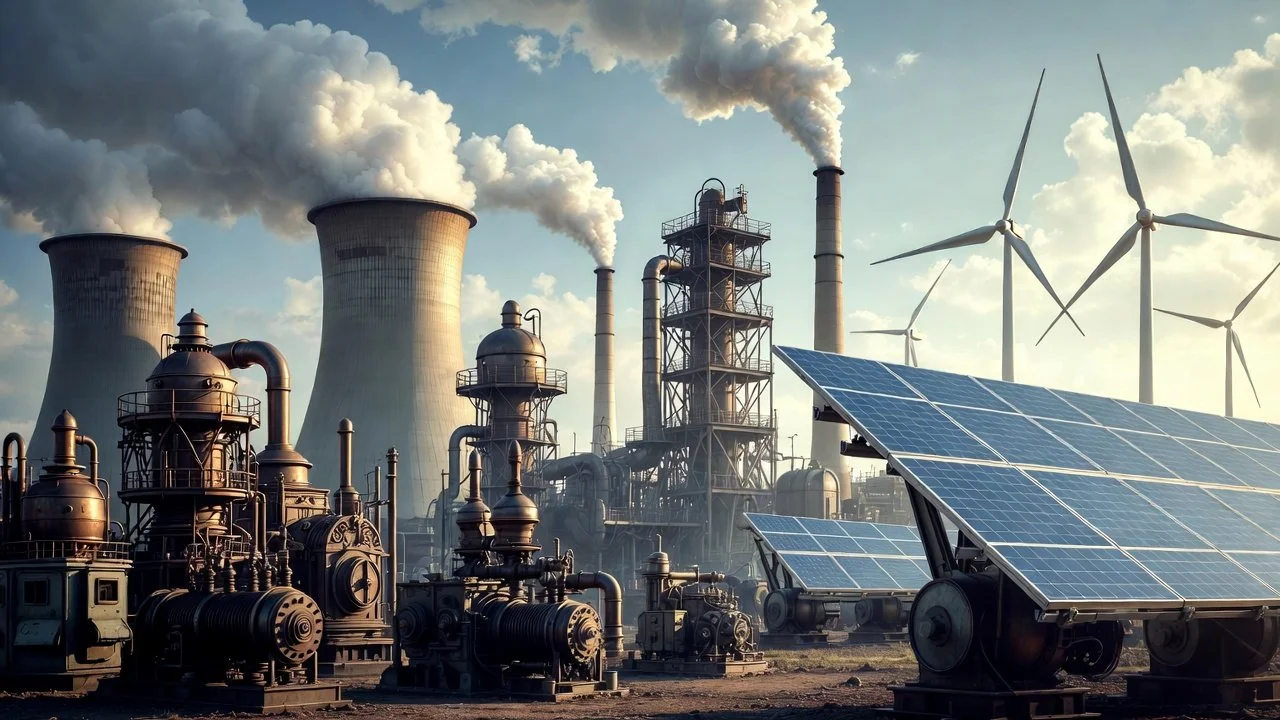
AI's hunger for electricity is reshaping global energy demand at a scale few appreciate. Massive data centers, GPU clusters, and inference at billions of queries per day require unprecedented power generation and storage. Batteries paired with renewables are emerging as the fastest path to unlocking grid capacity, while long-term visions point to space-based solar compute. Political and regulatory hurdles slow progress in the West, but the physics and economics favor rapid scaling—especially for integrated players.
Key Takeaways
AI data centers consume city-level electricity; cooling alone can eat 40% of usage, with inference scaling to billions of daily queries driving even higher demand.
Batteries + solar effectively double grid capacity by storing off-peak energy and discharging during peaks, bypassing the need for many new power plants or transmission lines.
Tesla deployed 46.7 GWh of energy storage in 2025 (up ~50% year-over-year), with energy gross margins around 29-31%—far outpacing automotive margins.
Battery costs have plummeted from over $1,000/kWh in 2010 to ~$115 today, following Wright's Law patterns of 20-30% cost drops per production doubling.
Distributed home batteries (like Powerwalls) form virtual power plants, stabilizing grids and enabling resilience without centralized failures.
Nuclear offers reliable baseload for AI, with co-location deals accelerating, but permitting delays (15-20 years) favor faster-deploy solar + storage.
China leads in solar and battery rollout; the U.S. faces grid bottlenecks, NIMBY opposition, and regulatory delays.
Space-based solar AI compute—enabled by low-cost launches, free cooling in vacuum, and constant sunlight—could become the lowest-cost path for massive inference in the coming years.
The full ecosystem convergence: solar/batteries for power, rockets for deployment, AI for workloads, and satellite networks for connectivity.
The Orbital AI Boom: Musk's Master Plan for Infinite Compute
Merging Rockets and Intelligence to Fuel the Future
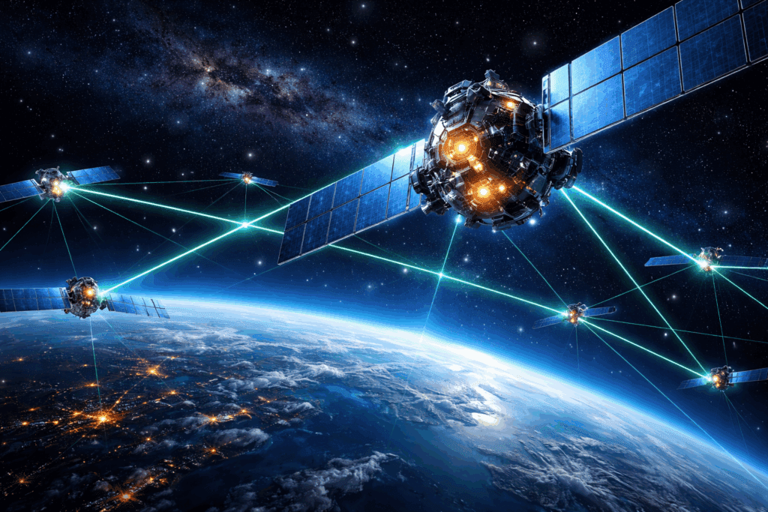
The convergence of space tech and AI is accelerating at a pace that could transform global industries. Recent developments point to orbital data centers becoming a reality, powered by unlimited demand for intelligence and energy. Robotaxis are scaling fast, promising to disrupt transportation with low costs and high safety. These shifts open up massive economic opportunities, from cheaper compute to redefined urban mobility.
Key Takeaways
Orbital AI data centers leverage space for unlimited compute, driven by endless demand for intelligence and energy.
Robotaxis could scale to millions of vehicles, undercutting ride-hail prices and expanding to new use cases like mobile businesses.
SpaceX's launch capacity enables rapid deployment of satellites, potentially shifting focus from Earth networks to space-based AI.
Regulatory frameworks at the federal level will accelerate adoption, prioritizing safety data over hardware specs.
Tesla's vertical integration gives it a cost edge, enabling profitable pricing as low as 25 cents per mile at scale.
Unlimited energy and intelligence create a flywheel for growth, with space as the ideal environment for AI expansion.
Orbiting AI: Revolutionizing Compute from Space
Why Space Could Power the AI Boom and Beyond
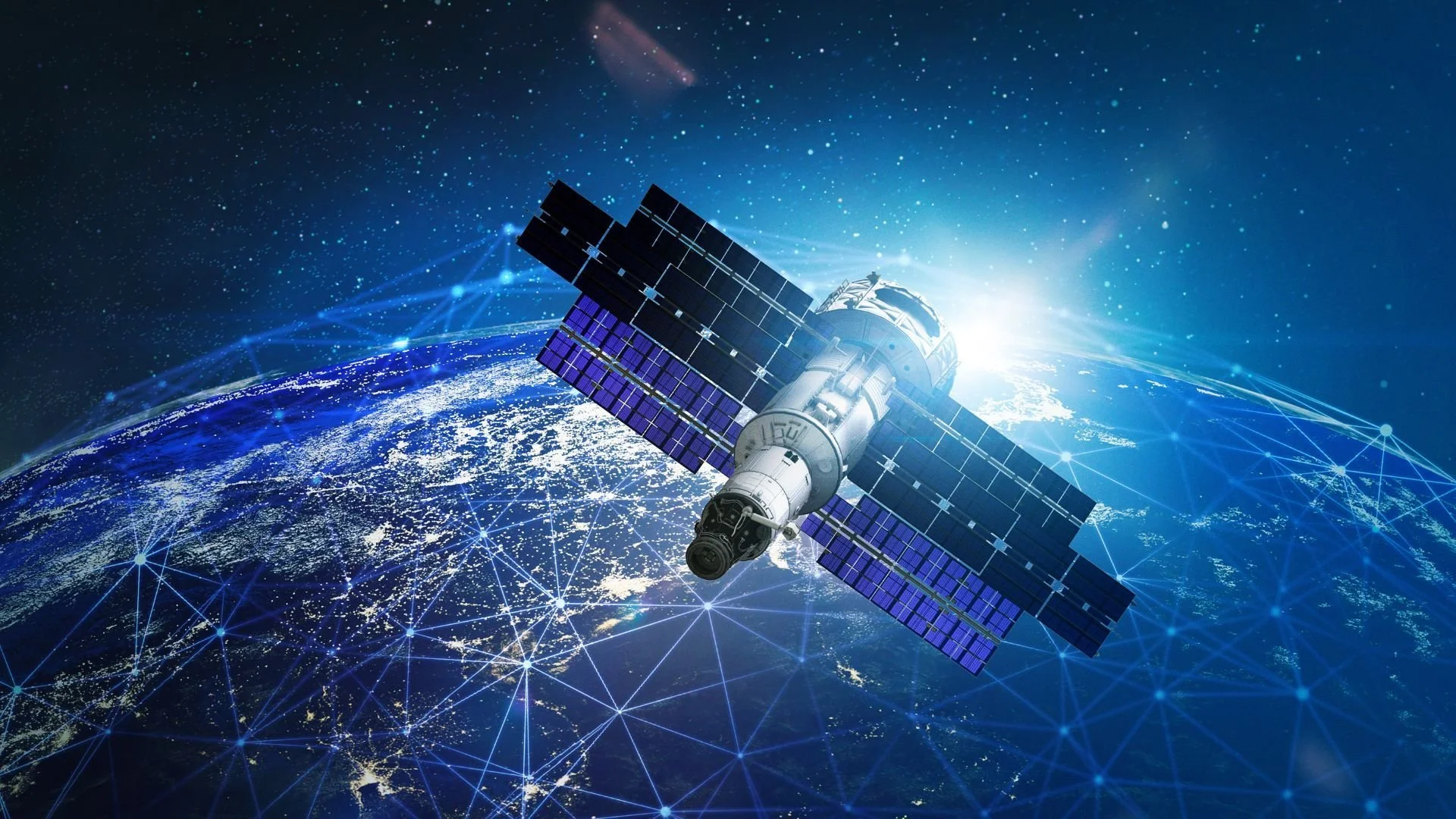
Advancements in launch tech are making orbital data centers a reality, promising near-unlimited solar energy for AI training and inference. This could cut electricity costs by up to 90% compared to ground-based systems, while global rollouts of autonomous tech accelerate mobility worldwide. Yet, these shifts demand new economic models to handle falling costs and rising disruptions in energy and jobs.
Key Takeaways
Space-based AI clusters leverage constant sunlight, reducing reliance on batteries and slashing operational costs for compute-intensive tasks.
Launch vehicles like Starship enable massive payloads to sun-synchronous orbits, though challenges in sites and reusability persist.
Autonomous ride-hailing apps are expanding to over a dozen countries, signaling faster adoption in regions with flexible regulations.
Energy could emerge as a universal value measure, with kilowatt-hours trading like currency to fuel AI and electric ecosystems.
Reversing inflation through tech abundance in essentials like food and housing could redistribute wealth, but requires proactive adaptation.

Tesla's Robot Revolution: Unlocking Superhuman Potential
Redefining Productivity Through AI and Automation
The push toward advanced robotics and AI is transforming everyday tasks, medical care, and global manufacturing, setting the stage for an era where technology delivers abundance for all.
Key Takeaways
Advanced humanoid robots with precise hands enable complex tasks like surgery, construction, and music, promising widespread access to elite skills.
Neural implants combined with robotic bodies could restore mobility to those with severe disabilities, offering cyborg-level abilities at affordable costs.
Real-time data from massive social networks fuels superior AI models, accelerating progress toward general intelligence.
Massive compute power, like data centers with hundreds of thousands of GPUs, outpaces competitors in training next-generation AI.
Manufacturing breakthroughs aim to produce vehicles every five seconds, driven by physics-inspired efficiency in factories.
Self-driving technology has reached a tipping point, enabling rapid expansion in vehicle production.