

SpaceX’s $2 Trillion IPO Buried a Kessler Cascade Warning Investors Still Underprice
In its S-1, SpaceX flagged that a single debris-generating collision could cascade into unusable orbits and hit the business hard - while Starlink already holds two-thirds of active satellites and crash-clock margins have collapsed from months to days.

SpaceX's IPO Bets Everything On One Number: The 95% Collapse In Cost-To-Orbit
A $1.77 trillion valuation that careful models can’t justify makes perfect sense once you see the cost of putting internet bandwidth into orbit fall from $6.55 to 30 cents per megabit per second, and why the same curve unlocks data centers in space.
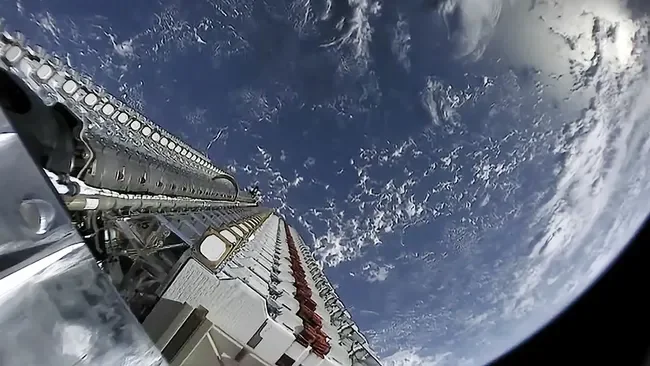
Vertical Integration at Scale: Unlocking Leadership Across Space, Connectivity, and AI
How control over the full stack—from rocket design to satellite operations and real-time data—creates durable advantages in markets projected to reach trillions.
The core advantage lies in end-to-end control over satellite systems and connectivity infrastructure. This approach compresses development cycles, slashes costs through in-house production, and generates recurring revenue at low marginal expense once the network is deployed. Layered onto that foundation is the ability to feed live global data into advanced AI systems, creating models that stay current rather than relying on frozen datasets. Together these elements form a platform positioned to expand aggressively into the multi-trillion-dollar intersections of orbital infrastructure, worldwide broadband, and intelligent computing.
Key Takeaways
Vertical integration spanning satellite design, manufacturing, launch, and constellation operations delivers superior cost efficiency and deployment speed that competitors struggle to match.
Ownership of the full orbital launch stack creates structural barriers, as replicating global leadership in reliable, high-cadence access to space requires years of accumulated hardware and operational experience.
Real-time data streams from large-scale platforms enhance AI model accuracy and timeliness, supporting truth-seeking systems that reflect current events and user-generated information.
Once core infrastructure exists, adding subscribers or new services incurs near-zero marginal cost, enabling rapid scaling and high operating margins in connectivity.
Integrated control across hardware, networks, data, and AI layers opens participation in multiple expanding markets, including satellite broadband, direct-to-device services, and space-enabled intelligent systems.
A mission-oriented culture combined with deep technical talent sustains the iteration velocity required to maintain leads in capital-intensive, fast-evolving fields.
SpaceX’s Massive Scale-Up: From Reusable Rockets to Orbital AI Empires
Unlocking multi-trillion-dollar markets through vertical integration and relentless iteration.
SpaceX is executing a tightly integrated strategy that turns orbital dominance into advantages in global broadband and frontier AI. By driving down launch costs through reusability and scaling production at unprecedented speeds, the company is positioning itself to capture enormous value across space transportation, connectivity, and compute infrastructure. This isn’t incremental progress—it’s a compounding flywheel that accelerates capability while slashing expenses.
Key Takeaways
Starship is poised to deliver roughly 100 metric tons to orbit initially, with Version 4 designs targeting 200 metric tons, while achieving full reusability to drive another order-of-magnitude cost reduction beyond Falcon’s already industry-leading economics.
Starlink’s V3 satellites promise a 20X capacity leap per launch compared to current V2 on Falcon, scaling toward petabyte-scale annual network throughput and closing the digital divide for billions.
The company is building the world’s largest coherent supercomputer clusters and pioneering orbital AI compute using solar power and radiative cooling for near-zero operating costs.
Revenue reached approximately $19 billion in 2025 with nearly $7 billion in positive adjusted EBITDA, while investing heavily in future infrastructure; connectivity alone showed 50% year-over-year growth.
Direct-to-device (Gen 2) 5G-quality service and specialized government constellations like Starshield expand addressable markets dramatically, backed by vertical integration that competitors struggle to match.
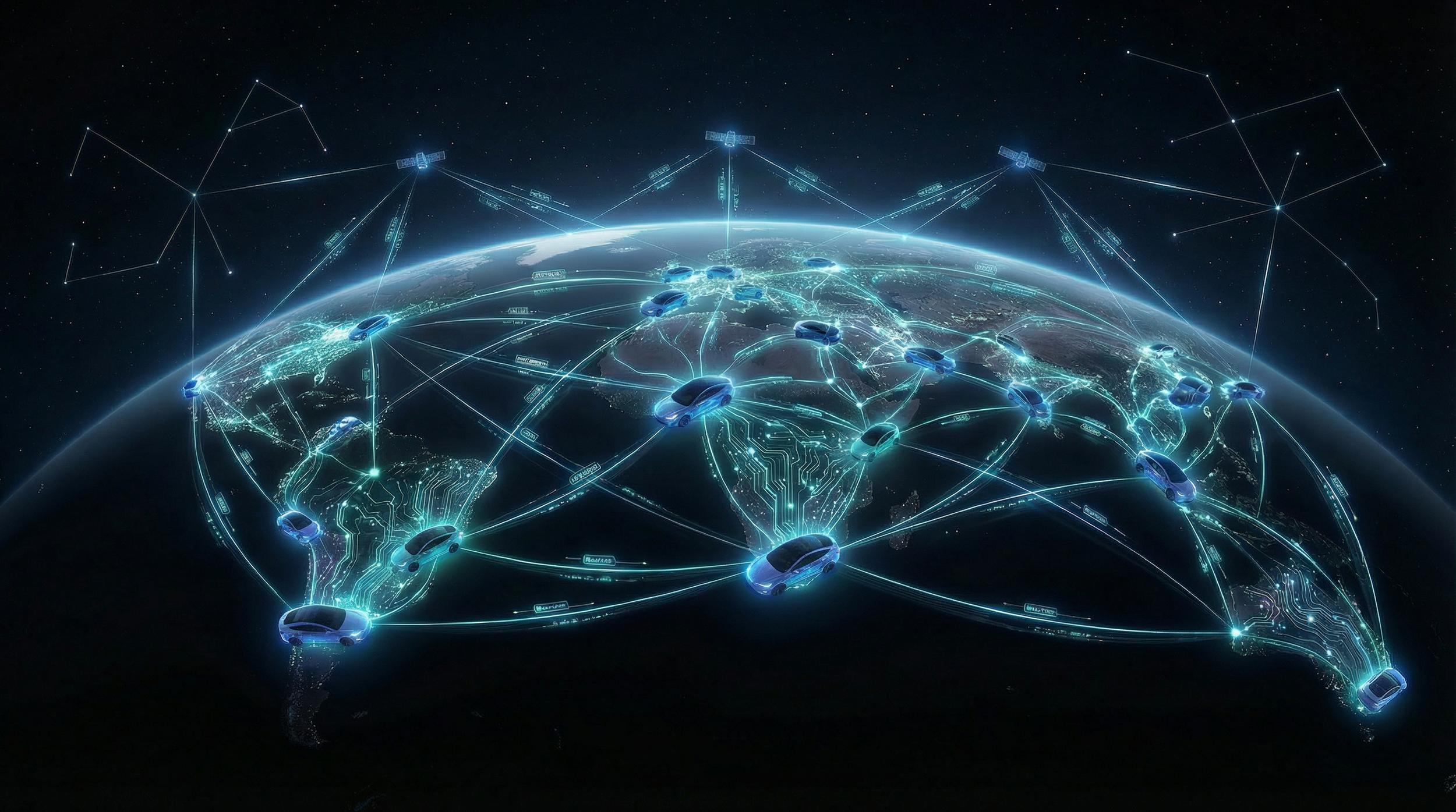
Tesla's Secret Weapon: Turning Cars into the World's Largest AI Network
Revolutionizing Compute Power Through Idle Vehicles and Satellite Connectivity
Imagine a future where millions of electric cars, sitting idle in garages worldwide, form the backbone of a massive AI processing empire. This isn't science fiction—it's a strategic pivot that could redefine computing infrastructure, leveraging existing hardware in ways the market hasn't priced in yet.
Key Takeaways
Tesla's vehicle fleet could evolve into a distributed AI inference system, harnessing unused computing power from parked cars to create a network rivaling major data centers.
With projections of 100 million vehicles, each contributing around a kilowatt of inference capability, this setup might deliver up to 100 gigawatts of compute—equivalent to a significant portion of U.S. power consumption.
Built-in power and cooling systems in electric vehicles solve key data center challenges, making this approach cost-effective and scalable.
Data transfer bottlenecks via traditional Wi-Fi or cellular networks hinder viability, but satellite-based internet offers high-bandwidth, low-latency solutions for seamless coordination.
Integration of satellite tech could enable consistent global connectivity, turning theoretical potential into practical reality for AI workloads.
Challenges include workload allocation, owner incentives, security, and focusing on inference tasks that suit distributed environments over centralized training.