

Starlink Surpasses 10 Million Users as SpaceX Scales Gigawatt AI and Readies Orbital Compute
The satellite network's dominance, direct-to-phone expansion, and space-based AI infrastructure plans point to a tightly integrated system built for both global connectivity and frontier intelligence workloads.
Starlink's active user base crossed 10.3 million by the end of Q1 2026 after more than doubling in the prior year. Its constellation now accounts for roughly three-quarters of every active maneuverable satellite in orbit, while coverage spans more than 164 countries and territories serving over three billion people. At the same time, the company has stood up gigawatt-scale AI training infrastructure on the ground and is advancing plans to place portions of that compute in orbit, powered by sunlight and cooled by radiation.
Key Takeaways
Starlink reached approximately 10.3 million users by the end of Q1 2026, reflecting more than 100 percent year-over-year growth from roughly 4.4 million users at the end of 2024.
The network now represents about 75 percent of all active maneuverable satellites currently in orbit.
Service is live across more than 164 countries and territories, providing coverage to populations exceeding three billion people.
Adoption is accelerating in aviation with frequent new airline integrations, while enterprises increasingly use Starlink as primary or backup connectivity for operational resilience.
Starshield operates as a dedicated constellation delivering secure capabilities tailored to U.S. government needs.
The first-generation direct-to-device service, activated with 650 satellites and partnerships involving 30 mobile network operators, has already demonstrated coverage for 1.9 billion people and confirmed real demand.
A second-generation direct-to-device system is designed to deliver full 5G performance directly to standard phones, targeting connectivity for the remaining three billion people currently outside reliable networks.
Colossus Two has been deployed as the world's largest coherent supercomputer, incorporating NVIDIA GB300 processors as the first gigawatt-scale training cluster along with the first gigawatt-scale Megapack battery installation and early large-scale use of both GB200 and GB300 hardware.
Orbital AI compute capacity is under active development for deployment within the next couple of years, leveraging solar power generation and radiative cooling in the space environment.
Proven satellite subsystems already in production—including ion propulsion thrusters, inter-satellite laser links, flight computers, and reaction wheels—remove key technical barriers to placing AI workloads in orbit.
Vertical integration across launch, satellites, connectivity, and AI creates a self-reinforcing loop: better infrastructure improves model quality and lowers token costs, which in turn funds further capacity expansion.
Starlink Crosses 10 Million Users as SpaceX Builds Toward Orbital AI Compute
SpaceX’s connectivity arm doubled its subscriber base to 10.3 million in a year while standing up a gigawatt-scale supercomputer and mapping a path to solar-powered AI data centers in space.
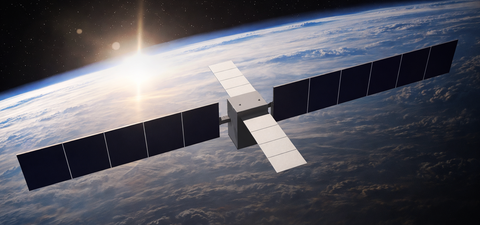
The Orbital AI Revolution: Why a Million Satellites Will Soon Power Every Major AI Model
Earth’s power grids are hitting a hard wall just as AI demand explodes. The solution? Move the data centers to space—where solar energy never stops and cooling is free.
The AI boom is real, but the infrastructure to run it is not. Tech giants have already committed three-quarters of a trillion dollars to data centers for 2026 alone, yet electricity shortages are forcing delays, cancellations, and even regulatory caps in key markets. At the same time, a handful of companies have quietly proven that full AI models can run on actual data-center chips in orbit. The economics, physics, and full-stack control now align to make orbital compute not just possible—but inevitable.
Key Takeaways
Global AI spending hits a record $1 trillion in 2026, but electricity—not money—is the real bottleneck, with major hubs like Northern Virginia maxed out until 2028 and countries like Singapore limiting new builds.
A single NVIDIA H100 chip has already run complete large language models in orbit 325 km above Earth, transmitting results back to the ground in real time.
Orbital solar power delivers roughly five times the efficiency of ground systems thanks to constant sunlight and no atmosphere, while deep-space radiative cooling at near-absolute zero eliminates the billions of gallons of water and massive energy overhead required on Earth.
Launch costs are collapsing: Starship targets under $200 per kilogram (and eventually $20), turning maintenance, redundancy, and refresh cycles from impossible to routine.
One company controls the entire vertical stack—reusable rockets, custom space-optimized chips, ground superclusters, and the world’s largest satellite constellation—positioning it to deploy the first million-satellite orbital data-center network.
Major cloud providers and rocket competitors are accelerating their own orbital plans, creating a high-stakes race that will define the next decade of compute infrastructure.
A pending IPO includes explicit performance milestones tied to 100 terawatts of space-based compute capacity—the power equivalent of 85 billion average U.S. homes.