
Vertical Integration at Scale: Unlocking Leadership Across Space, Connectivity, and AI
How control over the full stack—from rocket design to satellite operations and real-time data—creates durable advantages in markets projected to reach trillions.
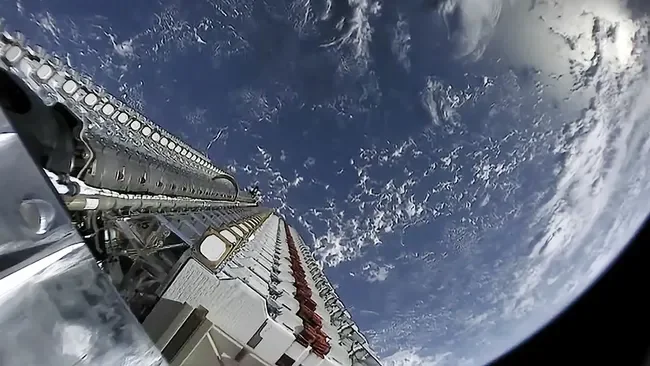
The core advantage lies in end-to-end control over satellite systems and connectivity infrastructure. This approach compresses development cycles, slashes costs through in-house production, and generates recurring revenue at low marginal expense once the network is deployed. Layered onto that foundation is the ability to feed live global data into advanced AI systems, creating models that stay current rather than relying on frozen datasets. Together these elements form a platform positioned to expand aggressively into the multi-trillion-dollar intersections of orbital infrastructure, worldwide broadband, and intelligent computing.
Key Takeaways
Vertical integration spanning satellite design, manufacturing, launch, and constellation operations delivers superior cost efficiency and deployment speed that competitors struggle to match.
Ownership of the full orbital launch stack creates structural barriers, as replicating global leadership in reliable, high-cadence access to space requires years of accumulated hardware and operational experience.
Real-time data streams from large-scale platforms enhance AI model accuracy and timeliness, supporting truth-seeking systems that reflect current events and user-generated information.
Once core infrastructure exists, adding subscribers or new services incurs near-zero marginal cost, enabling rapid scaling and high operating margins in connectivity.
Integrated control across hardware, networks, data, and AI layers opens participation in multiple expanding markets, including satellite broadband, direct-to-device services, and space-enabled intelligent systems.
A mission-oriented culture combined with deep technical talent sustains the iteration velocity required to maintain leads in capital-intensive, fast-evolving fields.

The Trillion-Dollar Threshold That Changes Little—and Everything
Why Elon Musk’s valuation milestone aligns with Gilded Age peaks in real terms while concentrating unmatched leverage over space, connectivity, and physical AI.
Elon Musk’s net worth crossing into trillion-dollar territory stems from equity stakes in companies that survived near-collapse and scaled into dominant positions across electric vehicles, reusable rocketry, satellite broadband, and AI-driven automation. The number itself functions mostly as a market-assigned price tag on shares rather than accessible cash, and when measured against the full size of the U.S. economy it sits at roughly the same slice once commanded by the most powerful industrialists of the early twentieth century. At the same time, operational control over launch capacity, global internet infrastructure, frontier AI models, and large-scale robotics data gives one individual influence over foundational technologies that no private citizen has previously held at this breadth.
Key Takeaways
Net worth in this range equals shares outstanding multiplied by current market price, with less than one-tenth of one percent typically held as liquid cash.
The fairest historical comparison uses wealth as a percentage of total economic output; Musk’s position lands near three percent of today’s U.S. economy, comparable to John D. Rockefeller’s roughly two-to-three percent share in 1913.
Tesla and SpaceX both approached bankruptcy in late 2008; concentrated founder ownership and willingness to risk remaining capital allowed both to reach leadership in autonomy, energy storage, reusable orbital launch, and satellite internet.
An IPO converts private valuation guesses into continuous public market pricing for shares already owned, without creating new assets for the holder.
Ultra-high-net-worth individuals commonly borrow against pledged stock at low interest rather than sell, since loans do not count as taxable income; proceeds have largely flowed back into the same companies.
Federal Reserve data show the top one percent of households now hold 32 percent of U.S. wealth and the top 0.1 percent hold around 14 percent—levels higher than at any point since tracking began in 1989.
Proposals for annual wealth taxes face practical hurdles demonstrated by multiple European countries that later repealed similar levies after they delivered minimal revenue, proved difficult to administer on private assets, and prompted capital relocation.
SpaceX currently accounts for the majority of mass placed into orbit by humanity in a given year, while Starlink serves ten million subscribers across more than one hundred countries and has proven decisive for connectivity in active conflicts.
Tesla’s real-world driving data and AI training pipeline support both autonomous vehicles without steering wheels or pedals and the development of humanoid robots intended for general physical tasks.
Continued execution on satellite mega-constellations, lunar and Mars infrastructure, high-volume robotaxis, and tens of millions of humanoid robots could scale Musk’s equity value well beyond current levels if those ventures succeed at planned magnitude.
SpaceX’s Massive Scale-Up: From Reusable Rockets to Orbital AI Empires
Unlocking multi-trillion-dollar markets through vertical integration and relentless iteration.
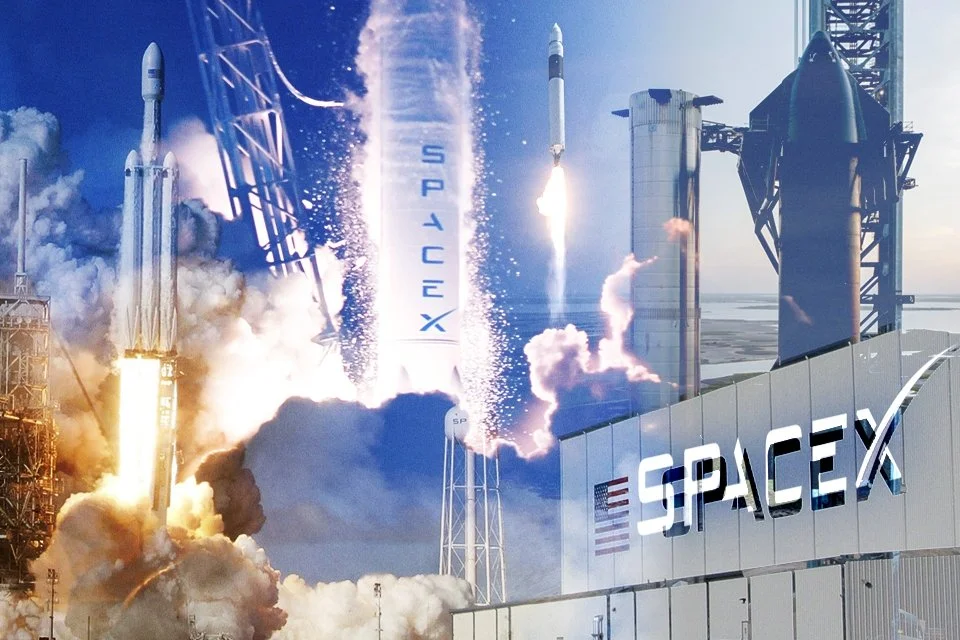
SpaceX is executing a tightly integrated strategy that turns orbital dominance into advantages in global broadband and frontier AI. By driving down launch costs through reusability and scaling production at unprecedented speeds, the company is positioning itself to capture enormous value across space transportation, connectivity, and compute infrastructure. This isn’t incremental progress—it’s a compounding flywheel that accelerates capability while slashing expenses.
Key Takeaways
Starship is poised to deliver roughly 100 metric tons to orbit initially, with Version 4 designs targeting 200 metric tons, while achieving full reusability to drive another order-of-magnitude cost reduction beyond Falcon’s already industry-leading economics.
Starlink’s V3 satellites promise a 20X capacity leap per launch compared to current V2 on Falcon, scaling toward petabyte-scale annual network throughput and closing the digital divide for billions.
The company is building the world’s largest coherent supercomputer clusters and pioneering orbital AI compute using solar power and radiative cooling for near-zero operating costs.
Revenue reached approximately $19 billion in 2025 with nearly $7 billion in positive adjusted EBITDA, while investing heavily in future infrastructure; connectivity alone showed 50% year-over-year growth.
Direct-to-device (Gen 2) 5G-quality service and specialized government constellations like Starshield expand addressable markets dramatically, backed by vertical integration that competitors struggle to match.
SpaceX at $2 Trillion: The Rocket Company That's About to Reshape Everything
Starship's cost revolution, Starlink dominance, and the potential Tesla merger signal the dawn of a multi-trillion-dollar space and AI empire.
SpaceX's confidential filing for a roughly $2 trillion valuation isn't just big news for investors. It marks the moment a private rocket company becomes one of the most valuable businesses on Earth, potentially raising $50–75 billion in the largest IPO in history. The numbers tell only part of the story. This is a company that already controls the majority of commercial launches, runs the world's largest satellite internet network, and is preparing to open entirely new frontiers in orbital computing, manufacturing, and global logistics through Starship.
Key Takeaways
SpaceX now handles 82% of the global commercial launch market and completed 165 Falcon 9 missions in 2025 alone.
Starlink has grown into the company's main business, with more than 10,000 satellites serving over 9 million paying subscribers and generating roughly $10–12 billion of the company's $15–16 billion total revenue last year.
Starship targets launch costs of $10–100 per kilogram to orbit—30 to 300 times cheaper than today's Falcon 9—through full reusability of both stages.
The economics unlock orbital AI data centers, space-based pharmaceutical and materials manufacturing, point-to-point Earth transport in under 45 minutes, and space solar power systems.
A $25 billion joint chip fabrication plant with Tesla and xAI already under construction in Texas will devote 80% of its output to space and orbital applications.
Merger speculation with Tesla could combine EVs, humanoid robots, AI training infrastructure, global satellite communications, and reusable rockets into a single vertically integrated entity.
The IPO would create thousands of new millionaires among employees while opening ownership to everyday retail investors for the first time.
The move strengthens U.S. strategic positioning in the renewed space race against rapidly advancing international competitors.
Starship's Rocket Catch Just Unlocked the Most Important Product in Human History
A 5,000x drop in launch costs is turning space into the next global economic engine—cheaper than air travel, with industries emerging that were impossible just a year ago.
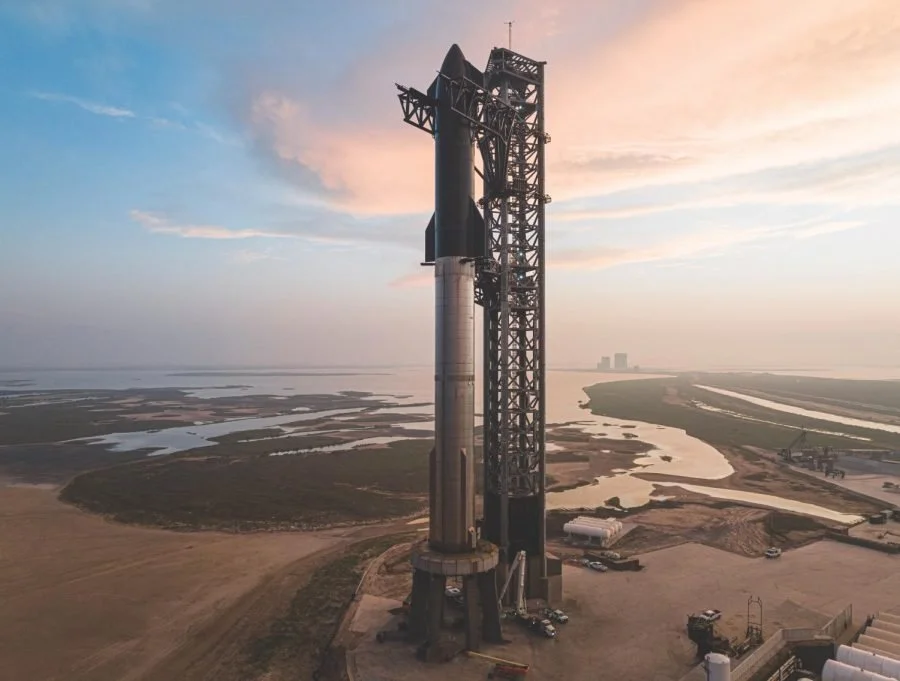
The Starship booster catch marks more than an engineering milestone. It proves that access to orbit is about to become dramatically cheaper, unlocking an entirely new economy between Earth and Mars that will dwarf today's satellite sector. This shift will reshape energy, manufacturing, computing, and resource extraction on a scale last seen with container shipping or the internet. The numbers are staggering, and the early players are already raising hundreds of millions while hardware launches into orbit.
Key Takeaways
Launch costs to orbit have fallen from $54,000 per kilogram during the Space Shuttle era to a projected $10–20 per kilogram with Starship, a 5,000x reduction that makes space business models profitable instead of impossible.
Wright's Law is driving relentless cost declines: every doubling of production volume cuts prices by 15–25 percent, the same dynamic that turned solar from $76 per watt in 1977 to 20 cents today.
Orbital manufacturing in microgravity is producing pharmaceutical crystals and semiconductor materials that cannot be made on Earth due to gravity's interference, creating entirely new product categories.
Space-based solar mirrors and orbital AI data centers solve Earth's power, cooling, and land constraints, while robot labor at roughly $2 per hour handles construction and maintenance that humans could never scale.
The second- and third-order effects of this infrastructure will spawn trillion-dollar industries nobody has named yet, exactly as container shipping and cheap bandwidth created globalization and the digital economy.
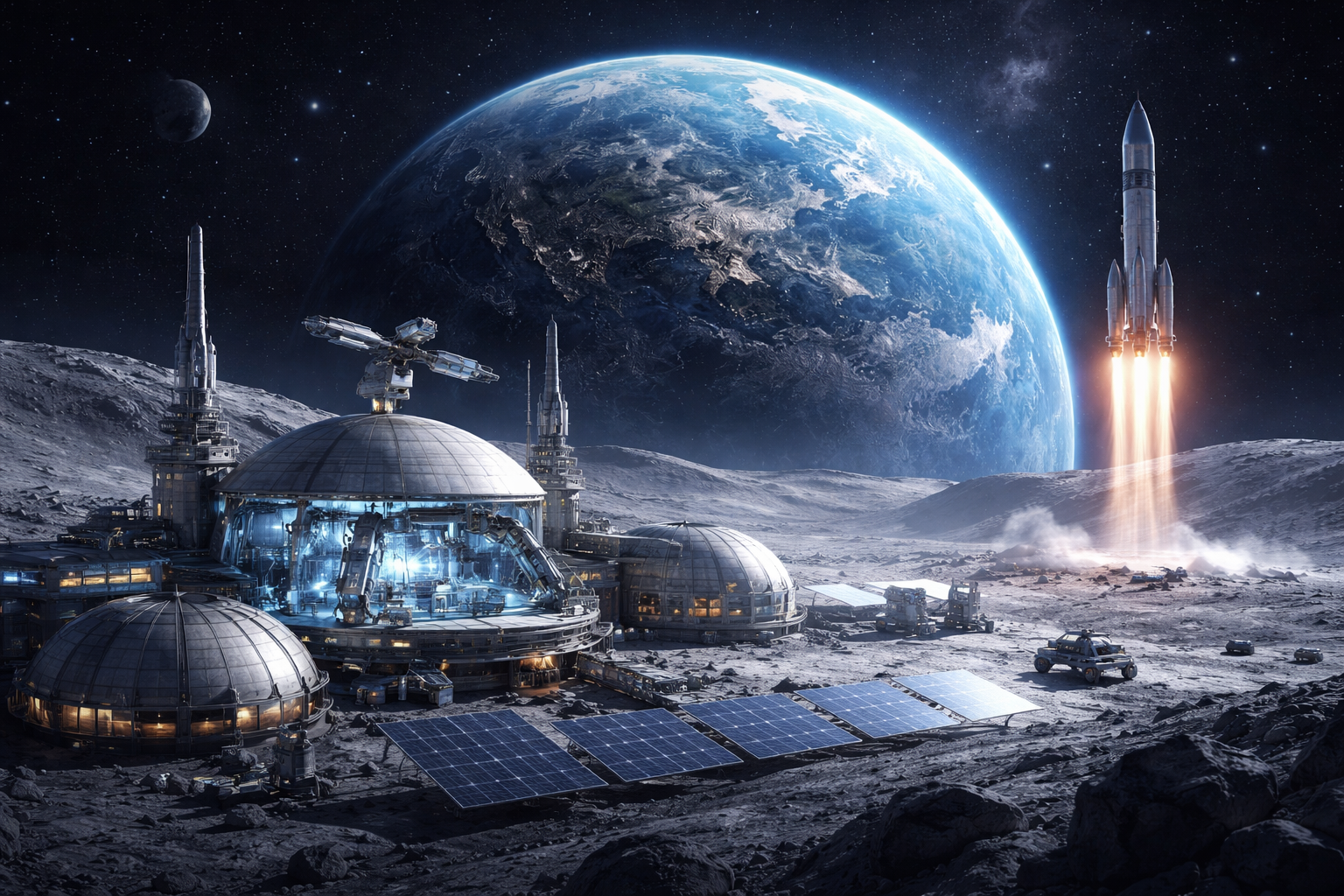
Elon Musk's Moon Gambit: The Trillion-Dollar Pivot Reshaping Space, AI, and Global Power
Why SpaceX's shift from Mars to the Moon accelerates humanity's multi-planetary future while fueling massive AI advancements and outpacing rivals.
SpaceX's recent decision to prioritize a self-sustaining lunar city over immediate Mars colonization marks a strategic turning point. This move slashes development timelines, harnesses unlimited solar energy for AI data centers, and positions the company to dominate emerging space economies amid rising competition from China.
Key Takeaways
SpaceX is delaying Mars missions by five to seven years to focus on the Moon, enabling faster iteration cycles due to shorter travel times and frequent launch windows.
The Moon serves as a testing ground for critical technologies like orbital refueling, habitat systems, and resource utilization, de-risking the longer Mars journey.
Integration with AI through the recent merger unlocks space-based data centers powered by endless solar energy, addressing Earth's power shortages for AI growth.
Competition with China's lunar ambitions drives urgency, with potential trillions in value from lunar resources like water ice for fuel and manufacturing.
This pivot aligns with an upcoming IPO, offering investors tangible milestones in lunar operations, government contracts, and commercial opportunities.