
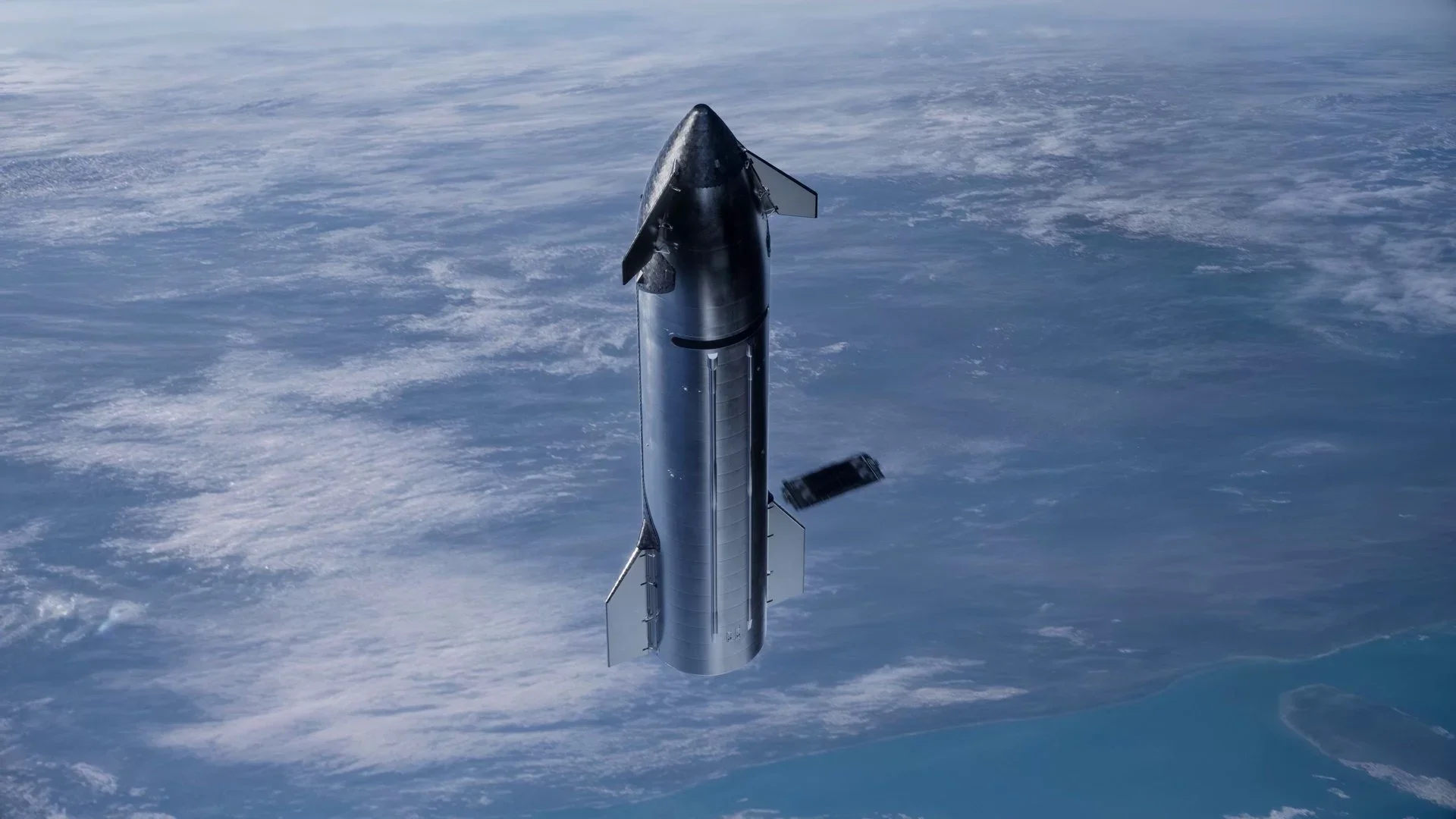
Unlocking the Stars: Starship, Orbital AI, and the Human Purpose Puzzle
Reusable rockets are set to slash space costs by orders of magnitude, opening orbital factories and AI compute clusters while automation quietly rewires human skills and identity—yet geopolitics in the Middle East and Eastern Europe supplies the friction that could accelerate it all.
SpaceX’s push toward full Starship reusability stands to repeat the shipping container breakthrough that cut ocean freight costs by 95 percent and turned global trade into an everyday reality. That single innovation let manufacturing shift to low-cost regions and built the modern supply chains powering everything from consumer electronics to pharmaceuticals. The same dynamic is now poised for orbit: cheap, frequent launches make zero-gravity factories practical for products ruined by Earth’s atmosphere or gravity, while solar-powered data centers in space could host the next leap in AI inference without terrestrial power or cooling limits.
Key Takeaways
Starship reusability could deliver a 100x to 1,000x jump in payload-to-orbit capacity, mirroring how standardized containers enabled globalization and China’s manufacturing dominance.
Orbital manufacturing becomes viable for gravity-sensitive processes such as advanced pharmaceuticals, while space-based AI inference clusters bypass Earth’s energy and heat constraints.
A successful reusable fleet at scale supports multi-trillion-dollar valuations only if it pairs with rapid earnings growth from new markets like orbital compute and global launch services.
Tesla’s near-term profit ramp may outpace SpaceX post-IPO, making the latter a longer-horizon bet dependent on two breakthroughs: full reusability and orbital AI revenue.
AI cognitive offloading already erodes routine skills—phone numbers, map reading, household chores, driving—freeing mental bandwidth for higher-order thinking but raising questions about identity and purpose.
Humans naturally invent new forms of friction through hobbies, creative arts, athletics, and philosophical structures to preserve meaning even in an age of abundance.
Geopolitical tensions, from record Russian casualties in Ukraine to Iran’s internal regime pressures, create short-term chaos that could reshape energy markets and tech supply chains while spurring innovation.
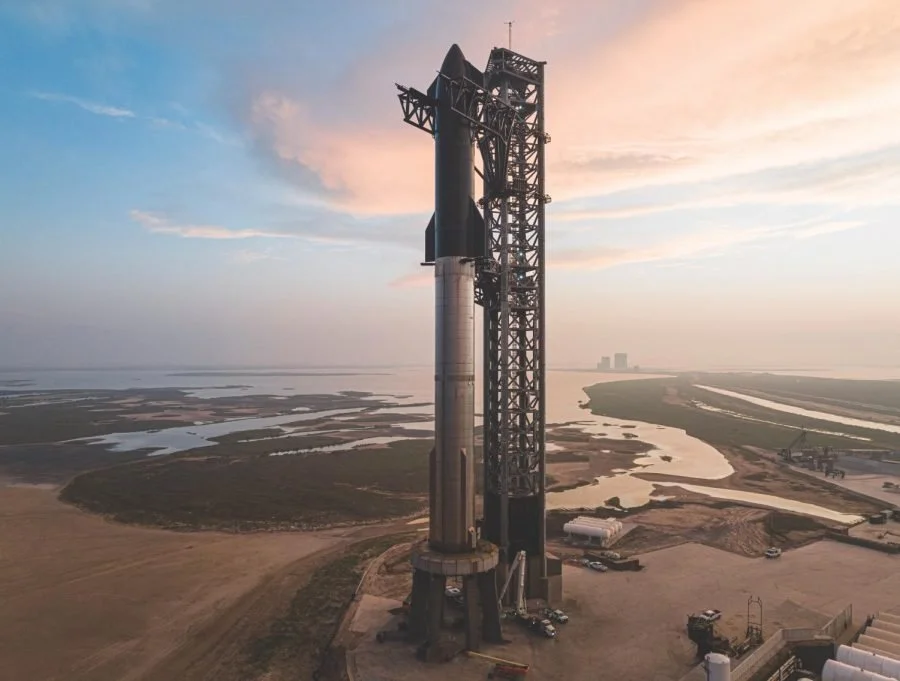
Starship's Rocket Catch Just Unlocked the Most Important Product in Human History
A 5,000x drop in launch costs is turning space into the next global economic engine—cheaper than air travel, with industries emerging that were impossible just a year ago.
The Starship booster catch marks more than an engineering milestone. It proves that access to orbit is about to become dramatically cheaper, unlocking an entirely new economy between Earth and Mars that will dwarf today's satellite sector. This shift will reshape energy, manufacturing, computing, and resource extraction on a scale last seen with container shipping or the internet. The numbers are staggering, and the early players are already raising hundreds of millions while hardware launches into orbit.
Key Takeaways
Launch costs to orbit have fallen from $54,000 per kilogram during the Space Shuttle era to a projected $10–20 per kilogram with Starship, a 5,000x reduction that makes space business models profitable instead of impossible.
Wright's Law is driving relentless cost declines: every doubling of production volume cuts prices by 15–25 percent, the same dynamic that turned solar from $76 per watt in 1977 to 20 cents today.
Orbital manufacturing in microgravity is producing pharmaceutical crystals and semiconductor materials that cannot be made on Earth due to gravity's interference, creating entirely new product categories.
Space-based solar mirrors and orbital AI data centers solve Earth's power, cooling, and land constraints, while robot labor at roughly $2 per hour handles construction and maintenance that humans could never scale.
The second- and third-order effects of this infrastructure will spawn trillion-dollar industries nobody has named yet, exactly as container shipping and cheap bandwidth created globalization and the digital economy.
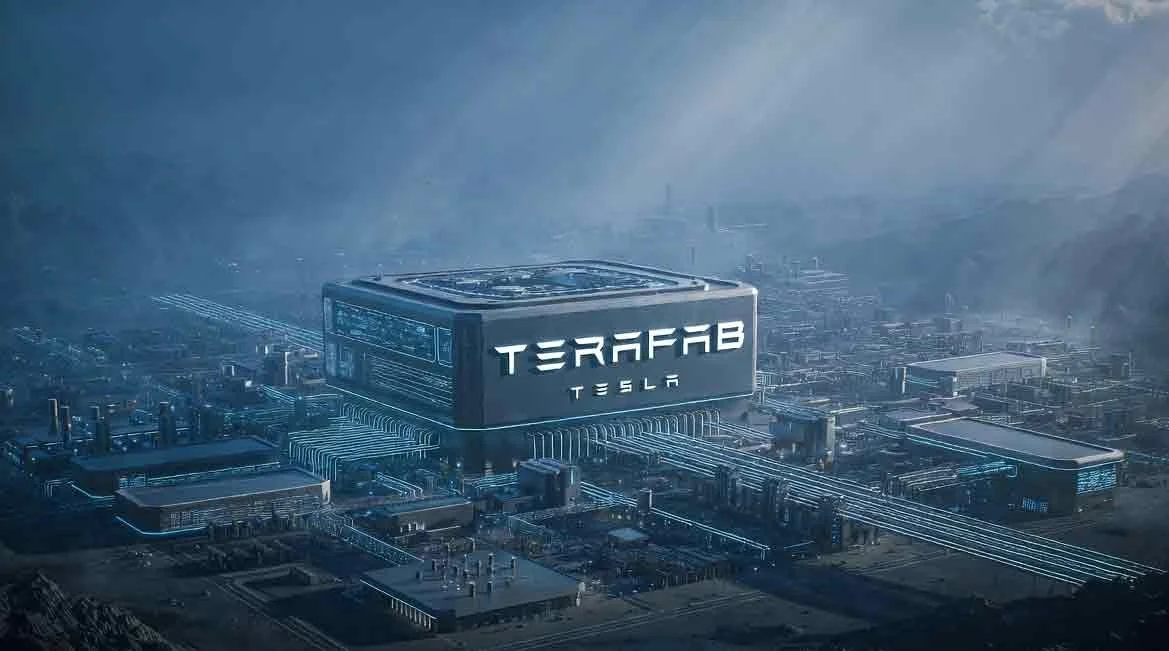
Elon Musk’s $25 Billion Chip Factory Is the Biggest Industrial Bet Ever Made
One Texas plant could crank out enough custom AI silicon to power a terawatt of compute—most of it headed to space—while rewriting the rules on design speed and efficiency.
A single factory under construction in Texas is preparing to manufacture custom AI chips at a scale that would consume more advanced semiconductor capacity than most nations currently possess. The project aims for 200 billion chips per year and one terawatt of annual compute power, with roughly 80 percent destined for orbital AI satellites launched by SpaceX. The real game-changer lies in how the factory compresses chip design cycles from months to weeks and uses advanced packaging techniques to stretch limited high-end lithography resources far beyond what traditional foundries achieve. This approach turns a seemingly impossible supply-chain bottleneck into a structural advantage for autonomous vehicles, humanoid robots, and space-based AI systems.
Key Takeaways
The factory starts at 100,000 wafer starts per month and scales to 1 million—roughly 70 percent of TSMC’s current worldwide output from all its plants combined.
Every two-nanometer chip relies on extreme ultraviolet lithography machines produced by a single company in a Dutch town of 45,000 people; global production sits at only 50 to 60 units per year, with every machine already spoken for years ahead.
In-house mask-making and rapid wafer runs shrink chip iteration cycles from three-to-four months down to one-to-two weeks, delivering five-to-ten times faster design progress than standard foundry loops.
Chiplet architecture limits expensive EUV usage to only the compute cores while sourcing memory and input/output dies on older, readily available nodes—boosting yields from 30-40 percent on monolithic dies to around 80 percent.
Custom inference silicon optimized specifically for Tesla workloads removes idle transistors, delivering major gains in power efficiency, latency, and cost—critical for extending robot runtime and lowering per-unit economics to $2 per hour of labor.
The strategy outsources heavy EUV volume work to existing foundries while owning the design-to-packaging loop, creating a compounding moat that widens each year as competitors remain locked into general-purpose chips.
Geopolitical risks around Taiwan and China’s slower EUV progress make localized, rapid-iteration capacity a strategic hedge for Western AI leadership.

Why Musk’s TeraFab Chip Factory Is Actually Insane
The lithography wall standing between today’s AI boom and tomorrow’s terawatt-scale future—and the clever paths that could smash through it.
Tesla’s TeraFab project isn’t just another factory announcement. It’s a direct assault on the single hardest problem in modern computing: turning raw silicon into the chips that will power millions of humanoid robots, autonomous vehicles, orbital AI constellations, and data-center-scale training clusters. The vision is breathtaking—terawatt-scale compute—but the physics and supply-chain math reveal why this might be the most ambitious manufacturing bet in tech history.
Key Takeaways
Cutting-edge EUV lithography machines are produced at a rate of only 50–60 per year worldwide, with plans to reach 100 by 2030—orders of magnitude short of what terawatt ambitions require.
Roughly 3.5 EUV machines are needed to sustain one gigawatt of advanced-chip output; scaling to terawatts implies a need for thousands of these machines cumulatively.
For inference-heavy workloads (robots, self-driving, satellites), mature 7 nm and larger DUV processes can be ramped far faster and with multiple suppliers, offering a practical near-term bridge.
Maskless alternatives such as multi-beam helium particle lithography promise finer features, dramatically faster design iteration, and long-term scalability beyond today’s photon-based limits.
Success hinges on a phased playbook: deep supplier partnerships for knowledge transfer, rapid internal R&D fabs, aggressive supply-chain acceleration, and AI-augmented engineering to compress decade-long timelines into years.
Tesla Just Built the Google of Atoms
The complete physical AI platform no competitor can replicate—and why it will define the next 20 years of technology
The physical world now has its dominant platform. One company has quietly assembled every critical layer—custom silicon, world-class AI models, battery chemistry, factories that scale like nothing else, vast real-estate holdings, and a global logistics network—and wired them together into a single, accelerating flywheel. The result is faster innovation, lower costs, and a data advantage that grows exponentially every day. This is not a car company with side projects. It is the infrastructure layer for the atom economy, and the implications stretch far beyond stock prices.
Key Takeaways
Tesla operates a full physical AI stack: computation, AI models, chemistry, manufacturing, land/real estate, and logistics—all internally controlled and mutually reinforcing.
Manufacturing functions as the CPU, real estate as storage, and logistics as the network in an atoms-based computer model that mirrors digital computing.
Billions of real-world driving miles feed a single neural architecture used for both autonomous vehicles and humanoid robots, creating a data flywheel no rival can match.
In-house battery chemistry, repurposed legacy factories, and continent-spanning energy assets deliver cost and infrastructure advantages that compound across every layer.
Vertical integration turns individual businesses into a cascading advantage: cheaper chips power better AI, better AI improves manufacturing, improved manufacturing lowers battery prices, and so on.
Single-layer competitors face structural economic disadvantages that widen over time, regardless of early leads in narrow domains.
Historical platform cycles suggest massive regulatory scrutiny is coming once dominance becomes obvious.
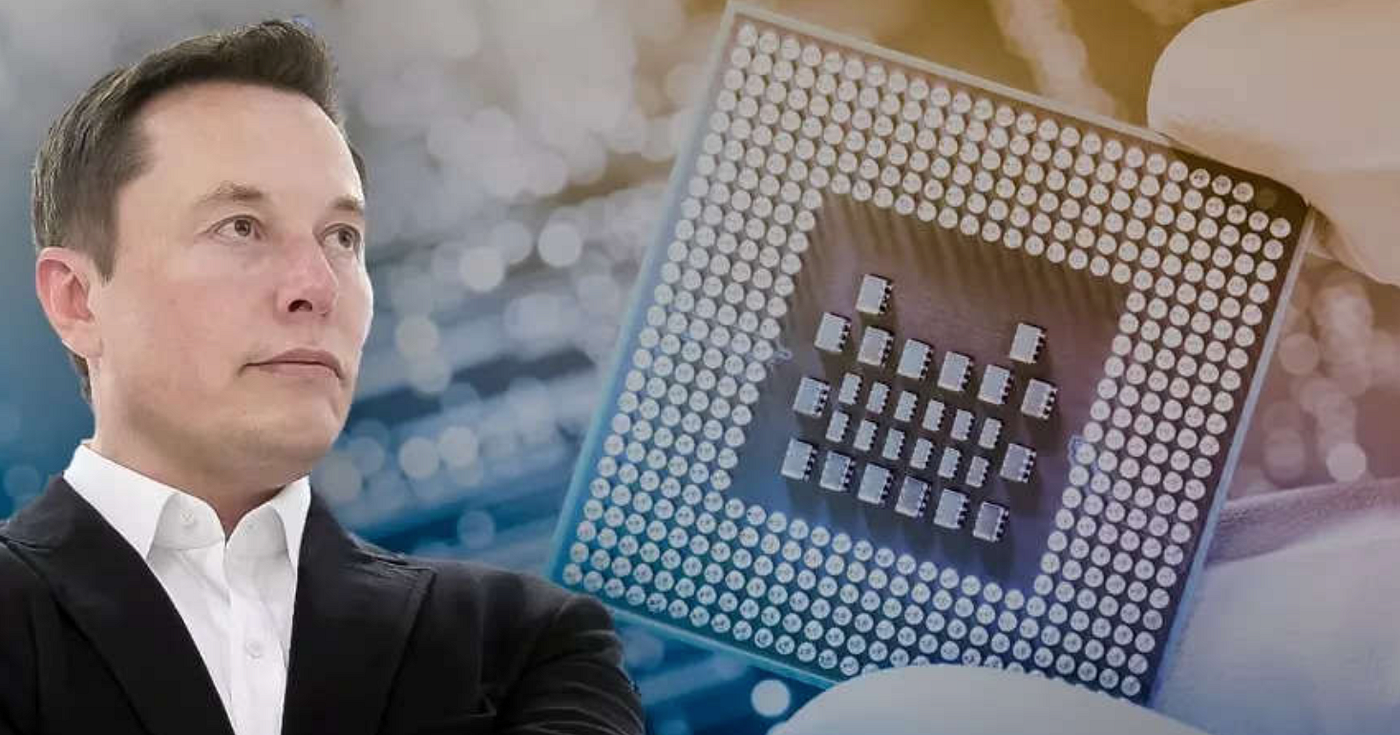
Taiwan's $10 Trillion Chip Crisis: Why Elon Musk Is Racing to Build His Own Semiconductor Empire
Global AI depends on one vulnerable island. Musk's Terra Fab could be the ultimate hedge—and a game-changer for Tesla and beyond.
The world's most advanced chips all come from one place: Taiwan. With China positioning forces for a potential takeover by 2027, the global economy faces a catastrophic risk estimated at $10 trillion in GDP losses in the first year alone. Yet amid this fragility, one leader is taking decisive action by investing tens of billions into domestic chip manufacturing independence. This move isn't just about one company—it's a signal of how tech giants are rethinking supply chains in an era of rising geopolitical tensions.
Key Takeaways
TSMC in Taiwan produces around 90% of the world's most advanced sub-7 nanometer chips, powering everything from AI systems to smartphones and defense tech.
China has directed its military to prepare for an invasion or blockade of Taiwan by 2027, with ongoing drills, incursions, and naval expansions increasing the pressure.
A disruption could wipe out $10 trillion from global GDP in year one—far exceeding the combined impacts of COVID-19 and the 2008 financial crisis—due to chip shortages crippling industries worldwide.
Tesla's new Terra Fab project aims for 2-nanometer process technology at massive scale, targeting production of hundreds of billions of custom AI and memory chips annually to support Tesla's autonomous vehicles, robots, and AI training.
This vertical integration strategy builds resilience against Taiwan risks while creating optimized, efficient silicon tailored to specific workloads in driving, robotics, and AI.
A broader "Sovereign AI" movement is underway, with countries and companies investing heavily in domestic chip and data center capacity to secure technological independence.
The Operating System Behind World-Changing Innovation
How intensity, technical depth, and strategic boldness create results that redefine what's possible in tech and beyond.
The principles shaping one of tech’s most effective operators deliver a rare edge for any builder or entrepreneur aiming for outsized impact. They reveal how purpose, mindset, and execution combine to solve problems at planetary scale while building durable companies that last for decades.
Key Takeaways
A singular profile fuses extreme energy and discipline with unconventional technical genius and Napoleonic strategic vision with bias to action.
Purpose acts as the core engine, driving decisions that ignore short-term financial or reputational optimization in favor of meaningful missions.
Upbringing and biology create dual fuel: running toward ambitious goals while escaping personal demons of inadequacy.
Effective leadership holds impossibly high standards, convincing teams they can achieve what they initially deem unfeasible.
Hardware success requires full vertical integration, domestic manufacturing mastery, and direct customer relationships rather than outsourcing everything.
AI and robotics convergence with ambitious entrepreneurship accelerates deflation and abundance across energy, transport, food, and space.
Wealth accumulates as a natural outcome of scaling solutions to civilization-level problems.

Elon Musk's New AI Agent Will Replace Entire Companies
Digital Optimist turns parked Teslas, robots, and Supercharger stations into a real-time digital workforce that runs on $650 chips and learns from everything at once.
A groundbreaking edge AI platform is taking shape that processes your computer screen locally, clicks buttons, fills forms, and navigates software in real time. It pairs this instant execution with high-level reasoning from the cloud only when needed, slashing costs to near zero beyond electricity while delivering speed and reliability that cloud-based agents cannot match. The same core intelligence powers self-driving cars, humanoid robots, and these digital workers, creating a single learning flywheel that improves every product simultaneously. At scale, this means fleets of agents could handle entire corporate operations using infrastructure already deployed worldwide.
Key Takeaways
A dual-brain system combines local real-time screen watching and action with cloud-based strategic reasoning for seamless autonomous workflows.
Primary processing runs on low-cost Tesla AI4 chips, delivering near-zero marginal cost per task and eliminating the latency and fees of cloud round-trips.
One foundational model adapts the same vision, spatial reasoning, and decision-making capabilities across vehicles, physical robots, and digital agents, with every task feeding back into shared improvement.
Distributed compute leverages parked cars with onboard batteries or wall power, 7 gigawatts available at Supercharger locations, and idle humanoid robots that switch between physical and digital duties.
Plans extend to solar-powered AI satellites in orbit using the identical chip family, providing free energy and vacuum cooling connected via Starlink.
Full vertical integration spans chip design, manufacturing in a planned Terra Fab, deployment in cars and robots, and space-based infrastructure for unmatched efficiency and scale.
The Tera Fab Breakthrough: Building Terawatts of AI Compute to Power a Galactic Civilization
Why one facility, paired with orbital infrastructure and robotics, could unlock energy abundance at a scale that dwarfs everything on Earth today.
The most valuable insight here is simple: humanity’s entire current AI chip production barely scratches the surface of what’s required to reach meaningful cosmic scale. A new integrated chip fabrication project called Tera Fab changes that equation by delivering terawatts of annual compute output—orders of magnitude beyond today’s global total—while making space-based AI not just viable but dramatically cheaper than anything possible on the ground. The result is a clear path to multi-planetary expansion, humanoid robots in the billions, and an economy powered by the Sun itself.
Key Takeaways
Current worldwide AI chip output sits at roughly 20 gigawatts per year; all existing fabs combined supply only about 2 percent of the terawatt-scale capacity now planned.
Tera Fab integrates logic, memory, packaging, testing, and mask-making in a single building, creating an ultra-fast design iteration loop measured in days instead of months.
Two specialized chip families emerge: high-volume, efficient designs for edge inference in humanoid robots and vehicles, plus radiation-hardened, high-power versions optimized for the harsh space environment.
Space-based solar delivers five times more consistent energy than ground installations, with no atmosphere, no night cycle, and no weather—driving AI compute costs below terrestrial levels within two to three years.
Starship upgrades will enable 10 million tons of payload to orbit annually, supporting orbital solar arrays and compute clusters at terawatt scale.
A lunar electromagnetic mass driver built with robotic labor will later push compute into the petawatt range, opening the door to million-fold economic growth and post-scarcity abundance.
AI: The New Nuclear Arms Race Redefining Global Power
Why the race for artificial superintelligence mirrors the atomic age—and what it means for the next century of dominance
The parallels between today's AI competition and the nuclear era of 1945 are striking and unavoidable. Just as the atomic bomb reshaped alliances, economies, and military strategies overnight, AI infrastructure is forcing nations to realign around control of compute, energy, data pathways, and deployable systems. The United States holds a commanding lead in frontier models and advanced semiconductors, but China advances rapidly in scaled deployment, energy buildout, and open-source disruption. Every tariff, reactor restart, satellite constellation, and robot factory forms part of a deliberate strategy to secure civilizational advantage.
Key Takeaways
The U.S. treats advanced AI chips as strategic weapons, imposing export controls and tariffs equivalent to munitions regulations to maintain its monopoly on the "uranium" of the AI age.
Global data center power demand surges toward levels rivaling entire nations' electricity use, pulling nuclear restarts, natural gas, and renewables into service—China deploys solar and small modular reactors at unmatched speed.
Orbital infrastructure emerges as a game-changer, with plans for massive solar-powered satellite networks to host AI compute beyond earthly grid constraints.
Humanoid robots and autonomous vehicles represent the "warheads"—physical AI embodiments poised to transform a $45+ trillion global labor and transportation market.
The U.S. benefits from uncapped private innovation and capital accumulation, while China's centralized system caps individual power but excels in coordinated infrastructure scaling.
Economic disruption hits hardest in the middle class unless offset by policies like universal basic income or widespread entrepreneurship; the top and bottom socioeconomic tiers stand to gain most from abundance.
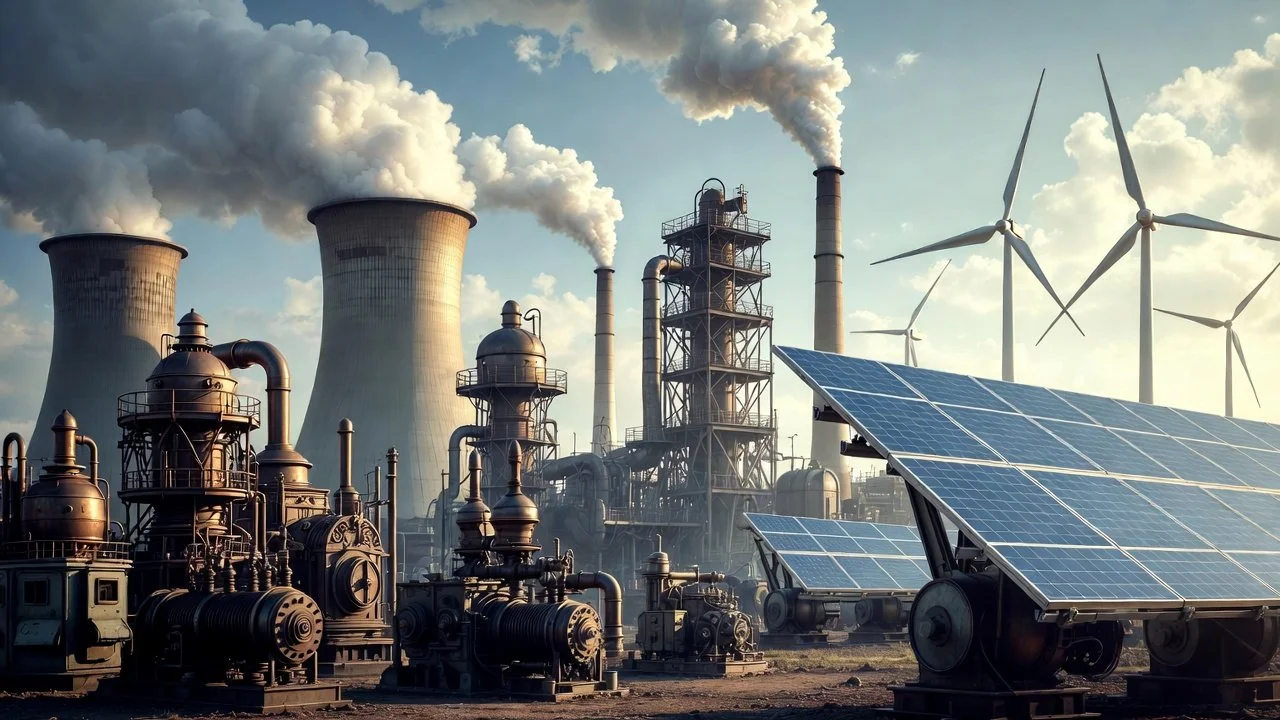
Energy: The Overlooked Force Powering the AI Explosion
Why cheap, abundant power—not just chips or models—will decide winners in the next decade
AI's hunger for electricity is reshaping global energy demand at a scale few appreciate. Massive data centers, GPU clusters, and inference at billions of queries per day require unprecedented power generation and storage. Batteries paired with renewables are emerging as the fastest path to unlocking grid capacity, while long-term visions point to space-based solar compute. Political and regulatory hurdles slow progress in the West, but the physics and economics favor rapid scaling—especially for integrated players.
Key Takeaways
AI data centers consume city-level electricity; cooling alone can eat 40% of usage, with inference scaling to billions of daily queries driving even higher demand.
Batteries + solar effectively double grid capacity by storing off-peak energy and discharging during peaks, bypassing the need for many new power plants or transmission lines.
Tesla deployed 46.7 GWh of energy storage in 2025 (up ~50% year-over-year), with energy gross margins around 29-31%—far outpacing automotive margins.
Battery costs have plummeted from over $1,000/kWh in 2010 to ~$115 today, following Wright's Law patterns of 20-30% cost drops per production doubling.
Distributed home batteries (like Powerwalls) form virtual power plants, stabilizing grids and enabling resilience without centralized failures.
Nuclear offers reliable baseload for AI, with co-location deals accelerating, but permitting delays (15-20 years) favor faster-deploy solar + storage.
China leads in solar and battery rollout; the U.S. faces grid bottlenecks, NIMBY opposition, and regulatory delays.
Space-based solar AI compute—enabled by low-cost launches, free cooling in vacuum, and constant sunlight—could become the lowest-cost path for massive inference in the coming years.
The full ecosystem convergence: solar/batteries for power, rockets for deployment, AI for workloads, and satellite networks for connectivity.
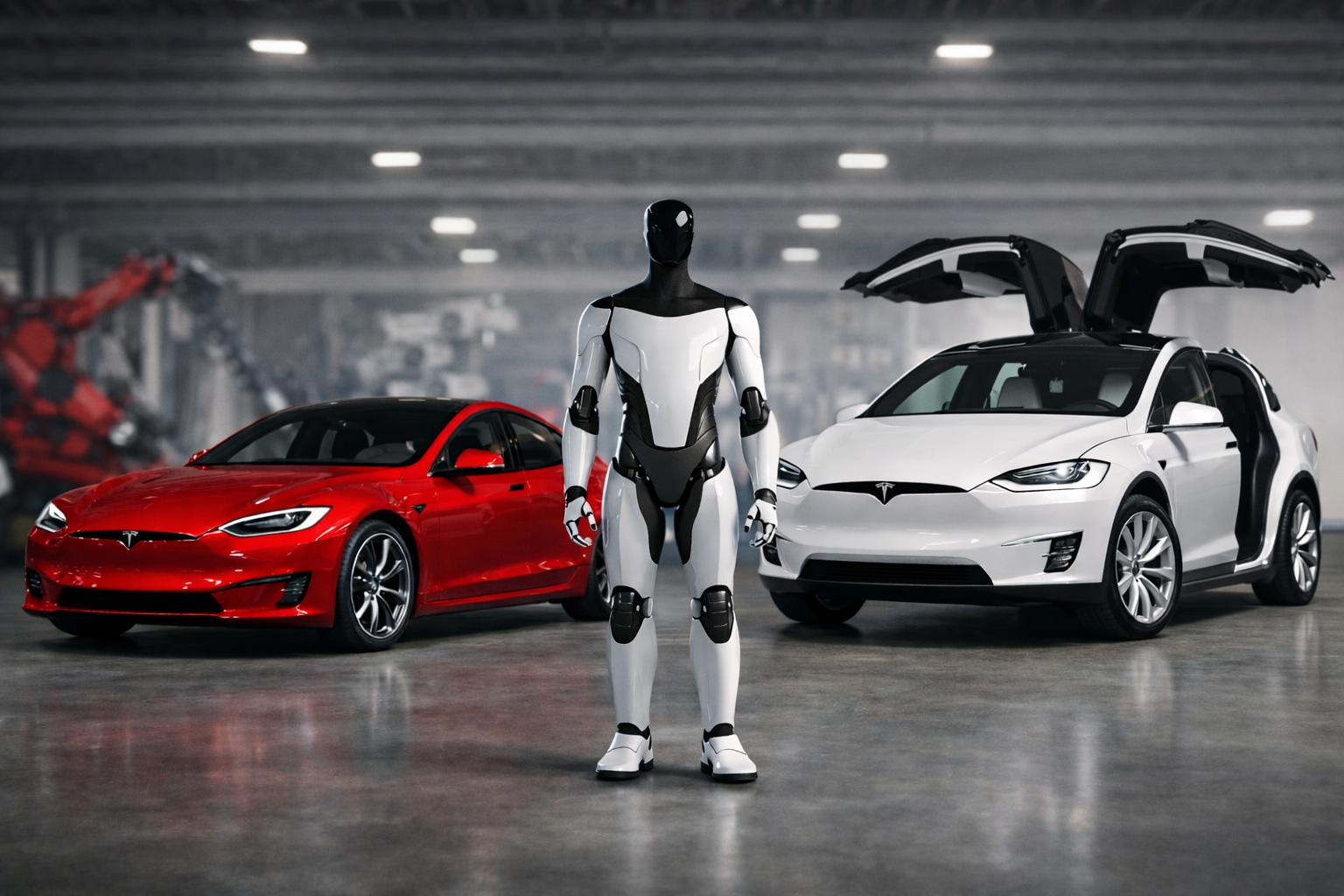
Tesla’s 2025 Production Tsunami Is Here: Cybercab, Optimus, and Sleep-in-the-Car Autonomy Arrive
The next 12 months deliver technical readiness for unsupervised autonomy, scaled robotaxi output, and the first practical humanoid assistants—milestones that reposition Tesla at the center of AI hardware and sustainable manufacturing.
Key Takeaways
Full self-driving software reaches the level where passengers can fall asleep and wake at their destination from a purely technical standpoint this year.
Cybercab production scales at Giga Texas starting April, targeting significant volumes by year-end, with European manufacturing under active consideration.
Optimus humanoid robots begin with household tasks such as childcare, dog walking, and elder support, progressing toward medical roles including surgery that surpass today’s human standards.
Five major production lines enter volume output across Tesla facilities, including 4680 battery cells at Giga Berlin plus lithium and nickel cathode refineries.
Legacy automakers face structural decline after years of minimal innovation and resistance to both electrification and autonomy.
Long-term vision includes Tesla factories on the Moon within 20 years and a future where work becomes optional, pursued for personal satisfaction rather than necessity.
Giga Berlin is positioned for massive expansion into batteries, Cybercab, Optimus, and additional products, potentially becoming Europe’s largest manufacturing complex if external conditions remain supportive.
Advice for the next generation emphasizes optimism, relentless learning through books and experimentation, and choosing roles that involve building tangible, useful things.
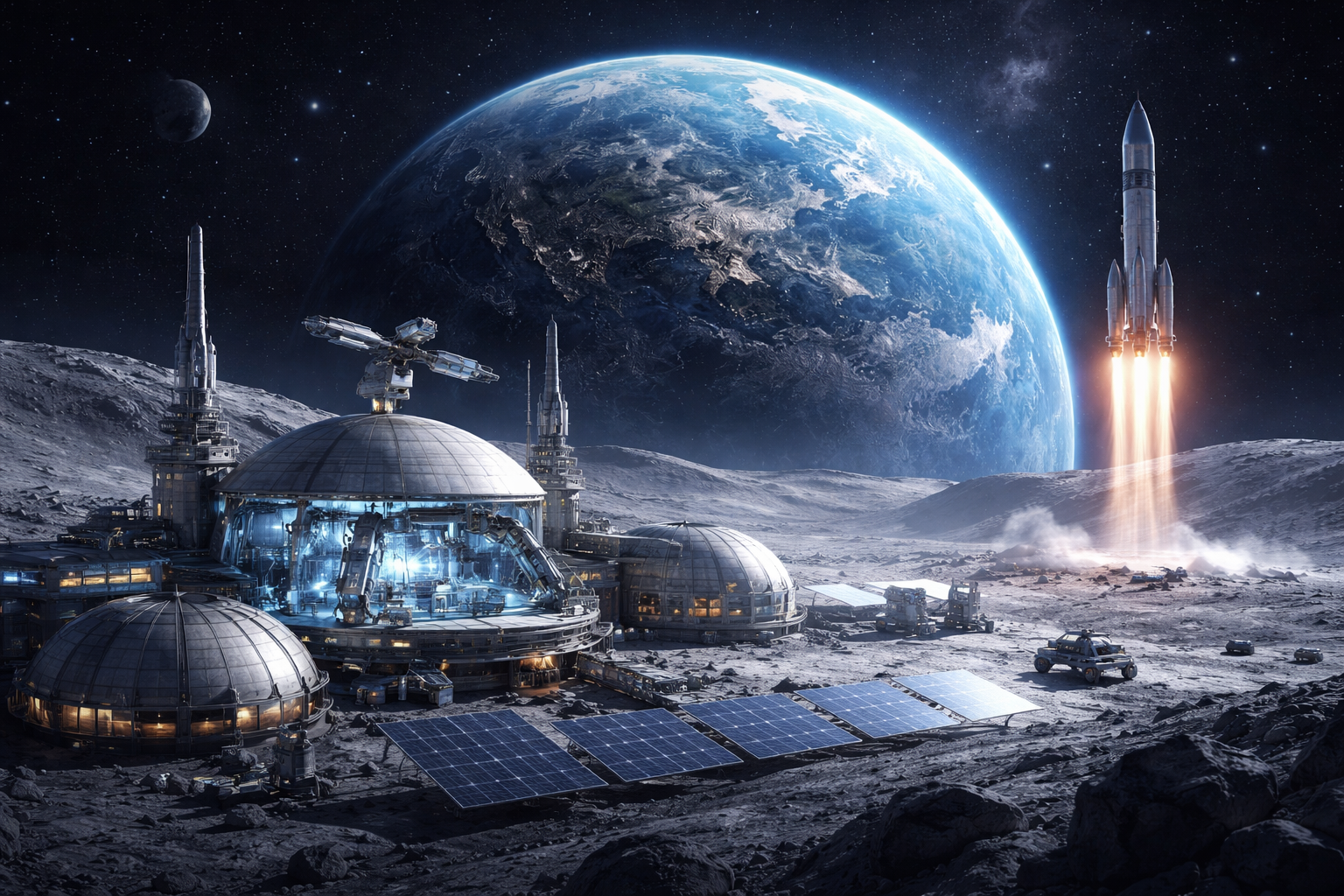
Elon Musk's Moon Gambit: The Trillion-Dollar Pivot Reshaping Space, AI, and Global Power
Why SpaceX's shift from Mars to the Moon accelerates humanity's multi-planetary future while fueling massive AI advancements and outpacing rivals.
SpaceX's recent decision to prioritize a self-sustaining lunar city over immediate Mars colonization marks a strategic turning point. This move slashes development timelines, harnesses unlimited solar energy for AI data centers, and positions the company to dominate emerging space economies amid rising competition from China.
Key Takeaways
SpaceX is delaying Mars missions by five to seven years to focus on the Moon, enabling faster iteration cycles due to shorter travel times and frequent launch windows.
The Moon serves as a testing ground for critical technologies like orbital refueling, habitat systems, and resource utilization, de-risking the longer Mars journey.
Integration with AI through the recent merger unlocks space-based data centers powered by endless solar energy, addressing Earth's power shortages for AI growth.
Competition with China's lunar ambitions drives urgency, with potential trillions in value from lunar resources like water ice for fuel and manufacturing.
This pivot aligns with an upcoming IPO, offering investors tangible milestones in lunar operations, government contracts, and commercial opportunities.
Musk's Moonshot Blueprint: AI Factories in Space and the Path to Galactic Intelligence
How xAI is rewriting the rules of compute, from Earth-orbit clusters to lunar mass drivers—and why this could unlock a million-fold energy leap for civilization.
In a world where AI progress feels relentless, the latest moves from xAI stand out: they've surged to the top in image, video, and forecasting benchmarks, while plotting orbital data centers and moon-based factories that could harness a sliver of the sun's power. These aren't distant dreams—they're blueprints for scaling intelligence beyond planetary limits, promising an era where digital emulations of entire companies drive unprecedented prosperity.
Key Takeaways
xAI has rocketed to leadership in AI capabilities, outpacing older rivals in voice, image/video generation, and forecasting, with models now producing more content than competitors combined.
Company reorganization focuses on specialized models: a versatile core for broad applications, a coding powerhouse skipping traditional compilation, and an image/video leader dominating real-time processing.
Macrohard emerges as the crown jewel, emulating full digital companies to spark an unimaginable prosperity boom, trained on massive GPU clusters scaling to a million equivalents.
Infrastructure leaps include the world's fastest AI compute deployment, open-sourced recommendation and chat systems for transparency, and X app expansions like encrypted messaging and global payments.
The ultimate vision: SpaceX-xAI synergy launches orbital compute at terawatt scales, evolving to lunar mass drivers hurling AI satellites into deep space, tapping up to a few percent of solar energy for galaxy-spanning exploration.
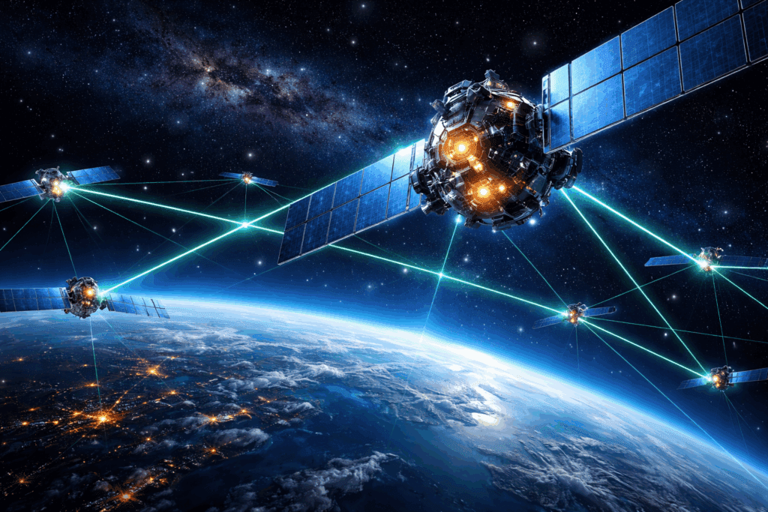
The Orbital AI Boom: Musk's Master Plan for Infinite Compute
Merging Rockets and Intelligence to Fuel the Future
The convergence of space tech and AI is accelerating at a pace that could transform global industries. Recent developments point to orbital data centers becoming a reality, powered by unlimited demand for intelligence and energy. Robotaxis are scaling fast, promising to disrupt transportation with low costs and high safety. These shifts open up massive economic opportunities, from cheaper compute to redefined urban mobility.
Key Takeaways
Orbital AI data centers leverage space for unlimited compute, driven by endless demand for intelligence and energy.
Robotaxis could scale to millions of vehicles, undercutting ride-hail prices and expanding to new use cases like mobile businesses.
SpaceX's launch capacity enables rapid deployment of satellites, potentially shifting focus from Earth networks to space-based AI.
Regulatory frameworks at the federal level will accelerate adoption, prioritizing safety data over hardware specs.
Tesla's vertical integration gives it a cost edge, enabling profitable pricing as low as 25 cents per mile at scale.
Unlimited energy and intelligence create a flywheel for growth, with space as the ideal environment for AI expansion.
The Hidden Convergence: How Elon's Empire is Building a $3 Trillion Future
Unlocking Abundance Through Integrated Tech Ecosystems
A massive shift is underway in technology, where separate companies are merging their strengths to create something far larger than any single entity. At the core is a vision of robots handling all human tasks, AI anticipating needs before they're voiced, and unlimited energy powering it all. This isn't distant sci-fi—key pieces are already connecting in ways that could reshape industries and economies.
Key Takeaways
Four major companies—Tesla, SpaceX, xAI, and Neuralink—are pooling resources to form an interconnected system worth over $3 trillion in combined value.
AI from xAI is designed to power Tesla's humanoid robots, creating self-sufficient machines that outperform humans in physical and cognitive tasks.
Satellite integration from SpaceX into Tesla vehicles ensures constant global connectivity, enabling real-time data sharing for autonomous driving.
Underground tunnels from The Boring Company serve as ideal testing grounds for self-driving tech, generating valuable data to refine AI models.
Neuralink's brain interfaces aim to blend human and machine intelligence, opening doors to telepathic control of robots and devices.
Despite missed timelines, rapid progress in robot deployment, energy storage, and AI supercomputing shows convergence happening now.
This ecosystem creates unbeatable advantages, like network effects in data and hardware, that competitors can't easily match.
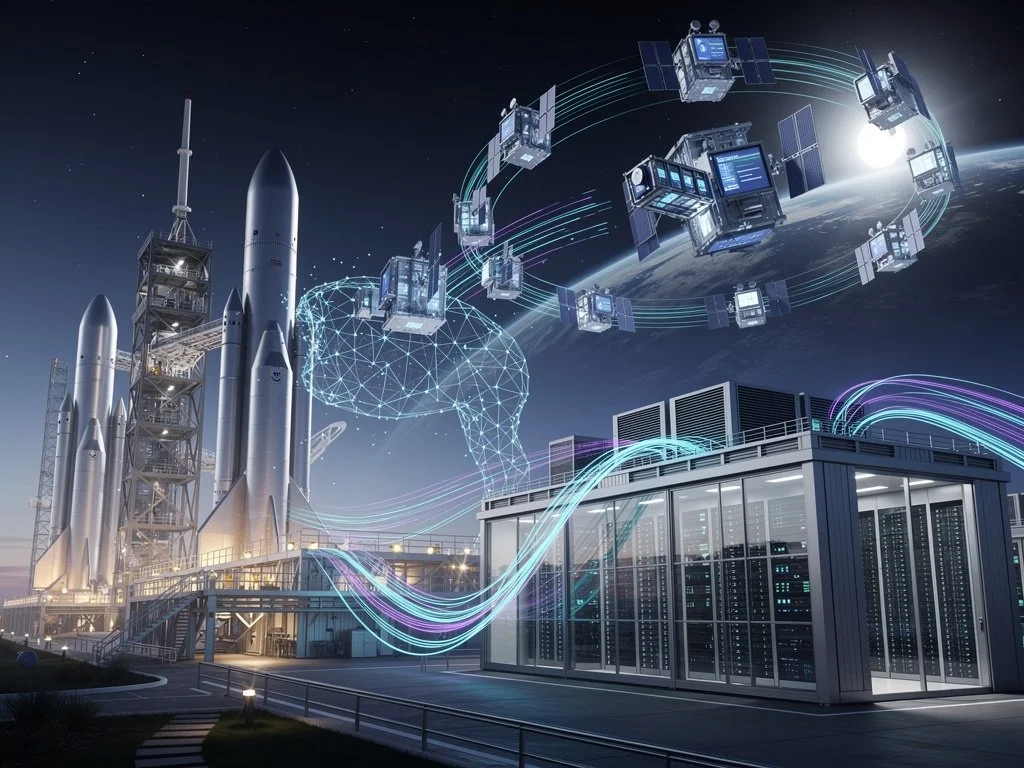
The Musk Megamerger: Building the Ultimate AI Infrastructure Empire
Revolutionizing Compute from Orbit to Earth
A massive merger between SpaceX, Tesla, and xAI could birth a $3 trillion powerhouse that dominates AI by leveraging space for unlimited energy and cooling. This isn't just consolidation—it's a strategic play to own the backbone of the AI era, from rockets to robots.
Key Takeaways
SpaceX, valued at $800 billion, might reverse merge into Tesla's $1.5 trillion structure, potentially including xAI's $230 billion valuation for a combined entity exceeding $3 trillion.
The core driver is overcoming AI's compute bottleneck through space-based data centers, offering constant solar power and passive cooling in orbit.
Synergies include SpaceX's rockets and satellites for deployment, Tesla's manufacturing for hardware scale, and xAI's models for intelligence, creating a vertically integrated AI stack.
Starship enables massive satellite launches, targeting 6,000 compute-enabled units annually, forming a global orbital network.
Risks involve regulatory hurdles, execution challenges in space tech, and geopolitical tensions, but the infrastructure moat could prove unbeatable.
Elon's Empire Expands: The SpaceX-xAI Merger Ignites a New Era
Revolutionizing AI, Space Tech, and Global Innovation Through Bold Consolidations
The tech world just witnessed a lightning-fast merger between SpaceX and xAI, turning rumors into reality overnight. This move signals massive shifts in how advanced AI integrates with space infrastructure, paving the way for breakthroughs in compute power, robotics, and national security assets. Readers will discover how these changes could reshape industries from agriculture to defense, with practical implications for efficiency and scalability.
Key Takeaways
SpaceX and xAI's merger accelerates AI-driven advancements in space tech, potentially enabling massive inference compute via satellite networks.
Optimus robots promise versatile skills learned through global networks, with business models likely favoring subscriptions over complex tiered pricing.
AI agents are evolving to handle context without creep, allowing seamless integration across tools like drones and VR for real-world applications.
Tesla's focus on U.S.-based factories hints at prioritizing national security, limiting expansion in markets like China and Europe.
Future data centers in space could outpace earthly ones economically, drawing investments from giants like Google and Nvidia.
AI's role in fields like plant breeding could speed up innovations, such as perennial grains, reducing agricultural labor dramatically.
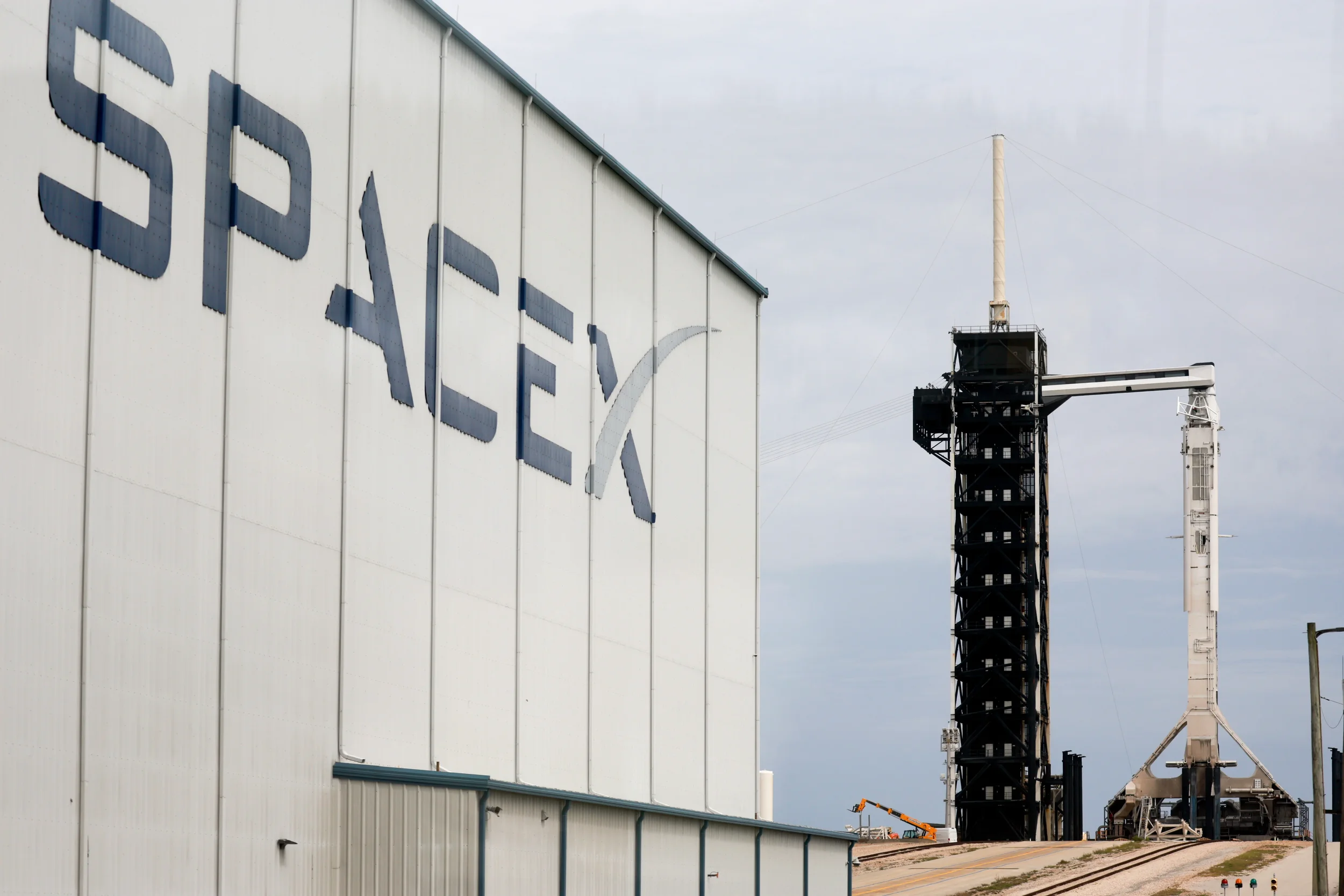
SpaceX Swallows xAI: The Dawn of Orbital AI Powerhouses
Revolutionizing Compute from the Stars – Why This Merger Changes Everything
The fusion of SpaceX and xAI unlocks a new era where AI training escapes Earth's limits, powered by endless solar energy in orbit. This deal catapults innovation by sidestepping power shortages and regulatory hurdles, paving the way for breakthroughs in physics, tech, and human expansion beyond our planet.
Key Takeaways
SpaceX's acquisition of xAI creates a $1.25 trillion entity, the world's most valuable private company, focused on integrating AI with space tech.
AI compute moves to space-based satellites, harnessing constant solar power and natural cooling to scale far beyond Earth's energy constraints.
This solves immediate bottlenecks like electricity demand and environmental concerns, enabling 10-100 times more AI capacity annually.
Starship rockets will launch millions of tons into orbit yearly, funding moon bases, Mars cities, and vast AI constellations.
The merger opens AI training services to other companies, accelerating global tech advances while fueling multi-planetary goals.
Elon's Cosmic Leap: AI Heads to Space with Satellites and Lunar Rail Guns
Revolutionizing Compute Power by Tapping Infinite Solar Energy—And It's Happening Sooner Than You Think
Space offers a breakthrough for AI's biggest bottleneck: power. By shifting compute to orbit and beyond, we could add massive capacity without Earth's constraints, accelerating advancements in every sector. This shift promises to scale AI far beyond current limits, opening doors to a true space economy.
Key Takeaways
AI development on Earth is stalled by electricity shortages, with data centers demanding power equivalent to small cities.
Orbital satellites in constant sunlight solve power and cooling issues, enabling 100 gigawatts of annual AI compute addition without competing for terrestrial resources.
In under three years, space-based AI could become the cheapest compute option, disrupting traditional data center economics.
Lunar factories using local materials and electromagnetic rail guns could launch satellites at scale, achieving over 100 terawatts per year—hundreds of times U.S. total power generation.
This accelerates AI capabilities, reshapes industries, and positions humanity toward multiplanetary expansion with self-sustaining space infrastructure.