
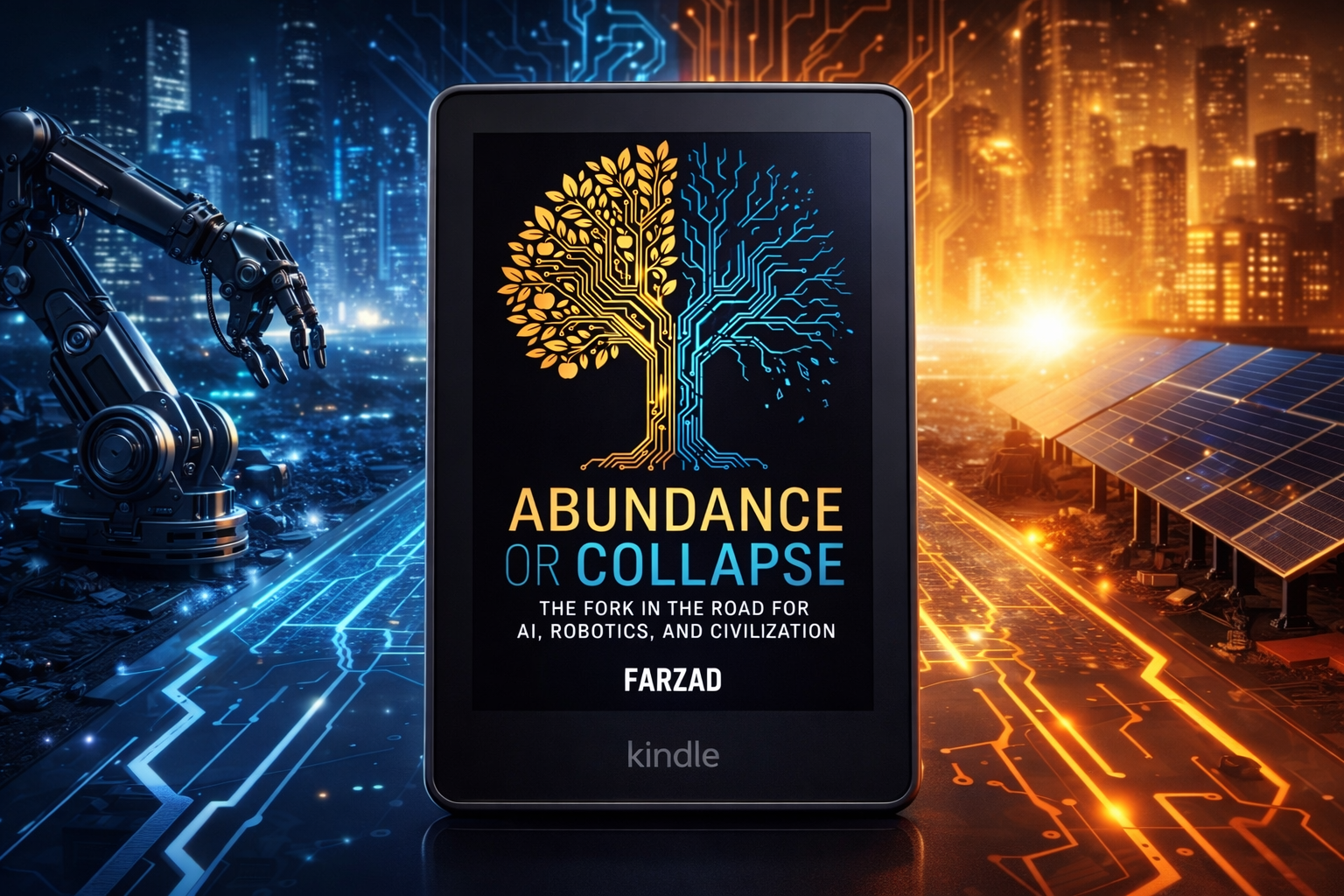
Abundance or Collapse: The Fork in the Road for AI, Robotics, and Civilization (The Future Book 1)
I just wrote my first book. It’s called ‘Abundance or Collapse: The Fork in the Road for AI, Robotics, and Civilization’.
As I’m sure you’re already aware, there’s a massive change coming for humanity in the next few years - both positive and negative.
This book shares my thoughts on where we’re likely headed, the biggest players that are driving that change, and what everyone can do to position themselves so that they aren’t left behind.
In a best case scenario, everyone who reads my book will be significantly better positioned in 5-10 years vs where they are today.
In a worst case scenario, we’re all dead. Just kidding - maybe.
The book will be out on February 14th on Kindle, paperback, and hardcover formats.

Tesla's 2026 Autonomy Revolution
Dive into Tesla's bold trajectory as 2026 emerges as a landmark year for autonomous innovation and market dominance.
Key Takeaways
Unsupervised FSD rollout expected to boost vehicle asset values by multiples, driving massive margin expansions.
Cybercab enters volume production in Q2, with flexible designs adapting to regulatory hurdles for rapid market entry.
AI5 hardware advancements pave the way for safer robotaxis, distributed computing, and integration with Optimus robots.
Energy sector growth fueled by infinite AI demand, complementing Tesla's shift toward subscription-based mobility models.
Potential for vehicles as multifunctional assets: personal transport, power backups, and AI computing hubs.
Tesla's 2026 strategy centers on accelerating unsupervised autonomy, where FSD evolves into a core revenue driver through enhanced safety and efficiency. Cybercab production kicks off in April, starting low but scaling to thousands weekly, likely incorporating temporary controls like steering wheels to navigate regulations while enabling verbal or subscription-activated self-driving. This approach sidesteps inventory risks, allowing sales as versatile vehicles that double as energy storage or inference nodes. Meanwhile, AI5's completion signals a pivot to chip-making capabilities, supporting robotaxis safer than humans and fueling Optimus trials. Energy deployments address surging AI power needs, creating a flywheel of recurring income from subscriptions and network participation, positioning Tesla for step-change valuations amid evolving global approvals.

Tesla's Bold FSD Shift: End of Purchases
Tesla's decision to eliminate FSD outright buys unlocks game-changing potential in self-driving tech, from Robotaxi fleets to skyrocketing vehicle profitability.
Key Takeaways
Tesla ends FSD outright purchases post-February 14, shifting to subscriptions for broader access.
Signals unsupervised driving rollout soon, enabling cars to operate without attention.
Vehicles could generate $100,000+ annual profit as robotaxis via ride-sharing.
Simplifies pricing: supervised vs. unsupervised tiers, plus fleet integration for owners.
Boosts long-term revenue per car, tripling profitability through recurring models.
Addresses hardware differences, likely offering transfers for early adopters.
Tesla's strategic pivot removes the $8,000 FSD buy option, emphasizing subscriptions to democratize access while capturing value from advancing autonomy. Unsupervised FSD transforms cars into autonomous assets capable of ride-hailing without drivers, potentially netting massive profits through Uber-like fares minus operational costs. This aligns with fleet-sharing plans, where owners add vehicles to Tesla's network for revenue splits, maximizing utilization. For investors, it embeds recurring income into every sale, elevating per-vehicle profits from current levels to tens or hundreds of thousands over a decade. Hardware 4+ owners may gain lifetime perks, while Hardware 3 users could see upgrade incentives like FSD transfers, ensuring equity as tech evolves.

Tesla's FSD v14 Revolutionizes Robotaxis
Dive into Tesla's cutting-edge autonomy that's set to reshape mobility and urban economies.
Key Takeaways
Tesla trials Robotaxi in small cities like Harrisburg, PA, highlighting scalability beyond big urban centers.
FSD v14 enables seamless self-driving in diverse environments, from U.S. suburbs to European streets.
Unlike sensor-heavy rivals, Tesla relies on camera-based AI trained on vast real-world data.
Autonomous tech could lower transport costs to under 50 cents per mile, transforming affordability.
Smaller markets gain economic boosts through cheaper, driverless rides, spurring business and events.
Tesla's Full Self-Driving (FSD) version 14 demonstrates advanced autonomy in vehicles like the Cybertruck, navigating complex scenarios without intervention. Trials in modest locales like Harrisburg underscore Tesla's ability to deploy widely, thanks to producing millions of hardware-equipped cars annually. This contrasts with competitors reliant on lidar and detailed mapping, limiting them to dense, affluent areas. By uploading AI improvements fleet-wide, Tesla achieves general driving intelligence that adapts globally, even in unmapped regions. The result? Profound economic shifts in underserved areas, where low-cost robotaxis remove barriers to mobility, encouraging more outings, commerce, and investment while handling varied weather and traffic.
Tesla's $60/Day Rental Revolution
Tesla's rental initiative paves the way for subscription-based transport, leveraging self-driving advancements to outpace traditional automakers and boost vehicle utility.
Key Takeaways
$60/day rentals cover Model 3 or Y, including charging, maintenance, and insurance for 3-7 days.
Signals shift to flexible models: ride-hailing, short-term subscriptions, long-term plans, or ownership.
Self-driving enables cars to deliver themselves, reducing idle time and increasing revenue per vehicle.
Compares favorably to dealership-dependent rivals, with Tesla controlling sales, service, and fleet.
Potential expansions include package delivery and logistics partnerships, lowering costs via AI.
This program tests a broader ecosystem where vehicles operate autonomously, transforming from static assets to dynamic units. Users summon cars via app for temporary use, with options scaling from single rides to monthly subscriptions at $500-600. Unlike competitors reliant on human drivers or complex sensors, Tesla's software updates millions of vehicles, enabling scalable robotaxi networks. This maximizes revenue through diverse pricing—rides, rentals, subs, sales—while minimizing waste from parked inventory. Future integrations could handle overnight deliveries, displacing labor but exploding utility in transportation.
Tesla's AI Revolution: Robots & Future Tech
Dive into Tesla's accelerating innovations and the broader AI boom reshaping industries and daily life.
Key Takeaways
Tesla's stock poised for surge with comp package approval removing major overhang.
Optimus V3 set for Q1 2026 unveil, focusing on functional production for factory use.
Robotaxi network expanding in Austin, facing geofence and fleet scaling hurdles.
AI growth outpacing internet, with 10% global weekly usage already.
Humanoid robots to disrupt repetitive workplaces first, homes later due to safety.
Potential societal split: tech adopters vs. those resisting automation.
AI enabling new businesses, reducing friction for human experiences.
Transition to AI economy involves disruption, requiring adaptation for abundance.
Tesla stands at a pivotal moment with its compensation package likely passing, unlocking focus on AI-driven growth. Optimus evolves toward practical deployment, starting in factories to prove value before consumer sales. Robotaxi tests reveal real-world calibration needs, like optimizing wait times and geofences for usability. Broader AI trends show explosive adoption, fueling an arms race in chips and data centers. Humanoids promise efficiency in structured environments, but home integration lags due to complexity and liability. Society may bifurcate, with some embracing bots for convenience while others opt out, echoing historical tech shifts. Ultimately, AI removes barriers, fostering creativity and connections in an era of potential abundance.
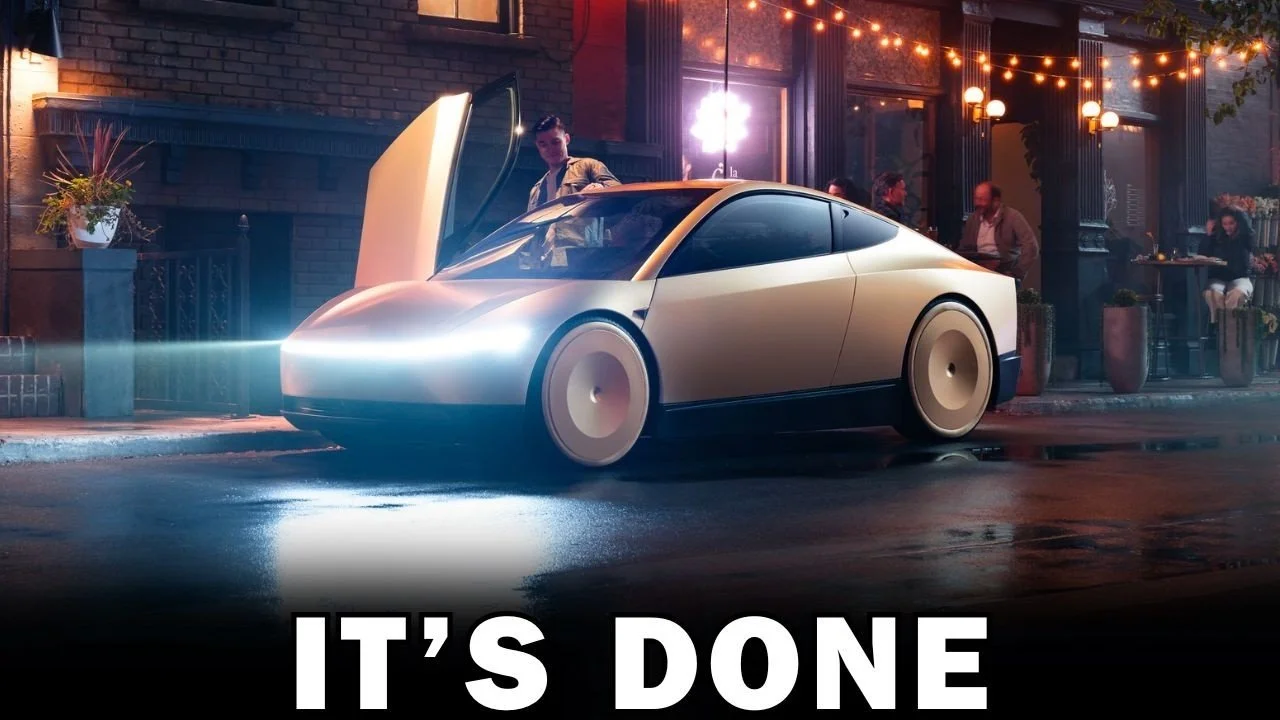
Tesla's Cybercab Future and AI Singularity
Dive into Tesla's ambitious roadmap for autonomous vehicles and the broader implications of AI advancements, uncovering strategies that could redefine mobility and technology integration.
Key Takeaways
Tesla plans to ramp up Cybercab production mid-next year, initially focusing on units without steering wheels, but likely introducing drivable versions to meet demand and regulatory realities.
Each autonomous vehicle could replace 3-5 traditional cars due to constant operation, accelerating market disruption.
Manufacturing breakthroughs like the unboxed process enable high-volume output of low-cost EVs, optimizing for scale over premium features.
Global tariffs on Chinese EVs protect national security, preventing foreign control over connected transportation systems.
AI progress points to superhuman capabilities in various domains within years, leading to job shifts and potential universal basic income needs.
Humanoid robots will require tailored AI models with strict obedience for physical tasks, differing from conversational LLMs.
Tesla's strategy hinges on achieving unsupervised self-driving to launch the Cybercab, a two-seater optimized for autonomy with features like wireless charging and easy access doors. Production could start with limited units under federal allowances, scaling to thousands weekly by late next year. To bridge regulatory gaps, a drivable variant sharing most components might emerge, priced under $30,000, ensuring manufacturing lines run at full capacity. This approach avoids cannibalizing existing models while preparing for widespread robotaxi adoption.
Broader discussions highlight EV market dynamics, with legacy automakers retreating from electrics amid subsidy losses. Tariffs on Chinese imports safeguard against data risks in connected vehicles, akin to concerns with foreign-owned tech like smartphones. AI's exponential growth, already generating most internet content, forecasts singularity-like changes by 2030, enabling superhuman performance in fields from driving to research. Transitions may involve economic turbulence, with one-person companies rising and workforce reductions, but curiosity and adaptation will drive personal growth in this era.
Tesla Solves Autonomy: FSD Breakthroughs
Tesla's advancements in full self-driving technology signal a pivotal shift, enabling scalable autonomy without radar or LIDAR, poised to boost vehicle demand and unlock new revenue streams through high-margin software.
Key Takeaways
Tesla's AI-driven approach achieves unsupervised driving at scale, using cameras and billions of miles of data for safer, more efficient vehicles.
Current FSD penetration supports $1.2 billion annualized revenue, contributing 15-20% to company EBIT with 85% margins.
Vision-only systems challenge traditional robotics, extending to aviation, marine, and other sectors.
Regulatory approval hinges on proven safety, with potential to reduce road deaths and lower transportation costs dramatically.
FSD v14 shows flawless highway performance and adaptive maneuvers, though minor comfort issues persist, improving rapidly.
Delving deeper, Tesla's strategy leverages a vast global fleet of over 8 million vehicles, with 12% FSD adoption translating to 1 million active users. This positions the company uniquely against competitors reliant on costlier sensors, allowing production of affordable self-driving cars under $35,000. As software matures, expect surged demand for models like the Model 3, where buyers opt for autonomy over traditional gas vehicles requiring maintenance and attention. Robotaxi operations could soon expand to major U.S. metros like Austin and LA, with global rollout following as AI adapts to regional rules via contextual learning. Regulators may accelerate approvals due to safety gains—systems avoid distractions, emotions, and fatigue—while economic benefits include cheaper goods transport and new event-driven mobility. Challenges remain in smoothing comfort for broader adoption, but pace of iteration suggests quick resolutions, fostering a luxurious, private ride experience far superior to rivals.
Tesla's FSD V14: The Dawn of Unsupervised Robotaxis
Get ready for a seismic shift in transportation! Tesla’s Full Self-Driving (FSD) version 14 marks a pivotal moment, potentially enabling unsupervised autonomous driving for millions of vehicles. This episode dives into how Tesla’s advancements in AI and affordability could redefine the auto industry and challenge competitors like Waymo and Uber.
Key Takeaways
Tesla’s FSD V14 achieves near-human reaction times, paving the way for unsupervised driving.
Over 3 million Tesla vehicles could receive software updates for hands-free operation.
Tesla’s $30,000 vehicles outperform costly competitors, leveraging AI and vast data.
Robotaxi trials in Austin signal Tesla’s scalable, cost-effective autonomous network.
Competitors like Waymo and Uber face challenges due to Tesla’s data-driven approach.
Tesla’s journey from a niche automaker to a mass-market disruptor has reached a new peak with FSD V14. This software update brings Tesla closer to unsupervised self-driving, where drivers can ride without monitoring the vehicle. Unlike competitors, Tesla’s approach relies on a neural network trained by millions of vehicles, capturing real-world scenarios like drive-thru interactions. This data advantage allows Tesla to refine its AI rapidly, achieving superhuman perception and reaction times. With production capacity for 2 million vehicles annually, Tesla can deploy robotaxis at scale, potentially flooding markets like Austin with affordable autonomous cars. This threatens traditional ride-sharing models, as Tesla’s low-cost vehicles could offer cheaper fares without human drivers. While regulatory hurdles and final safety validations remain, Tesla’s path to widespread autonomy seems inevitable, positioning it to dominate the future of transportation.
Tesla FSD v14: Sentient Self-Driving Breakthrough
Tesla's FSD v14 transforms everyday drives into seamless experiences, with AI-driven decisions that mimic human intuition—cutting interventions and boosting confidence on roads.
Key Takeaways
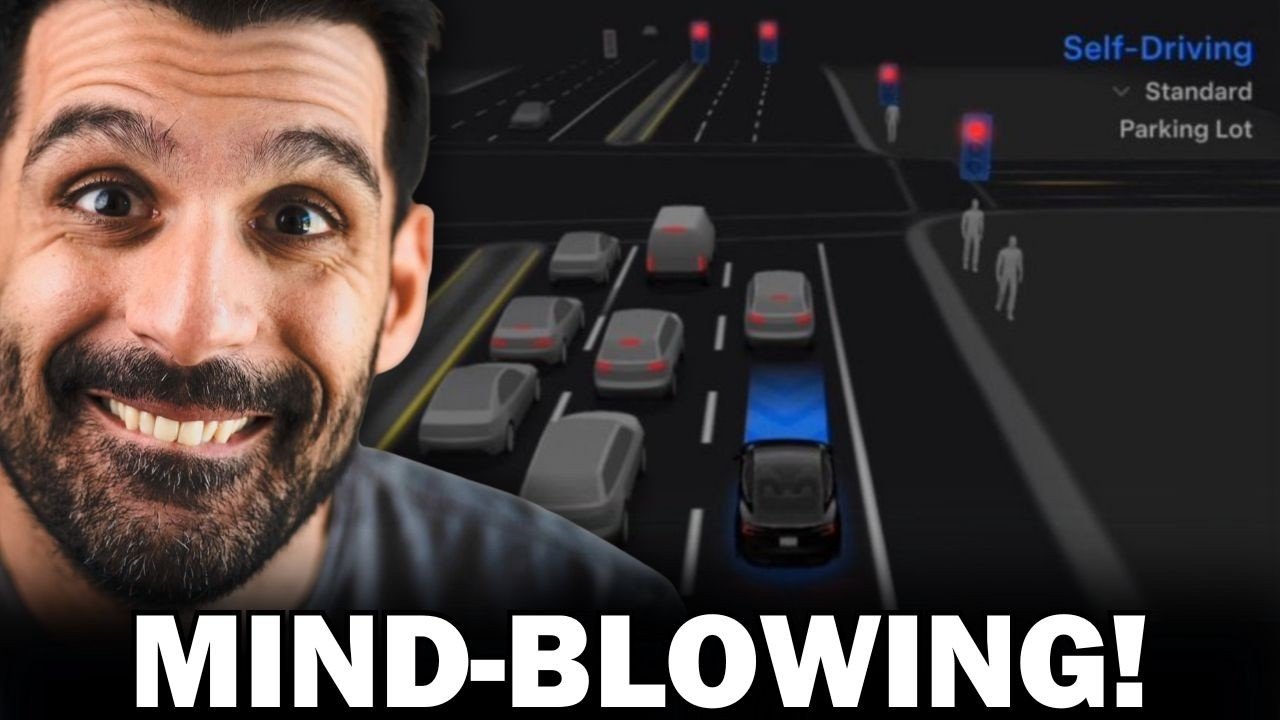
Enhanced arrival options let drivers choose precise parking spots like driveways or curbside, executing maneuvers with pinpoint accuracy.
New driving profiles—Sloth for ultra-conservative pacing, up to Hurry—tailor speed and lane changes for personalized control.
Hands-free mode activates in supervised settings, while alerts in tricky spots like construction zones signal evolving trust in the system.
Parking garages and tight gates now handle flawlessly, pulling tickets and slotting between lines without hesitation.
Robotaxi testing in Austin and Bay Area gathers real-world data, paving the way for unsupervised FSD by early 2026, potentially at a premium subscription.
This update marks a leap in Tesla's neural net evolution, building on v13's foundation with broader rollout to everyday owners. Users report zero interventions over hours of mixed urban drives, though minor hitches like brief low-speed braking persist—issues Tesla's rapid follow-ups are poised to polish. The AI core excels at reading nuanced environments, from dodging glare to threading narrow paths, outpacing rigid competitors. Paired with upcoming affordable models, v14 positions Tesla's fleet for robotaxi revenue streams, where vehicles earn passively via network miles. Underpinning this is the same vision tech fueling Optimus robots, hinting at unified AI across mobility and labor—deployable yet, but accelerating toward ubiquity.
Tesla's Affordable Model Y Leaks
Leaked photos reveal Tesla's budget-friendly Model Y redesign, stripping premium features to hit aggressive price targets while fueling data collection for autonomy—essential viewing for EV buyers eyeing sub-$40K options.
Key Takeaways
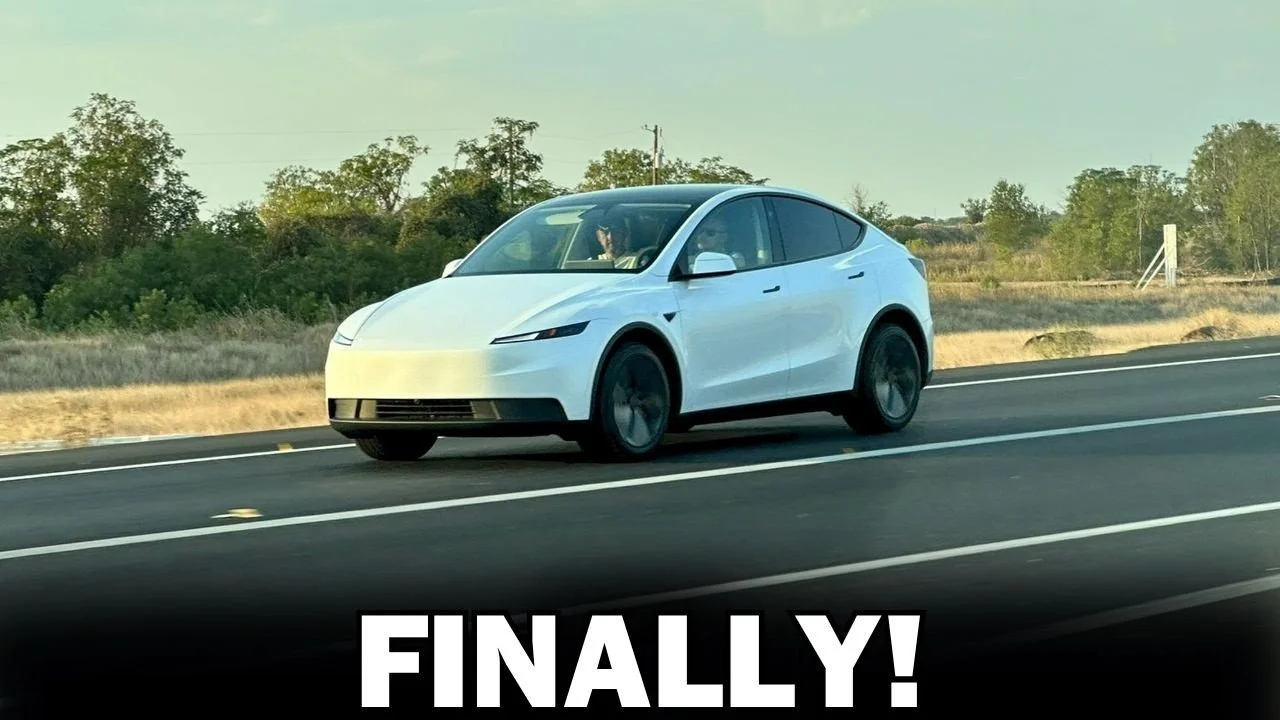
Leaked shots show a simplified front fascia without the light bar, integrated blinkers, and a flatter grille for cost reduction.
Rear design omits the reflector plate and light bar, with altered brake light and trunk lip details.
Potential solid roof replaces glass to cut manufacturing expenses on handling and materials.
Expected pricing: $30K–$38K base, via smaller battery (250–300 miles range), RWD-only, downgraded interiors, and slower motors.
Ties into Tesla's autonomy push: Sell hardware at cost, profit via $200–$300/month FSD subscriptions for unsupervised driving.
Broader lineup teases include a Cybertruck-based three-row SUV and $25K Cybercab for robotaxi fleets.
This video breaks down fresh spy shots of Tesla's entry-level Model Y prototype, captured on Texas highways and shared widely online. The design echoes the familiar Y silhouette but dials back luxuries: headlights merge blinkers into a single unit, erasing the current model's lower accents and aggressive lower lip for a sleeker, shorter-nosed profile. A front grille camera nods to next-gen FSD hardware, while the rear swaps out chrome accents and the full-width light bar for a cleaner diffuser integration. Side profiles hint at thicker tires on simpler wheels, and the roof's opaque panel suggests ditching panoramic glass—a smart move to slash costs amid U.S. tax credit losses.
Tesla's factory ramp-up demands volume: First builds hit in June 2025, with mass production slated for H2. To compete without subsidies, expect trade-offs like reduced range, vegan cloth over premium synthetics, and no AWD at launch—mirroring China's stretched Model Y but in reverse for material savings. At $35K, it revives Model 3 pricing parity; drop to $30K, and it becomes a loss-leader for FSD upsells. This feeds Tesla's data hunger for robotaxis already testing in Austin and California, where unsupervised autonomy turns vehicles into revenue streams. Glimpses of teased CyberSUV (three-row utility beast) and Cybercab (pedal-free two-seater) round out a roadmap prioritizing miles over margins.