
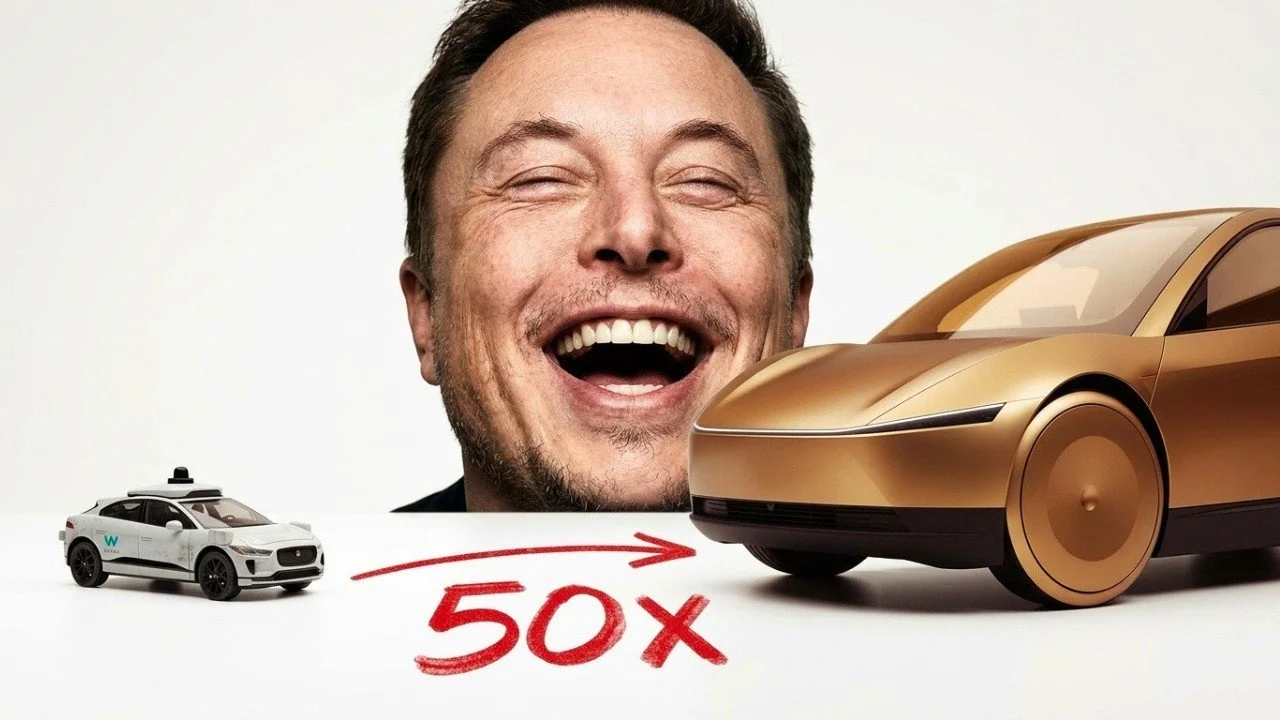
Tesla Robotaxi Miles: 50x Waymo Lead Exposed
The Robotaxi race isn't about today's fleet sizes—it's about the exponential power of data accumulation and manufacturing scale. Tesla is leveraging Wright's Law on autonomous miles to slash costs and accelerate capabilities far faster than competitors.
Key Takeaways
Tesla has accumulated ~10B FSD miles vs Waymo's ~200M, a 50x advantage that continues to widen
Both double miles every ~9 months, but Tesla's production capacity enables vastly faster scaling
Tesla's current Robotaxi cost per mile already ~40% lower than Waymo's
Unsupervised fleet ramping across multiple cities with paid miles nearly tripling quarterly
Cybercab production and global fleet provide path to tens of thousands of vehicles rapidly
The true metric in autonomy is cumulative training data miles, not snapshot fleet size. Tesla's software benefits from billions of supervised miles across its global customer fleet, feeding into unsupervised Robotaxi operations. This data flywheel, paired with Tesla's ability to manufacture hundreds of thousands of capable vehicles quarterly, creates a steep learning curve. Waymo, reliant on third-party manufacturers and city-specific tuning, faces structural scale limitations. Projections show Tesla potentially matching or exceeding Waymo's commercial volume by end of 2026, driving costs toward 25 cents per mile and transforming personal transportation economics.
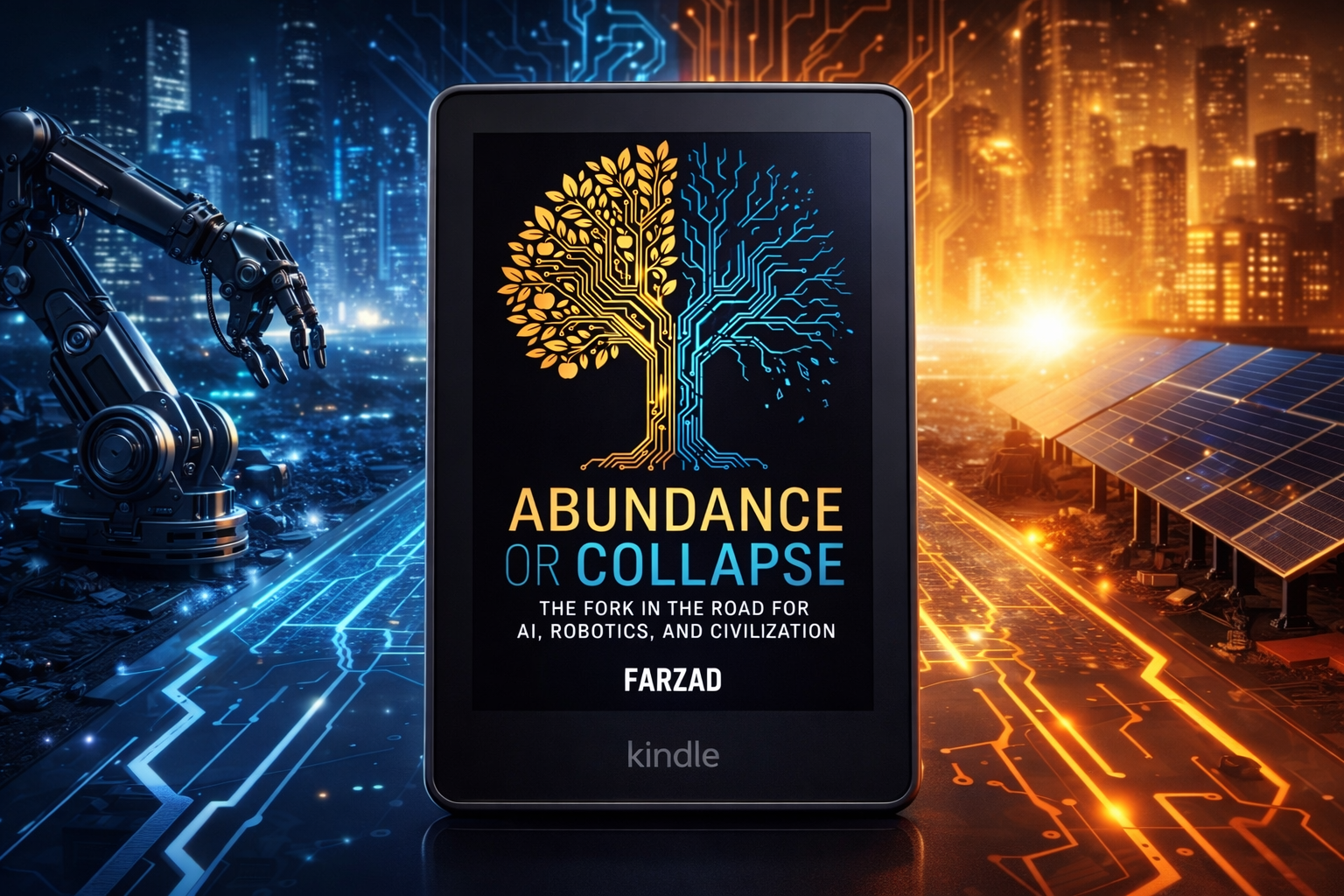
Abundance or Collapse: The Fork in the Road for AI, Robotics, and Civilization (The Future Book 1)
I just wrote my first book. It’s called ‘Abundance or Collapse: The Fork in the Road for AI, Robotics, and Civilization’.
As I’m sure you’re already aware, there’s a massive change coming for humanity in the next few years - both positive and negative.
This book shares my thoughts on where we’re likely headed, the biggest players that are driving that change, and what everyone can do to position themselves so that they aren’t left behind.
In a best case scenario, everyone who reads my book will be significantly better positioned in 5-10 years vs where they are today.
In a worst case scenario, we’re all dead. Just kidding - maybe.
The book will be out on February 14th on Kindle, paperback, and hardcover formats.
Elon Musk's Bold Tesla Future: Autonomy & Abundance
Dive into Tesla's ambitious roadmap where AI and robotics redefine mobility and energy, unlocking unprecedented abundance and autonomy for all.
Key Takeaways
Tesla updates its mission to emphasize amazing abundance through AI and robotics, aiming for universal high income.
Model S and X production ends next quarter to repurpose factory space for scaling Optimus robots to one million units annually.
Full self-driving advances with unsupervised paid rides in Austin, expanding to dozens of major U.S. cities by year-end.
Cybercab, a pedal-less autonomous vehicle, starts production in April, optimized for high-duty cycles and low cost per mile.
Massive investments in AI chips, solar cells, and batteries, including plans for a Tesla Terra Fab to secure supply amid geopolitical risks.
Optimus 3 unveiling soon as a general-purpose robot that learns from human demonstrations.
Energy division poised for explosive growth with 100 gigawatts annual solar production.
Future fleet management enhanced by Grok AI for optimizing autonomous vehicles and robot teams.
Competition from China in humanoid robots, with Tesla leading in hand dexterity, real-world AI, and scaling.
Transitioning Semi trucks to full autonomy for local cargo delivery.
Tesla envisions a future dominated by autonomy, where vehicles like Cybercab handle the vast majority of travel—over 95% of miles—with just one or two passengers. This shift optimizes designs for durability and efficiency, expecting usage five times higher than traditional cars. Investments span the battery supply chain, solar manufacturing, and AI hardware to drive down costs and enhance safety. Optimus robots evolve into versatile tools for factories and beyond, learning tasks via observation or description, potentially boosting U.S. GDP significantly. Amid chip shortages and global risks, building in-house fabs ensures self-sufficiency. Energy growth leverages solar and batteries for grid stability, including space-based solutions. Overall, these moves position Tesla at the forefront of solving complex challenges in mobility, manufacturing, and sustainability.

Tesla's 2026 Autonomy Revolution
Dive into Tesla's bold trajectory as 2026 emerges as a landmark year for autonomous innovation and market dominance.
Key Takeaways
Unsupervised FSD rollout expected to boost vehicle asset values by multiples, driving massive margin expansions.
Cybercab enters volume production in Q2, with flexible designs adapting to regulatory hurdles for rapid market entry.
AI5 hardware advancements pave the way for safer robotaxis, distributed computing, and integration with Optimus robots.
Energy sector growth fueled by infinite AI demand, complementing Tesla's shift toward subscription-based mobility models.
Potential for vehicles as multifunctional assets: personal transport, power backups, and AI computing hubs.
Tesla's 2026 strategy centers on accelerating unsupervised autonomy, where FSD evolves into a core revenue driver through enhanced safety and efficiency. Cybercab production kicks off in April, starting low but scaling to thousands weekly, likely incorporating temporary controls like steering wheels to navigate regulations while enabling verbal or subscription-activated self-driving. This approach sidesteps inventory risks, allowing sales as versatile vehicles that double as energy storage or inference nodes. Meanwhile, AI5's completion signals a pivot to chip-making capabilities, supporting robotaxis safer than humans and fueling Optimus trials. Energy deployments address surging AI power needs, creating a flywheel of recurring income from subscriptions and network participation, positioning Tesla for step-change valuations amid evolving global approvals.
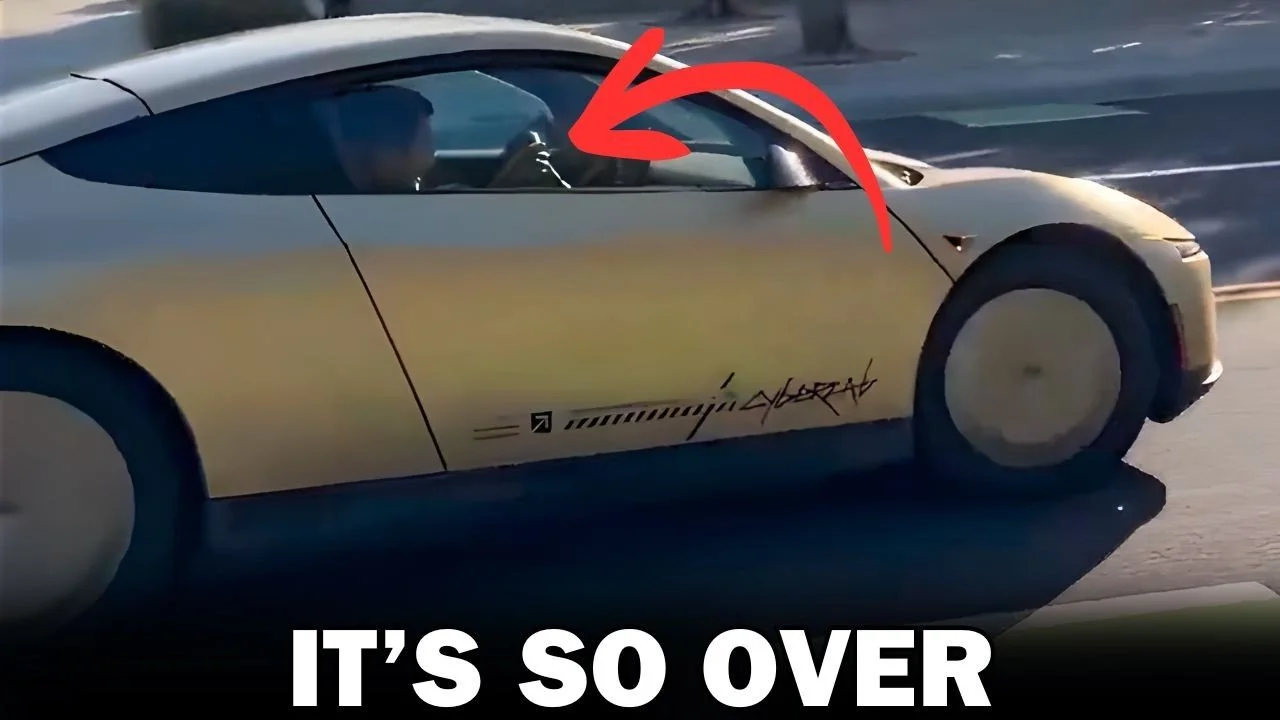
Tesla's FSD Revolution: Mind-Blowing Autonomy Ahead
Tesla's advancing autonomy tech delivers paradigm-shifting insights into future transport, from seamless self-driving to economic disruptions in mobility.
Key Takeaways
Tesla FSD enables flawless, multi-hour journeys without steering or pedal input, astonishing new users.
Shift to unsupervised mode will eliminate driver attention, mirroring driverless trials in select cities.
Steer-by-wire systems in new models allow easy removal of controls, paving the way for adaptable vehicles.
Sub-$30k autonomous cars could redefine ownership with flexible monthly plans including insurance and charging.
Robotaxis promise 30 cents per mile, undercutting traditional rides and legacy autos in urban areas.
Diving deeper, Tesla's FSD has evolved from basic autopilot to advanced navigation that handles complex routes autonomously, though currently requiring supervision. This tech, experienced by under 1% of the population, normalizes hands-free travel across the US. Unsupervised versions, already in limited trials, use affordable models built at scale. Innovations like steer-by-wire—electronically linking controls without mechanical ties—simplify conversions to full autonomy, similar to aircraft systems. Economically, these vehicles slash costs below human-driven options, targeting metro areas where traffic dominates. This surge in capability drives analyst upgrades, signaling massive market shifts as regulations evolve.
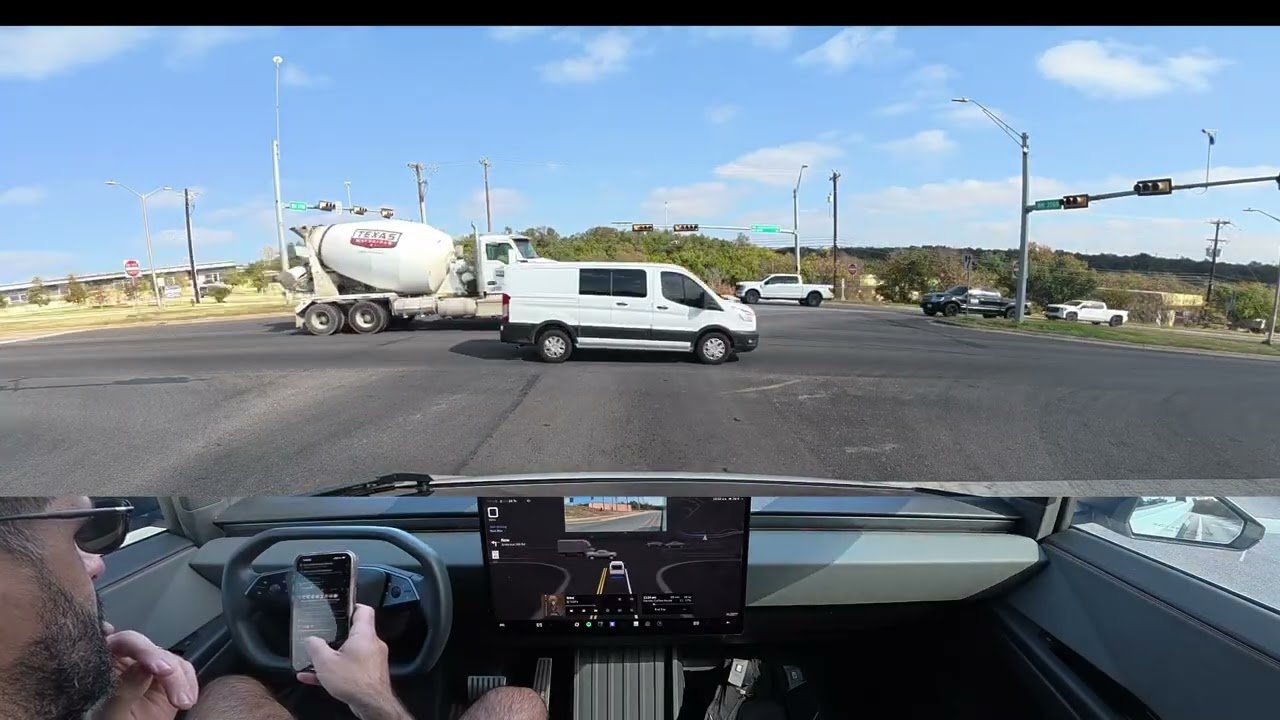
Cybertruck Navigates Austin Chaos
Dive into the Cybertruck's real-time performance on Austin's demanding streets, revealing how advanced autonomy turns obstacles into opportunities for efficiency and safety.
Key Takeaways
Autonomous systems excel in evading roadblocks like tractor trailers on inclines.
Navigation adapts quickly to unfinished toll roads and construction zones.
High toll costs in urban areas underscore the need for optimized EV routing.
Spotting poor driving behaviors emphasizes the value of AI-assisted vigilance.
Effortless parking in crowded spots demonstrates end-to-end self-driving reliability.
This footage captures the Cybertruck in action during a typical Austin drive, where a semi-truck obstruction tests uphill capabilities, resulting in a smooth bypass. Toll expenses highlight regional infrastructure pricing, while a navigation glitch from ongoing roadwork is swiftly corrected. Encounters with distracted drivers and rapid signage changes further illustrate the vehicle's responsive handling, culminating in a flawless, intervention-free arrival.
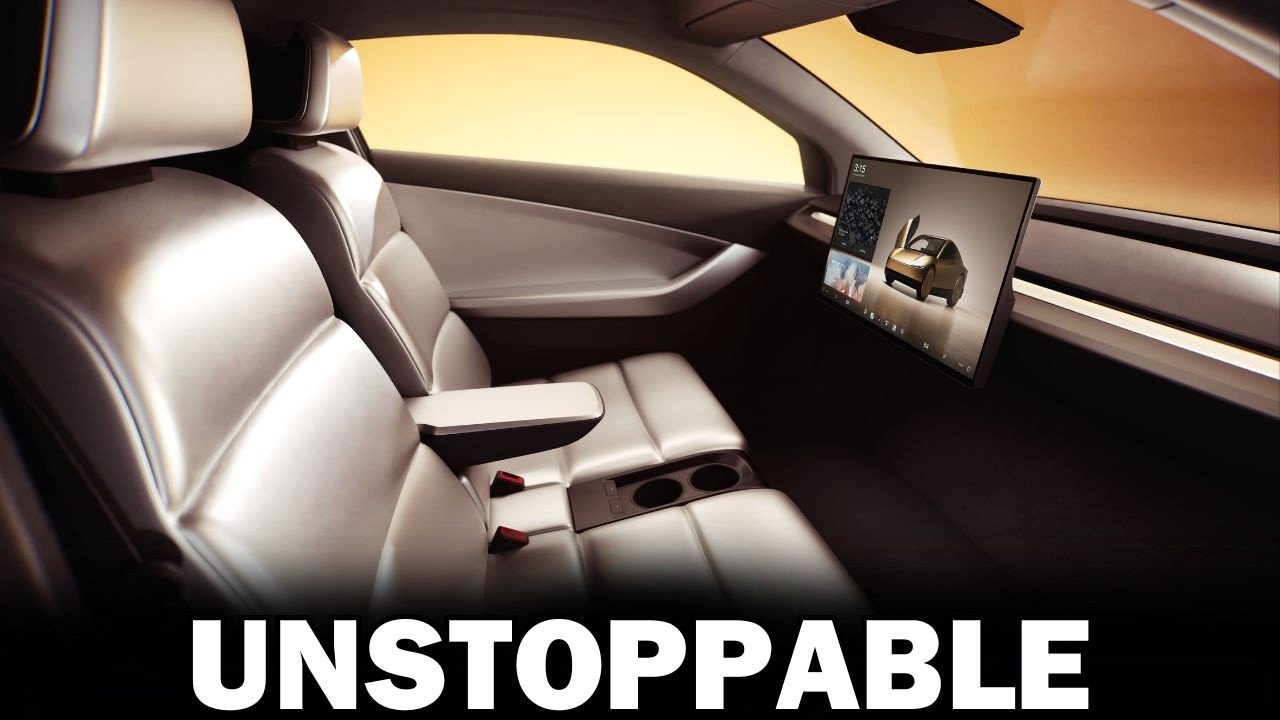
Tesla's Autonomous Revolution: Disruption Ahead
Tesla's advancements in autonomy and robotics promise transformative efficiency gains, reshaping industries and offsetting economic pressures through lower operational costs.
Key Takeaways
Tesla's self-driving tech could dominate global fleets, rendering human-driven services uncompetitive.
Ride-sharing platforms face collapse without adopting autonomous networks, with disruptions hitting by 2030.
Humanoid robots, trained via AI like autonomous vehicles, will handle repetitive tasks in factories within five years.
Broader adoption of robotics may drive deflation, countering inflation from excessive money printing.
Economic policies lag behind rapid tech changes, leading to unforeseen unemployment and societal readjustments.
Delving deeper, Tesla's full self-driving capabilities position it to capture a vast market of over a billion vehicles worldwide, gradually replacing traditional cars with autonomous ones. This shift threatens established players, as self-driving options offer superior cost, safety, and privacy. In robotics, the same AI framework enables humanoid units to learn tasks through video training, starting with simple repetitions and evolving to complex operations by 2040, with production scaling to millions annually. Software improvements, not hardware, will drive progress, reducing per-hour costs to under $5. Amid fiscal excesses, this tech influx could create deflationary pressures by slashing labor expenses, potentially stabilizing economies despite policy shortcomings like short-term political focus and lack of proactive planning.

Tesla FSD v14: Game-Changing Autonomy Insights
FSD v14 marks a leap in Tesla's autonomy, delivering end-to-end driving with human-like decision-making that outpaces prior versions in perception and response.
Key Takeaways
Enhanced beginning and end-of-drive capabilities allow seamless backing out from tight spaces and parking in varied spots.
Rapid reaction times to environmental changes, like ambulances or pedestrians, improve safety but introduce brief brake taps for caution.
Emergent behaviors emerge, such as navigating drive-thrus by detecting transactions via cameras, without specific training.
Hesitancy in lane changes and speed profile adjustments signal a shift toward more conservative, context-aware driving.
Path to SAE Level 3 autonomy appears close, with new alerts for increased attention paving the way for relaxed supervision on highways.
This update transforms Tesla vehicles into more sentient systems, excelling in unprotected turns, obstacle avoidance, and low-speed maneuvers. While smoothness issues like abrupt braking persist, the core advancements in neural network processing enable quicker adaptations to dynamic scenarios, from railroad crossings to construction zones. Hardware 4 models benefit from front cameras for precision, yet hardware 3 compatibility remains a focus for broader rollout. Overall, v14 edges closer to robotaxi viability, prioritizing safety over aggressive actions, with future iterations likely refining speed limits and parking logic for polished performance.
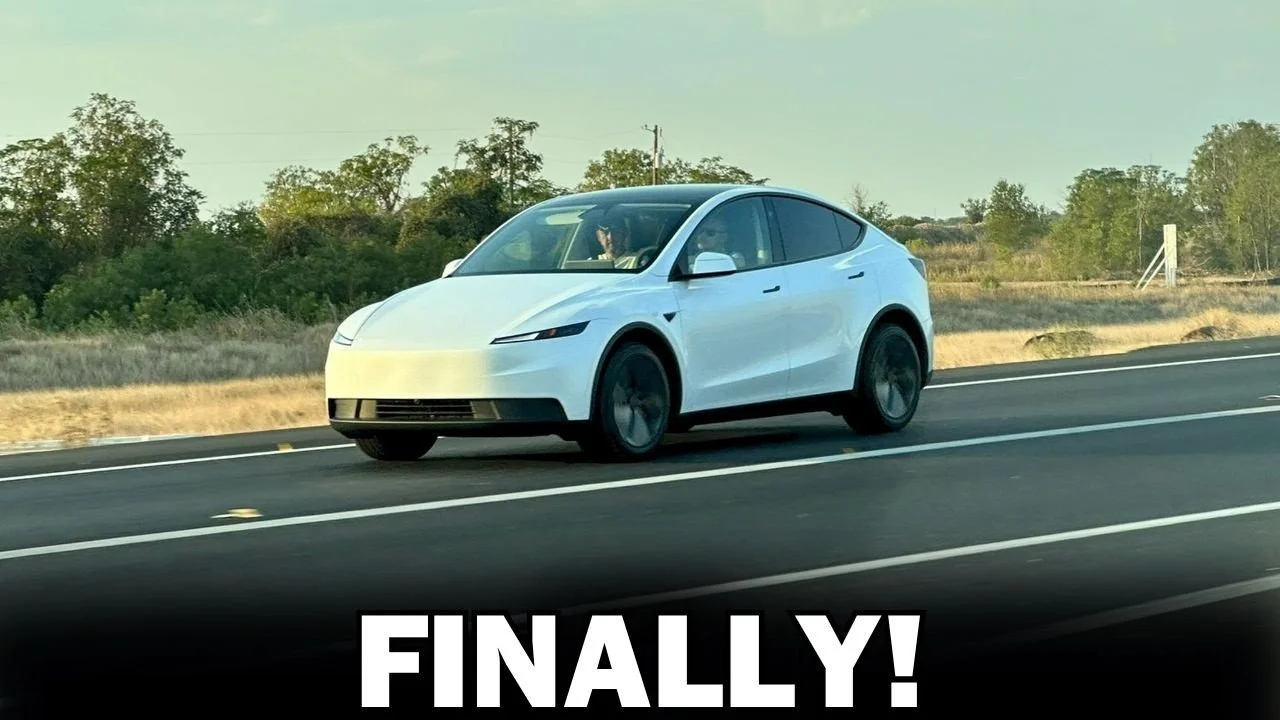
Tesla's Affordable Model Y Leaks
Leaked photos reveal Tesla's budget-friendly Model Y redesign, stripping premium features to hit aggressive price targets while fueling data collection for autonomy—essential viewing for EV buyers eyeing sub-$40K options.
Key Takeaways
Leaked shots show a simplified front fascia without the light bar, integrated blinkers, and a flatter grille for cost reduction.
Rear design omits the reflector plate and light bar, with altered brake light and trunk lip details.
Potential solid roof replaces glass to cut manufacturing expenses on handling and materials.
Expected pricing: $30K–$38K base, via smaller battery (250–300 miles range), RWD-only, downgraded interiors, and slower motors.
Ties into Tesla's autonomy push: Sell hardware at cost, profit via $200–$300/month FSD subscriptions for unsupervised driving.
Broader lineup teases include a Cybertruck-based three-row SUV and $25K Cybercab for robotaxi fleets.
This video breaks down fresh spy shots of Tesla's entry-level Model Y prototype, captured on Texas highways and shared widely online. The design echoes the familiar Y silhouette but dials back luxuries: headlights merge blinkers into a single unit, erasing the current model's lower accents and aggressive lower lip for a sleeker, shorter-nosed profile. A front grille camera nods to next-gen FSD hardware, while the rear swaps out chrome accents and the full-width light bar for a cleaner diffuser integration. Side profiles hint at thicker tires on simpler wheels, and the roof's opaque panel suggests ditching panoramic glass—a smart move to slash costs amid U.S. tax credit losses.
Tesla's factory ramp-up demands volume: First builds hit in June 2025, with mass production slated for H2. To compete without subsidies, expect trade-offs like reduced range, vegan cloth over premium synthetics, and no AWD at launch—mirroring China's stretched Model Y but in reverse for material savings. At $35K, it revives Model 3 pricing parity; drop to $30K, and it becomes a loss-leader for FSD upsells. This feeds Tesla's data hunger for robotaxis already testing in Austin and California, where unsupervised autonomy turns vehicles into revenue streams. Glimpses of teased CyberSUV (three-row utility beast) and Cybercab (pedal-free two-seater) round out a roadmap prioritizing miles over margins.