
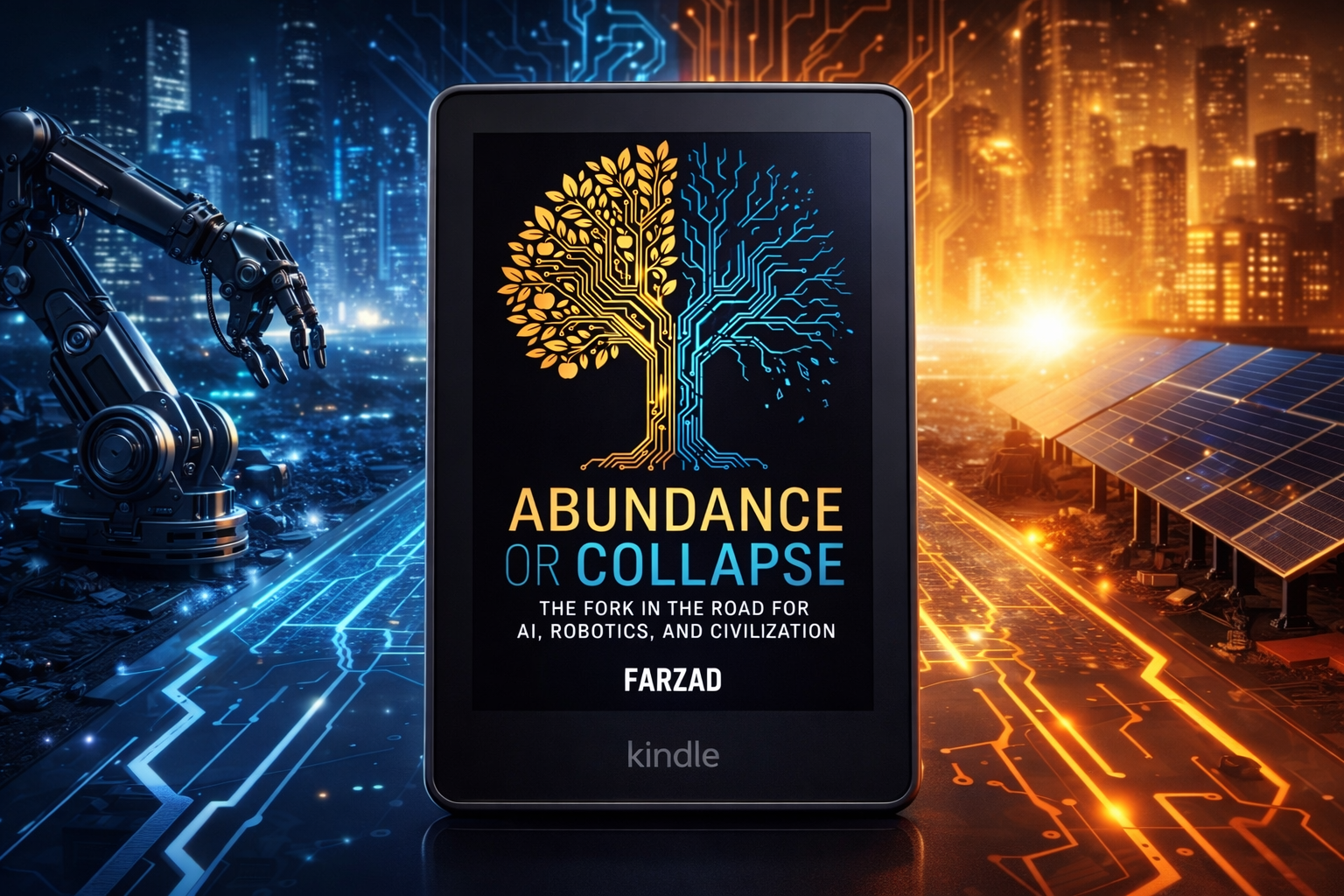
Abundance or Collapse: The Fork in the Road for AI, Robotics, and Civilization (The Future Book 1)
I just wrote my first book. It’s called ‘Abundance or Collapse: The Fork in the Road for AI, Robotics, and Civilization’.
As I’m sure you’re already aware, there’s a massive change coming for humanity in the next few years - both positive and negative.
This book shares my thoughts on where we’re likely headed, the biggest players that are driving that change, and what everyone can do to position themselves so that they aren’t left behind.
In a best case scenario, everyone who reads my book will be significantly better positioned in 5-10 years vs where they are today.
In a worst case scenario, we’re all dead. Just kidding - maybe.
The book will be out on February 14th on Kindle, paperback, and hardcover formats.

Tesla's 2026 Autonomy Revolution
Dive into Tesla's bold trajectory as 2026 emerges as a landmark year for autonomous innovation and market dominance.
Key Takeaways
Unsupervised FSD rollout expected to boost vehicle asset values by multiples, driving massive margin expansions.
Cybercab enters volume production in Q2, with flexible designs adapting to regulatory hurdles for rapid market entry.
AI5 hardware advancements pave the way for safer robotaxis, distributed computing, and integration with Optimus robots.
Energy sector growth fueled by infinite AI demand, complementing Tesla's shift toward subscription-based mobility models.
Potential for vehicles as multifunctional assets: personal transport, power backups, and AI computing hubs.
Tesla's 2026 strategy centers on accelerating unsupervised autonomy, where FSD evolves into a core revenue driver through enhanced safety and efficiency. Cybercab production kicks off in April, starting low but scaling to thousands weekly, likely incorporating temporary controls like steering wheels to navigate regulations while enabling verbal or subscription-activated self-driving. This approach sidesteps inventory risks, allowing sales as versatile vehicles that double as energy storage or inference nodes. Meanwhile, AI5's completion signals a pivot to chip-making capabilities, supporting robotaxis safer than humans and fueling Optimus trials. Energy deployments address surging AI power needs, creating a flywheel of recurring income from subscriptions and network participation, positioning Tesla for step-change valuations amid evolving global approvals.
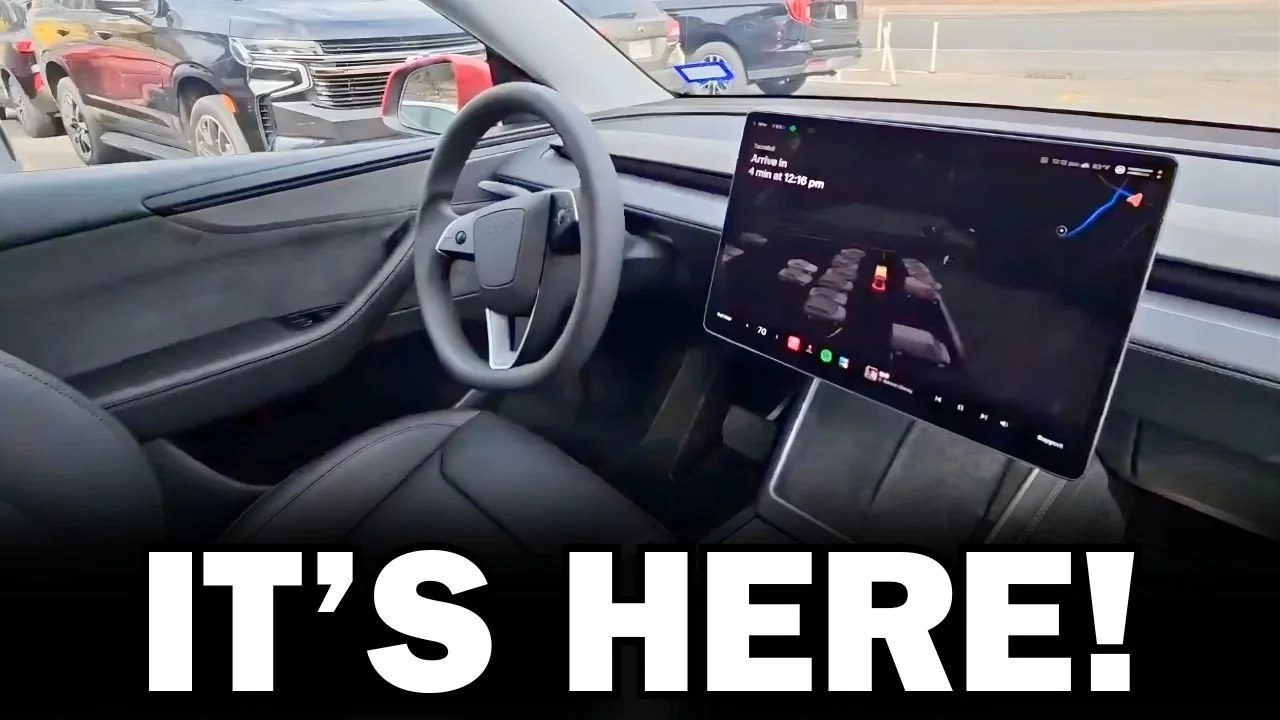
Tesla Unsupervised Robotaxi Launches in Austin
Tesla achieves a landmark in autonomous mobility with the rollout of truly unsupervised Robotaxi rides in Austin, Texas. Using standard Model Y vehicles equipped with Full Self-Driving (FSD) software, these cars now transport paying passengers without any safety driver or monitor onboard, starting with a small number mixed into the existing fleet.
Key Takeaways
Unsupervised Robotaxi service begins in Austin using production Model Ys—no custom hardware required.
Tesla's vision-only system (cameras + neural nets) trained on vast real-world driving data powers the capability, differing from sensor-heavy competitors like Waymo.
Fleet starts small (a few vehicles among ~30 in Austin, more in Bay Area), with unsupervised ratio set to grow over time.
Removing human drivers collapses costs to energy + maintenance (~40-60 cents/mile vs. $2+ for human-driven rides), enabling aggressive future pricing.
Third-party validation arrives via Lemonade insurance offering ~50% rate cuts on FSD-engaged miles, signaling strong safety data from an independent actuarial perspective.
Scalability advantage stems from millions of existing Teslas collecting data globally, positioning the tech for rapid expansion beyond Texas.
This launch validates years of AI development and data accumulation, proving the same hardware in customer vehicles can handle driverless operation under controlled rollout. While initial deployment remains limited and cautious (with regulatory and public scrutiny factors), it opens the path to high-margin, widespread autonomy—potentially flooding markets with affordable self-driving transport via current models and upcoming purpose-built Cybercab.

Tesla's Bold FSD Shift: End of Purchases
Tesla's decision to eliminate FSD outright buys unlocks game-changing potential in self-driving tech, from Robotaxi fleets to skyrocketing vehicle profitability.
Key Takeaways
Tesla ends FSD outright purchases post-February 14, shifting to subscriptions for broader access.
Signals unsupervised driving rollout soon, enabling cars to operate without attention.
Vehicles could generate $100,000+ annual profit as robotaxis via ride-sharing.
Simplifies pricing: supervised vs. unsupervised tiers, plus fleet integration for owners.
Boosts long-term revenue per car, tripling profitability through recurring models.
Addresses hardware differences, likely offering transfers for early adopters.
Tesla's strategic pivot removes the $8,000 FSD buy option, emphasizing subscriptions to democratize access while capturing value from advancing autonomy. Unsupervised FSD transforms cars into autonomous assets capable of ride-hailing without drivers, potentially netting massive profits through Uber-like fares minus operational costs. This aligns with fleet-sharing plans, where owners add vehicles to Tesla's network for revenue splits, maximizing utilization. For investors, it embeds recurring income into every sale, elevating per-vehicle profits from current levels to tens or hundreds of thousands over a decade. Hardware 4+ owners may gain lifetime perks, while Hardware 3 users could see upgrade incentives like FSD transfers, ensuring equity as tech evolves.
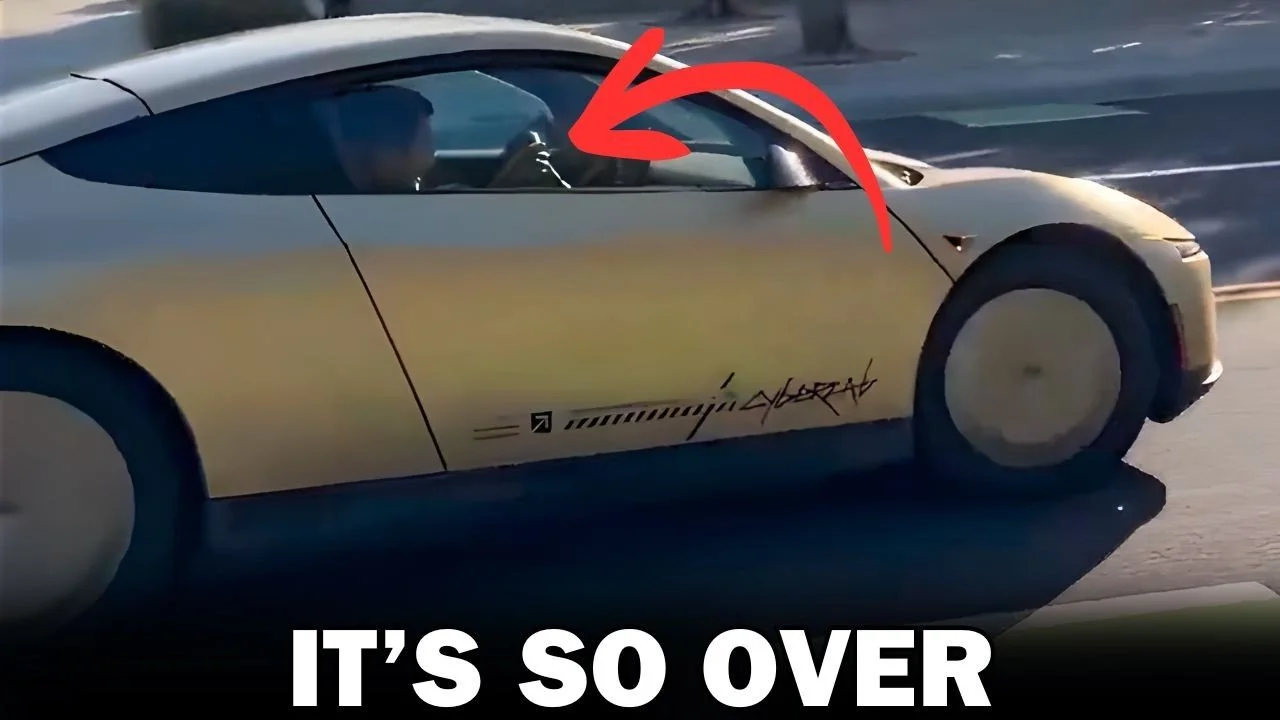
Tesla's FSD Revolution: Mind-Blowing Autonomy Ahead
Tesla's advancing autonomy tech delivers paradigm-shifting insights into future transport, from seamless self-driving to economic disruptions in mobility.
Key Takeaways
Tesla FSD enables flawless, multi-hour journeys without steering or pedal input, astonishing new users.
Shift to unsupervised mode will eliminate driver attention, mirroring driverless trials in select cities.
Steer-by-wire systems in new models allow easy removal of controls, paving the way for adaptable vehicles.
Sub-$30k autonomous cars could redefine ownership with flexible monthly plans including insurance and charging.
Robotaxis promise 30 cents per mile, undercutting traditional rides and legacy autos in urban areas.
Diving deeper, Tesla's FSD has evolved from basic autopilot to advanced navigation that handles complex routes autonomously, though currently requiring supervision. This tech, experienced by under 1% of the population, normalizes hands-free travel across the US. Unsupervised versions, already in limited trials, use affordable models built at scale. Innovations like steer-by-wire—electronically linking controls without mechanical ties—simplify conversions to full autonomy, similar to aircraft systems. Economically, these vehicles slash costs below human-driven options, targeting metro areas where traffic dominates. This surge in capability drives analyst upgrades, signaling massive market shifts as regulations evolve.