
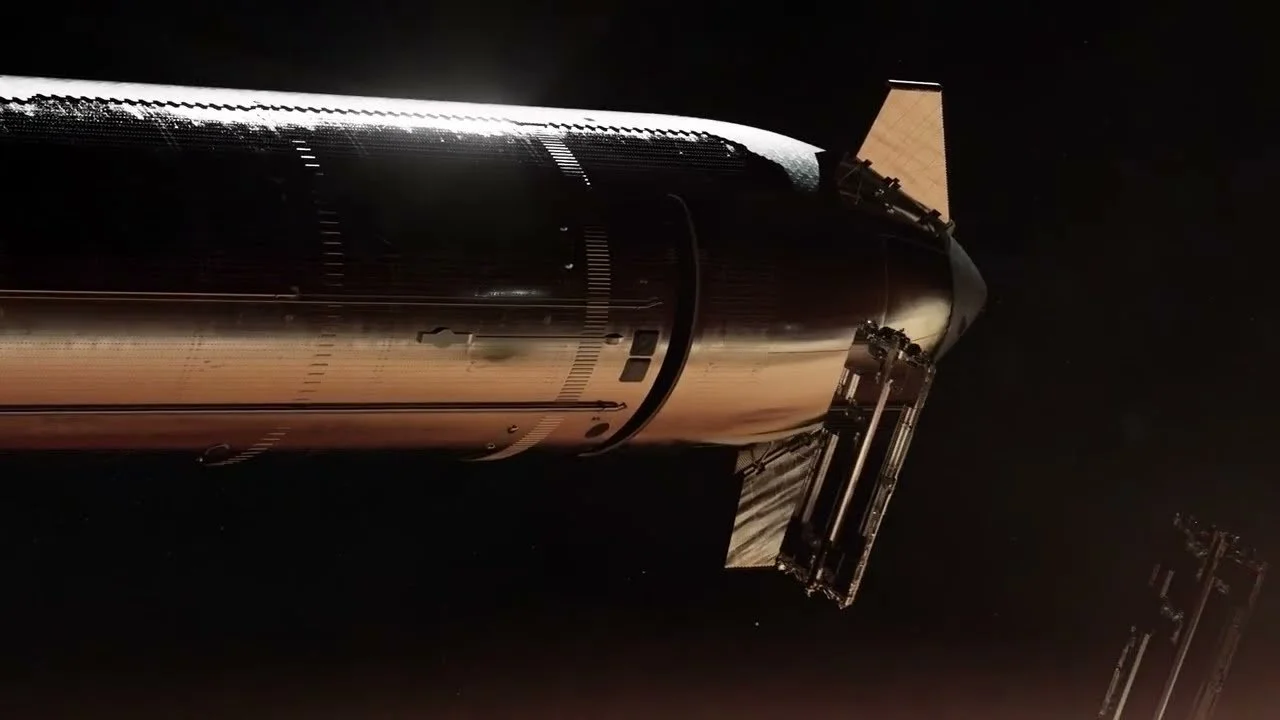
Starlink Hits 10M Users as SpaceX Pushes Orbital AI Compute
SpaceX is solidifying leadership in global satellite communications with explosive user growth and diversified applications, while simultaneously developing next-generation AI systems that span both terrestrial data centers and future orbital platforms.
Key Takeaways
Starlink serves 10.3 million users with over 100% year-over-year growth, covering more than 3 billion people across 164 countries and territories while representing 75% of all active maneuverable satellites in orbit.
Strong momentum in aviation with near-weekly airline adoption announcements, plus expanding use in government via Starshield and as primary or backup connectivity for enterprises seeking resiliency.
Direct-to-device service has validated demand through Gen 1, reaching 1.9 billion people via partnerships with 30+ mobile operators; Gen 2 will deliver full 5G quality to connect the remaining 3 billion people currently excluded from reliable digital access.
Colossus 2 represents the world's largest coherent supercomputer, featuring NVIDIA GB300 GPUs as the first gigawatt-scale AI training cluster with integrated gigawatt-scale battery storage and early large-scale deployment of GB200/300 hardware.
Orbital AI compute, planned for the coming years, will repurpose proven Starlink technologies—ion propulsion, inter-satellite laser links, flight computers, and reaction wheels—combined with solar power and radiative cooling to deliver near-zero operating costs and address energy constraints of ground-based AI infrastructure.
SpaceX owns the full value chain from launch through end-user connectivity and now into frontier AI models. Its Starlink network already demonstrates global distribution at scale, enabling a powerful flywheel: superior connectivity drives better AI performance and lower token costs, which generates revenue to fund further infrastructure expansion on the ground and in orbit. This approach positions the company to deliver both the connectivity layer and the compute layer for the next era of intelligence while directly tackling the digital divide.
SpaceX CFO Unveils Plans for Advanced AI and Lunar Mission
SpaceX leverages its orbital launch leadership to drive parallel advances in AI infrastructure and space economy development. Truth-seeking model design combined with real-time data streams creates differentiated capabilities, while Starship reusability unlocks higher payload throughput for connectivity and compute hosting at scale.
Key Takeaways
Truth-seeking AI models are developed from the ground up with real-time X platform data as a core differentiator for accuracy and relevance.
Full Starship reusability expands launch capacity, lowers costs, and directly fuels connectivity growth plus AI infrastructure hosting for external customers.
Addressable markets exceed six trillion dollars across space, connectivity, and AI, with enterprise AI alone representing over twenty-eight trillion dollars in long-term opportunity.
Twenty-one billion dollars in recent CapEx, heavily weighted toward AI compute, is already monetizing through hosting deals while building capacity for broader enterprise adoption.
Lunar return within the next couple of years establishes sustainable surface capabilities and seeds an entirely new lunar economy with applications in manufacturing, resources, and research.
2025 results delivered roughly nineteen billion dollars in revenue with over thirty percent year-over-year growth and approximately seven billion dollars in positive adjusted EBITDA.
Connectivity segment grew roughly fifty percent year-over-year, while Q1 revenue reached five billion dollars with connectivity contributing three billion.
Projected long-term model shows gross margins near seventy percent and GAAP net income margins near forty-five percent as scale efficiencies compound.
Dominant global position in orbital launch services provides the foundation for winning in integrated space transport, AI services, and future in-space industries.
Progress on Starship reusability multiplies orbital access for both satellite constellations and compute infrastructure, enabling lower-latency connectivity and distributed AI workloads. The same reusable architecture supports eventual point-to-point terrestrial transport and in-space manufacturing. Lunar surface operations shift from flags-and-footprints missions to sustained presence, opening pathways for resource prospecting, microgravity production, and scientific infrastructure that complement terrestrial AI and data businesses. Financial discipline remains central: meaningful revenue expansion continues alongside heavy but targeted investment, with early AI hosting revenue validating the compute buildout. This convergence of launch dominance, real-time data advantages, and purpose-built AI positions the company to lead the next phase of space-enabled intelligence and economic expansion.
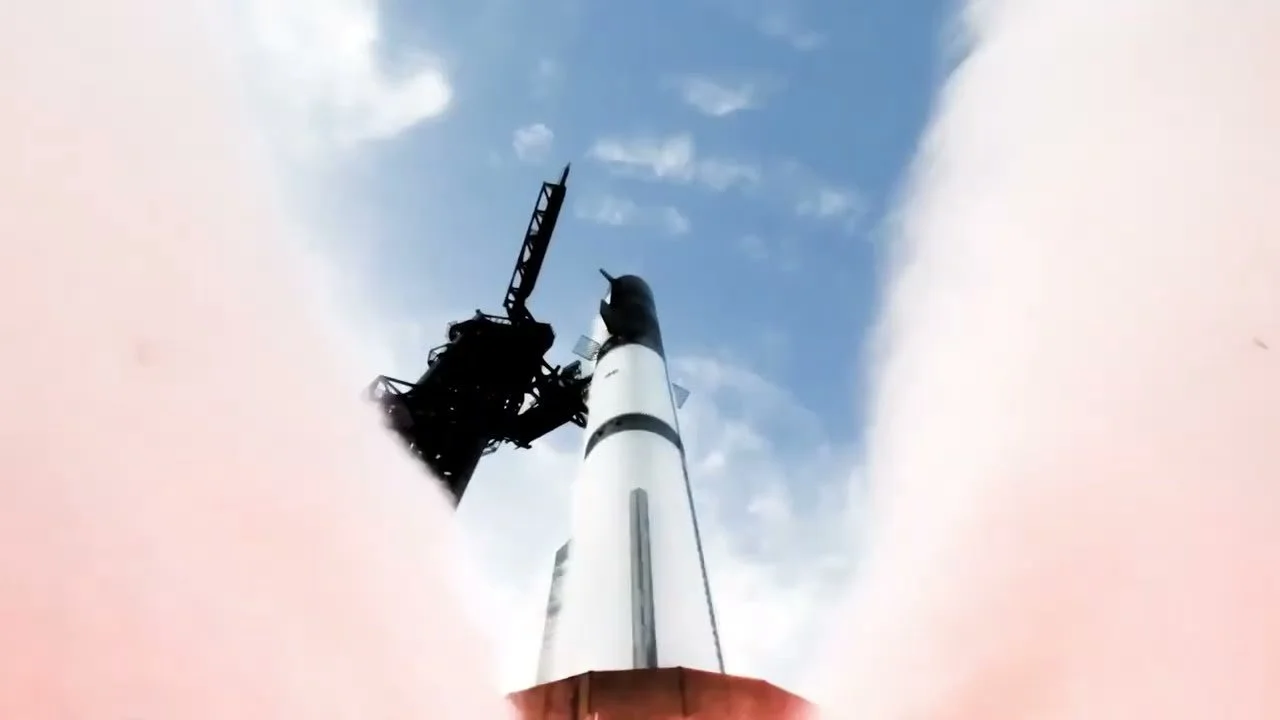
SpaceX Vertical Integration Drives Space and AI Innovation
SpaceX's vertical integration across satellite systems combined with AI enhanced by real-time platform data delivers unmatched velocity and cost efficiency while opening pathways to major new markets.
Key Takeaways
Vertical integration across satellite design, manufacturing, deployment, and operations drives high velocity and superior cost efficiency at scale.
Real-time data from the X platform enhances AI models, improving performance and adaptability.
Global leadership in orbital launch creates barriers that make business models difficult to replicate.
The integrated approach supports expansion into trillion-dollar markets across space, connectivity, and AI.
A mission-driven culture backed by world-class talent sustains long-term innovation and execution.
By controlling the full satellite lifecycle internally, SpaceX reduces friction between stages and accelerates iteration. Feeding live X platform data into AI systems builds continuous improvement loops that increase model accuracy for connectivity and related applications. The requirement of orbital launch dominance adds a structural moat, limiting who can match the infrastructure and expertise. Together these elements create a scalable base for growth in high-value sectors where speed, cost, and data advantages compound over time.
Starlink Hits 10.3 Million Users as SpaceX Builds Orbital AI Data Centers
SpaceX flies 75% of every active maneuverable satellite, just crossed 10.3 million Starlink users, and now wants to run AI data centers in orbit on free solar power. The launch-to-frontier-model flywheel could make it the only company that can.
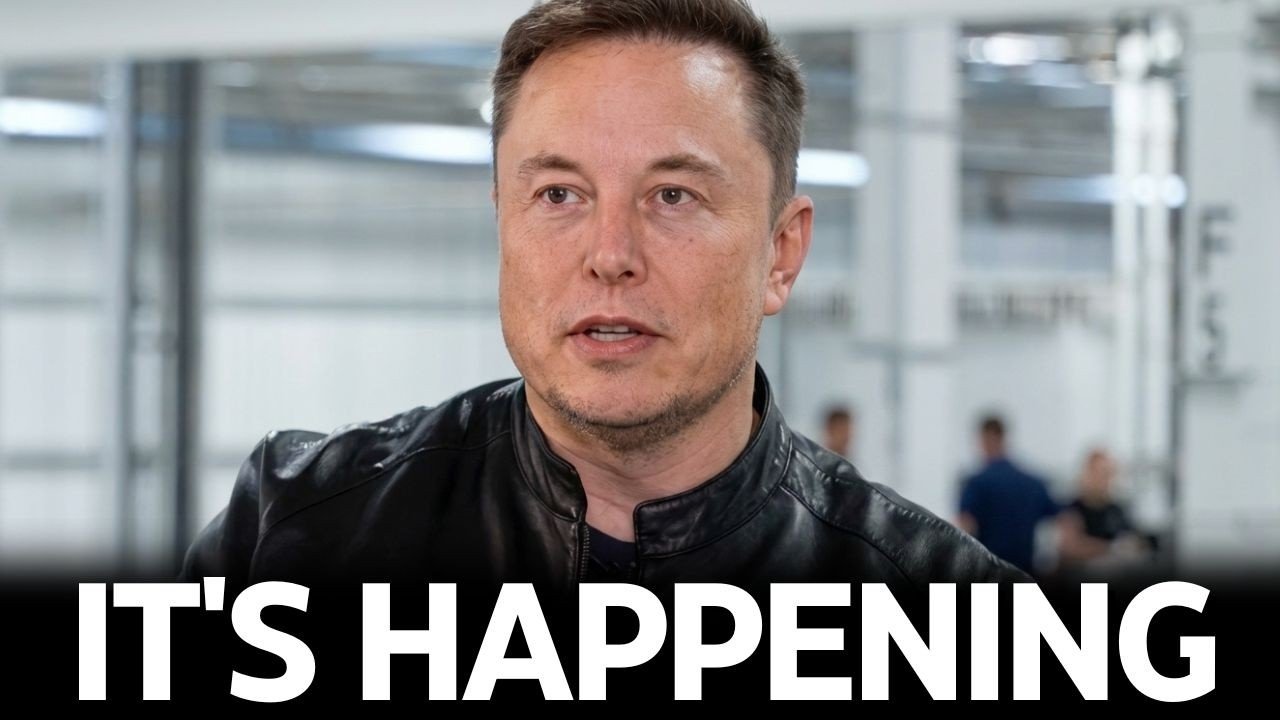
Elon Musk on Space AI Data Centers & Kardashev Scale
Elon Musk outlines a clear engineering roadmap to move substantial AI compute into orbit, enabling civilization to capture a meaningful share of stellar energy and advance on the Kardashev scale from its current near-zero position.
Key Takeaways
Full rapid reusability with Starship is the critical breakthrough needed to scale mass to orbit from a few thousand tons per year to millions of tons annually within a short timeframe.
AI satellites are simpler than communication satellites, built around solar arrays at ~250 W/m², double-sided radiators at ~1,400 W/m², and compute hardware supporting 120–150 kW power envelopes.
The scaling plan targets roughly 1 GW per year of space AI compute by the end of next year, 10 GW within 2.5 years, and 100 GW in 3.5 years, with terawatt capacity requiring dedicated high-volume chip production.
Long-term growth depends on lunar manufacturing and electromagnetic mass drivers to achieve orders-of-magnitude higher deployment rates without transporting all mass from Earth.
Current global energy use represents a negligible fraction of the sun’s output; only space-based collection and vacuum radiation make even micro-scale stellar harnessing practical.
Orbital deployment solves two fundamental constraints that limit terrestrial expansion: usable land area for solar collection is small, and rejecting massive waste heat becomes far easier when radiators can face the cold vacuum of space. The proposed satellites integrate proven solar and thermal technologies at larger scale, paired with laser links for low-latency connectivity between satellites and to ground networks. Early units align with existing high-end GPU rack power profiles, allowing current chips to fly while larger chip fabrication capacity is built on the ground. Reaching true terawatt output requires both launch cadence and chip production to grow in parallel. Looking further ahead, shifting photovoltaic and radiator production to the Moon combined with mass-driver launch removes Earth’s gravity well as the primary bottleneck, opening a route to 1,000× greater infrastructure scale. This integrated path directly supports the energy demands of advanced AI while establishing the first practical steps toward Type II civilization capabilities.
Starship V3: Scaling Mass to Orbit for Space AI Data Centers
Starship V3 stands to eliminate the mass-to-orbit constraint that has limited ambitious space projects, particularly the construction of data centers beyond Earth. Its vastly increased thrust and reusability open a pathway to deploying specialized AI hardware in orbit at scales previously unimaginable.
Key Takeaways
Starship V3 generates more than double the thrust of the historic Saturn V Moon rocket, with version four expected to reach nearly three times that output.
Launch frequency is projected to exceed one flight per hour, supporting rapid deployment of space infrastructure.
Annual mass delivery to orbit is targeted to grow from approximately 2,500 tons today to millions of tons, with one million tons achievable in roughly three years.
Existing Falcon vehicles already deliver 85 to 90 percent of all mass placed into Earth orbit globally.
AI satellites feature simpler architectures than Starlink units, relying primarily on solar cells, thermal radiators, and laser links for operation in space.
The AI-1 satellite prototype is designed around 150 kilowatts of peak power generation to sustain about 120 kilowatts of average AI compute workloads.
The shift to space-based compute involves launching modular components rather than entire facilities. Satellites incorporate extensive solar arrays to generate electricity and deploy radiators to manage thermal loads by emitting infrared radiation into space. Without the demanding communications hardware of Starlink, these AI platforms achieve greater simplicity and focus on processing density. Powered by Starship's lift capacity, such systems can be assembled into larger networks, offering a new dimension for AI expansion where terrestrial energy and cooling limitations are bypassed.
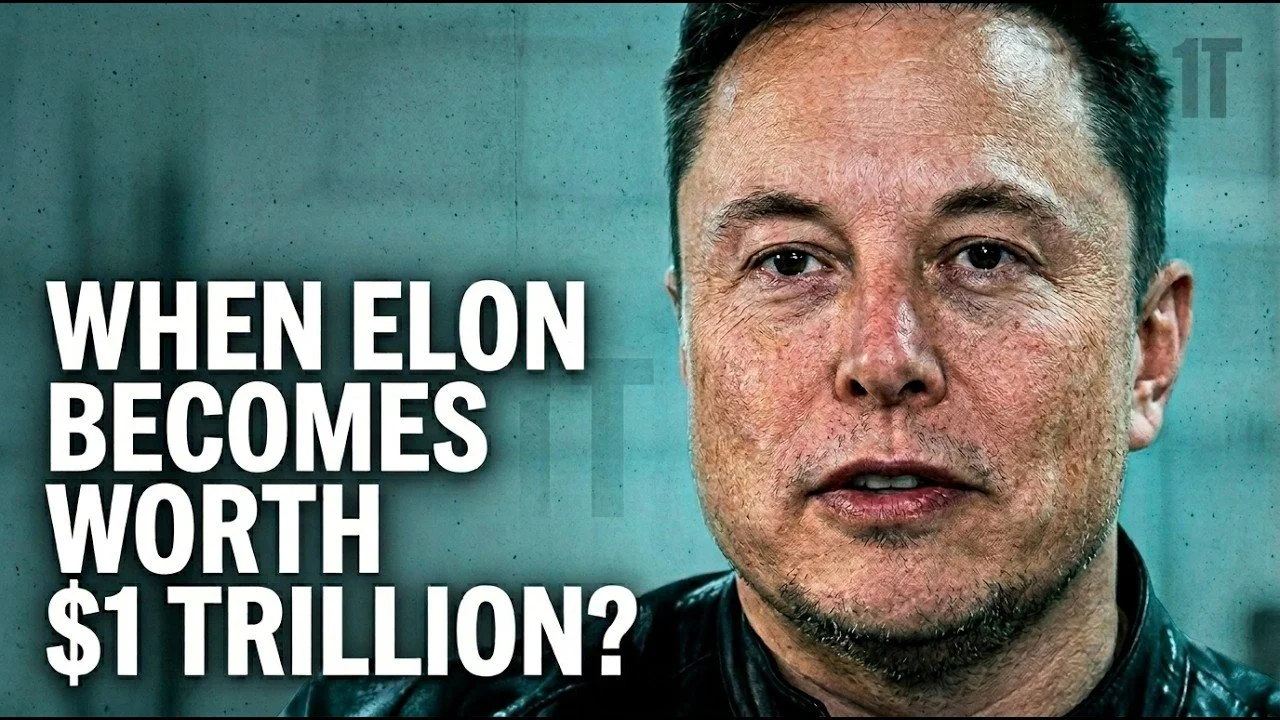
Elon Musk Trillionaire: Matches Rockefeller Economic Share
Elon Musk’s potential trillion-dollar net worth, driven by Tesla shareholder approval and SpaceX’s upcoming public valuation, forces a clearer look at how wealth, power, and technological progress actually intersect. The core insight is that headline trillions represent market-priced equity in companies delivering reusable rockets, global satellite broadband, autonomous vehicles, humanoid robots, and frontier AI systems—not cash reserves. When measured as a share of total economic output, Musk’s position aligns closely with John D. Rockefeller’s peak influence more than a century ago, reframing the milestone as continuity rather than rupture.
Key Takeaways
Net worth at this scale equals shares outstanding multiplied by current market price; less than 0.1 percent typically sits in cash.
The most meaningful comparison uses wealth as a percentage of GDP; Musk’s roughly 3 percent stake in the 2026 US economy parallels Rockefeller’s 1913 position.
SpaceX now handles the majority of global orbital mass and operates Starlink with 10 million subscribers across 100+ countries, providing decisive connectivity in remote and contested regions.
Tesla aggregates unmatched real-world driving data while scaling energy storage and preparing volume production of Optimus humanoid robots.
US wealth concentration has reached tracked highs, with the top 1 percent holding 32 percent of wealth and the top 0.1 percent holding 14 percent.
Proposals for annual wealth taxes cite democratic risks from concentrated political spending and government influence; opponents note most modern large fortunes are self-made through voluntary purchases and that similar European taxes raised little revenue while triggering capital flight and administrative complexity.
Buy-borrow-die strategies let owners access liquidity via loans against appreciating stock without immediate capital-gains events, preserving control for long-horizon bets.
Successful execution across Mars-scale satellite constellations, mass robot deployment, and advanced AI could push Musk’s valuations into the multiple-trillions range, amplifying both capability and scrutiny.
The distinction between nominal, inflation-adjusted, and economy-share metrics shows why raw dollar comparisons across eras mislead. An IPO simply converts private valuation guesses into continuous public market prices for shares already owned. Political arguments split between concerns that extreme concentration tilts democratic processes through campaign finance and advisory roles, and counter-claims that this wealth stems from products people actively choose and that forced annual sales for tax bills could end the patient capital required for breakthroughs like reusable orbital transport or general-purpose robotics. Musk’s portfolio now sits at the center of three foundational stacks—launch capacity, space-based internet, and physical-world AI—giving one private actor leverage over infrastructure that previously belonged to governments or diffuse markets. Historical precedents suggest the decisive variable is not the size of the fortune but whether it ultimately funds broad capability expansion or remains narrowly held. The coming decade will test whether these specific companies deliver on multi-planetary logistics and ubiquitous automation while navigating the policy response their scale inevitably provokes.
SpaceX AI Satellites: Starlink V3 Tech Powers Orbital AI
SpaceX is extending its satellite expertise to place high-performance AI compute directly in low Earth orbit, creating interconnected orbital systems that deliver substantial processing power with minimal transmission delays.
Key Takeaways
Reuses Starlink V3 satellite technology, reducing development complexity for AI workloads in space.
Delivers terabit laser connectivity for high-speed data exchange between satellites and ground networks.
Supports up to 150 kW peak power, comparable to an NVIDIA GB300 rack with 72 GPUs.
Achieves approximately 3 ms latency from 600-800 km orbital altitude using laser links.
Integrates with the existing Starlink constellation via Ka/Ku antennas and laser ground links.
Uses radiators sized like current solar arrays (around 70 m wingspan) for thermal management.
Leverages proven operations with over 10,000 satellites for safe, dense constellation scaling.
Advances production at Bastrop facilities, with solar manufacturing underway and AI satellite lines planned for volume output by end of next year.
These AI satellites function as self-contained compute racks in orbit. Laser links allow direct satellite-to-satellite communication at high bandwidth while routing results through the established Starlink network for fast delivery to users on the ground. The low orbital altitude keeps signal travel time short, supporting responsive AI applications without the delays sometimes assumed for space systems. Power design matches real-world GPU rack envelopes, with peaks near 150 kW and typical loads around 120 kW. Thermal radiators sized to existing solar array dimensions handle heat rejection in vacuum conditions. SpaceX’s experience operating large constellations at safe distances provides a foundation for adding thousands more satellites without congestion risks, as orbital volume remains vast. Manufacturing expansion in Bastrop combines solar production with dedicated AI satellite assembly to reach meaningful output rates within roughly 18 months.
Elon Musk's Lunar Mass Driver Plan for AI Satellites
Elon Musk shares a forward-looking strategy to expand beyond Earth's constraints by developing lunar production capabilities and revolutionary launch systems for AI infrastructure.
Key Takeaways
Lunar in-situ resource utilization allows most solar power and thermal components to be built on the Moon, reducing dependency on Earth launches for bulk materials.
Mass drivers, operating as linear electric motors, can accelerate AI satellites to deep space velocities efficiently due to the Moon's lack of atmosphere and lower gravity.
Achieving 1,000x growth in power generation marks significant steps toward Kardashev Level II civilization capabilities.
The scale of lunar operations required would enable affordable and frequent trips to the Moon for scientific, commercial, and personal purposes.
Future expansions include more Starship missions, increased semiconductor output, and extensive orbital solar and AI deployments.
The proposed system centers on building solar arrays and supporting infrastructure directly on the Moon to power and sustain large constellations of AI satellites. Local resource use for the heavy components avoids the enormous expense of Earth-to-Moon shipping. The mass driver then provides a continuous, high-capacity method to inject these satellites into optimal orbits or deep space paths using electromagnetic acceleration. This not only addresses the immense power requirements for advanced AI but also creates the logistical backbone for a thriving cislunar economy and eventual broader solar system presence.
Tesla Semi: Rewriting Freight Economics with Electric Trucks
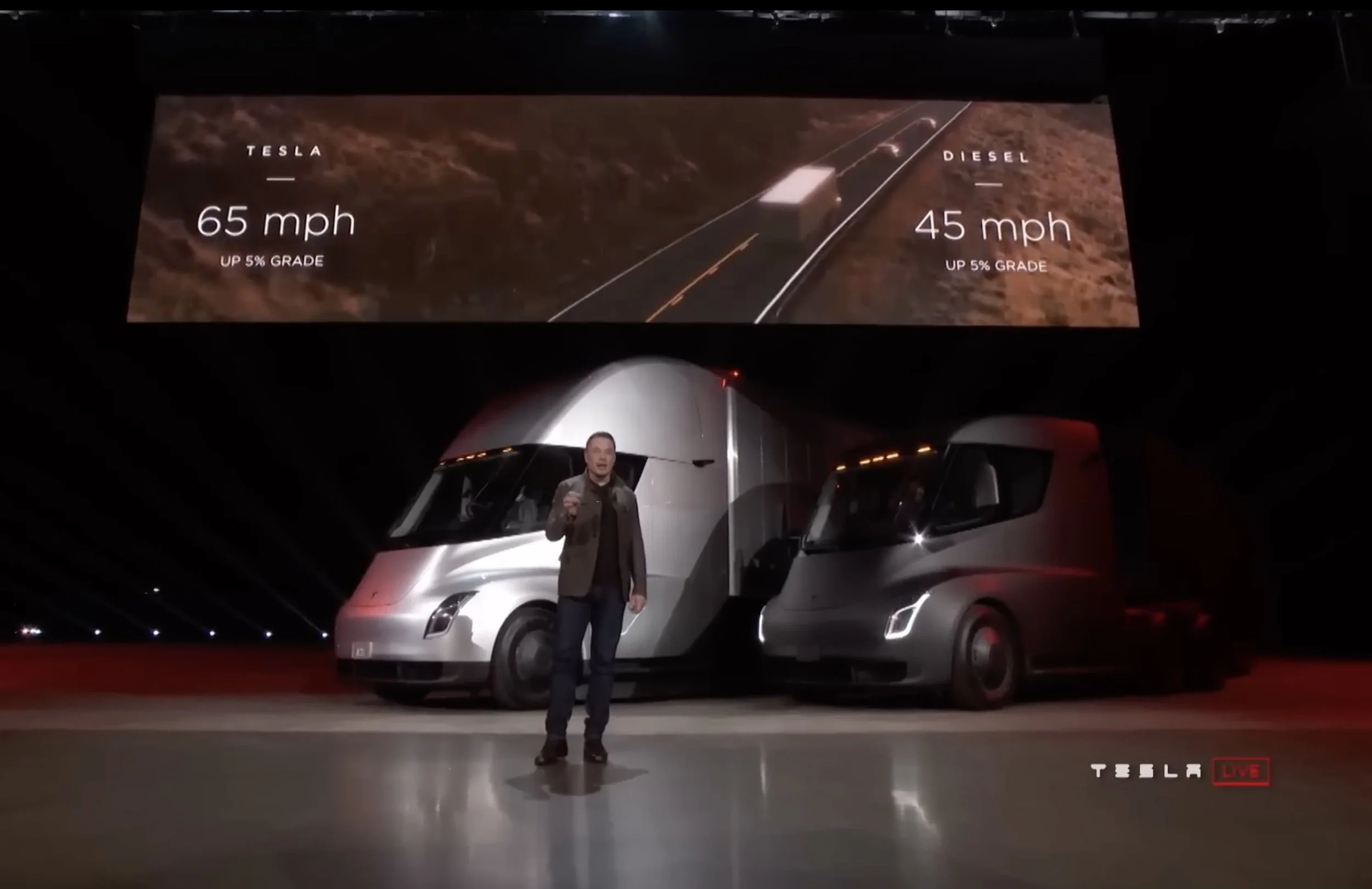
The Tesla Semi marks a decisive break from diesel's century-long grip on freight. With published ranges of 325–500 miles at full 82,000-pound loads and 30-minute Mega Charger top-ups, early operators report energy costs of roughly 25 cents per mile against 80–90 cents for diesel. Broader industry benchmarks put all-in diesel trucking at $2.26 per mile, where fuel is only about 48 cents and labor plus maintenance dominate the rest.
Key Takeaways
Electric drivetrains eliminate engines, multi-speed transmissions, exhaust aftertreatment, and frequent fluid changes, dropping maintenance from 19–20 cents to around 6 cents per mile.
Driver wages and benefits remain the largest single line item today (~$1 per mile), but current electric trucks improve conditions with quieter, smoother operation.
Autonomy on long, straight highway routes is projected to handle 30–50% of long-haul miles by 2030–2035, removing the driver cost layer on those segments.
Combined savings push total cost per mile toward rail territory (2–5 cents per ton-mile) while preserving point-to-point flexibility trucks have always enjoyed.
Lower distance costs make near-shoring and distributed warehousing mathematically viable, reversing decades of centralized, far-flung supply chains.
Historical precedent: containerization cut ocean shipping costs over 90% and multiplied trade volumes; similar dynamics now apply to inland freight.
Beyond the immediate efficiency gains, the electric Semi's simpler architecture removes thousands of wear-prone parts that define diesel complexity. Real fleet data confirms consistent efficiency even at 65%+ of miles above 70,000 pounds. When autonomy matures on interstate corridors, the remaining cost stack—electricity and tires—creates a vehicle that is simultaneously cheaper to run than diesel and nearly as inexpensive as rail, yet unconstrained by tracks or schedules.
This compression of the cost floor reopens location decisions that distance once penalized. Factories can sit closer to customers, small regional warehouses can replace mega-hubs replenished by frequent low-cost runs, and the economic map of production and inventory begins to redraw itself. Lower operating costs also expand total freight activity rather than contracting it, consistent with observed patterns when transport efficiency jumps. The net result is a logistics layer that is both radically cheaper and radically more adaptable than the diesel system it displaces.
Tesla AI5 Chip: Inference Edge at Fraction of NVIDIA Cost
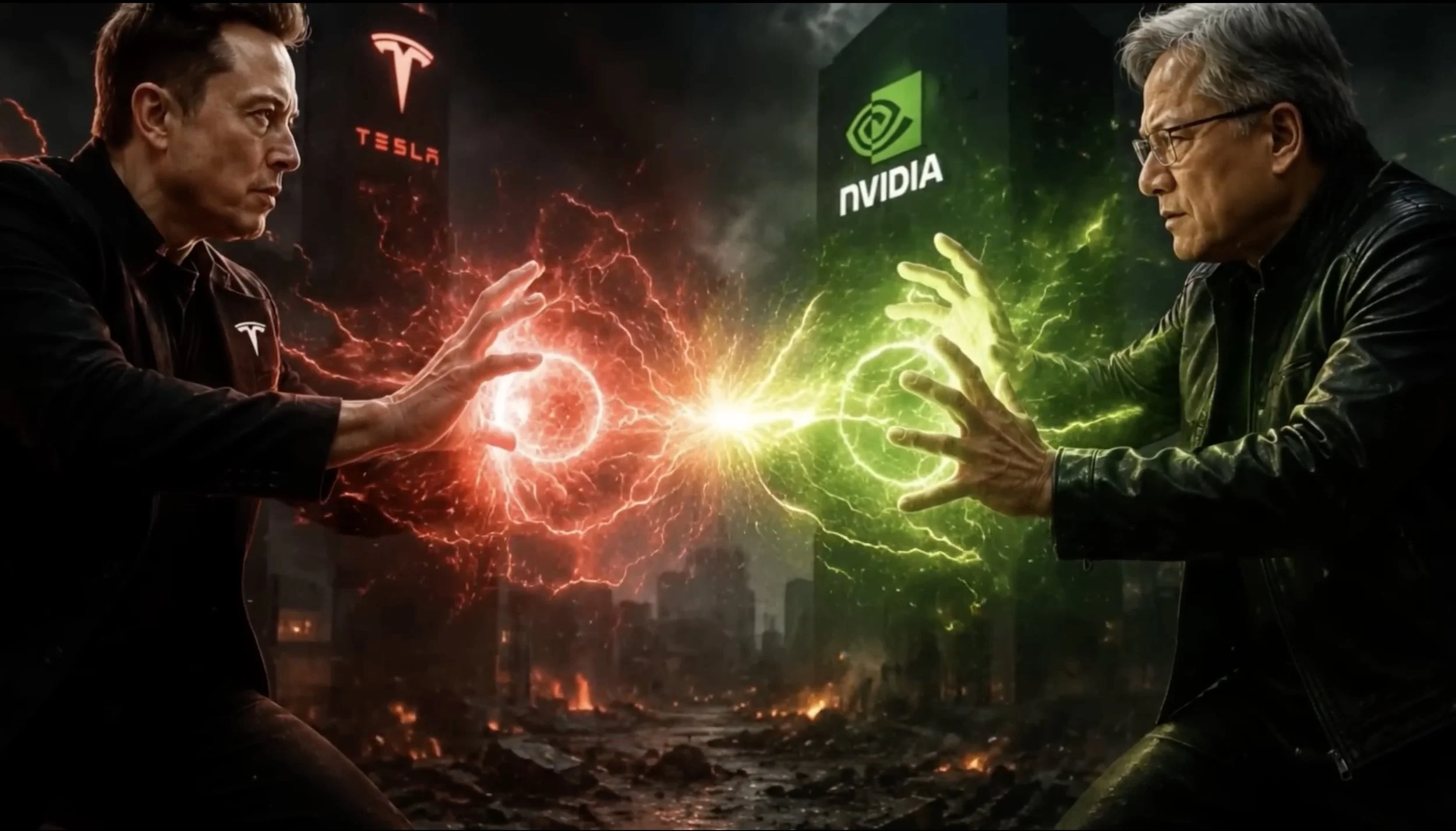
Tesla's AI5 chip marks a calculated advance in specialized AI hardware. Optimized strictly for inference workloads in humanoid robots and self-driving systems, it achieves performance levels comparable to NVIDIA's H100 while operating at dramatically lower power and cost. This focused approach, combined with a multi-year chip roadmap and major investment in US-based manufacturing, positions Tesla to expand control across the AI value chain from silicon to deployment infrastructure.
Key Takeaways
AI5 is an inference-focused ASIC that matches H100 performance for Tesla's specific low-precision workloads in robots and vehicles.
Radical simplification by removing general-purpose components enables major gains in performance per dollar and per watt.
Tesla continues purchasing NVIDIA GPUs in volume for frontier model training, treating AI5 as a complement for deployment.
Roadmap targets AI6 in 2027 with doubled performance, followed by AI6.5 on advanced process nodes.
Planned Texas fabrication facility carries a $55 billion first phase, exceeding the scale of the entire US CHIPS Act.
Long-term vision includes space-based data centers running on continuous solar power, reducing reliance on terrestrial grids and foreign chip supply chains.
Tesla achieved these results by designing the AI5 exclusively around the computational patterns of neural inference rather than building a versatile GPU for every possible workload. This ASIC strategy removes unnecessary circuitry such as image processors, shrinking die size, power draw, and manufacturing expense. The result is a chip that fits behind a vehicle glovebox yet delivers useful compute equivalent to multiple prior-generation units.
The same specialization that drives efficiency also limits immediate broad adoption. Without a mature software ecosystem comparable to CUDA, the chip serves Tesla's internal needs first—Optimus robots and its own AI supercomputers—before any external sales. Training of the largest models remains on NVIDIA hardware for now, underscoring that AI5 targets the inference stage after models are already developed.
Looking further ahead, the integration of custom silicon with SpaceX's satellite and launch capabilities opens a path to orbital compute clusters powered by uninterrupted solar energy. Combined with domestic fabrication plans that dwarf national semiconductor initiatives, this creates a credible trajectory toward greater supply-chain independence. Increased competition at the hardware layer is expected to accelerate efficiency improvements and expand access to AI compute across the industry.
SpaceX Starship: Starlink Petabyte Scale & Orbital AI Future
Elon Musk's companies are not separate bets but interconnected layers forming the foundational infrastructure for the next 100 years of civilization. Recent milestones—such as a 13,000-mile coast-to-coast autonomous Tesla journey and frontier AI labs renting compute from a Musk-built supercomputer—reveal accelerating integration. These developments signal a shift where AI, robotics, and space technologies compound to create abundance on Earth while preparing for multi-planetary expansion.
Key Takeaways
Tesla full self-driving has completed verified 13,000-mile cross-country trips without human input, proving robust real-world autonomy across weather and traffic.
Hardware-level integration is underway, including Starlink antennas embedded in vehicle roofs and Megapacks powering AI data centers that train models improving Tesla products.
AI inference costs have fallen over 30x in two years while a supercomputer with hundreds of thousands of GPUs was constructed in under four months to support robotics and external frontier models.
Starship targets orbital delivery at $10–100 per kilogram—30 to 300 times cheaper than current systems—enabling dense satellite constellations and large-scale space infrastructure.
Humanoid robots are projected to deliver physical labor at $1.50–2 per hour at scale, while solar energy costs continue their 99% decline since the 1970s.
Mars colonization acts as the forcing function: technologies required for off-world habitats (tunnels, robots, reliable power, connectivity) directly solve terrestrial constraints and accelerate Earth abundance.
As intelligence, labor, and energy approach near-zero marginal cost, economic value shifts toward the remaining scarce resources—mass and energy—echoing long-predicted post-scarcity frameworks.
The system comprises eight mutually reinforcing layers. Energy comes from Tesla solar and Megapack storage. Transport relies on millions of FSD-equipped vehicles plus Boring tunnels. Physical labor scales through Optimus humanoid robots. Knowledge work shifts to AI agents. Intelligence infrastructure runs on massive custom-chip foundries and GPU clusters. Networks depend on Starlink's growing satellite backbone. Off-world reach uses Starship for heavy-lift capacity. Augmentation arrives via Neuralink brain-computer interfaces.
These layers create powerful feedback loops: social platform data trains models that enhance vehicles and robots, which generate more data and revenue to fund compute and energy capacity. Manufacturing lines are already transitioning from cars to robots. A single terawatt-scale chip fab is planned with most output allocated to space applications. The result is a cohesive stack where progress in one domain accelerates all others, with Mars demand ensuring technologies remain practical and cost-effective on Earth first.
Tesla Runs Your Brain on $20 of Electricity a Year
Why the $20 cost of running a human brain versus its $65,000 of labor value is the arbitrage reframing AI as an energy business — and why SpaceX’s orbital data centers may be its most unpriceable bet.
Elon Musk's Master Plan for Civilization's Next Foundation
Elon Musk's companies are not separate bets but interconnected layers forming the foundational infrastructure for the next 100 years of civilization. Recent milestones—such as a 13,000-mile coast-to-coast autonomous Tesla journey and frontier AI labs renting compute from a Musk-built supercomputer—reveal accelerating integration. These developments signal a shift where AI, robotics, and space technologies compound to create abundance on Earth while preparing for multi-planetary expansion.
Key Takeaways
Tesla full self-driving has completed verified 13,000-mile cross-country trips without human input, proving robust real-world autonomy across weather and traffic.
Hardware-level integration is underway, including Starlink antennas embedded in vehicle roofs and Megapacks powering AI data centers that train models improving Tesla products.
AI inference costs have fallen over 30x in two years while a supercomputer with hundreds of thousands of GPUs was constructed in under four months to support robotics and external frontier models.
Starship targets orbital delivery at $10–100 per kilogram—30 to 300 times cheaper than current systems—enabling dense satellite constellations and large-scale space infrastructure.
Humanoid robots are projected to deliver physical labor at $1.50–2 per hour at scale, while solar energy costs continue their 99% decline since the 1970s.
Mars colonization acts as the forcing function: technologies required for off-world habitats (tunnels, robots, reliable power, connectivity) directly solve terrestrial constraints and accelerate Earth abundance.
As intelligence, labor, and energy approach near-zero marginal cost, economic value shifts toward the remaining scarce resources—mass and energy—echoing long-predicted post-scarcity frameworks.
The system comprises eight mutually reinforcing layers. Energy comes from Tesla solar and Megapack storage. Transport relies on millions of FSD-equipped vehicles plus Boring tunnels. Physical labor scales through Optimus humanoid robots. Knowledge work shifts to AI agents. Intelligence infrastructure runs on massive custom-chip foundries and GPU clusters. Networks depend on Starlink's growing satellite backbone. Off-world reach uses Starship for heavy-lift capacity. Augmentation arrives via Neuralink brain-computer interfaces.
These layers create powerful feedback loops: social platform data trains models that enhance vehicles and robots, which generate more data and revenue to fund compute and energy capacity. Manufacturing lines are already transitioning from cars to robots. A single terawatt-scale chip fab is planned with most output allocated to space applications. The result is a cohesive stack where progress in one domain accelerates all others, with Mars demand ensuring technologies remain practical and cost-effective on Earth first.
Humanoid Robots: The $40 Trillion Takeover Begins
The pieces for scalable humanoid robots have converged in 2025-2026, unlocking deployments in BMW plants, Mercedes facilities, and logistics hubs while filling chronic vacancies.
Key Takeaways
VLA neural nets, data flywheels from Tesla/Optimus/FSD + NVIDIA Cosmos, and 10x cheaper actuators via Chinese EV chains enable million-unit scale.
First wave targets brutal high-turnover roles (Amazon 100-150% churn, trucking shortages) and demographic gaps in Japan/Germany eldercare and industry.
Middle wave from ~2030 hits 10M+ US material handling, assembly, and service jobs humans actually hold.
One massive flywheel ties humanoids to AI, EVs, batteries, and manufacturing—impossible to halt without sacrificing competitiveness.
Visible robot deployments will drive regulatory battles over bans and carve-outs, deciding which nations capture trillions in productivity.
Humanoid robots are shifting from prototypes to production reality, starting with undesirable shifts no one wants and expanding rapidly. The economics favor robots in 24/7 operations at fraction of human cost with zero turnover. Yet the optics of named robots replacing workstations will accelerate political friction far ahead of pure numbers. Adaptation means embracing AI tools to augment skills in the new economy, positioning the under-35 cohort for abundance amid the fastest labor shift since industrialization. New opportunities emerge in hazardous environments, creative services, and robot oversight that didn't exist before.

AI Dopamine Trap: WALL-E Future Warning
Advanced AI and robotics herald a future of infinite comfort, where the real danger is an irresistible dopamine trap mirroring WALL-E’s passive humans.
Key Takeaways
AI-driven abundance creates maximum individual freedom to pursue purpose or total digital immersion.
Humanoid robots and infinite energy make physical effort optional, amplifying lifestyle choices.
Discipline and real-world engagement with family and experiences are vital to counter addiction.
Optimism in human spirit suggests most will reject passivity for building and exploration.
Space frontier channels ambition, preventing internal conflict.
The coming era of solar-powered robots, neural interfaces, and advanced biotech dissolves physical limits. Goods move freely, longevity treatments keep bodies perfect, and personalized AI delivers any experience on demand. Some may embrace a fully automated existence of zero friction and constant stimulation. Others will use the same tools to build, serve, and explore new frontiers. The difference lies in self-awareness: recognizing that infinite digital rewards feel good in the moment but finite real-world connections—with loved ones, hands-on projects, and shared adventures—deliver lasting fulfillment. Education and lowered barriers to action could shift more people toward purposeful paths than expected.

SpaceX $2T IPO: AI Compute & Starlink Revolution
SpaceX’s S-1 filing reveals a company that has quietly evolved into three high-stakes businesses: rocketry, satellite internet, and large-scale AI compute. The headline-grabbing $1.25 billion monthly agreement with Anthropic validates the bet that SpaceX will own the critical infrastructure powering the next decade of AI.
Key Takeaways
Anthropic commits $1.25B monthly ($15B annually) for SpaceX AI compute through May 2029
Starlink generated $11B revenue in 2025 with ~50% YoY growth, 63% adjusted EBITDA margins, and 10 million subscribers
Space segment invests billions in Starship R&D while Falcon 9 remains profitable
AI segment (post-xAI acquisition) shows heavy losses now offset by major compute deals
Orbital AI compute satellites planned for deployment as early as 2028, solving Earth-bound power and cooling limits
Risks include key-person dependency and dual-class share structure preserving founder control
SpaceX now operates three distinct segments. The space business launches payloads and develops Starship for future Mars missions. Connectivity (Starlink) is the cash engine—delivering satellite broadband to 164 countries with software-like margins. The AI segment, powered by massive GPU clusters, already supplies compute at scale and is set to turn highly profitable once new contracts ramp.
By using Starlink’s cash flow to fund both Starship and orbital data centers, SpaceX is executing the classic “cash cow funds moonshot” strategy seen in Amazon, Tesla, and Google—only this time the moonshot literally lives in space. The IPO on NASDAQ marks the moment this infrastructure vision becomes publicly traded.

SpaceX IPO: $15B AI Compute Deal
SpaceX’s IPO filing reveals a company that has quietly become three businesses in one: rockets, satellite internet, and AI infrastructure. Starlink profits are now bankrolling the biggest compute bet in history, validated by a landmark Anthropic partnership.
Key Takeaways
Anthropic commits $1.25B per month ($15B annually) for SpaceX AI compute through May 2029
Starlink delivered $11B revenue in 2025 with $7B+ adjusted EBITDA and 63% margins
Three segments: Space (Starship R&D drag), Connectivity (cash cow), AI (xAI data centers)
Orbital AI compute satellites planned for 2028 deployment to bypass Earth power and cooling limits
Post-IPO dual-class structure keeps Elon in control; largest IPO in history expected at ~$2.5T valuation
The filing shows how Starlink’s rapid subscriber growth (10M users, 10K+ satellites) and sky-high profitability subsidize heavy Starship development and the Colossus-scale GPU clusters acquired with xAI. The Anthropic deal alone proves third-party AI leaders are choosing SpaceX’s compute-as-a-service model over building their own. Looking ahead, orbital data centers leverage constant solar power and infinite heat dissipation in space, solving the terrestrial grid bottleneck that already constrains AI expansion. While risks include leadership dependency and cash burn, the numbers paint SpaceX as the infrastructure backbone powering the AI era—rockets are now just one piece of a far larger vision.

Farzad Q&A - 05/26/2026
Join Farzad and his community for an open, unscripted Q&A about technology, investing, business, and the future of innovation. In every session, Farzad answers community questions, breaks down complex topics with clarity, and shares practical insights on building, scaling, and thinking long-term in tech.
Space AI Data Centers: Orbiting the Compute Crisis
The AI boom is hitting a wall—not from money or chips, but from electricity. The solution? Moving massive data centers into orbit where solar power flows 24/7 and radiative cooling is free.
Key Takeaways
Global data centers projected to consume as much electricity as Japan by 2026, overwhelming grids like Northern Virginia’s.
Space-based compute offers 5x solar efficiency, zero nighttime, and effortless heat dissipation into deep space.
StarCloud demonstrated a full NVIDIA H100 running AI models in orbit.
SpaceX is building the full stack: cheap Starship launches, Terafab chip production, Colossus compute, and Starlink-scale satellite networks.
Plans for gigawatts of orbital AI capacity via SpaceX partnerships.
Major players like Amazon (AWS integration) and Blue Origin (Project Sunrise) are entering the fray.
Orbital compute targets 100 TW—equivalent to powering 85 billion US homes.
Earth’s energy infrastructure can’t scale fast enough for exploding AI needs, with hyperscalers committing over a trillion dollars in 2026 alone yet facing power caps, delays, and regulatory hurdles. Orbital data centers solve this by leveraging constant sunlight and vacuum cooling, making high-performance compute feasible despite radiation challenges. Advances in launch costs via Starship turn maintenance, refresh cycles, and redundancy from prohibitive to practical. With full vertical integration across launches, chips, compute, and connectivity, SpaceX leads, but competition from Bezos-backed efforts promises rapid innovation.