

Why Keynes Was Wrong About the 15-Hour Workweek—and Why AI Might Prove Musk Right Instead
The gap between soaring productivity and a two-income survival grind comes down to artificially inflated housing, healthcare, and education costs—and robotics may be the only force capable of collapsing them.

The Model Y Problem: Why AI Won't Take Your Job as Fast as the Headlines Claim
The best product on the planet still can’t get into most garages, and that same adoption friction is what gives the economy room to absorb AI - unless a slow bleed pushes unemployment to 7% and the ballot box turns.
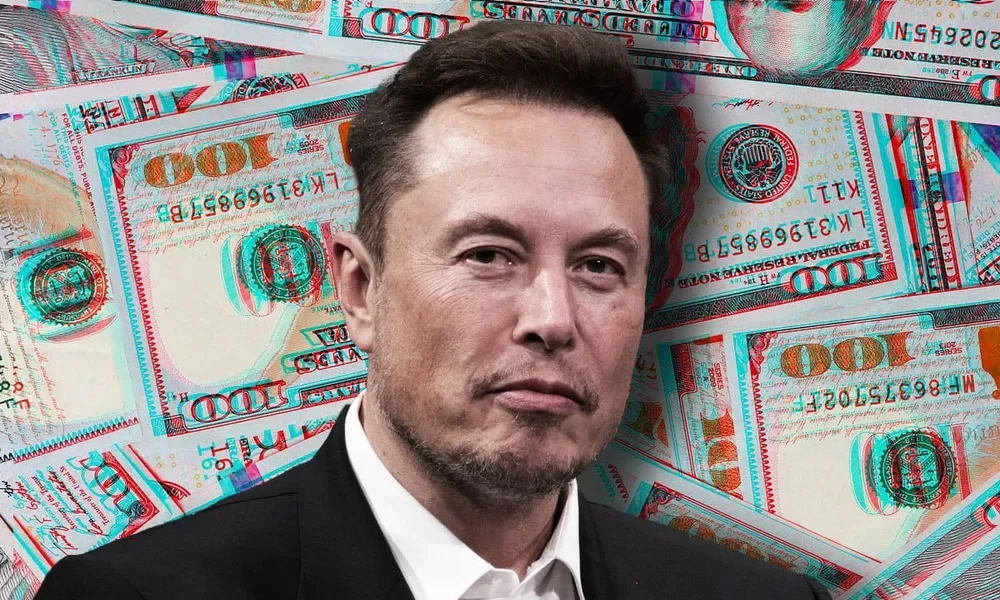
Elon Musk's Bombshell: Mass and Energy as the New Global Currency
The Shift That Redefines Wealth in an AI-Driven World
Rapid advances in AI, robotics, and solar power are converging to make intelligence, labor, and energy nearly free, positioning mass and energy as the core drivers of future economies. This transformation echoes historical currency shifts and points to a deflationary era where energy production becomes the ultimate measure of value.
Key Takeaways
AI training and inference costs have plummeted, with benchmarks dropping from thousands of dollars to pennies, making cognitive tasks approach zero cost.
Robotic labor could reach 20 cents per hour by 2032, disrupting a $40 trillion global market in physical work.
Solar energy costs have fallen 99.6% since 1976, outpacing other sources and enabling exponential growth in power generation.
Historical currency systems—from gold to petrodollars—evolved with dominant economic inputs; energy now emerges as the next anchor.
Orbital solar data centers could multiply Earth's energy output by millions, turning space into the ultimate power source.
In this framework, companies controlling energy, AI, and robotics stacks stand to dominate, while traditional fiat currencies face unprecedented pressure.

The NIL Revolution: How Sudden Wealth is Reshaping College Football's Future
Why the 2024 season's chaos isn't just about upsets—it's a symptom of deeper financial and mental shifts in the sport.
College football in 2024 has delivered nonstop surprises, from unexpected losses to underperforming powerhouses. Beneath the surface, the introduction of Name, Image, and Likeness (NIL) deals and revenue sharing has transformed the game into a high-stakes business arena. Players now earn millions before turning pro, but this influx of cash brings psychological pressures, financial pitfalls, and operational headaches that are testing teams, coaches, and the entire ecosystem. For fans and observers, understanding these dynamics reveals why the sport feels more unpredictable than ever—and what it might mean long-term.
Key Takeaways
NIL deals have created a free-agency-like environment where five-star recruits can command over $2 million, leading to complacency and overthinking among players who feel they've "made it" early.
Psychological warfare is real: Young athletes face immense pressure from family demands, donor expectations, and social media scrutiny, often without adequate financial education, resulting in mismanagement like excessive car leases and tax issues.
Coaching decisions are complicated by money—bench a high-paid starter for a cheaper backup, and you risk alienating donors who funded the deal, potentially cutting future contributions.
Revenue sharing caps (around $20 million per athletic department) aim to level the playing field but are easily bypassed through outside donors and front-loaded payments, fueling roster instability.
The NCAA's weakened authority has turned college athletics into a Wild West, with private equity eyeing investments to stabilize unsustainable donor-reliant models.
Programs like Penn State exemplify the transition pains: Rebuilding from past scandals while navigating NIL could lead to leadership shakeups if expectations aren't met.
Future outlook: Expect more GM roles in teams, agent incompetence driving bad deals, and a potential talent pipeline shift to the NFL as players prioritize money over development.

The Money Trap: How Broken Currency Fuels Global Chaos and Why a Digital Fix Could Change Everything
Unveiling the hidden forces behind economic inequality, endless wars, and societal decay—and the tech innovation poised to rewrite the rules.
Inflation isn't just a headline—it's a silent thief eroding your future. Imagine a world where prices naturally drop as innovation thrives, families afford homes on a single income, and governments can't fund endless conflicts by printing cash. This newsletter dives into the flaws of modern money systems and explores a groundbreaking digital alternative that's already reshaping global finance.
Key Takeaways
Modern fiat currencies allow unlimited printing, leading to hidden theft through inflation that devalues savings and forces people to work harder for less.
Sound money systems promote deflationary pressures where prices fall and quality rises due to competition and innovation, benefiting everyone without government interference.
Broken money distorts economic signals, pulling resources toward government-linked sectors and creating inefficiencies like obesity epidemics, housing crises, and demographic declines.
A perfect money should be scarce, verifiable, divisible, portable, and censorship-resistant—qualities that gold approximated but modern digital solutions like Bitcoin perfect through technology.
Adopting superior money could separate finance from state control, fostering a human renaissance with reduced wars, greater individual empowerment, and long-term societal prosperity.
Global adoption of advanced money systems is inevitable, similar to the internet's rise, but we're still in the early stages—offering massive opportunities for those who act now.

Bitcoin's Unstoppable Rise: Redefining Money in a Decentralized World
Decoding the Tech That Powers Trustless Finance
Bitcoin stands out as a system built for extreme distrust, where participants operate without needing to rely on each other. Its core design ensures that even adversaries can transact securely, making it a prime candidate for future economies driven by AI agents. Large-scale adoption by corporations and governments appears inevitable, driven by its fixed supply and transparency features that outshine traditional assets like gold.
Key Takeaways
Bitcoin operates on a decentralized network where users run nodes to verify transactions, ensuring no single entity controls the system.
The fixed supply of 21 million coins prevents inflation, contrasting with fiat currencies that expand through central bank policies.
Transparency comes from the public ledger, allowing anyone to verify holdings without trusting intermediaries.
Security relies on massive computational power, with attacks like gaining 51% of the hash rate requiring billions in investment and years of chip production.
Forks allow network evolution, but changes need widespread agreement, defaulting to the original hard money rules for stability.
The Lightning Network enables instant, low-cost payments by handling transactions off the main chain before final settlement.
Quantum computing poses risks to current cryptography, but resistant algorithms exist and are under development for integration.
Institutional involvement, such as ETFs, provides exposure but lacks the control and portability of direct ownership.
Bitcoin fosters optimism by protecting wealth from political interference, encouraging long-term planning over short-term survival.

Bitcoin: The Digital Fortress Redefining Wealth in a World of Infinite Energy and AI
Unlocking the Power of Scarce Digital Assets Amid Economic Shifts and Technological Leaps
Bitcoin stands out as a resilient store of value in an era where traditional currencies lose purchasing power through constant dilution, while emerging technologies like cheap energy and AI promise to disrupt everything from gold mining to global economies. This newsletter dives into how Bitcoin's fixed supply and built-in security could make it essential for preserving wealth, outperforming stocks, real estate, and even precious metals over long horizons.
Key Takeaways
Bitcoin has consistently outperformed major asset classes like stocks, bonds, and commodities over the past decade, with annualized returns often exceeding 100% in early years and stabilizing around 20-30% recently.
Traditional currencies have lost 65-99% of their purchasing power in the last 30 years across countries from the US to Venezuela due to inflation and debasement, pushing people toward assets that hold value better.
Bitcoin's capped supply at 21 million units creates deflationary pressure on goods priced in it, making items like electronics cheaper over time when viewed through its lens.
Unlike gold, which could be disrupted by asteroid mining or synthetic production via cheap energy, Bitcoin's scarcity is algorithmically enforced and resistant to physical discoveries.
As a protocol, Bitcoin functions first as a cybersecurity tool using massive computational power to deter attacks, potentially securing digital assets in cyberspace beyond just money.
In a future of AI-driven abundance and potential job displacement, governments may print more money to support populations, accelerating the flow into non-debasable assets like Bitcoin.
Corporations are increasingly adopting Bitcoin as a treasury reserve, with holdings now rivaling major tech firms, offering a hedge against currency dilution and a path to long-term capital growth.

Tesla Outperforms Waymo In Critical Test
A ground-level comparison reveals surprising winners and losers in the self-driving race
The future of transportation is unfolding right now on the streets of Austin, Texas. With both Tesla's new Robotaxi service and Waymo's established presence competing for passengers, we're witnessing a real-world experiment that could determine how we'll all be getting around in just a few years.
Key Takeaways
Bitcoin has consistently outperformed major asset classes like stocks, bonds, and commodities over the past decade, with annualized returns often exceeding 100% in early years and stabilizing around 20-30% recently.
Traditional currencies have lost 65-99% of their purchasing power in the last 30 years across countries from the US to Venezuela due to inflation and debasement, pushing people toward assets that hold value better.
Bitcoin's capped supply at 21 million units creates deflationary pressure on goods priced in it, making items like electronics cheaper over time when viewed through its lens.
Unlike gold, which could be disrupted by asteroid mining or synthetic production via cheap energy, Bitcoin's scarcity is algorithmically enforced and resistant to physical discoveries.
As a protocol, Bitcoin functions first as a cybersecurity tool using massive computational power to deter attacks, potentially securing digital assets in cyberspace beyond just money.
In a future of AI-driven abundance and potential job displacement, governments may print more money to support populations, accelerating the flow into non-debasable assets like Bitcoin.
Corporations are increasingly adopting Bitcoin as a treasury reserve, with holdings now rivaling major tech firms, offering a hedge against currency dilution and a path to long-term capital growth.