

The $600 Million Rescue: One Colonel Hidden in a Mountain Crevice
How US forces ran seven simultaneous deception operations, deployed 155 aircraft, and extracted a single airman from deep inside Iran using every tool from quantum sensor claims to low-level helicopter insertions under a near-full moon.
In early April 2026, during the ongoing air campaign against Iran, an F-15E Strike Eagle was hit by a long-range surface-to-air missile over the Zagros Mountains. The two crew members ejected but landed miles apart. One pilot, seriously wounded, was pulled out in a daylight helicopter operation under small-arms fire. The second man, a colonel in the back seat with only a sprained ankle, climbed higher into the range, wedged himself into a narrow limestone crack at 7,000 feet, and stayed hidden for more than 36 hours while thousands of Iranian searchers and a state-backed bounty hunted him. The recovery that followed became the largest and most elaborate combat search-and-rescue effort the United States has mounted in decades.
Key Takeaways
A single F-15E loss on April 3 triggered two distinct recovery missions: one rushed daylight extraction for the wounded pilot and one meticulously planned nighttime operation 36 hours later for the colonel still hidden in the mountains.
The colonel followed core SERE principles by moving uphill, concealing himself in a tight crevice, and limiting radio transmissions to seconds-long bursts to defeat Iranian direction-finding and thermal assets.
Iranian forces mobilized IRGC units and local Bakhtiari tribesmen, using state media to broadcast a substantial bounty and turn civilians into active searchers across terrain they knew intimately.
US and Israeli intelligence ran a parallel deception campaign that established seven separate fake rescue sites and fed false narratives of a maritime extraction, successfully diverting Iranian attention and resources toward the coast.
The final extraction involved roughly 200 special operators from DEVGRU and supporting units, flown by 160th Special Operations Aviation Regiment crews, with an air support package of 155 aircraft that included B-1 bombers creating isolation zones and MQ-9 Reapers providing close overwatch.
Seven US aircraft were ultimately lost across the broader sequence of events, several deliberately destroyed on the ground to prevent capture, yet both airmen returned alive with zero American fatalities.
Claims of a classified quantum sensor capable of detecting a heartbeat through rock at long range were quickly challenged by physicists on basic signal-propagation grounds, suggesting the publicized technology story may have protected more conventional intelligence sources.
Iran’s Regime Falls: How One Historic Shift Could Flood the World With Cheap Energy and Accelerate the AI Boom
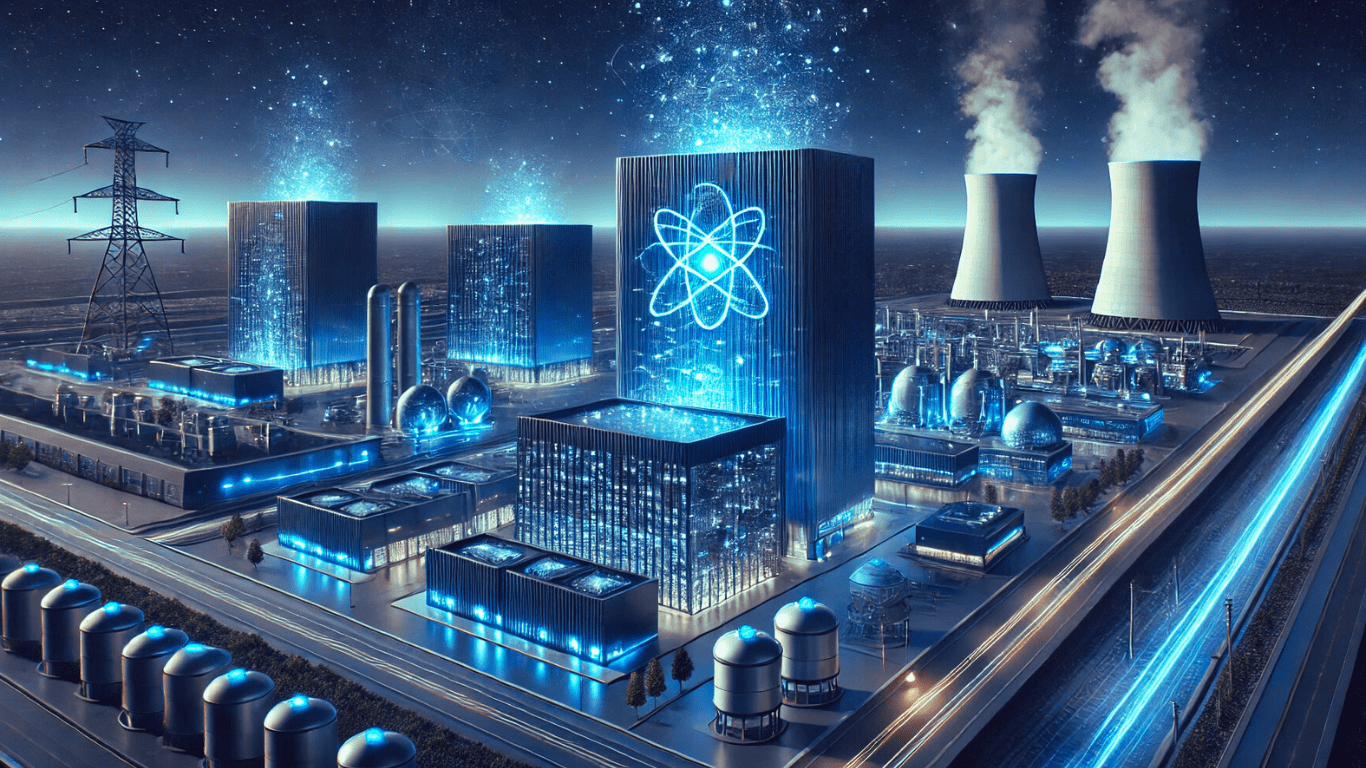
The collapse of Iran’s theocratic government after 47 years isn’t just Middle East news. It removes the single biggest sponsor of regional chaos, frees a population of 90 million that is young, educated, and entrepreneurial, and opens vast oil and gas reserves at the exact moment AI data centers are about to consume unprecedented amounts of power. At the same time, artificial intelligence is already driving transportation costs toward zero, turning $50 airport rides into $5 trips and making door-to-door autonomy cheaper than owning a car. The combination is explosive: stable energy supply meets deflationary mobility technology.
Key Takeaways
AI will make personal transportation radically cheaper, forcing adoption even among skeptics because the price difference is too large to ignore.
Robo-vans unlock flexible, high-frequency urban transit that traditional buses never could, potentially running as free services funded entirely by in-vehicle advertising.
Autonomous freight tunnels separate trucks from passenger traffic, slashing logistics costs and removing semi-trucks from daytime roads without raising goods prices.
Iran’s pre-1979 society was modern and Western-facing; today’s population largely rejects the regime that replaced it, with hardline support estimated below 20 percent.
A post-regime Iran aligned with global markets could add hundreds of billions in productive capacity and become a major energy exporter again.
Transactional, deal-focused leadership resonates strongly in the Middle East because it prioritizes mutual profit over ideology.
The 2028 U.S. election will be decided by candidates who offer concrete answers to AI-driven job displacement and broad participation in AI-created wealth.

Elon Musk's Bureaucracy Roast: How Overregulation Stifles Innovation
Unraveling the Absurd Hurdles Facing Space Tech and Beyond
Government red tape isn't just annoying—it's a massive barrier to progress in fields like space exploration. Recent stories highlight ridiculous requirements, from analyzing shark collision risks to fines for spilling water, all while tech pioneers push boundaries. These insights reveal how outdated systems slow down ambitious projects and what it means for the future of innovation.
Key Takeaways
Overly cautious environmental studies for rocket launches, like assessing impacts on sharks and whales, delay critical advancements in space travel despite minimal actual risks.
Fines for minor actions, such as dumping clean water to cool launch pads, show how regulations ignore context in high-rainfall areas.
Early internet pioneers often started companies out of necessity when traditional job paths failed, leading to breakthroughs like the first online maps and directories.
Media outlets frequently echo identical talking points, raising questions about coordination and reducing public trust in reporting.
Government expansion risks inefficiency, akin to scaling up slow bureaucratic agencies without improving outcomes.
Persistent issues like chronic back pain represent untapped opportunities for tech to boost quality of life.
Free speech advocates face escalating threats, including media labeling and security concerns, underscoring the need for robust protections.
Political leadership often appears scripted, with breakdowns revealing potential influences from unelected power brokers.
Overlaps between high-profile scandals and political figures suggest hidden networks shaping decisions.

The Epstein Black Hole: Intelligence, Tech, and America's Uncertain Path
Why Scandals Like Epstein Could Reshape Foreign Policy and Spark a Tech-Driven Revival
The Epstein case isn't just a media storm—it's a window into how intelligence networks influence global decisions, while technology offers a lifeline for rebuilding trust and prosperity. In the midst of political gridlock and escalating conflicts, emerging tools like AI and independent platforms are challenging old systems, pointing toward a future where transparency and innovation could finally align.
Key Takeaways
Epstein's connections highlight potential intelligence ties that affect U.S. foreign policy, particularly with allies like Israel, raising questions about leverage in ongoing conflicts.
Public frustration with government handling of scandals stems from a perceived lack of transparency, but issues like the economy and immigration often take priority in voter decisions.
Nuclear policy and historical secrecy frameworks continue to justify withholding information, complicating modern accountability in a post-Cold War era.
Independent media and long-form discussions are filling gaps left by traditional outlets, enabling deeper explorations of complex issues and fostering public engagement.
Technological advancements, from AI disrupting jobs to renewable energy promising abundance, represent a hopeful counter to cultural and political decline, though they risk widening divides if not managed carefully.
Political reforms, such as targeted funding for deficit-focused candidates, could create influential voting blocks in Congress, amplifying voices for fiscal responsibility.
COVID-era policies have left lasting psychic impacts, contributing to voter apathy and shifts in party support, especially among younger demographics.
A pro-human approach to tech innovation—balancing benefits like self-driving cars and clean energy with risks like social media isolation—could unify efforts toward a more optimistic national vision.
The America Party Paradox: When Your Biggest Supporter Becomes Your Greatest Threat
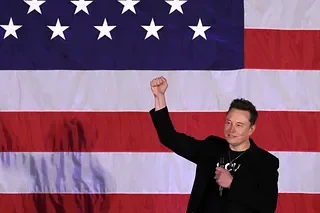
Elon Musk's political movement could reshape America—but what happens when the trillionaire who automated your job also controls the party promising to fix it?
Five to ten years from now, America could face an unprecedented political reality: a third party founded by the world's first trillionaire, whose companies eliminated millions of jobs through AI and robotics. This isn't science fiction—it's the logical endpoint of current trajectories in politics, technology, and wealth concentration. The implications are both thrilling and terrifying.
Key Takeaways
America Party targets the mismatch between voter registration (50% independent) and Congressional representation (99% Democrat/Republican).
Success would make Musk both the richest person ever and founder of the nation's most powerful political party—an unprecedented concentration of influence.
The AI/robotics revolution will eliminate drivers, cut management roles by 80%, and transform physical labor, creating massive displacement.
Political opponents will weaponize job losses against the party led by the person whose companies automated those jobs away.
Universal Basic Income becomes inevitable, but which party champions it could determine America's political future for generations.
The venture might serve as a "beta test" for governing Mars, where SpaceX would need to establish political structures.

Elon's America Party Gambit: The Biggest Risk Tesla Investors Have Ever Faced
As Musk launches a third political party targeting the national debt, Tesla shareholders confront unprecedented uncertainty in the company's most critical moment
The Fourth of July weekend brought fireworks of a different kind as Elon Musk officially announced the formation of the America Party, positioning himself to disrupt the two-party system that has dominated American politics for centuries. For Tesla investors, this move represents potentially the riskiest decision in the company's tumultuous history—arriving just as robotaxis promise to transform the business forever.
Key Takeaways
Musk's America Party aims to address national debt concerns he claims both major parties ignore, directly challenging GOP power after supporting Trump
Tesla faces unprecedented political risk as disrupting the two-party system could trigger bipartisan retaliation affecting autonomous vehicle regulations
The timing creates a dangerous convergence: political chaos meets Tesla's critical robotaxi scaling phase where cash flow remains unproven
Tesla currently manufactures 1.2 million potential robotaxis annually (Model Y), capable of replacing Uber's entire U.S. fleet each year
Political backlash already manifested in vandalized Tesla stores and customer vehicles following Musk's Trump support
Success depends on robotaxi economics becoming "undeniable" before political headwinds can materialize into regulatory roadblocks

The Great Disruption
Why American Politics Will Never Be the Same
The U.S. faces a convergence of crises that most politicians still refuse to name out loud. Interest payments are consuming the federal budget. Birth rates are falling off a cliff. AI is advancing faster than society can absorb. And the parties in power? Locked in theater, denial, and dysfunction.
At the center of it all is a stark truth: neither side has a real plan. Republicans talk fiscal discipline while passing trillion-dollar bills. Democrats cling to elite consensus while working-class voters drift away. And behind the noise, America’s foundational systems—economic, political, demographic—are quietly failing.
Tech leaders like Elon Musk are sounding the alarm, but even they are caught in internal wars. The Musk-Bannon rift over spending and control signals a deeper fracture between the tech elite and the populist base. It’s not just a feud—it’s a fault line that could shatter the Republican coalition entirely.
Meanwhile, AI is the wild card. It could drive enough growth to outrun our problems—or accelerate collapse by replacing jobs, destabilizing economies, and breaking politics as we know it. Add in a collapsing birth rate and rising global competition, and the U.S. enters a pressure cooker with no historical precedent.
Here’s what we explore:
Why the U.S. debt crisis may be irreversible under current political incentives
The real meaning behind the Musk vs. Bannon feud—and what it signals about 2026
How AI could be our salvation or the match that ignites mass unrest
The demographic doom loop no one in D.C. wants to confront
Why media gatekeepers have lost control—and what that means for political power
The growing class disconnect between elites and everyday Americans
And why the “middle ground” in politics, economics, and culture may no longer exist

Delaware's Legal System Crisis
A Seismic Shift in Corporate Governance
For over a century, Delaware has been the undisputed home of American corporate law. But that era may be ending.
A quiet but dramatic shift is unfolding in Delaware’s Chancery Court, where plaintiff attorneys are now securing attorney fee multipliers of 7–10x, far above the federal standard of 1–2x. In some cases, those awards have surpassed 20x—a legal escalation so extreme that it’s begun reshaping where companies choose to incorporate.
This isn’t just about expensive lawsuits. It’s about activist judges rewriting the rules of corporate governance through precedent-driven decisions that feel increasingly hostile to business. Since 2009, Delaware has seen a surge in rulings favoring plaintiffs, with fee awards occurring 100 times more frequently than in federal court.
Now, a growing number of companies, investors, and legal teams are making a different choice: leave. States like Texas, Nevada, and Arizona are gaining traction as safer harbors—jurisdictions where the law is statute-based, more predictable, and less subject to judicial interpretation.
Here’s what this signals:
How a handful of activist judges triggered a corporate legal exodus
Why plaintiff attorneys are flooding Delaware with lawsuits
The cost mechanics behind fee multipliers that can bankrupt companies
Where startups and VCs are moving instead—and why
And what this means for the future of American corporate law
Delaware isn’t just losing its edge—it may be losing the very trust it was built on.
America's Industrial & Defense Readiness
A Critical Analysis
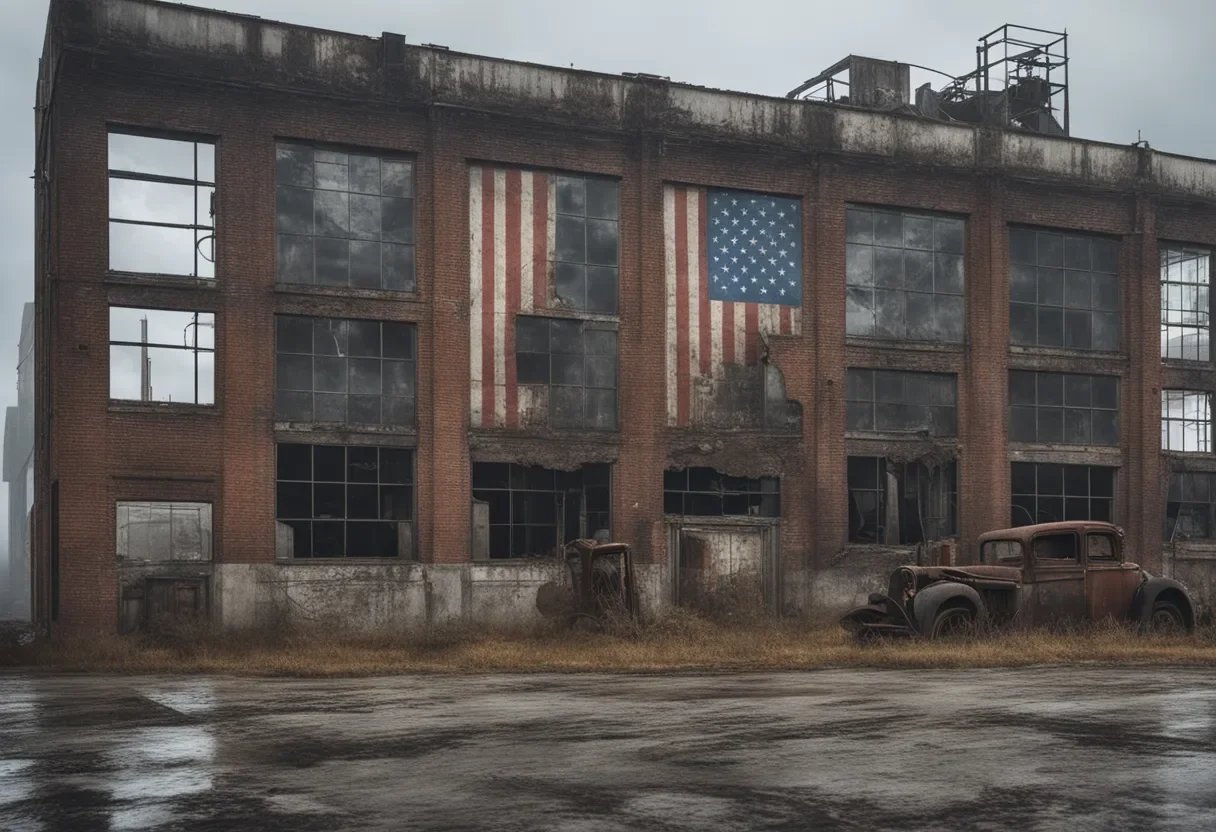
For decades, the U.S. traded away its industrial base in pursuit of cost efficiency. Today, that strategy is showing its cracks. America now produces just four ships per year—while China builds 400. Fewer than 8,000 toolmakers remain in the entire country. Critical manufacturing skills have vanished, regulatory frameworks are frozen in the 1940s, and the defense sector is increasingly dependent on foreign suppliers.
This isn’t just an economic oversight. It’s a strategic vulnerability.
From shipbuilding to rare earths to heavy industry, the U.S. has allowed core capabilities to wither—while peer rivals scaled up. Our inability to scale production in a crisis, supply weapons quickly, or retrain a skilled workforce fast enough is no longer theoretical. It’s a live risk.
Inside this breakdown:
Why outdated regulations are killing defense-sector innovation
How cultural stigma around trades has gutted America’s technical workforce
Where China’s production capacity now utterly dwarfs ours
And what a modern manufacturing revival would actually require
This isn’t a question of if we need to rebuild industrial strength—but whether we’ll act in time to do it.
America's Energy Renaissance
How Strategic Resource Development Could Reshape the Nation's Future
The U.S. is no longer just energy independent—it’s on the verge of becoming the energy superpower of the 21st century.
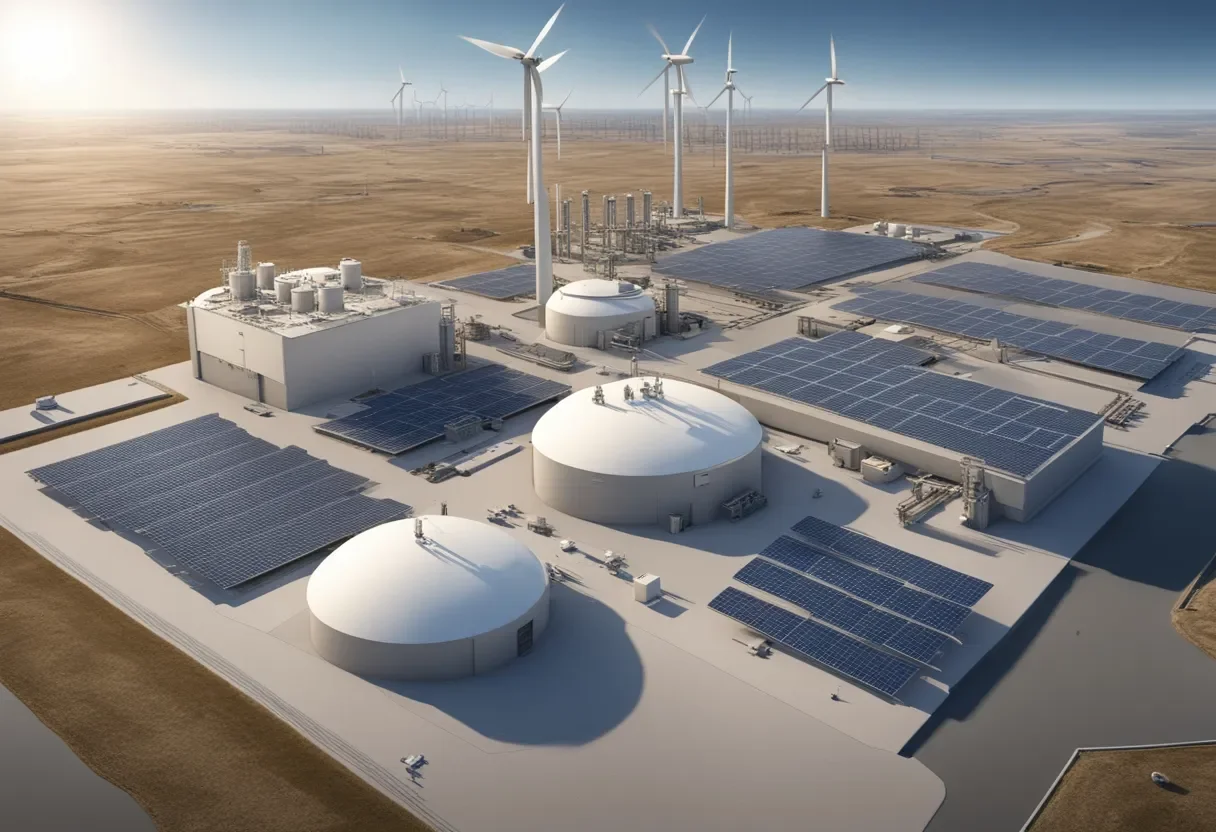
With LNG export capacity now second in the world, vast untapped mineral reserves, and cutting-edge technologies like Small Modular Reactors (SMRs) and AI-driven resource extraction, the United States sits at the intersection of economic renewal, energy dominance, and technological leadership.
But this isn’t just about fossil fuels or renewables. It’s about building a modern energy ecosystem that can power everything from AI superclusters to next-gen manufacturing—while setting global standards for environmental stewardship and strategic resilience.
Inside this analysis:
How energy exports are reshaping America’s geopolitical leverage
Why regulatory reform could unlock trillions in new infrastructure
What powering AI means for national energy planning
And how modern extraction techniques could align development with conservation