

The Master Plan You Can't Unsee: Wiring Civilization's Next Foundation
How energy systems, self-driving fleets, humanoid robots, satellite networks, and orbital infrastructure are stacking into one coherent architecture for abundance—and why Mars ambitions are already reshaping what is possible on Earth.
A single Tesla completing a 13,000-mile coast-to-coast journey on full self-driving in January 2026 without any human intervention on the controls was more than an autonomy milestone. It marked the visible activation of something larger: a stacked foundation of technologies now advancing in parallel across energy, transport, labor, intelligence, connectivity, and space. The most valuable pattern is not any single product but the way these layers reinforce one another, with physics-first requirements for multi-planetary settlement acting as the forcing function that accelerates practical progress everywhere else. Cost curves in AI, robotics, and solar are collapsing at the same moment, pointing toward a period where intelligence, physical work, and energy become abundant enough to reorder how economies measure value.
Key Takeaways
Eight interlocking layers—energy generation and storage, physical transport, humanoid robotics for labor, AI agents for knowledge work, frontier model intelligence, global satellite networks, off-world transport, and direct brain-computer interfaces—are being built together rather than as isolated bets.
Reusable orbital-class rockets and mass-market electric vehicles both moved from expert consensus of impossibility to routine operation, showing that compressed timelines often precede large-scale delivery once the underlying engineering locks in.
Hardware and data integrations across projects, such as satellite antennas embedded in vehicle roofs, energy storage powering training clusters, and vehicle fleets supplying training data for robots, create closed loops that multiply progress beyond what any single company could achieve alone.
The requirement to settle Mars drives demand for electric propulsion, robotic construction crews, subsurface habitats, and reliable interplanetary links—technologies that simultaneously relieve energy, labor, infrastructure, and connectivity constraints on Earth.
Observed cost trajectories show AI inference dropping by roughly 36 times in two years, robotic labor approaching a couple of dollars per hour at scale, and solar generation costs having already fallen 99 percent over recent decades, with further declines continuing.
Physical infrastructure at new orders of magnitude, including chip fabrication targeting 100–200 billion specialized AI units per year and launch costs falling toward $10–100 per kilogram to orbit, is enabling both terrestrial AI expansion and space industrialization at the same time.
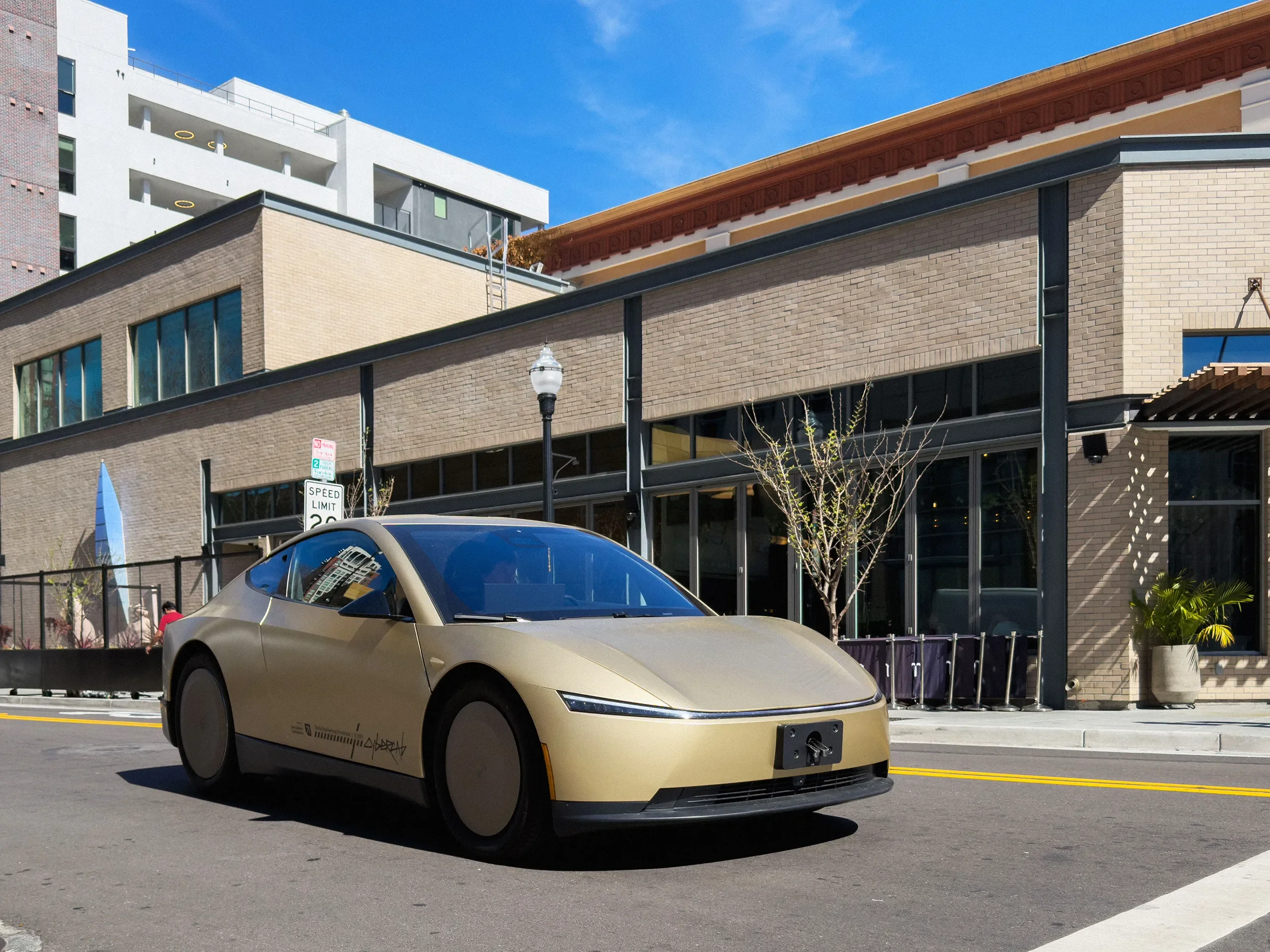
The End of Scarcity? How Radical Abundance Will Remake Cities, Purpose, and Civilization
From robo-taxis and walkable arcologies to lunar megaprojects and the human drive for status in a post-work world.
Automation and advanced robotics are steering us toward a future where material limits fade fast. Everyday movement, living spaces, and even our sense of purpose stand to change in profound ways. Cities could shrink their footprints around people instead of vehicles. New settlements will sprout in breathtaking locations once considered too remote. And in a world of plenty, the real test becomes inventing fresh reasons to strive, create, and connect.
Key Takeaways
Robo-taxis will free up vast urban real estate, creating networks of highly walkable zones packed with green walls, terraces, and integrated ecosystems rather than parking lots and roads.
Personal flight systems with bird-like energy density could eliminate the need for cars and roads altogether, turning journeys into direct, exhilarating point-to-point experiences.
Robotic construction and cheap desalination will unlock development of stunning new towns and cities on high-desert land, mountain foothills, or even ocean platforms—places chosen purely for beauty and livability.
Perfect abundance environments, like those studied in controlled animal populations, can lead to behavioral collapse and population decline, but humans counter this through endless creativity, relative status-seeking, and the constant invention of new social contracts and subcultures.
Lunar resources could fuel enormous off-world compute infrastructure, while early Mars missions may confirm microbial life is common across the solar system, strengthening ideas of panspermia.
Versatile humanoid robots and brain-computer interfaces will handle physical labor and deliver immersive new experiences—from instant skill acquisition to full-sensory simulations—while heightening global competition over autonomous systems and supply chains.

Optimus: The Robot Revolution Targeting $40 Trillion in Human Labor
How AI-Powered Humanoids Could Drive an Era of Abundance—or Economic Upheaval
Humanoid robots stand poised to transform the global economy by automating vast swaths of physical work, tapping into a $40 trillion annual labor market. Advances in AI enable these machines to learn tasks rapidly, while manufacturing expertise allows production at unprecedented scale. This shift promises lower costs and higher efficiency, but it also raises questions about job displacement and regulatory hurdles.
Key Takeaways
Humanoid robots target the $40 trillion global labor market, dwarfing industries like automotive ($3 trillion) and smartphones (under $1 trillion).
AI forms the core intelligence, drawing from self-driving tech to process visual inputs and execute physical actions.
Scaling production to millions of units leverages existing manufacturing capabilities, creating a data flywheel for rapid AI improvements.
Initial deployments focus on factories for repetitive tasks, expanding to warehousing, agriculture, construction, and healthcare.
Economic models show robots costing $20,000–$30,000 could replace human labor at a fraction of annual wages, with added savings on insurance and benefits.
Risks include timeline delays, regulatory barriers, technical challenges in dexterity, and competition from other firms.
Long-term, abundant robot labor could eliminate scarcity constraints, enabling massive economic growth, but requires careful management to avoid societal disruption.