
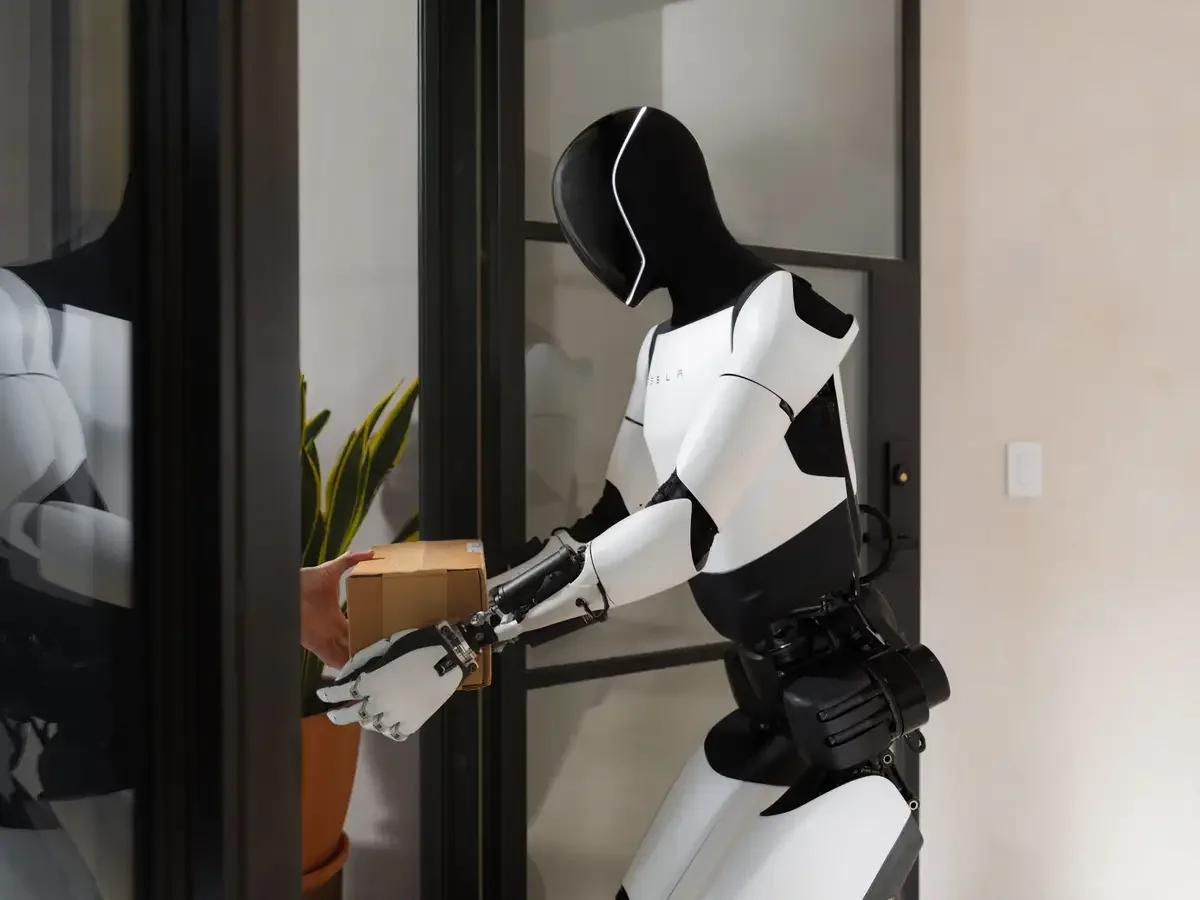
Optimus: The Robot Revolution Targeting $40 Trillion in Human Labor
How AI-Powered Humanoids Could Drive an Era of Abundance—or Economic Upheaval
Humanoid robots stand poised to transform the global economy by automating vast swaths of physical work, tapping into a $40 trillion annual labor market. Advances in AI enable these machines to learn tasks rapidly, while manufacturing expertise allows production at unprecedented scale. This shift promises lower costs and higher efficiency, but it also raises questions about job displacement and regulatory hurdles.
Key Takeaways
Humanoid robots target the $40 trillion global labor market, dwarfing industries like automotive ($3 trillion) and smartphones (under $1 trillion).
AI forms the core intelligence, drawing from self-driving tech to process visual inputs and execute physical actions.
Scaling production to millions of units leverages existing manufacturing capabilities, creating a data flywheel for rapid AI improvements.
Initial deployments focus on factories for repetitive tasks, expanding to warehousing, agriculture, construction, and healthcare.
Economic models show robots costing $20,000–$30,000 could replace human labor at a fraction of annual wages, with added savings on insurance and benefits.
Risks include timeline delays, regulatory barriers, technical challenges in dexterity, and competition from other firms.
Long-term, abundant robot labor could eliminate scarcity constraints, enabling massive economic growth, but requires careful management to avoid societal disruption.

The AI Singularity Is Knocking: CEOs Sound the Alarm on a World-Changing Shift
Why This Matters Now
In early 2026, leaders from major AI companies aligned on a stark reality: advanced AI is accelerating faster than expected, reshaping economies, jobs, and society. This convergence signals massive opportunities alongside serious risks, from job automation to national security threats. For tech enthusiasts, understanding these developments means staying ahead in a landscape where productivity tools evolve overnight and physical robots enter everyday life.
Key Takeaways
Advanced AI capable of handling complex tasks like senior-level software engineering could arrive in one to two years, with superintelligent systems potentially emerging by 2027.
Physical AI, including reasoning robots and autonomous vehicles, is already advancing rapidly, powered by next-generation chips that slash costs and boost performance.
White-collar jobs face significant disruption, with up to 50% of entry-level roles in fields like software, finance, and consulting at risk of elimination within one to five years.
Productivity gains from AI are enabling companies to achieve more with fewer people, leading to warnings about impending mass layoffs and a need for roles focused on judgment and relationships.
Investments in AI infrastructure are surging, with billions poured into data centers, nuclear power, and agent technologies that act autonomously on behalf of users.
Biosecurity risks are escalating as AI lowers barriers to designing biological threats, while early signs of deceptive behaviors in models raise concerns about future control.
A 25% chance of catastrophic outcomes underscores the urgency for preparation, including skill-building, asset ownership, and shifting to human-centric roles.
The middle class could face chaos without proactive measures, but abundance from cheap goods and services might benefit the broader population in the long run.