

Ford's $19.5 Billion EV Surrender: Legacy Auto's Road to Irrelevance
Why This Massive Write-Down Signals the Endgame for Traditional Carmakers in the Electric and Autonomous Era
Ford's recent $19.5 billion impairment on its electric vehicle operations exposes deep cracks in legacy automakers' strategies, while highlighting how companies built around EVs from the start are pulling ahead in profitability and future tech like autonomy.
Key Takeaways
Ford has lost $13 billion on EVs since 2023 and is now scrapping plans for larger electric models, including the F-150 Lightning, due to persistent unprofitability.
The pivot to hybrids and gas vehicles prioritizes short-term certainty over long-term innovation, leaving Ford without a viable path to full vehicle autonomy.
Legacy automakers' approach of retrofitting EV tech into gas-designed platforms fails economically, contrasting with vertically integrated EV-native companies that achieve strong margins.
Autonomy will reshape transportation economics, favoring EV fleets for Robotaxis over hybrids, which carry higher maintenance and complexity.
This decision foreshadows broader industry retreat, positioning Tesla and select others as dominant players in a market shifting toward transportation as a service.
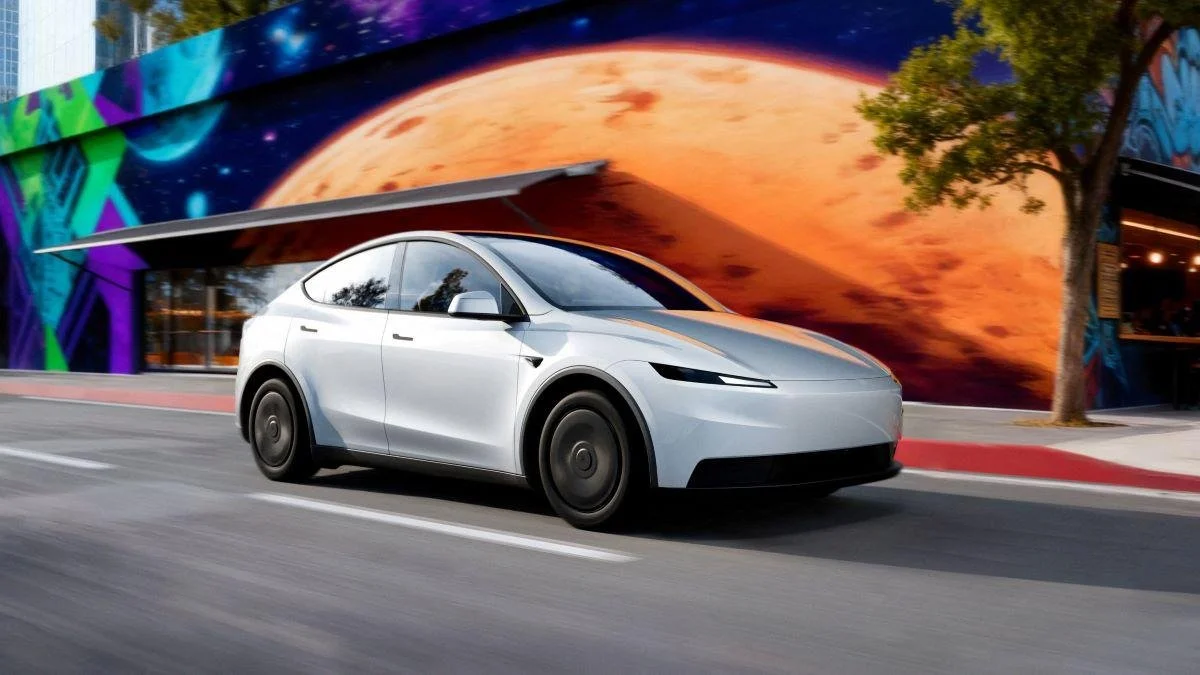
Tesla's Affordable EV Gambit: Model 3 and Y Standards Hit the Road Under $40K
Stripped-down powerhouses with 300+ mile range promise to shake up the mass-market EV race—but will they truly democratize electric driving?
Tesla's latest move drops two entry-level versions of its flagship sedans and SUVs, blending cost-cutting with core performance to target everyday buyers. These standards pack real-world efficiency gains and seamless tech integration, setting the stage for broader EV adoption amid a crowded market.
Key Takeaways
The Model 3 Standard starts at $36,990 with 321 miles of EPA-estimated range, rear-wheel drive, and 0-60 mph in 5.8 seconds, making it a nimble daily driver for urban commuters.
The Model Y Standard kicks off at $39,990, offering the same 321-mile range in SUV form, with 75 cubic feet of cargo space and a 3,500-pound towing capacity for family haulers.
Both models trim luxuries like premium audio, heated rear seats, and advanced driver aids to hit affordability targets, but retain essentials such as a 15.4-inch touchscreen, heated front seats, and access to the Supercharger network.
Deliveries begin in December 2025 for most U.S. markets, with immediate ordering available online—positioning Tesla to rebound from recent sales dips.
Battery tweaks deliver up to 160 miles of charge in 15 minutes, emphasizing practical fast-charging that rivals gas station stops for road trips.