
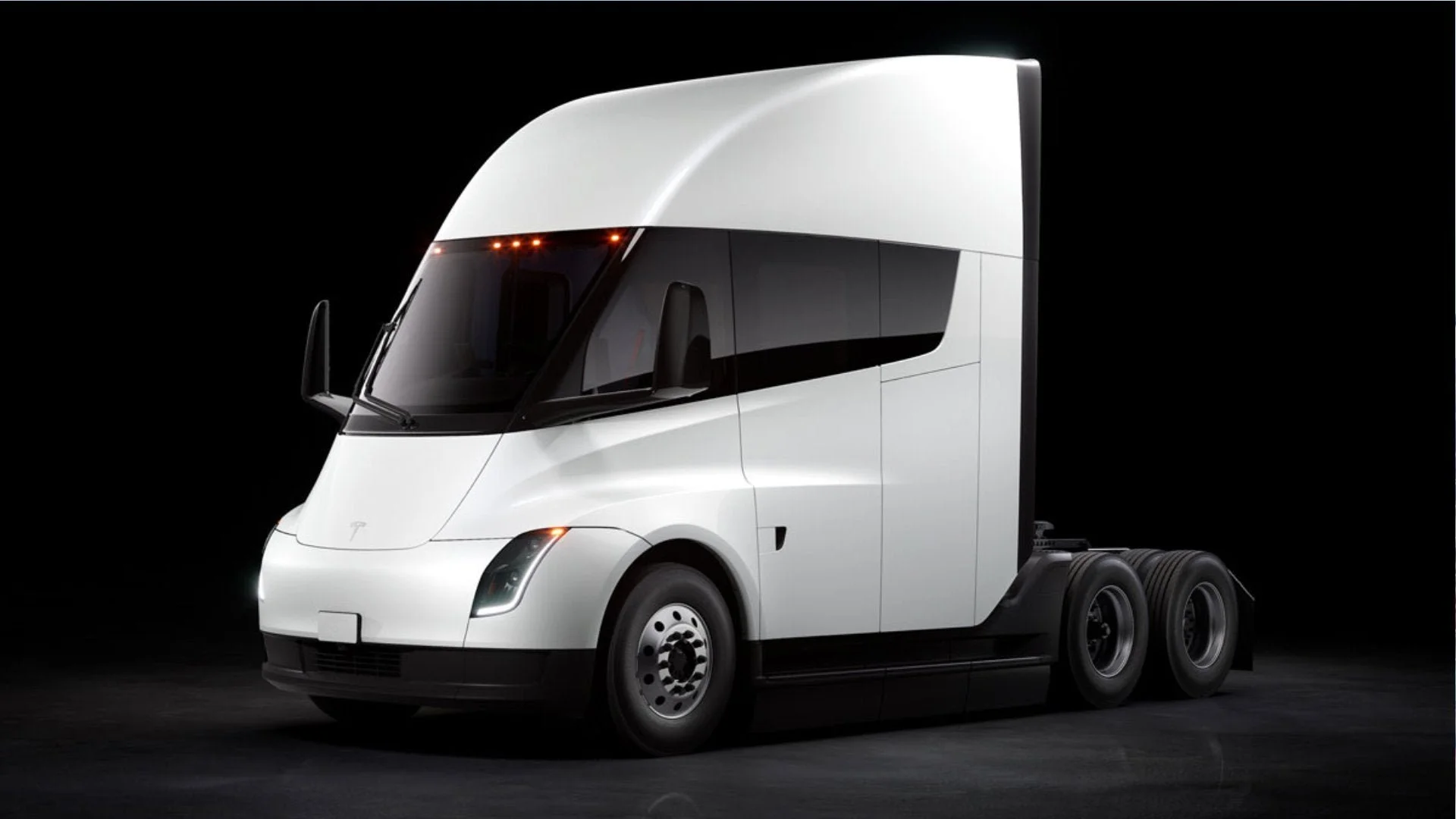
The Tesla Semi Has Started Production. The Truck That Ends Diesel's Century-Long Grip on Freight
Electric powertrains plus coming autonomy slash costs enough to compete with rail while keeping every road advantage, redrawing factory maps and supply chains across America.
Tesla began rolling production Semis out of its Nevada factory in 2026. Real-world efficiency data shows these trucks consuming about 1.7 kilowatt-hours per mile even when more than 65 percent of miles are run at loads above 70,000 pounds. At typical depot electricity rates, that works out to 20–30 cents per mile in energy. A comparable diesel big rig burns 80–90 cents of fuel for the same mile at current prices. Maintenance follows the same pattern: electric architecture removes the engine, multi-speed transmission, exhaust aftertreatment system, oil changes, and DEF fluid that dominate diesel repair bills, dropping that line item from roughly 19–20 cents per mile to around 6 cents. The math is already decisive on fuel and upkeep alone. When autonomy reaches the long, straight highway segments that make up the easiest slice of long-haul work, the largest remaining cost—driver wages and benefits—also shrinks dramatically. The combined trajectory points to an 80 percent or greater drop in total cost per mile, pushing road freight economics close to rail levels while preserving the flexibility rail can never match.
Key Takeaways
Production Tesla Semis achieve roughly 1.7 kWh per mile in heavy-duty service, translating to energy costs of 20–30 cents per mile versus 80–90 cents in diesel fuel at mid-2026 prices.
Comprehensive industry benchmarks place all-in diesel truck operating costs at $2.26 per mile, with driver compensation at nearly 44 percent and fuel representing only about one-fifth even at bulk rates.
Electric drivetrains cut maintenance costs by approximately 70 percent by eliminating thousands of moving parts, complex transmissions, and emissions hardware that require constant service in diesel rigs.
Layering autonomy onto electric operation on major highway corridors projects total cost reductions of 80 percent or more, approaching rail's 2–5 cents per ton-mile while retaining door-to-door road access.
The resulting affordability removes distance as a primary economic tax, making localized manufacturing and smaller, more frequent warehouse networks economically rational instead of politically driven.
Historical precedent from standardized shipping containers shows that transport cost collapses exceeding 90 percent can multiply trade volumes by factors of nine or more and reorganize global production geography within 15 years.
Efficiency gains do not reduce total freight movement; they expand it through longer supply chains, greater product variety, and higher shipment frequency as new use cases become viable.

Cybertruck's Near-Miss Off-Road Run Shows Why Tesla's Platform Strategy Matters More Than Looks
Real-world durability tests, modular interiors, DC energy rethinking, and agent orchestration are quietly defining the next wave of useful hardware.
A recent off-road outing in rugged Hill Country terrain put the Cybertruck through conditions most owners will never encounter. The truck handled narrow, rocky ATV trails and sudden drops when its systems were engaged properly, but the episode also showed how quickly capability turns risky without clear route judgment. That same platform thinking now points toward a three-row SUV variant that could solve family hauling needs while keeping the core advantages of shared production and component architecture. At the same time, the push to cut power conversion losses in homes and data centers is gaining practical momentum through integrated solar, storage, and local compute. AI tooling is shifting from single clever models to orchestrated systems with real safeguards. And autonomous van platforms are opening the door to living arrangements that treat mobility as a core feature rather than an afterthought. These threads matter because they focus on integration, efficiency, and adaptability rather than isolated specs.
Key Takeaways
The Cybertruck proved its hardware margin in demanding terrain when using maximum suspension and recovery modes, but the incident reinforced that operator decisions remain the primary variable in extreme use.
Tesla is positioned to launch a three-row SUV on the existing Cybertruck line, likely with configurable seating on tracks, higher interior volume, and shared 48-volt and networking architecture for fast reconfiguration between passenger and cargo layouts.
Native DC power chains in homes and data centers with on-site generation can recover substantial energy currently lost to repeated AC conversions, enabling tighter integration of batteries, HVAC, and local AI hardware.
Effective AI agent systems now emphasize hierarchical permissions, auditability, and task reliability over raw model power, with local frameworks showing clear differences in sustained execution performance.
Autonomous high-roof platforms that double as living spaces reduce the friction of relocation and create climate-resilient, scalable housing options that align with human patterns of mobility seen throughout history.