
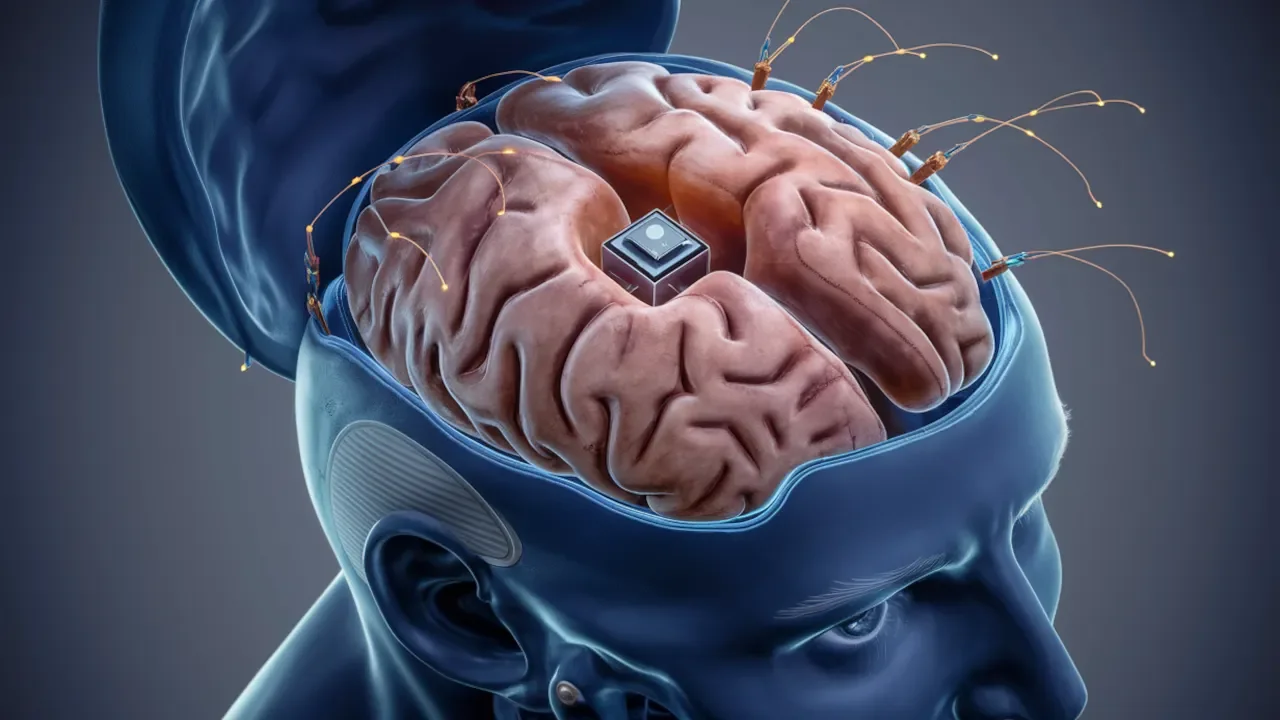
Mind-Powered Speech: How Brain Implants Are Restoring Voices Lost to ALS
A single neural device now decodes thoughts into fluent, personalized words—bypassing damaged nerves entirely and handing independence back to patients who once faced total silence.
Brain-computer interfaces have crossed a critical threshold. They now let people with advanced ALS generate clear speech simply by intending to talk, using a voice that sounds exactly like their own from before the disease took hold. The result is not just communication—it is restored identity, reduced exhaustion, and a direct bridge from brain to the world.
Key Takeaways
The implant records activity from thousands of individual neurons in the brain’s speech motor cortex at once, translating raw signals into synthesized words without any muscle movement.
Patients produce speech by silently mouthing or simply thinking the words, eliminating the fatigue and frustration that come with trying to force damaged vocal muscles.
Voices are rebuilt from pre-illness recordings, so loved ones hear the exact tone and personality they remember from years earlier.
Calibration happens quickly through guided sentence practice, with models improving from near-zero accuracy to fluent output in a single session.
Users gain immediate practical control—turning on lights, playing games, or holding extended conversations—while also contributing real-time data that accelerates future versions.
The entire experience is low-burden: same-day discharge after surgery, home charging, and an app that keeps everything intuitive.
Neuralink's Leap: From Sci-Fi to Everyday Reality
Unlocking Human Potential Through Brain-Machine Fusion
Neuralink is pushing boundaries in brain-computer interfaces, turning paralysis into possibility and aiming for full brain connectivity. With rapid advancements in implants, robotics, and decoding, the tech promises to restore lost functions and enhance cognition, all while scaling to help thousands.
Key Takeaways
Neuralink's first product enables quadriplegic users to control devices like computers and phones purely through thought, with average daily usage reaching eight hours.
The company has implanted devices in 13 people as of late 2024, focusing initially on spinal cord injuries and ALS, with plans to expand to restoring sensation, speech, and vision.
Surgical robots insert ultra-thin threads into the brain, avoiding blood vessels, with future versions targeting faster, more reliable procedures under one hour.
Implants feature 1,000 channels for neural recording, wireless charging, and data compression to transmit signals via Bluetooth, but scaling to higher channel counts demands innovations in power, packaging, and compression.
Decoding algorithms convert brain spikes into actions like cursor movement in 15-20 minutes of calibration, though ongoing drift requires robust, self-adapting ML models.
Long-term vision includes whole-brain interfaces for treating psychiatric disorders, augmenting abilities, and exploring the brain's inner workings, backed by vertical integration from chip design to manufacturing.