

Tesla's 2026 Leap: Unlocking Robotaxis and AI Dominance
Revolutionizing Transportation and Compute in One Bold Year
Tesla's trajectory heads into overdrive as unsupervised self-driving tech nears reality, Cybercab production ramps up, and AI hardware reshapes the company's future. These shifts promise massive value unlocks for vehicles, energy, and beyond, setting the stage for explosive growth.
Key Takeaways
Unsupervised full self-driving (FSD) could multiply vehicle values by five times through higher margins and new revenue streams.
Cybercab enters volume production in April, starting slow but scaling to thousands per week, with flexible designs to navigate regulations.
AI hardware advancements pave the way for safer robotaxis, distributed computing, and pathways to bots and satellites.
Energy demand surges infinitely due to AI needs, bolstering Tesla's bottom line.
Subscription models for vehicles and software could transform ownership, blending transport, power backup, and personal AI computing.

The AI Triple Shift: Why Computing's Future is Accelerating Faster Than Ever
Unlocking Trillions in Value Through Three Converging Revolutions
The landscape of computing is undergoing its most profound changes since the early days of silicon chips. Three overlapping transitions— from traditional processing to accelerated systems, the integration of generative technologies, and the emergence of intelligent agents—are set to redefine industries, boost efficiencies, and spawn entirely new markets. These shifts aren't just incremental; they're creating opportunities worth hundreds of billions in annual spending while addressing the slowdown in historical cost reductions from chip advancements.
Key Takeaways
Accelerated computing via specialized hardware is overtaking general-purpose processors, optimizing data processing, simulations, and non-AI workloads to cut costs in a post-Moore's Law world.
Generative AI is upgrading core applications like search engines, recommendation systems, and ad targeting, leading to measurable gains such as 5% higher conversions on social platforms.
Agentic AI represents the next frontier, powering tools for coding, medical diagnostics, legal analysis, and autonomous vehicles, with startups in this space growing at unprecedented rates.
A unified architecture that handles all AI phases—from training to inference—ensures seamless support across clouds, enterprises, and edge devices, maximizing energy efficiency and revenue per watt.
Global infrastructure investments will expand beyond major tech firms to include sovereign funds, industries like healthcare and manufacturing, and new AI factories dedicated to real-time token generation.
Scaling laws in pre-training, post-training, and inference are driving exponential improvements in model intelligence, with each hardware generation delivering 20-30x performance leaps.
Ecosystem partnerships with leading AI developers are broadening platform reach, securing diverse demand, and fostering resilience in supply chains.

Grok 4 Ushers in a New Era of AI Dominance
Why Scale is Redefining the Race to Superintelligent Machines
The latest advancements in AI are reshaping industries at breakneck speed, with breakthroughs that promise to accelerate progress toward human-level intelligence. At the forefront is Grok 4, a model that's not only topping benchmarks but also introducing innovative approaches to reasoning and data handling. Dive in to explore how massive computing power and clever data strategies are giving one player a commanding lead, and what this means for the future of technology.
Key Takeaways
Grok 4 has achieved the highest scores on leading benchmarks, surpassing models from established players and establishing itself as the most capable AI available today.
Built on the principle that raw scale in compute and data outperforms complex shortcuts, this model leverages a colossal supercomputer setup with over 200,000 high-end GPUs, set to expand dramatically.
Innovative use of synthetic data and multimedia training, including video and audio, enables superior reasoning and positions future models to learn more like humans.
Despite its strengths, challenges like high costs—up to $300 per month for advanced access—and ethical concerns highlight ongoing debates about AI accessibility and safety.
The rapid rise of this technology underscores how resource advantages can create insurmountable leads, potentially accelerating the path to artificial general intelligence (AGI).
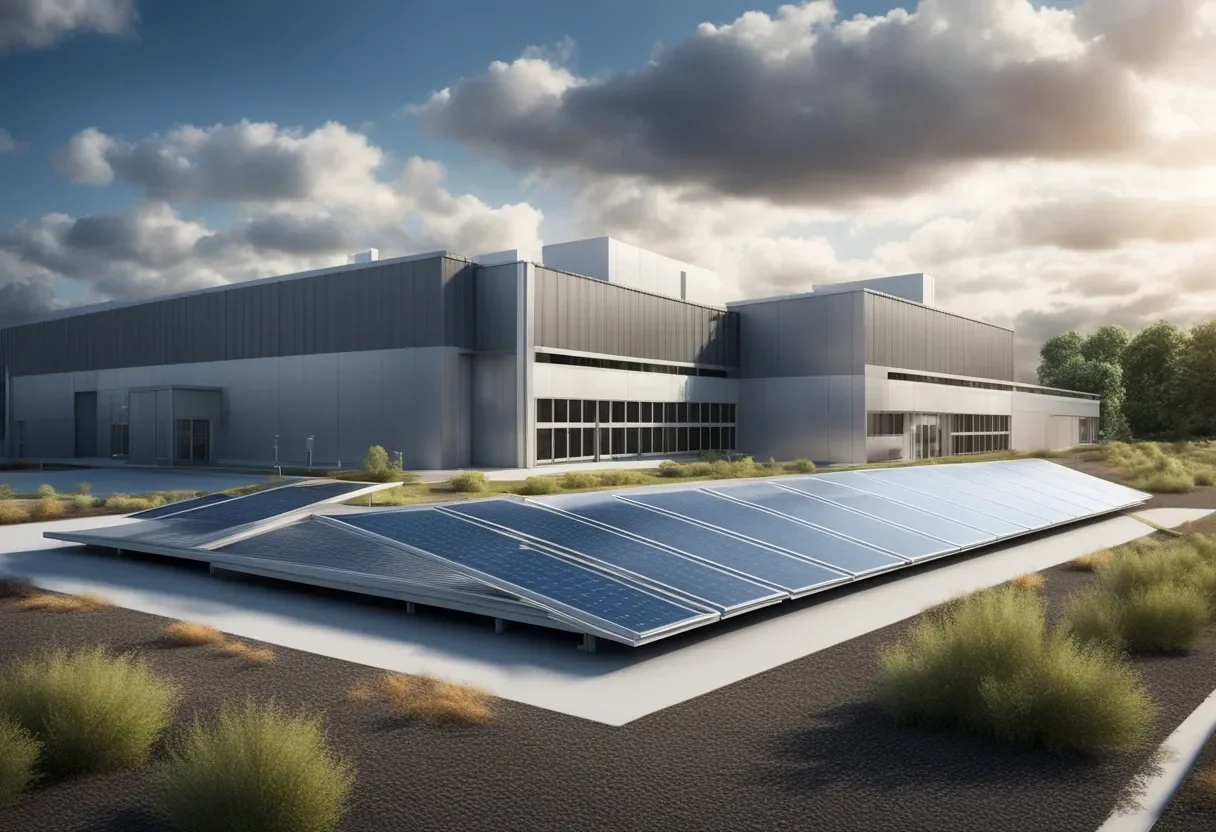
Tesla's Battery Revolution
AI data centers demand instant power shifts that grids can't handle—batteries step in to smooth the ride and unlock massive efficiency gains.
AI computing has exploded, but its hidden cost is massive power volatility that threatens grid stability. Short-duration batteries address this by absorbing surges and optimizing energy flow, turning a technical headache into a profitable edge. In flexible markets like Texas, these systems are proving their worth, potentially creating a trillion-dollar industry as AI scales up.
Key Takeaways
AI data centers create rapid power fluctuations from synchronized GPUs, stressing traditional grids with megawatt-scale spikes multiple times per second.
Short-duration batteries (2-4 hours) excel at managing these brief surges, offering better efficiency than long-duration options or wasteful GPU idling.
Battery systems can pay for themselves through energy savings by reducing peak power needs and optimizing usage.
Flexible power markets, like those in Texas, accelerate AI infrastructure growth by enabling quick adaptations and cost-effective solutions.
As AI expands, energy storage emerges as essential infrastructure, bridging current grid limits with future computing demands.