

The AI War Is Over: Only Two Factions Will Dominate by 2030
Compute compounds like nothing in history—turning a handful of leaders into an unassailable advantage while the rest get acquired, commoditized, or left behind.
In the age of AI, the most valuable resource isn’t land, oil, or even raw processing power. It’s the self-reinforcing cycle where superior models draw more users, those users generate higher-quality data, and that data trains even stronger models. This flywheel accelerates with every iteration, widening the gap between frontrunners and everyone else. Eight major factions are battling for control of this cycle. Most coverage calls it competition. The math reveals something far more decisive: by 2030, only two will hold the keys to the intelligence layer that underpins the global economy.
Key Takeaways
AI’s compounding loop—models, users, data, and compute feeding each other—creates exponential separation that no physical resource war has ever matched.
Training costs have already jumped roughly tenfold in three years and could exceed a billion dollars per frontier model by 2027, pricing out all but the deepest-pocketed players.
The real bottleneck isn’t just GPU counts; high-bandwidth memory (HBM) determines how effectively massive clusters work together.
Labs now train on 100 times more data than classic scaling laws recommend, shifting the goal from efficiency to massive user retention and cheap inference at scale.
OpenAI leads in users but bleeds cash on inference and talent; Microsoft locks in enterprises; Meta uses open-source to neutralize monopoly pricing; China pursues cheap, efficient models despite chip limits; Google owns unmatched data, custom chips, and infrastructure; Anthropic bets on safety for enterprise and government; the Musk stack integrates compute, real-world data, and connectivity under one roof; regulators slow Western progress while China accelerates.
Google wins through substrate dominance—proprietary data, power-efficient TPUs, and quiet efficiency gains. The Musk integrated stack wins through vertical control of compute scale, fleet data, and end-to-end ownership.
The other six will likely be absorbed, reduced to distribution layers, or confined to regional/price-sensitive markets.
For individuals: focus on skills AI cannot synthesize on demand; invest in the infrastructure winners; prepare children for an economy where intelligence is abundant and cheap.
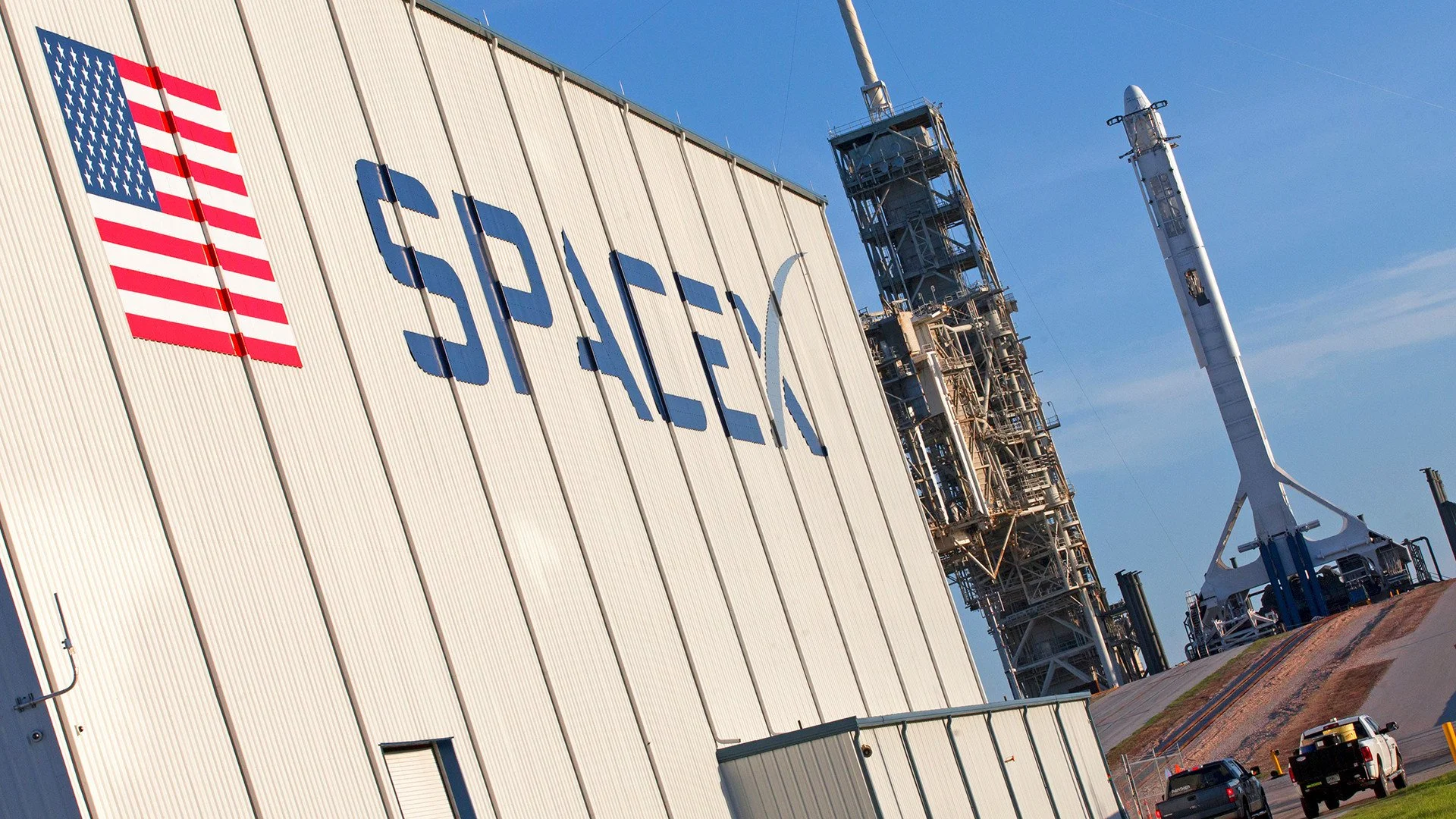
SpaceX Just Locked In the AI Infrastructure Crown
The vertical stack that turns rockets, chips, power, and satellites into permanent AI rent.
A single partnership has quietly redrawn the AI landscape. SpaceX is no longer just the leader in reusable rockets — it has assembled the only fully integrated physical stack for frontier AI, from silicon fabs to orbital data centers. By opening its massive Colossus compute cluster to Anthropic’s Claude models, the company proved it can act as the landlord for the entire industry while keeping its own options wide open.
Key Takeaways
SpaceX is supplying Anthropic with over 300 megawatts and 220,000+ NVIDIA GPUs from the Memphis Colossus-1 facility, instantly doubling rate limits and removing throttling for Claude Pro, Max, Code, and API users.
The deal follows SpaceX’s all-stock absorption of xAI, giving the combined entity ownership of the world’s largest concentrated GPU clusters and positioning it as a hyperscaler with launch, chip, power, and network capabilities no one else matches.
Vertical integration now spans Falcon 9/Starship launches, Terafab’s multi-hundred-billion-dollar 2nm chip production, Starlink’s 10,000+ satellite constellation, and gigawatt-scale data centers — six critical layers versus four for even the strongest competitors.
Anthropic gains immediate capacity to deploy its next-generation Mythos model at scale; SpaceX secures high-margin recurring revenue that strengthens its path to a $1.5–2 trillion+ IPO.
The broader shift: models are commoditizing fast. Sustainable advantage now lives in the physical stack below the model — the new oil, pipelines, refineries, and shipping lanes of the AI economy.
The $130 Billion Lawsuit That Could Rewrite Nonprofit Law for the Next Century
One courtroom decision now testing whether a tax-advantaged charity can convert into a for-profit powerhouse—handing billions in equity to insiders while reshaping the rules for every hospital, university, and research lab in America.
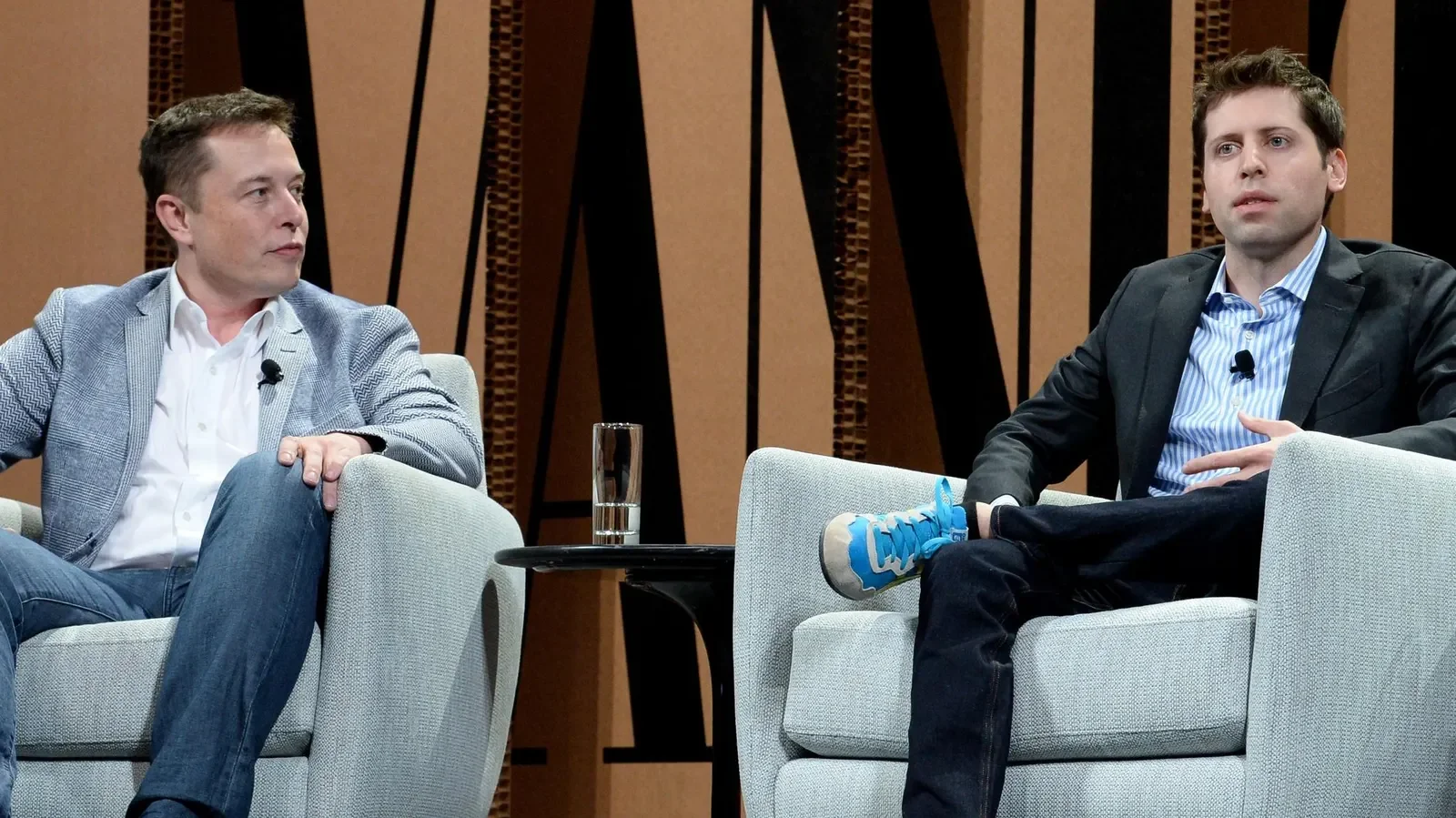
This trial, which opened on April 27, 2026, in the U.S. District Court for the Northern District of California, is far larger than any AI chatbot rivalry. At its core sits a single question with trillion-dollar consequences: Can a 501(c)(3) public charity, built on tax-deductible donations and a charter promising public benefit, legally transform itself into a for-profit entity where employees, executives, and outside investors capture enormous equity stakes? The assets in play total roughly $130 billion. The precedent set here will echo through America’s entire charitable sector for generations.
Key Takeaways
OpenAI launched in 2015 as a 501(c)(3) nonprofit with an explicit charter to advance AI for humanity’s benefit through open research, collaboration, and resistance to corporate concentration of power.
By 2025 the organization had completed a full conversion to a Delaware public benefit corporation, removing earlier profit caps; the original nonprofit foundation retained an approximately 26% ownership stake valued at around $130 billion at the time of conversion.
The lawsuit claims breach of charitable trust and unjust enrichment, arguing that assets originally held in public trust were effectively transferred to private hands without meeting historical standards for nonprofit-to-for-profit restructurings.
Regulators including the IRS, California Attorney General, and Delaware Attorney General reviewed the changes, yet the case tests whether paper approvals satisfied the spirit and letter of century-old nonprofit law.
A ruling in either direction will directly affect the $1 trillion-plus annual U.S. charitable sector—hospitals, university endowments, research foundations, conservation groups, religious institutions, and more—by clarifying (or loosening) the rules for converting mission-driven assets into commercial equity.
Three plausible outcomes range from a full green light for future conversions, a hard reset enforcing traditional public-trust protections, or a hybrid ruling that adds stricter procedural safeguards going forward.