

AI Designs Personalized mRNA Cancer Vaccine for Dying Dog – Tumors Shrink 50-75%
Global AI depends on one vulnerable island. Musk's Tera Fab could be the ultimate hedge—and a game-changer for Tesla and beyond.
A tech professional with no background in biology or medicine used readily available AI tools to design a tailored mRNA vaccine for his rescue dog’s aggressive mast cell cancer. After standard treatments offered only months to live, the dog’s tumors shrank dramatically and mobility returned. This case shows AI, cheap genomics, and mature mRNA platforms working together to put frontier-level personalized medicine within reach of motivated individuals.
Key Takeaways
A non-biologist sequenced his dog’s healthy and tumor DNA for about $3,000 AUD, then leveraged AI for literature navigation, mutation analysis, protein modeling, and full vaccine design.
Three complementary AI systems handled distinct tasks: research planning and initial blueprinting, 3D protein structure prediction, and final mRNA construct creation.
The dog received the vaccine in late 2025 with boosters into early 2026; tennis-ball-sized tumors reduced by half to three-quarters, and the dog went from barely moving to chasing rabbits.
The breakthrough combined AI capabilities with mRNA delivery technology refined during the COVID era and genomics costs that dropped from billions of dollars and years of work to laptop-level affordability.
Similar personalized mRNA vaccines are already in late-stage human trials for melanoma, pancreatic cancer, glioblastoma, and other hard-to-treat conditions, delivering measurable improvements in survival and recurrence risk.
Regulatory and ethics approvals took three months and a 100-page document—longer than the actual technical design—highlighting that bureaucracy, not technology, is now the main bottleneck.
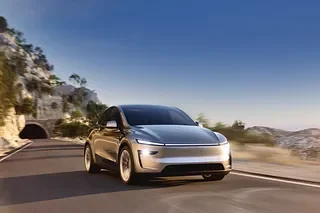
Tesla's Model Y L Ushers in a New Era of Affordable Family EVs and Autonomous Rides
Expanding Tesla's lineup with a stretched, six-seater crossover that bridges gaps in the market while amplifying robo-taxi potential.
Tesla just dropped details on its latest vehicle, the Model Y L, a longer-wheelbase version designed for families needing more space without breaking the bank. This move not only plugs a hole in the affordable three-row EV segment but also ties into broader shifts like robo-taxi fleets and AI integrations that could redefine personal transport. For tech fans eyeing sustainable mobility, this signals Tesla ramping up production efficiency and versatility in a competitive landscape.
Key Takeaways
The Model Y L extends the standard model by 7 inches, adding a usable third row for six passengers, starting around $60,000 in China with potential U.S. pricing between the Model Y and Model X.
It positions Tesla stronger against rivals like the Kia EV9 and Rivian R1S by offering a more affordable three-row EV option.
Robo-taxi services in Austin are expanding, with seamless autonomous rides becoming practical for daily use, costing under $15 round-trip for urban commutes.
This vehicle enhances Tesla's robo-taxi strategy, enabling higher-capacity rides beyond the upcoming two-seater Cybercab, potentially scaling to millions of units annually.
Speculation points to phasing out older models like the S and X to free up factory space for high-volume production or new ventures like drones or AI devices.
Grok AI is rolling out as a car assistant, paving the way for voice-activated features and cross-device integration, potentially challenging smartphone ecosystems.
Overall, these developments aim at sustainable abundance, prioritizing mass-market EVs and AI-driven autonomy over luxury niches.