
Musk Lifts Tesla Voting Power to 20% Days After the $1.7 Trillion SpaceX-xAI IPO
By exercising 304 million options from his 2018 award five days after the newly merged SpaceX-xAI began trading, Musk is quietly assembling the control stack needed to bolt Tesla onto a nascent $4 trillion machine.

SpaceX Bets Its IPO on Turning Space-Based Sunlight Into Intelligence With AI-1 Orbital Data Centers
Alongside its historic public offering, SpaceX unveiled AI-1, a solar-powered satellite carrying a 150-kilowatt computing payload, revealing a vertically integrated plan to manufacture cognition from the cheapest energy in the solar system.
SpaceX Absorbs xAI and Bets Its $1 Trillion Revenue Target on Compute, Not Rockets
Fresh off the largest IPO in history, Elon Musk is claiming SpaceX can multiply revenue 54x by 2030 — a promise that only makes sense because the company quietly became an AI infrastructure play whose addressable market it pegs at $28.5 trillion.
SpaceX's IPO Bets Everything On One Number: The 95% Collapse In Cost-To-Orbit
A $1.77 trillion valuation that careful models can’t justify makes perfect sense once you see the cost of putting internet bandwidth into orbit fall from $6.55 to 30 cents per megabit per second, and why the same curve unlocks data centers in space.
SpaceX Debuts Public With 4% Float as Retail Gets Slivers and Starlink Storms Mainstream Ads
A thin tradable float, staggered lockup releases starting in August, and a sudden Starlink advertising blitz across the NBA Finals, UFC, and T-Mobile push notifications reframe SpaceX as a multi-revenue ecosystem the moment it hits the open market.
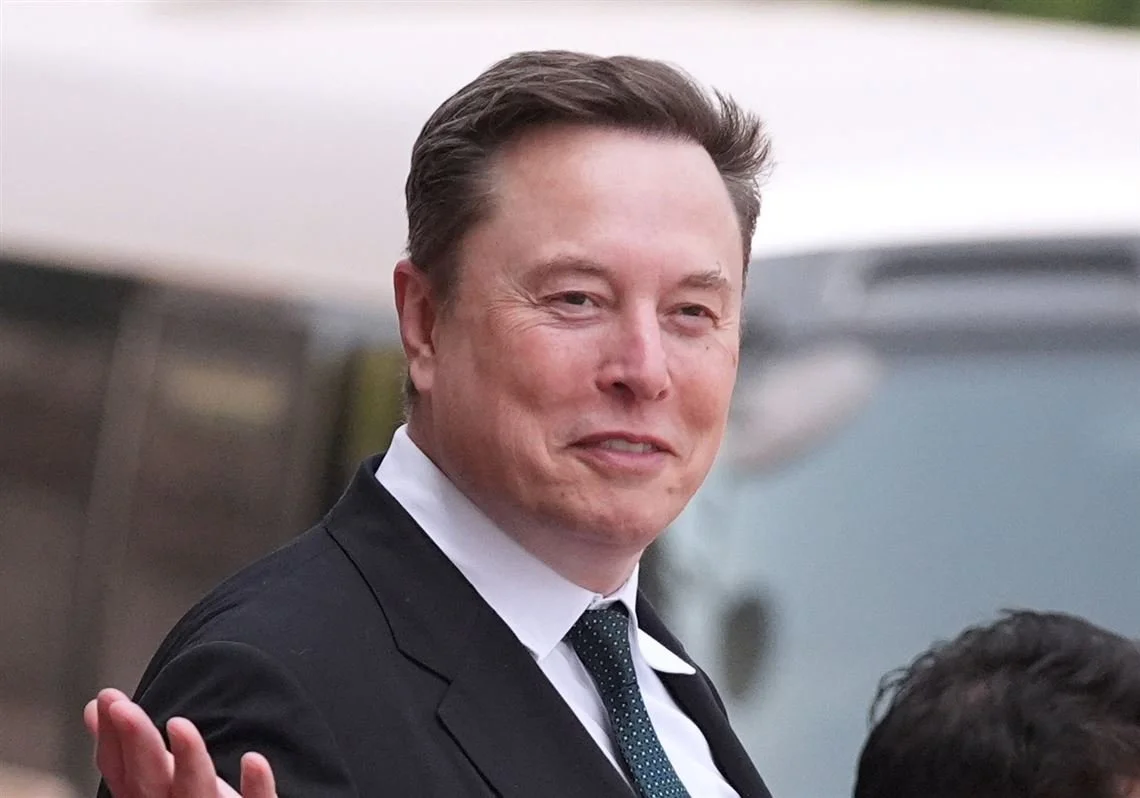
SpaceX's Record IPO: The Warehouse Vision That Could Make Mars Routine
Turning slim odds and sci-fi dreams into a practical path for anyone who wants to leave Earth
SpaceX reaching the largest IPO in history after starting in a single warehouse reveals how a clear, long-term objective can survive early doubts and technical setbacks. The real value lies in what comes next: engineering that treats multi-planetary settlement as a solvable problem rather than a distant fantasy, while giving ordinary people a concrete reason to believe the future will feel more expansive than the present.
Key Takeaways
A company founded in a modest El Segundo warehouse achieved the largest IPO ever, showing that sustained focus on ambitious technical goals can overcome initial assessments of very low success probability.
The central objective is to build systems that let anyone travel to the Moon, Mars, or other solar system destinations, moving spaceflight beyond professional crews to broader participation.
Established aerospace players produce reliable rockets yet have not directed equivalent effort toward the specific technologies required for permanent multi-planetary presence.
Earth-bound problems still require attention and resources, but large-scale projects that generate excitement about what happens next supply essential motivation that pure problem-solving alone cannot provide.
Current team capabilities support confidence that vehicles and infrastructure capable of carrying people to Mars and beyond can be delivered on a practical timeline.
SpaceX’s $2 Trillion IPO: The AI Infrastructure Empire Hiding in Plain Sight
A single $15 billion annual compute contract is about to flip the entire narrative on the company’s reported losses—and reveal why this might be the most important public offering of the decade.
SpaceX has filed its S-1 for what is set to become the largest IPO in history, targeting a valuation near $2 trillion. While headlines fixate on last year’s nearly $5 billion loss, the filing exposes a far more strategic picture: a company that has evolved into three distinct businesses, with Starlink generating massive cash flow to bankroll an aggressive push into AI compute infrastructure—including orbital data centers that could solve Earth’s crippling power and cooling constraints.
Key Takeaways
SpaceX is on track for the biggest IPO ever, raising potentially three times more capital than Saudi Aramco’s 2019 record at a $2 trillion-plus valuation.
Anthropic has committed to paying SpaceX $1.25 billion every month—$15 billion per year—through May 2029 for exclusive access to its AI compute capacity.
The company now reports in three segments: Space (rockets), Connectivity (Starlink), and AI (data centers and related operations acquired via xAI).
Starlink delivered $11 billion in 2025 revenue—61 percent of total company sales—with $4 billion in operating income and roughly 63 percent adjusted EBITDA margins on a hardware business.
Starlink grew nearly 50 percent year-over-year, now serves 10 million subscribers in 164 countries, and powers direct-to-cell service for millions of devices monthly.
The AI segment, currently showing operating losses, is positioned to swing sharply profitable once the Anthropic revenue begins flowing, potentially making the entire company profitable as early as 2026.
SpaceX plans to launch orbital AI compute satellites as early as 2028, leveraging constant solar power and infinite heat dissipation in space.
Elon Musk will retain overwhelming voting control post-IPO through a dual-class share structure, ensuring long-term focus on Mars colonization.
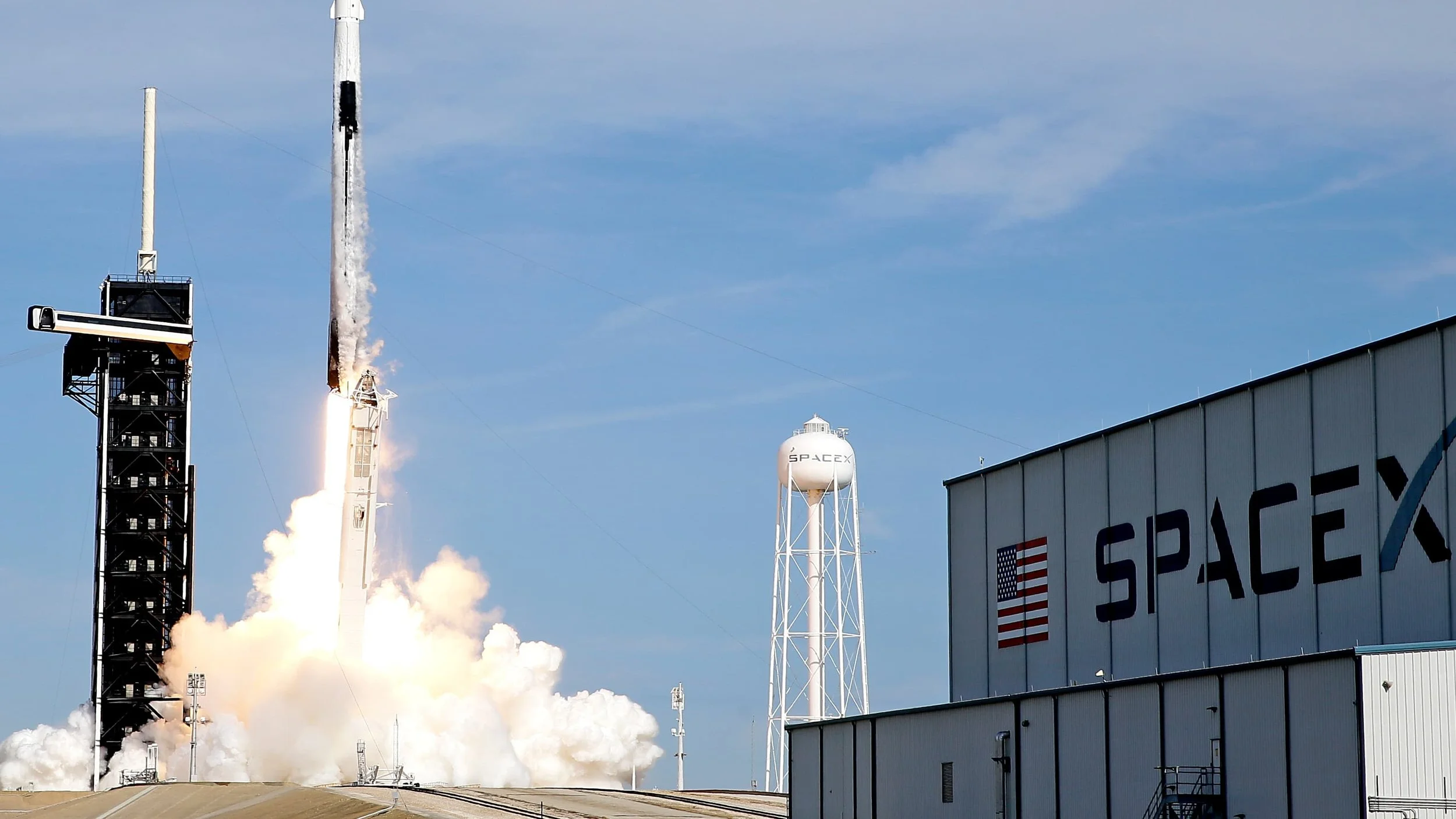
SpaceX’s IPO Isn’t About Rockets Anymore
The $15 Billion Anthropic Deal That Turns a $5 Billion Loss Into the Blueprint for AI Infrastructure Dominance
SpaceX just filed the paperwork for what could be the largest IPO the world has ever seen, and the numbers look wild at first glance: nearly $5 billion in losses last year. But buried inside the filing is a single customer agreement that rewrites the entire narrative. One of the top AI labs on the planet has committed to paying SpaceX roughly $15 billion a year for computing power through 2029. That deal alone flips the story from “expensive rocket company bleeding cash” to “picks-and-shovels supplier for the AI gold rush with a high-margin cash engine already in orbit.”
Key Takeaways
SpaceX now operates as three distinct businesses: traditional space launches, Starlink satellite internet, and a fast-growing AI compute division powered by massive data centers.
• Starlink delivered $11 billion in revenue in 2025 (61% of total company revenue) and generated more than $7 billion in adjusted cash flow at roughly 63% margins.
• A single AI customer, Anthropic, signed on for $1.25 billion per month in compute revenue through May 2029, instantly turning the AI segment into a potential profit center.
• The rocket business is still investing heavily in Starship (nearly $3 billion in R&D last year), but Falcon 9 operations remain solidly profitable and will soon be joined by paying Starship missions in the second half of 2026.
• Orbital data centers are on the roadmap for 2028, solving Earth’s power-grid and cooling bottlenecks with unlimited solar energy and infinite radiator space in vacuum.
• The company ended March 2026 with $15 billion in cash after a heavy burn quarter, but incoming AI revenue streams are expected to slow or reverse that trend rapidly.
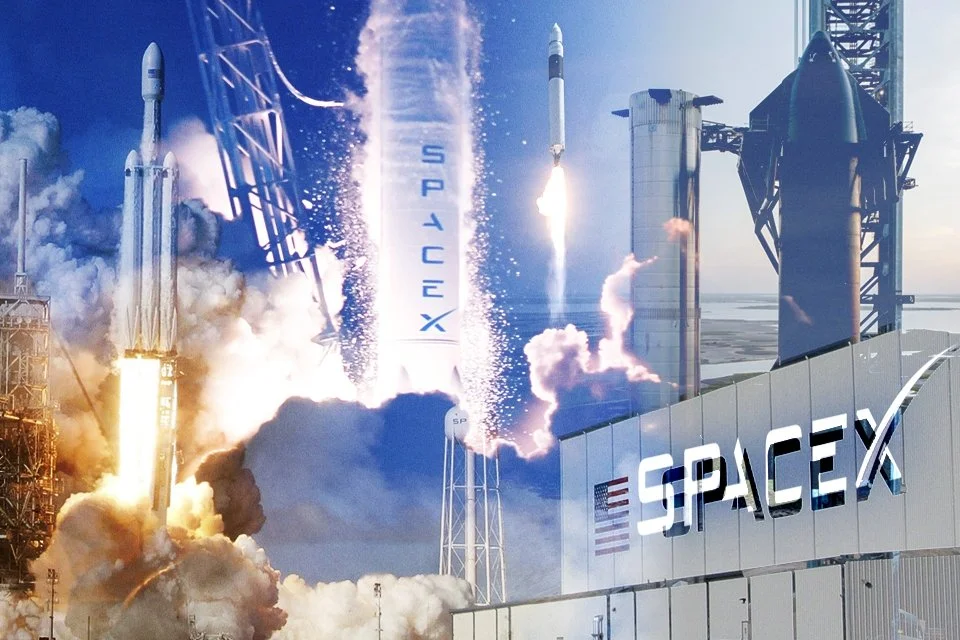
SpaceX at $2 Trillion: The Rocket Company That's About to Reshape Everything
Starship's cost revolution, Starlink dominance, and the potential Tesla merger signal the dawn of a multi-trillion-dollar space and AI empire.
SpaceX's confidential filing for a roughly $2 trillion valuation isn't just big news for investors. It marks the moment a private rocket company becomes one of the most valuable businesses on Earth, potentially raising $50–75 billion in the largest IPO in history. The numbers tell only part of the story. This is a company that already controls the majority of commercial launches, runs the world's largest satellite internet network, and is preparing to open entirely new frontiers in orbital computing, manufacturing, and global logistics through Starship.
Key Takeaways
SpaceX now handles 82% of the global commercial launch market and completed 165 Falcon 9 missions in 2025 alone.
Starlink has grown into the company's main business, with more than 10,000 satellites serving over 9 million paying subscribers and generating roughly $10–12 billion of the company's $15–16 billion total revenue last year.
Starship targets launch costs of $10–100 per kilogram to orbit—30 to 300 times cheaper than today's Falcon 9—through full reusability of both stages.
The economics unlock orbital AI data centers, space-based pharmaceutical and materials manufacturing, point-to-point Earth transport in under 45 minutes, and space solar power systems.
A $25 billion joint chip fabrication plant with Tesla and xAI already under construction in Texas will devote 80% of its output to space and orbital applications.
Merger speculation with Tesla could combine EVs, humanoid robots, AI training infrastructure, global satellite communications, and reusable rockets into a single vertically integrated entity.
The IPO would create thousands of new millionaires among employees while opening ownership to everyday retail investors for the first time.
The move strengthens U.S. strategic positioning in the renewed space race against rapidly advancing international competitors.