
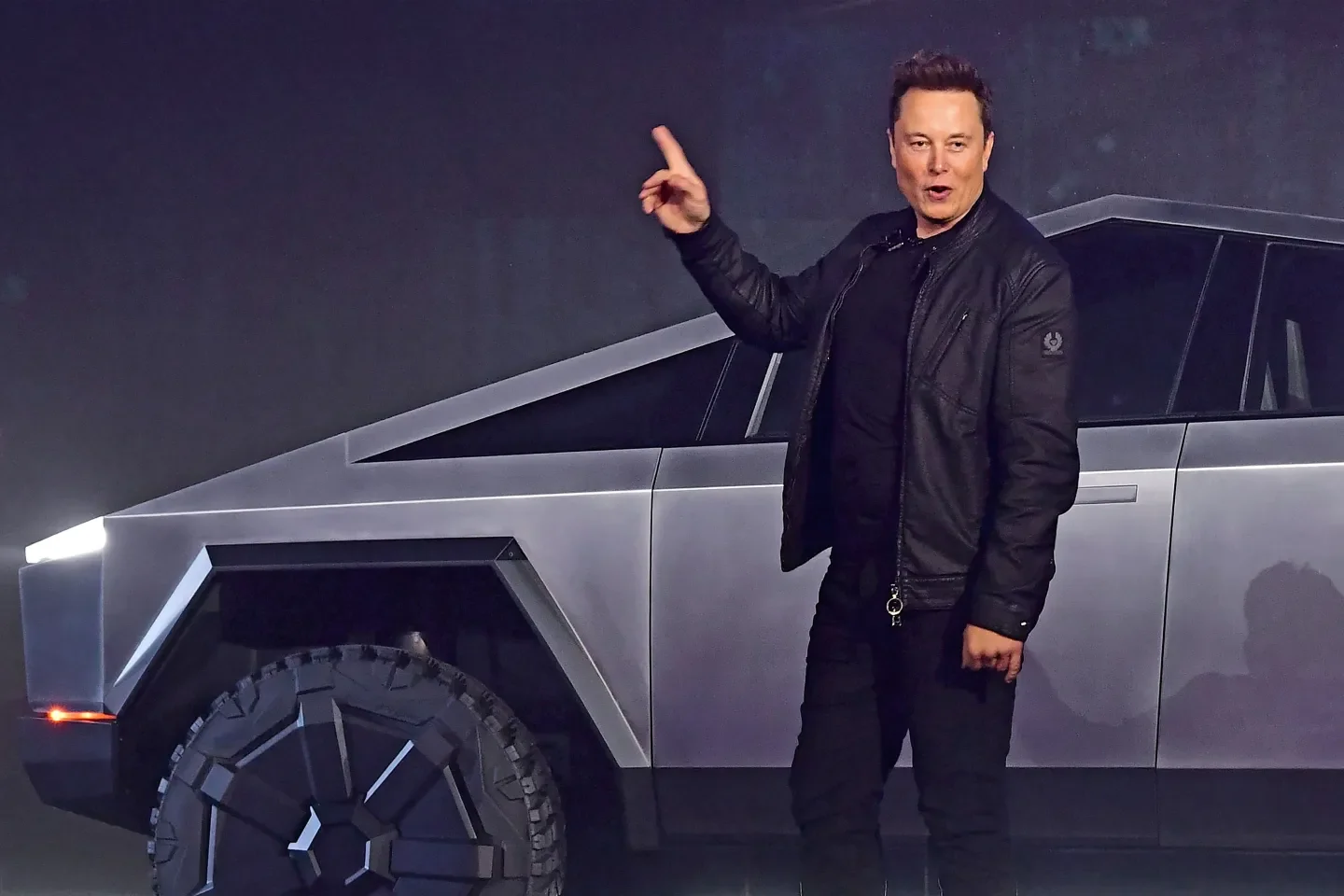
The Trillion-Dollar Threshold That Changes Little—and Everything
Why Elon Musk’s valuation milestone aligns with Gilded Age peaks in real terms while concentrating unmatched leverage over space, connectivity, and physical AI.
Elon Musk’s net worth crossing into trillion-dollar territory stems from equity stakes in companies that survived near-collapse and scaled into dominant positions across electric vehicles, reusable rocketry, satellite broadband, and AI-driven automation. The number itself functions mostly as a market-assigned price tag on shares rather than accessible cash, and when measured against the full size of the U.S. economy it sits at roughly the same slice once commanded by the most powerful industrialists of the early twentieth century. At the same time, operational control over launch capacity, global internet infrastructure, frontier AI models, and large-scale robotics data gives one individual influence over foundational technologies that no private citizen has previously held at this breadth.
Key Takeaways
Net worth in this range equals shares outstanding multiplied by current market price, with less than one-tenth of one percent typically held as liquid cash.
The fairest historical comparison uses wealth as a percentage of total economic output; Musk’s position lands near three percent of today’s U.S. economy, comparable to John D. Rockefeller’s roughly two-to-three percent share in 1913.
Tesla and SpaceX both approached bankruptcy in late 2008; concentrated founder ownership and willingness to risk remaining capital allowed both to reach leadership in autonomy, energy storage, reusable orbital launch, and satellite internet.
An IPO converts private valuation guesses into continuous public market pricing for shares already owned, without creating new assets for the holder.
Ultra-high-net-worth individuals commonly borrow against pledged stock at low interest rather than sell, since loans do not count as taxable income; proceeds have largely flowed back into the same companies.
Federal Reserve data show the top one percent of households now hold 32 percent of U.S. wealth and the top 0.1 percent hold around 14 percent—levels higher than at any point since tracking began in 1989.
Proposals for annual wealth taxes face practical hurdles demonstrated by multiple European countries that later repealed similar levies after they delivered minimal revenue, proved difficult to administer on private assets, and prompted capital relocation.
SpaceX currently accounts for the majority of mass placed into orbit by humanity in a given year, while Starlink serves ten million subscribers across more than one hundred countries and has proven decisive for connectivity in active conflicts.
Tesla’s real-world driving data and AI training pipeline support both autonomous vehicles without steering wheels or pedals and the development of humanoid robots intended for general physical tasks.
Continued execution on satellite mega-constellations, lunar and Mars infrastructure, high-volume robotaxis, and tens of millions of humanoid robots could scale Musk’s equity value well beyond current levels if those ventures succeed at planned magnitude.
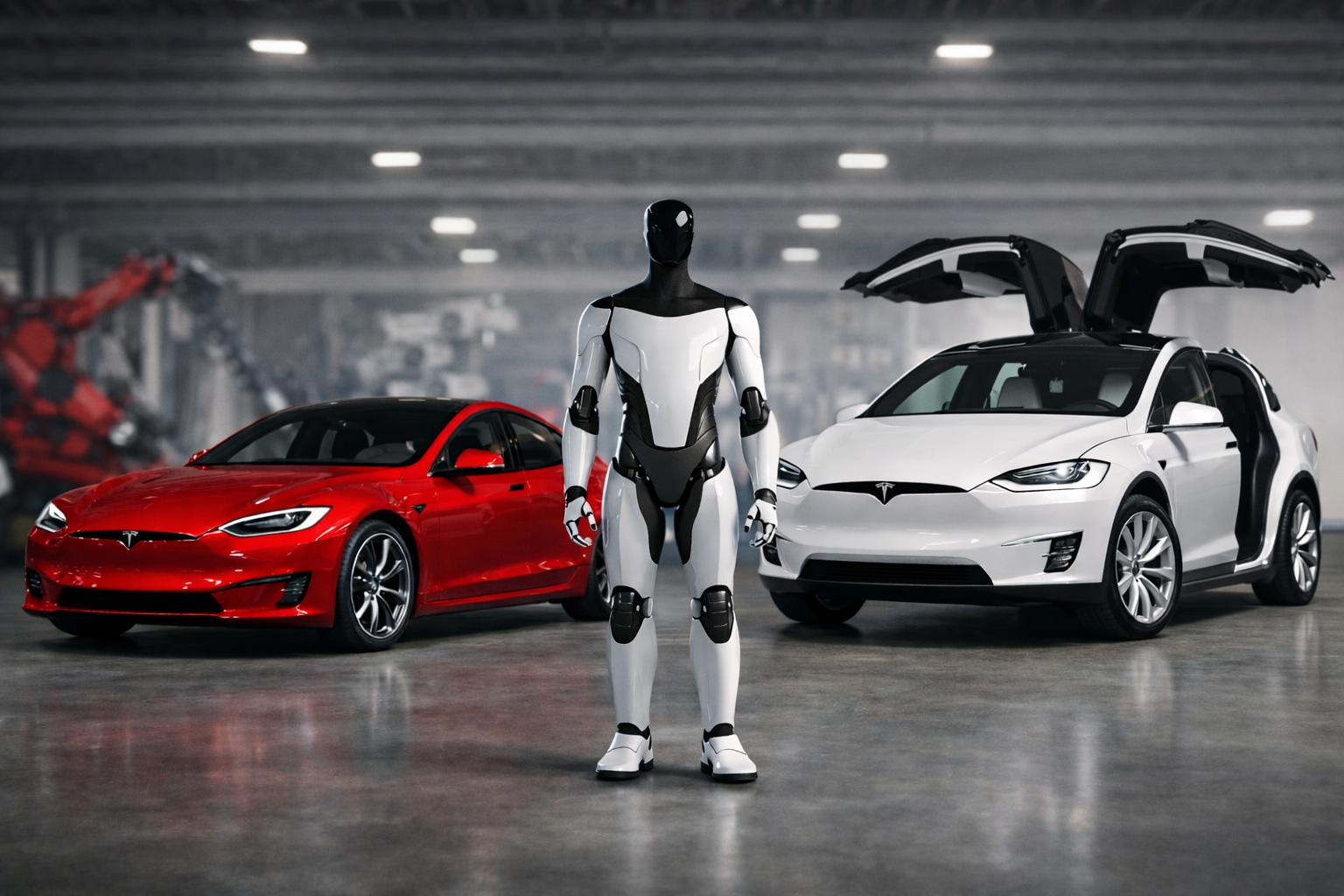
Tesla’s 2025 Production Tsunami Is Here: Cybercab, Optimus, and Sleep-in-the-Car Autonomy Arrive
The next 12 months deliver technical readiness for unsupervised autonomy, scaled robotaxi output, and the first practical humanoid assistants—milestones that reposition Tesla at the center of AI hardware and sustainable manufacturing.
Key Takeaways
Full self-driving software reaches the level where passengers can fall asleep and wake at their destination from a purely technical standpoint this year.
Cybercab production scales at Giga Texas starting April, targeting significant volumes by year-end, with European manufacturing under active consideration.
Optimus humanoid robots begin with household tasks such as childcare, dog walking, and elder support, progressing toward medical roles including surgery that surpass today’s human standards.
Five major production lines enter volume output across Tesla facilities, including 4680 battery cells at Giga Berlin plus lithium and nickel cathode refineries.
Legacy automakers face structural decline after years of minimal innovation and resistance to both electrification and autonomy.
Long-term vision includes Tesla factories on the Moon within 20 years and a future where work becomes optional, pursued for personal satisfaction rather than necessity.
Giga Berlin is positioned for massive expansion into batteries, Cybercab, Optimus, and additional products, potentially becoming Europe’s largest manufacturing complex if external conditions remain supportive.
Advice for the next generation emphasizes optimism, relentless learning through books and experimentation, and choosing roles that involve building tangible, useful things.
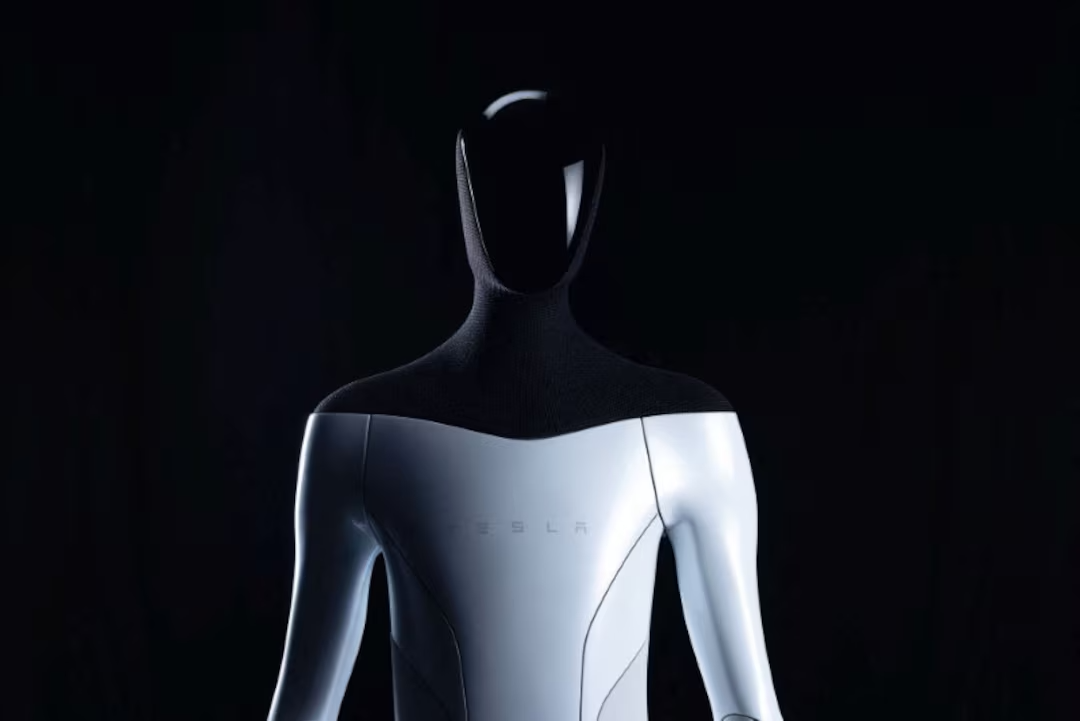
Tesla’s Optimus Robot: A Glimpse into a $40 Trillion Future
How Tesla’s Humanoid Robot Could Redefine Labor and Unlock Unprecedented Economic Value
Tesla’s latest showcase of its Optimus robot signals a bold leap toward a future where humanoid robots could transform industries, economies, and daily life. The technology, still in its early stages, demonstrates nuanced capabilities like tactile feedback and precise hand movements, hinting at its potential to disrupt the massive $40 trillion global labor market. Combined with Tesla’s push for autonomous vehicles and energy solutions, Optimus could be the key to unlocking extraordinary value for the company and its investors.
Key Takeaways
Humanoid Robot Potential: Tesla’s Optimus robot showcases advanced capabilities like tactile feedback and precise manipulation, positioning it to compete in the $40 trillion global market for physical human labor.
Economic Disruption: At an estimated $3/hour operating cost, Optimus could drastically reduce labor expenses compared to human wages ($12-$30/hour), opening new markets and business models.
Massive Market Opportunity: Tesla aims to produce one million robots annually at $20,000-$25,000 each, targeting industries like warehousing and manufacturing where repetitive tasks dominate.
Broader Tesla Vision: Optimus aligns with Tesla’s autonomous vehicles and energy solutions, driving the company toward a potential $8.5 trillion market cap and $400 billion in annual revenue.
Labor and Economic Shifts: While robots promise efficiency, they could disrupt traditional labor markets, necessitating new job creation and economic adaptation.
Tesla’s AI Revolution: Samsung Chip Deal Signals a Bold Future
How Tesla’s $16.5 Billion Partnership with Samsung for the AI6 Chip Could Redefine AI, Robotics, and Supply Chains
Tesla’s $16.5 billion deal with Samsung to produce the AI6 chip, set to power autonomous vehicles, humanoid robots, and AI data centers starting in 2027, marks a pivotal moment for the company. This strategic move, coupled with Tesla’s advancements in Full Self-Driving (FSD), robotaxis, and the Optimus humanoid robot, underscores its transformation from an electric vehicle (EV) manufacturer to a leader in AI and robotics. Despite challenges in its core EV business, Tesla’s stock has shown resilience, reflecting investor optimism about its AI-driven future. Here’s what this means for Tesla, its supply chain, and the broader AI landscape.
Key Takeaways
Strategic Partnership: Tesla’s $16.5 billion deal with Samsung to produce the AI6 chip at its Texas foundry aims to secure a robust supply chain for AI-driven products, including self-driving cars and Optimus robots, starting in 2027.
Stock Performance: Despite weak EV sales and negative sentiment around Tesla’s political controversies, its stock has risen approximately 45% over the past year, driven by progress in FSD, robotaxis, and robotics.
AI6 Chip Versatility: The AI6 chip is designed for both AI training and inference, potentially reducing costs and improving efficiency across Tesla’s ecosystem of vehicles, robots, and data centers.
Supply Chain Diversification: Partnering with Samsung reduces Tesla’s reliance on TSMC and Nvidia, mitigating geopolitical risks tied to Taiwan and ensuring long-term chip supply for ambitious AI goals.
Humanoid Robot Ambitions: Tesla’s Optimus robot, with production targets of 5,000 units in 2025 and millions by 2030, could tap into a $38 billion market by 2035, with applications in logistics, manufacturing, and urban services.
Market Implications: The deal challenges Nvidia’s dominance in AI hardware and pressures TSMC to innovate, while positioning Samsung as a stronger player in the foundry market.