
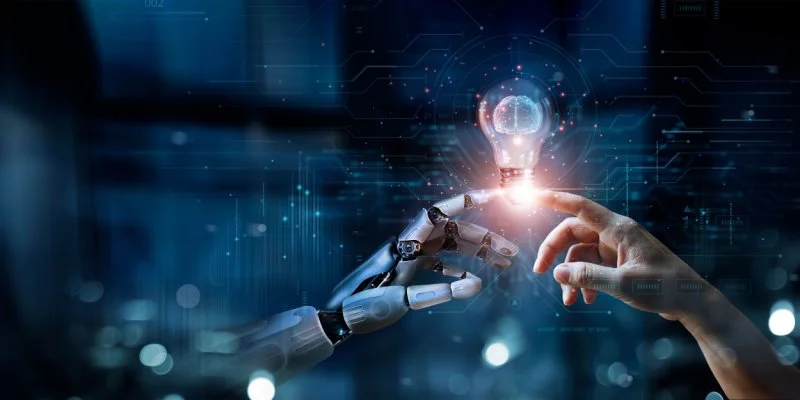
The Robotic Revolution: Unlocking Infinite Abundance Through AI and Automation
Why Humanoid Robots Could End Poverty, Transform Healthcare, and Redefine Global Economies
The rapid advancements in AI-driven robotics and autonomous systems are set to create a world where scarcity becomes obsolete, energy is sustainable, and human potential is amplified like never before. This newsletter dives into the breakthroughs propelling us toward a future of unprecedented productivity and prosperity.
Key Takeaways
Humanoid robots like Optimus are poised to scale to billions of units, enabling mass production that could increase global economic output by a factor of 10 or more.
Full self-driving technology is nearing unsupervised operation, with safety statistics showing it outperforms human drivers, potentially saving millions of lives annually.
AI hardware optimized for efficiency, such as integer-based inference chips, will power robots and vehicles at a fraction of the cost and power of general-purpose alternatives.
Sustainable energy solutions, including advanced batteries and solar integration, could double U.S. energy output without new power plants by buffering supply fluctuations.
New vehicle designs optimized for autonomy, like pedal-less robotaxis, aim for production cycles as low as five seconds per unit, revolutionizing manufacturing efficiency.
Future economies may shift from traditional money to metrics like electrical wattage, as AI and robotics create deflationary pressures through hyper-productivity.
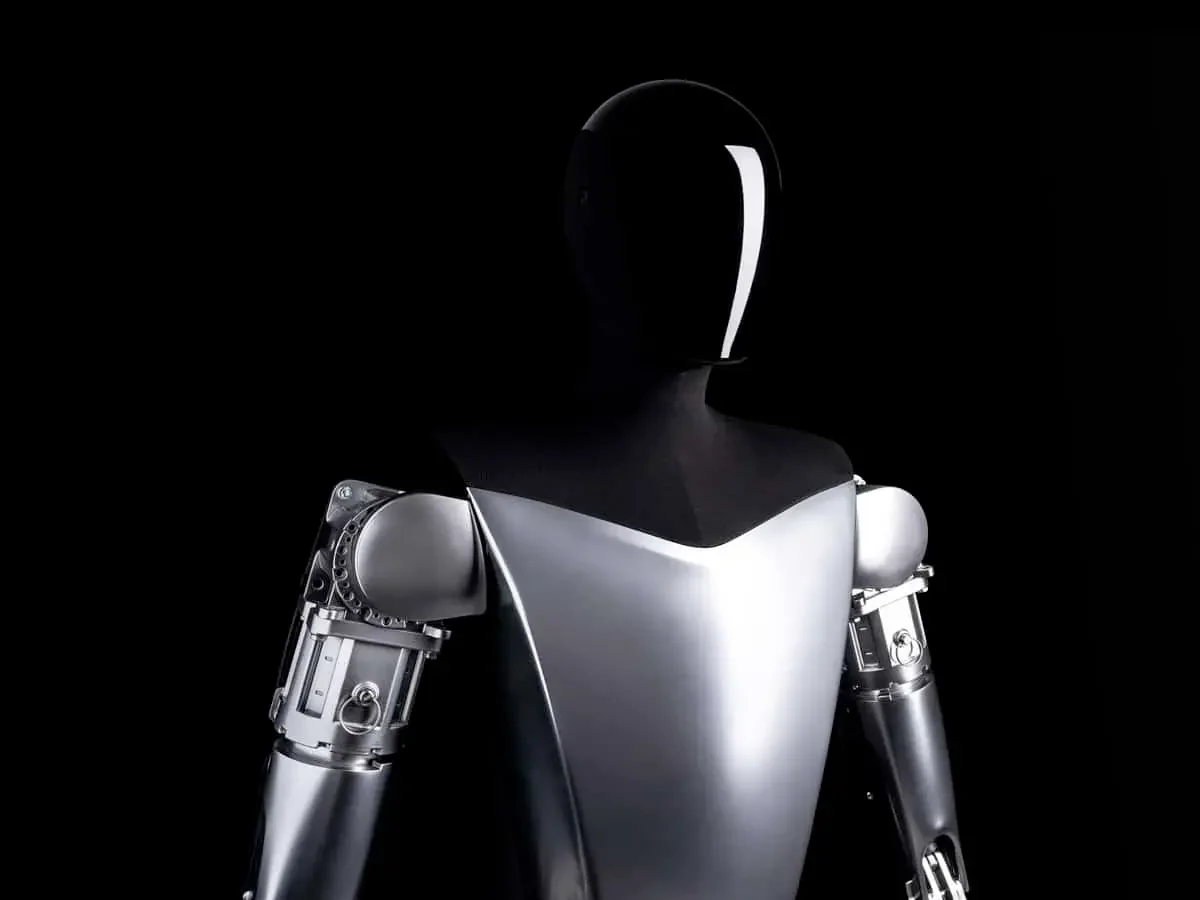
Tesla's Robotic Revolution: Unlocking Infinite Abundance
How AI and humanoid robots could reshape economies, eliminate poverty, and redefine human potential
The future of technology isn't just about smarter gadgets—it's about creating a world where scarcity ends and abundance thrives. Recent advancements in AI, robotics, and autonomous systems point to massive economic growth, safer transportation, and groundbreaking medical applications. These developments promise to multiply global productivity by factors of 10 or even 100, turning science fiction into everyday reality.
Key Takeaways
Humanoid robots like Optimus could scale to billions of units, enabling precision surgery beyond human capability and providing personalized crime prevention without prisons.
AI-driven autonomy in vehicles will soon allow safe texting or sleeping while driving, with production ramps targeting millions of units annually starting next year.
Sustainable energy through solar, batteries, and efficient chips will fuel this era, potentially doubling U.S. energy output without new power plants.
Tesla's custom AI chips, optimized for low power and high efficiency, could outperform competitors at a fraction of the cost, powering robots, cars, and distributed computing networks.
Economic shifts may render traditional money obsolete, measuring value in wattage or computational power instead.
Regulatory hurdles in Europe and China are easing, paving the way for global deployment of full self-driving technology by early next year.
Massive production goals aim for 5 million vehicles annually by 2028, alongside humanoid robot lines capable of units every 5 seconds.

Tesla's AI Revolution: Betting Big on Autonomy and Abundance
Redefining Mobility, Energy, and Humanoid Robotics in a Post-AI World
Tesla is pushing boundaries in real-world AI, positioning itself as a frontrunner in transforming transportation, energy systems, and even daily life through advanced robotics. The company's aggressive expansion in production, coupled with breakthroughs in unsupervised full self-driving and humanoid robots, signals a shift toward a future of sustainable abundance where technology eliminates scarcity and makes work optional. These developments aren't just incremental—they promise to double energy outputs, create fleets of autonomous vehicles, and deploy millions of AI-powered robots.
Key Takeaways
Tesla leads in real-world AI density, enabling cars to operate as intelligent entities with 360-degree vision and reasoning capabilities for tasks like optimal parking.
Unsupervised full self-driving is on track for rollout in multiple U.S. states by year-end, with robotaxi operations expanding to 8-10 metro areas, prioritizing safety through cautious deployment.
Optimus humanoid robots are advancing rapidly, with production scaling to millions annually, focusing on dexterous hands and vertical integration to overcome supply chain gaps.
AI chip designs like AI5 promise 40x performance gains over predecessors, optimized for Tesla's stack, potentially creating oversupplied compute for distributed inference fleets.
Energy storage via Megapacks could double U.S. energy output without new power plants, integrating substation features for faster deployment.
Cybercab production starts in Q2 2025, designed solely for autonomy, minimizing costs per mile and allowing passengers full device use during rides.
Overall strategy aims for sustainable abundance, where AI and robotics eradicate poverty and provide universal access to advanced services like surgery.

Tesla’s Q3 Triumph: Record-Breaking Growth and a Glimpse into an AI-Powered Future
How Tesla’s Stellar Quarter Signals a Bold Leap Toward Autonomy and Sustainable Energy
Tesla’s third quarter of 2025 delivered a masterclass in resilience and innovation, shattering records in vehicle deliveries, energy storage deployments, and financial performance. Despite navigating a turbulent global market, the company’s focus on scaling its core businesses while investing in AI-driven solutions positions it as a leader in the race toward a sustainable, autonomous future. From record cash reserves to groundbreaking advancements in full self-driving (FSD) technology, Tesla’s latest earnings reveal a company balancing immediate growth with transformative long-term bets.
Key Takeaways
Record Vehicle Deliveries: Tesla achieved unprecedented global vehicle deliveries, with growth across all regions, driven by new affordable models like the Model Y Standard and Model 3 Standard.
Energy Storage Surge: The energy division saw record deployments in residential, industrial, and utility sectors, bolstered by the launch of Megapack 3 and Megablock.
Financial Strength: Revenue hit an all-time high, with $5 billion added to cash reserves, bringing the total to $41.6 billion—nearly matching Ford’s entire market cap.
AI and Autonomy Milestones: FSD version 14 rolled out with intervention-free drives in complex urban environments, while robotaxi services expanded in Austin and the Bay Area.
Future-Ready Investments: Production lines for Optimus, Cybercab, and Tesla Semi are on track for volume production in 2026, signaling Tesla’s pivot toward robotics and AI-driven services.
Cautious Outlook: Despite strong performance, Tesla highlighted uncertainties from global trade, tariffs, and fiscal policies, emphasizing a robust balance sheet to weather challenges.
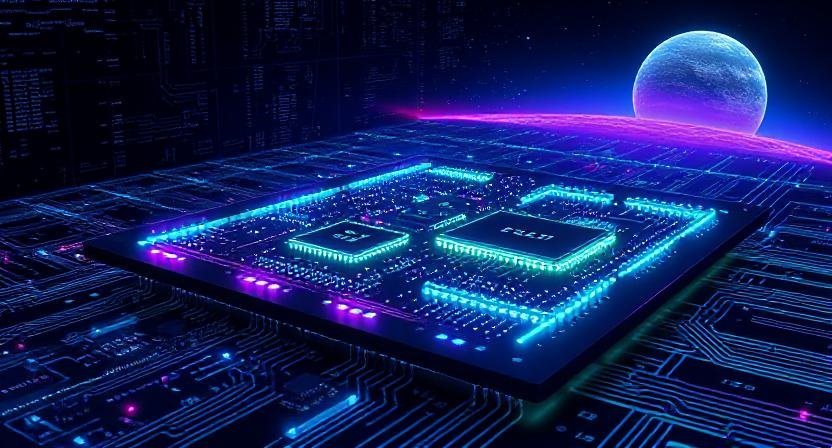
The AI Chip Revolution: Tesla's Path to Unified Compute Dominance
Unlocking massive efficiencies in training and inference through innovative hardware partnerships and designs.
AI hardware is evolving at breakneck speed, outpacing traditional computing trends. Recent developments point to chips that handle both training massive models and running real-time inferences efficiently. This shift promises lower costs, faster scaling, and tighter integration with energy systems, paving the way for widespread embodied AI in vehicles, robots, and beyond.
Key Takeaways
Unified AI chips can perform both training and inference tasks, reducing costs by enabling mass production of identical hardware for diverse applications.
Panel-level integration allows for combining hundreds of chips into massive training substrates, improving communication speed and thermal management compared to wafer-based designs.
Hardware convergence integrates processing, memory, and networking on single boards, mirroring biological neurons for better efficiency.
Distributed compute in vehicles and robots could turn idle hardware into cloud resources, solving power and latency challenges.
AI demand accelerates sustainable energy adoption, with solar and batteries emerging as the most scalable solutions for powering data centers.
Future AI systems may enable real-time learning loops, blending training and inference for rapid adaptation without massive batch updates.
Partnerships with foundries like Samsung enable supply chain resilience, proximity to manufacturing hubs, and potential for custom optimizations.