
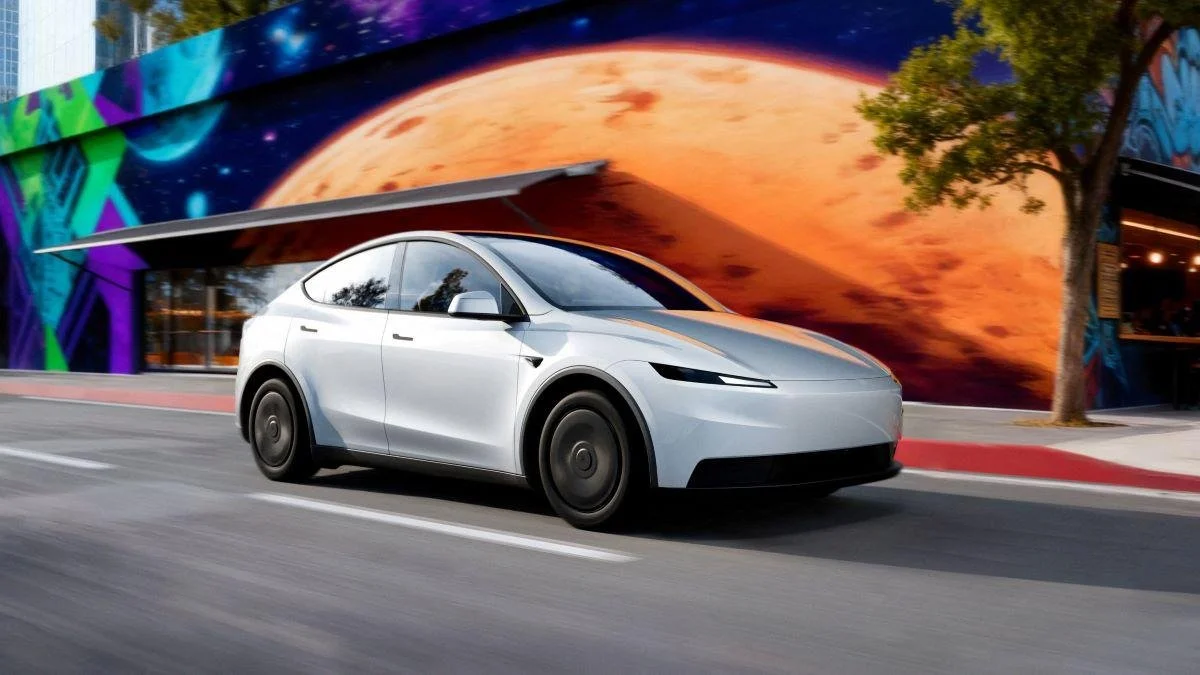
Tesla's Affordable EV Gambit: Model 3 and Y Standards Hit the Road Under $40K
Stripped-down powerhouses with 300+ mile range promise to shake up the mass-market EV race—but will they truly democratize electric driving?
Tesla's latest move drops two entry-level versions of its flagship sedans and SUVs, blending cost-cutting with core performance to target everyday buyers. These standards pack real-world efficiency gains and seamless tech integration, setting the stage for broader EV adoption amid a crowded market.
Key Takeaways
The Model 3 Standard starts at $36,990 with 321 miles of EPA-estimated range, rear-wheel drive, and 0-60 mph in 5.8 seconds, making it a nimble daily driver for urban commuters.
The Model Y Standard kicks off at $39,990, offering the same 321-mile range in SUV form, with 75 cubic feet of cargo space and a 3,500-pound towing capacity for family haulers.
Both models trim luxuries like premium audio, heated rear seats, and advanced driver aids to hit affordability targets, but retain essentials such as a 15.4-inch touchscreen, heated front seats, and access to the Supercharger network.
Deliveries begin in December 2025 for most U.S. markets, with immediate ordering available online—positioning Tesla to rebound from recent sales dips.
Battery tweaks deliver up to 160 miles of charge in 15 minutes, emphasizing practical fast-charging that rivals gas station stops for road trips.
Tesla's Model Y L Ushers in a New Era of Affordable Family EVs and Autonomous Rides
Expanding Tesla's lineup with a stretched, six-seater crossover that bridges gaps in the market while amplifying robo-taxi potential.
Tesla just dropped details on its latest vehicle, the Model Y L, a longer-wheelbase version designed for families needing more space without breaking the bank. This move not only plugs a hole in the affordable three-row EV segment but also ties into broader shifts like robo-taxi fleets and AI integrations that could redefine personal transport. For tech fans eyeing sustainable mobility, this signals Tesla ramping up production efficiency and versatility in a competitive landscape.
Key Takeaways
The Model Y L extends the standard model by 7 inches, adding a usable third row for six passengers, starting around $60,000 in China with potential U.S. pricing between the Model Y and Model X.
It positions Tesla stronger against rivals like the Kia EV9 and Rivian R1S by offering a more affordable three-row EV option.
Robo-taxi services in Austin are expanding, with seamless autonomous rides becoming practical for daily use, costing under $15 round-trip for urban commutes.
This vehicle enhances Tesla's robo-taxi strategy, enabling higher-capacity rides beyond the upcoming two-seater Cybercab, potentially scaling to millions of units annually.
Speculation points to phasing out older models like the S and X to free up factory space for high-volume production or new ventures like drones or AI devices.
Grok AI is rolling out as a car assistant, paving the way for voice-activated features and cross-device integration, potentially challenging smartphone ecosystems.
Overall, these developments aim at sustainable abundance, prioritizing mass-market EVs and AI-driven autonomy over luxury niches.