
Tesla Files "Megapod" Trademark, Setting Up a Five-Layer AI Stack No Rival Owns
A June 18, 2026 USPTO filing for modular AI data center hardware reveals how Tesla plans to flip from compute buyer to compute seller—and eventually shrink the whole box down to a Powerwall bolted to your house that heats, powers, and pays you.
Tesla Job Listing Signals In-House Push Into Distributed AI Training and Inference
Two Palo Alto software engineering roles built around PyTorch and low-level GPU tooling point to Tesla owning the AI compute layer that sets how fast it can scale FSD, Optimus, and the CyberCab, even as viral crash narratives and safety scrutiny escalate alongside.
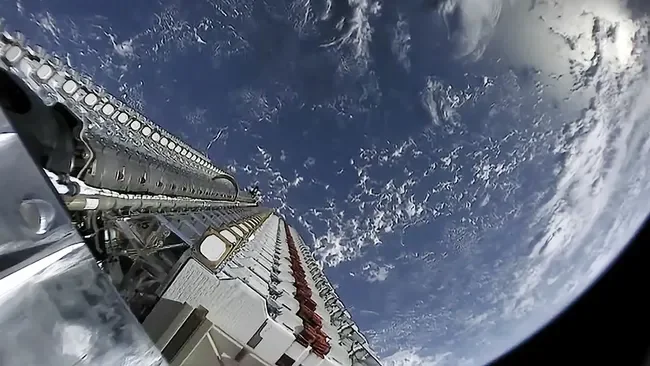
Vertical Integration at Scale: Unlocking Leadership Across Space, Connectivity, and AI
How control over the full stack—from rocket design to satellite operations and real-time data—creates durable advantages in markets projected to reach trillions.
The core advantage lies in end-to-end control over satellite systems and connectivity infrastructure. This approach compresses development cycles, slashes costs through in-house production, and generates recurring revenue at low marginal expense once the network is deployed. Layered onto that foundation is the ability to feed live global data into advanced AI systems, creating models that stay current rather than relying on frozen datasets. Together these elements form a platform positioned to expand aggressively into the multi-trillion-dollar intersections of orbital infrastructure, worldwide broadband, and intelligent computing.
Key Takeaways
Vertical integration spanning satellite design, manufacturing, launch, and constellation operations delivers superior cost efficiency and deployment speed that competitors struggle to match.
Ownership of the full orbital launch stack creates structural barriers, as replicating global leadership in reliable, high-cadence access to space requires years of accumulated hardware and operational experience.
Real-time data streams from large-scale platforms enhance AI model accuracy and timeliness, supporting truth-seeking systems that reflect current events and user-generated information.
Once core infrastructure exists, adding subscribers or new services incurs near-zero marginal cost, enabling rapid scaling and high operating margins in connectivity.
Integrated control across hardware, networks, data, and AI layers opens participation in multiple expanding markets, including satellite broadband, direct-to-device services, and space-enabled intelligent systems.
A mission-oriented culture combined with deep technical talent sustains the iteration velocity required to maintain leads in capital-intensive, fast-evolving fields.
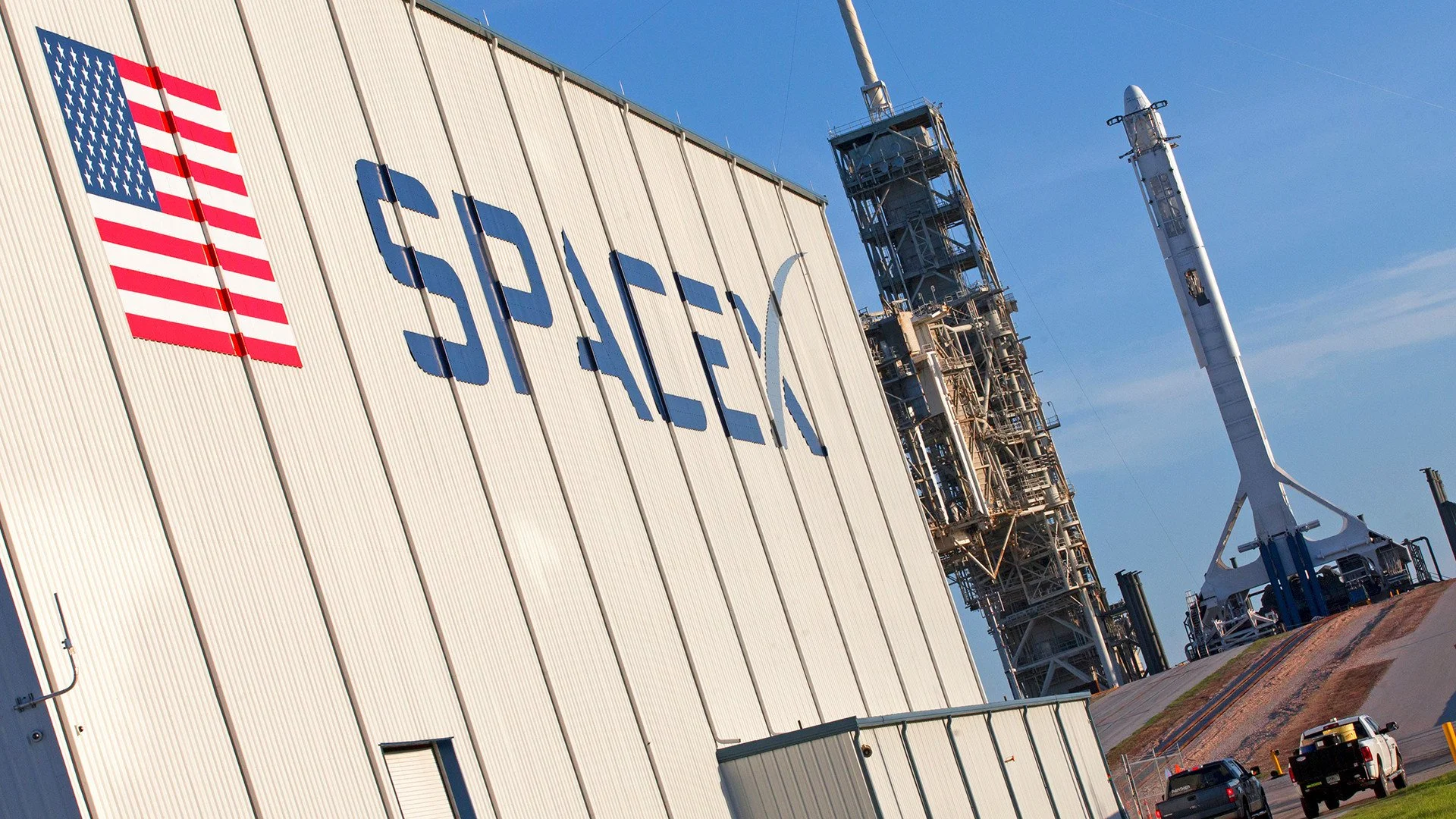
SpaceX Just Locked In the AI Infrastructure Crown
The vertical stack that turns rockets, chips, power, and satellites into permanent AI rent.
A single partnership has quietly redrawn the AI landscape. SpaceX is no longer just the leader in reusable rockets — it has assembled the only fully integrated physical stack for frontier AI, from silicon fabs to orbital data centers. By opening its massive Colossus compute cluster to Anthropic’s Claude models, the company proved it can act as the landlord for the entire industry while keeping its own options wide open.
Key Takeaways
SpaceX is supplying Anthropic with over 300 megawatts and 220,000+ NVIDIA GPUs from the Memphis Colossus-1 facility, instantly doubling rate limits and removing throttling for Claude Pro, Max, Code, and API users.
The deal follows SpaceX’s all-stock absorption of xAI, giving the combined entity ownership of the world’s largest concentrated GPU clusters and positioning it as a hyperscaler with launch, chip, power, and network capabilities no one else matches.
Vertical integration now spans Falcon 9/Starship launches, Terafab’s multi-hundred-billion-dollar 2nm chip production, Starlink’s 10,000+ satellite constellation, and gigawatt-scale data centers — six critical layers versus four for even the strongest competitors.
Anthropic gains immediate capacity to deploy its next-generation Mythos model at scale; SpaceX secures high-margin recurring revenue that strengthens its path to a $1.5–2 trillion+ IPO.
The broader shift: models are commoditizing fast. Sustainable advantage now lives in the physical stack below the model — the new oil, pipelines, refineries, and shipping lanes of the AI economy.
The Operating System Behind World-Changing Innovation
How intensity, technical depth, and strategic boldness create results that redefine what's possible in tech and beyond.
The principles shaping one of tech’s most effective operators deliver a rare edge for any builder or entrepreneur aiming for outsized impact. They reveal how purpose, mindset, and execution combine to solve problems at planetary scale while building durable companies that last for decades.
Key Takeaways
A singular profile fuses extreme energy and discipline with unconventional technical genius and Napoleonic strategic vision with bias to action.
Purpose acts as the core engine, driving decisions that ignore short-term financial or reputational optimization in favor of meaningful missions.
Upbringing and biology create dual fuel: running toward ambitious goals while escaping personal demons of inadequacy.
Effective leadership holds impossibly high standards, convincing teams they can achieve what they initially deem unfeasible.
Hardware success requires full vertical integration, domestic manufacturing mastery, and direct customer relationships rather than outsourcing everything.
AI and robotics convergence with ambitious entrepreneurship accelerates deflation and abundance across energy, transport, food, and space.
Wealth accumulates as a natural outcome of scaling solutions to civilization-level problems.
The Musk Megamerger: Building the Ultimate AI Infrastructure Empire
Revolutionizing Compute from Orbit to Earth
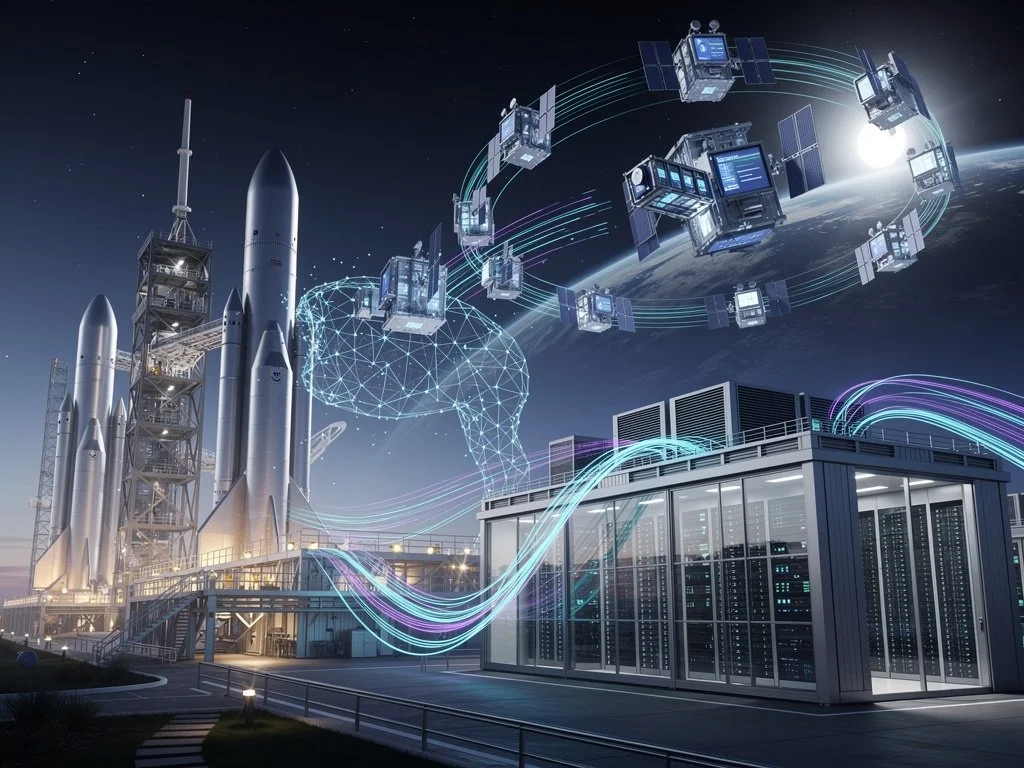
A massive merger between SpaceX, Tesla, and xAI could birth a $3 trillion powerhouse that dominates AI by leveraging space for unlimited energy and cooling. This isn't just consolidation—it's a strategic play to own the backbone of the AI era, from rockets to robots.
Key Takeaways
SpaceX, valued at $800 billion, might reverse merge into Tesla's $1.5 trillion structure, potentially including xAI's $230 billion valuation for a combined entity exceeding $3 trillion.
The core driver is overcoming AI's compute bottleneck through space-based data centers, offering constant solar power and passive cooling in orbit.
Synergies include SpaceX's rockets and satellites for deployment, Tesla's manufacturing for hardware scale, and xAI's models for intelligence, creating a vertically integrated AI stack.
Starship enables massive satellite launches, targeting 6,000 compute-enabled units annually, forming a global orbital network.
Risks involve regulatory hurdles, execution challenges in space tech, and geopolitical tensions, but the infrastructure moat could prove unbeatable.
Tesla's Bold Leap into Custom AI Silicon
Unlocking the future of autonomous vehicles, humanoid robots, and massive-scale AI training through a game-changing partnership.
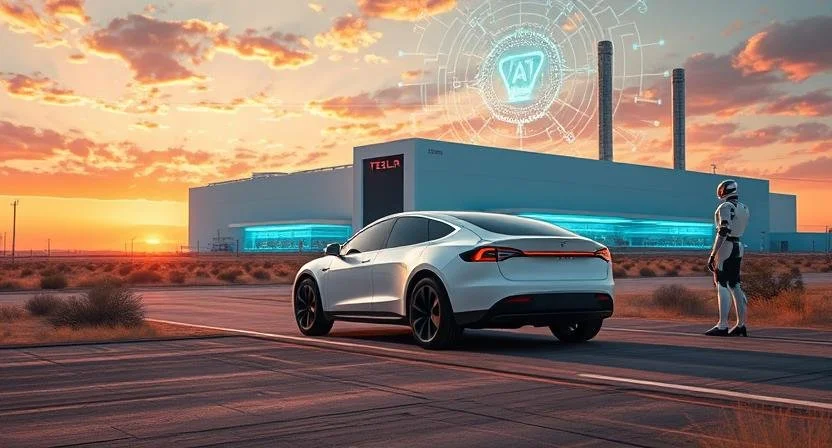
Tesla has just sealed a massive partnership that could reshape the AI hardware landscape, positioning the company to control its destiny in chip production while boosting U.S. manufacturing. This move addresses supply chain vulnerabilities, cuts costs, and accelerates innovation in everything from self-driving tech to robotics.
Key Takeaways
Tesla's new AI6 chip aims to handle both AI training and inference on a single architecture, optimizing for vehicles, robots, and data centers.
A $16.5 billion deal with Samsung taps into a Texas-based fab for production, enhancing efficiency and reducing reliance on overseas suppliers.
This strategy mirrors past vertical integration successes, like battery production, to secure supply for ambitious AI goals.
Broader implications include strengthening U.S. chip manufacturing amid global tensions and fostering competition that drives industry-wide advancements.
The partnership leverages expertise from key engineers to create specialized hardware tailored to real-world AI demands.