

Optimus: The Robot Revolution Targeting $40 Trillion in Human Labor
How AI-Powered Humanoids Could Drive an Era of Abundance—or Economic Upheaval
Humanoid robots stand poised to transform the global economy by automating vast swaths of physical work, tapping into a $40 trillion annual labor market. Advances in AI enable these machines to learn tasks rapidly, while manufacturing expertise allows production at unprecedented scale. This shift promises lower costs and higher efficiency, but it also raises questions about job displacement and regulatory hurdles.
Key Takeaways
Humanoid robots target the $40 trillion global labor market, dwarfing industries like automotive ($3 trillion) and smartphones (under $1 trillion).
AI forms the core intelligence, drawing from self-driving tech to process visual inputs and execute physical actions.
Scaling production to millions of units leverages existing manufacturing capabilities, creating a data flywheel for rapid AI improvements.
Initial deployments focus on factories for repetitive tasks, expanding to warehousing, agriculture, construction, and healthcare.
Economic models show robots costing $20,000–$30,000 could replace human labor at a fraction of annual wages, with added savings on insurance and benefits.
Risks include timeline delays, regulatory barriers, technical challenges in dexterity, and competition from other firms.
Long-term, abundant robot labor could eliminate scarcity constraints, enabling massive economic growth, but requires careful management to avoid societal disruption.
The Convergence Flywheel: Why AI, Robots, and Endless Energy Will Either Save Us or Break Us
One self-reinforcing loop is about to rewrite the rules of civilization—here's how to spot the signals, seize the upsides, and dodge the pitfalls before 2030 hits.
The next decade isn't just another tech cycle; it's a make-or-break pivot where artificial intelligence, humanoid robots, and boundless energy sources lock into a single, unstoppable system. This convergence could slash the cost of essentials like housing, water, and education to near-zero, unlocking human potential on a scale that dwarfs the industrial age. But it could also obliterate jobs faster than societies can adapt, widening gaps between the adaptable and the left behind. The real edge? Grasping how these forces amplify each other—and positioning your skills, investments, and mindset to ride the acceleration.
Key Takeaways
Interlocked Revolutions: AI, robotics, and energy aren't separate trends—they form a feedback loop where smarter AI powers cheaper robots, which build endless energy infrastructure, fueling even more advanced AI in a cycle that compounds exponentially.
Timeline Shock: Expect AI handling 80% of digital tasks at elite human levels by 2027, with robots scaling from factories to homes by 2030, driven by cost drops via Wright's Law (costs halve predictably with production doublings).
Abundance Blueprint: Cheap robotic labor and solar-powered grids could make basics like clean water and personalized education universally accessible, not through handouts but raw economics.
Disruption Warning: The middle class faces the biggest hit—knowledge and manual jobs vanish in years, not decades—while builders and risk-takers thrive; governments lag, so personal adaptation is key.
Ecosystem Edge: Vertically integrated players like those blending AI brains, space-scale infrastructure, and mass-manufacturing bodies hold the structural advantage, but the flywheel spins regardless of winners.

AI's Double-Edged Sword: Revolutionizing Creativity and Redefining Humanity
Navigating the explosion of AI tools that empower creators while reshaping society, work, and even consciousness.
AI is reshaping how people build online businesses, from music education to broader content creation, while sparking debates on privacy, addiction, and the essence of human experience. This newsletter dives into practical strategies for leveraging these tools today and explores the profound shifts they could bring tomorrow—offering actionable insights for anyone eyeing the tech frontier.
Key Takeaways
Start content creation by focusing on genuine passion and audience needs, using simple setups like a camera to demonstrate value upfront.
Treat free platforms as marketing arms that deliver real lessons or insights, leading viewers naturally toward paid offerings like subscriptions or one-on-one sessions.
AI excels at analyzing personal styles and generating new ideas, but its true power emerges when users clearly define problems and experiment deeply.
Future AI agents could automate product searches, negotiations, and reputation checks, transforming how consumers find and buy solutions.
Privacy concerns loom large as AI synthesizes vast personal data, potentially creating tailored realities that deepen societal divides.
Authenticity in content will stand out in an AI-saturated world, fostering human connections amid increasing digital isolation.
Neuralink-like tech could expand human memory and cognition, but risks dependency and evolutionary changes in brain function.
Consciousness might blend with silicon, raising questions about whether AI develops independent will or remains an extension of human intent.
Genetic entropy poses a hidden extinction risk, potentially outpacing threats like asteroids through accumulated mutations in the human genome.
The AI Barbell Economy: Surviving the 2026 Job Tsunami
Why the Middle is Getting Crushed—and How to Position Yourself for the Win
A massive economic shift driven by AI is set to hit in 2026, reshaping jobs and wealth distribution. Tech giants are pouring billions into AI while slashing headcounts, creating a barbell-shaped economy where the top and bottom ends grow stronger, but the middle gets squeezed. Early movers who adapt to AI tools or pivot to hands-on trades stand to gain big, while those stuck in routine cognitive work face tough times.
Key Takeaways
AI is accelerating job polarization, forming a barbell economy: capital owners at the top multiply their wealth through AI leverage, while the bottom benefits from cheaper delivery of essentials like water, healthcare, and housing.
Middle-tier white-collar jobs—accounting, marketing, analysis, and customer service—are at high risk, with predictions of 50% entry-level roles vanishing in 1-5 years, potentially pushing unemployment to 10-20%.
Companies like buy-now-pay-later firms have cut workforces by 40% using AI assistants that handle millions of customer interactions, proving AI can replace hundreds of human roles even if quality dips slightly.
Physical trades such as plumbing, electrical work, and construction are booming, with wages up 20% since 2020 and shortages of over 500,000 workers in the US, driven by demand for AI infrastructure.
To thrive, focus on owning assets, mastering AI agents for automation, or building irreplaceable hands-on skills—staying in the middle assuming your job is safe is the biggest risk.
The Smartphone Apocalypse: AI Takes Over Your Pocket Computer
Unlocking Abundance Through Integrated Tech Ecosystems
A massive shift is underway in technology, where separate companies are merging their strengths to create something far larger than any single entity. At the core is a vision of robots handling all human tasks, AI anticipating needs before they're voiced, and unlimited energy powering it all. This isn't distant sci-fi—key pieces are already connecting in ways that could reshape industries and economies.
Key Takeaways
Four major companies—Tesla, SpaceX, xAI, and Neuralink—are pooling resources to form an interconnected system worth over $3 trillion in combined value.
AI from xAI is designed to power Tesla's humanoid robots, creating self-sufficient machines that outperform humans in physical and cognitive tasks.
Satellite integration from SpaceX into Tesla vehicles ensures constant global connectivity, enabling real-time data sharing for autonomous driving.
Underground tunnels from The Boring Company serve as ideal testing grounds for self-driving tech, generating valuable data to refine AI models.
Neuralink's brain interfaces aim to blend human and machine intelligence, opening doors to telepathic control of robots and devices.
Despite missed timelines, rapid progress in robot deployment, energy storage, and AI supercomputing shows convergence happening now.
This ecosystem creates unbeatable advantages, like network effects in data and hardware, that competitors can't easily match.
Tesla's Robots: The Dawn of a $40 Trillion Revolution
Unlocking the future where humanoid robots redefine global labor and Tesla leads the charge
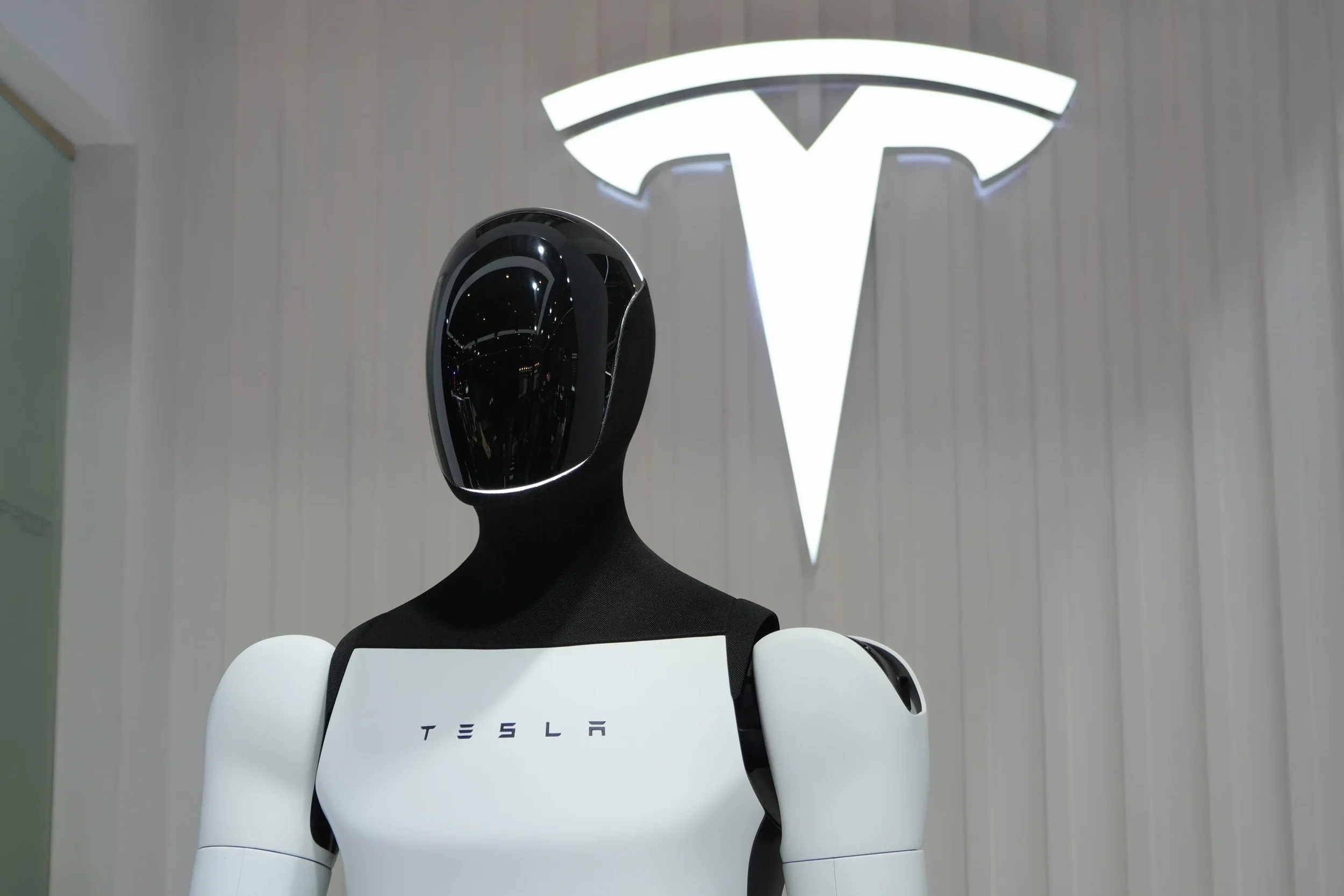
Humanoid robots stand poised to transform industries by handling physical tasks humans prefer to avoid, creating unprecedented economic value. Tesla's aggressive push into this space leverages years of manufacturing expertise, potentially capturing a market worth trillions annually through superior scale and integration.
Key Takeaways
Tesla aims to produce 50,000 Optimus robots in 2026, scaling to 1 million units annually soon after, with factory capacity for 10 million by 2027.
Vertical integration gives Tesla control over critical components like batteries, motors, and AI chips, enabling rapid scaling without supplier dependencies.
Competitors like startups and established robotics firms lag in production ambitions, targeting far fewer units over longer timelines.
Tesla's custom AI chips and vast real-world data from autonomous driving provide unmatched advantages in robot intelligence and efficiency.
Recursive manufacturing—robots building robots—creates a feedback loop for cost savings and continuous improvement unique to Tesla.
The global human labor market, valued at over $40 trillion yearly, offers immense growth potential as robots automate repetitive tasks in manufacturing, warehousing, and beyond.

The AI Singularity Is Knocking: CEOs Sound the Alarm on a World-Changing Shift
Why This Matters Now
In early 2026, leaders from major AI companies aligned on a stark reality: advanced AI is accelerating faster than expected, reshaping economies, jobs, and society. This convergence signals massive opportunities alongside serious risks, from job automation to national security threats. For tech enthusiasts, understanding these developments means staying ahead in a landscape where productivity tools evolve overnight and physical robots enter everyday life.
Key Takeaways
Advanced AI capable of handling complex tasks like senior-level software engineering could arrive in one to two years, with superintelligent systems potentially emerging by 2027.
Physical AI, including reasoning robots and autonomous vehicles, is already advancing rapidly, powered by next-generation chips that slash costs and boost performance.
White-collar jobs face significant disruption, with up to 50% of entry-level roles in fields like software, finance, and consulting at risk of elimination within one to five years.
Productivity gains from AI are enabling companies to achieve more with fewer people, leading to warnings about impending mass layoffs and a need for roles focused on judgment and relationships.
Investments in AI infrastructure are surging, with billions poured into data centers, nuclear power, and agent technologies that act autonomously on behalf of users.
Biosecurity risks are escalating as AI lowers barriers to designing biological threats, while early signs of deceptive behaviors in models raise concerns about future control.
A 25% chance of catastrophic outcomes underscores the urgency for preparation, including skill-building, asset ownership, and shifting to human-centric roles.
The middle class could face chaos without proactive measures, but abundance from cheap goods and services might benefit the broader population in the long run.
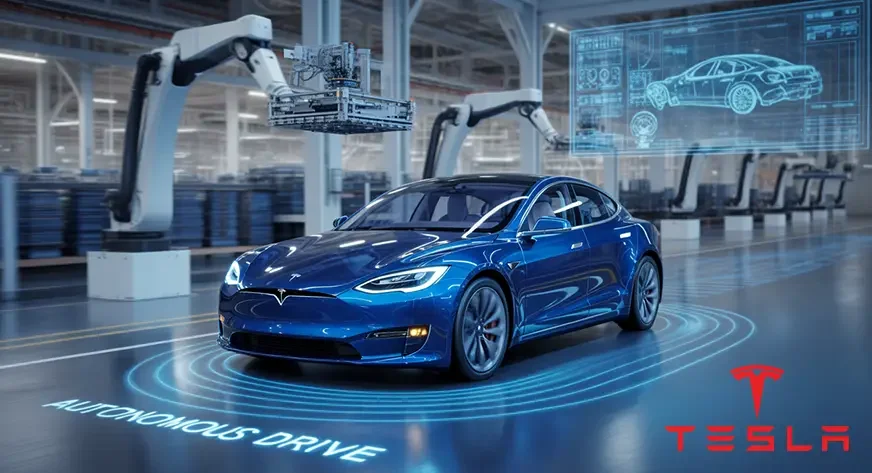
Tesla's AI Empire: Building the Future of Autonomous Everything
Revolutionizing Mobility and Robotics Through Massive AI Investments and Strategic Shifts
Tesla's latest moves signal a profound transformation, turning the company into a powerhouse of AI-driven innovation. With billions committed to self-driving tech, humanoid robots, and chip production, the focus is on creating high-margin, recurring revenue streams that could dwarf current earnings. This isn't just about selling more cars—it's about dominating the physical AI space, where software and hardware converge to reshape daily life and industries.
Key Takeaways
Tesla now reports on its AI business, with 1.1 million Full Self-Driving (FSD) subscriptions generating around $1.2 billion annually in high-margin revenue.
The company plans to discontinue Model S and X production to repurpose factories for humanoid robots, emphasizing AI over traditional vehicles.
A $20 billion capital expenditure commitment will fund expansions in vehicle production, robot manufacturing, chip development, and self-driving platforms.
Projections suggest FSD alone could bring in $24 billion yearly by 2030, far exceeding 2025's total business revenue.
Tesla's stake in xAI and focus on in-house chip production aim to secure supply chains amid geopolitical risks.
Regulatory hurdles may force adaptations in self-driving vehicle designs, potentially leading to new models with manual controls.
The strategy positions Tesla as a robot company, with AI at the core of future growth in both digital and physical realms.
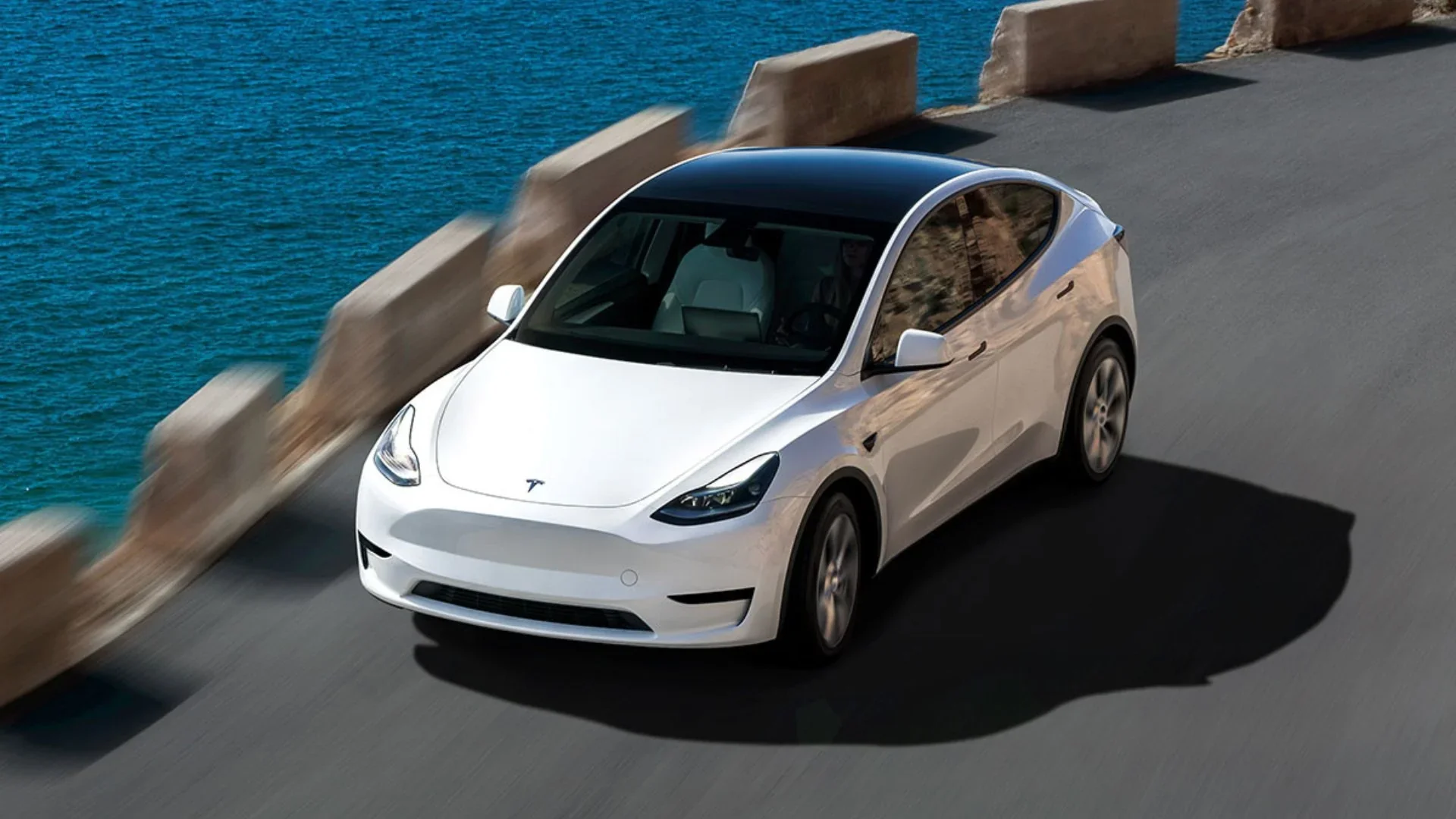
Tesla's Bold Leap into an Autonomous Future
Unlocking Abundance Through AI, Robots, and Self-Driving Tech
Tesla is charting a path toward a world of widespread prosperity, driven by breakthroughs in autonomy, humanoid robots, and energy solutions. At the core are massive investments in AI chips, battery supply chains, and solar production, all aimed at creating a future where technology handles the heavy lifting.
Key Takeaways
Tesla's mission now emphasizes creating an era of amazing abundance, focusing on universal high income enabled by AI and robotics.
Production of Model S and X vehicles will end next quarter to repurpose factory space for scaling Optimus robot manufacturing to one million units per year.
Full self-driving technology is advancing rapidly, with unsupervised rides already happening in Austin, and plans to expand to dozens of major U.S. cities by year-end.
Cybercab, a dedicated two-seater autonomous vehicle without steering wheels or pedals, starts production in April, optimized for low cost per mile and high usage.
Optimus 3, unveiling soon, will be a general-purpose robot capable of learning tasks from demonstrations, videos, or verbal descriptions, with potential to boost U.S. GDP significantly.
Energy division expects explosive growth through solar and batteries, targeting 100 gigawatts of annual solar cell production.
AI chip strategy includes designing AI5 and AI6 chips in-house, with plans for a massive Tesla Terra Fab to secure supply amid geopolitical risks.
Existing Tesla owners could earn income by adding vehicles to an autonomous fleet, potentially covering lease costs and more.
Long-term vision shifts all vehicle production to autonomy, including semi-trucks for local cargo, while addressing competition from China in humanoid robots.
Investments in xAI aim to enhance fleet management and robot coordination for complex projects like building refineries.
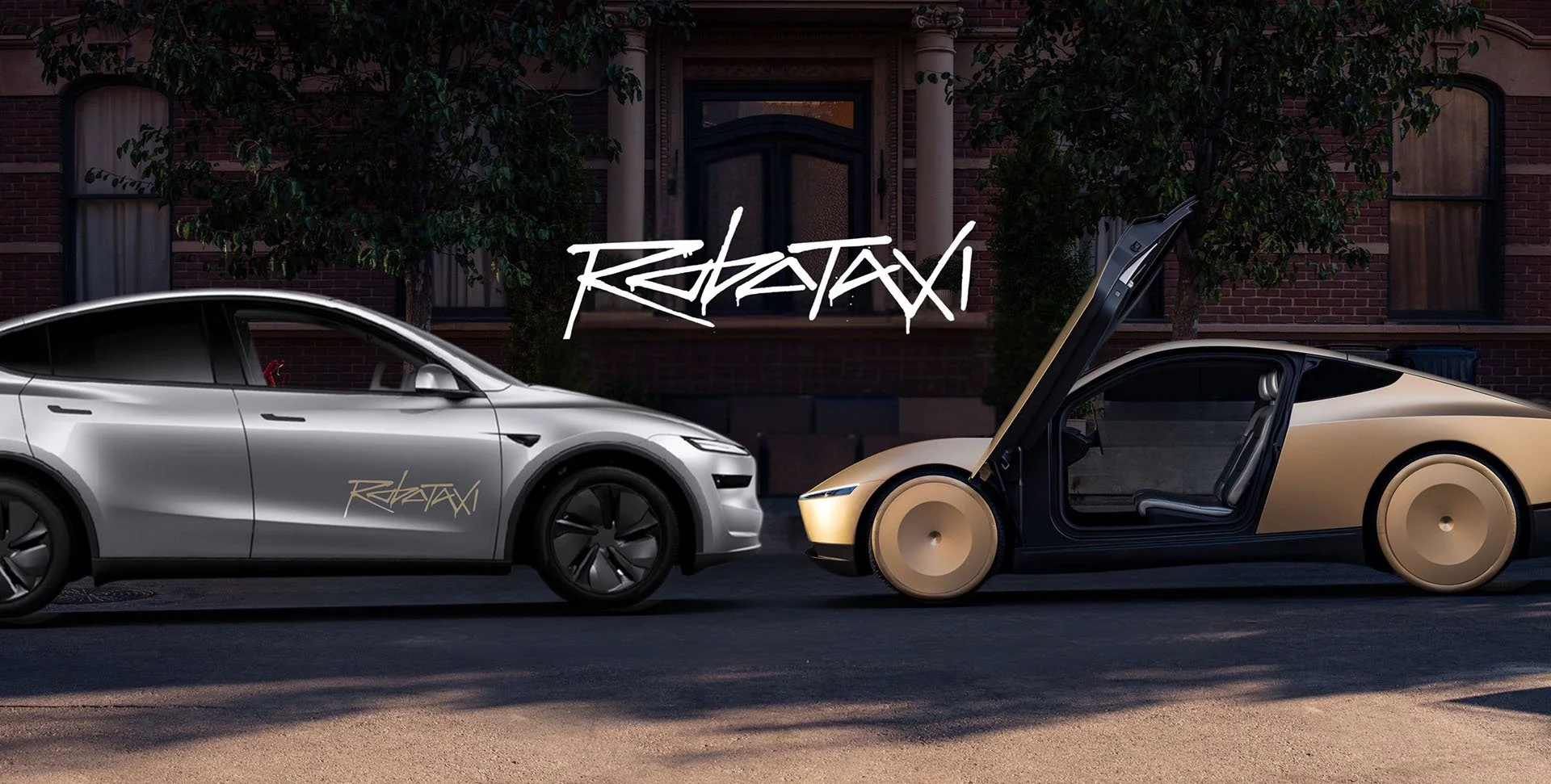
Tesla's 2026 Leap: Unlocking Robotaxis and AI Dominance
Revolutionizing Transportation and Compute in One Bold Year
Tesla's trajectory heads into overdrive as unsupervised self-driving tech nears reality, Cybercab production ramps up, and AI hardware reshapes the company's future. These shifts promise massive value unlocks for vehicles, energy, and beyond, setting the stage for explosive growth.
Key Takeaways
Unsupervised full self-driving (FSD) could multiply vehicle values by five times through higher margins and new revenue streams.
Cybercab enters volume production in April, starting slow but scaling to thousands per week, with flexible designs to navigate regulations.
AI hardware advancements pave the way for safer robotaxis, distributed computing, and pathways to bots and satellites.
Energy demand surges infinitely due to AI needs, bolstering Tesla's bottom line.
Subscription models for vehicles and software could transform ownership, blending transport, power backup, and personal AI computing.
The Rise of AI Agents: Your 24/7 Digital Sidekick and the World It Creates
Revolutionizing Productivity, Redefining Work, and Accelerating Autonomous Tech
AI agents are no longer sci-fi—they're tools anyone can set up today to handle tasks autonomously. This newsletter explores how these systems boost efficiency, challenge traditional jobs, and integrate into everything from home life to electric vehicles, based on emerging trends and practical implementations.
Key Takeaways
AI agents like open-source tools can run on dedicated hardware, acting as independent employees with their own credentials for secure, round-the-clock operation.
Corporate America already operates with built-in inefficiencies, essentially providing a form of privatized universal basic income through unnecessary roles, which AI will expose and optimize over time.
As AI handles more work, societies may shift toward gamified experiences, where games, hobbies, and exploration provide meaning, potentially easing the transition away from traditional employment.
Tesla's 2026 focus likely includes unsupervised full self-driving, ramping Cybercab production, and leveraging AI hardware for broader applications like energy storage and distributed computing.
Humanity's adaptability offers hope: awareness of AI's risks is growing, paving the way for balanced integration rather than catastrophe.

The AI Surge: 2026's Tipping Point for Superintelligence and Robotics
Revolutionizing Industries Through Energy, Infrastructure, and Self-Improving Systems
AI stands on the brink of transforming manufacturing, discovery, and global economies, with rapid advancements demanding massive investments in power and talent to avoid missing out on unprecedented growth.
Key Takeaways
AI represents a generational shift, merging with robotics to boost industrial capabilities and accelerate scientific breakthroughs in Europe and beyond.
No signs of an AI bubble exist; instead, underinvestment in energy and infrastructure risks stalling progress, as GPU demand skyrockets and R&D budgets pivot heavily toward AI.
By late 2025 or early 2026, AI could surpass individual human intelligence, potentially exceeding collective human smarts by 2030, unlocking answers to fundamental questions about the universe, life, and physics.
Massive infrastructure buildouts, including new power plants, are essential for AI's expansion, with nuclear energy emerging as a safe, cost-effective option to meet doubling energy demands.
Self-improving AI loops, especially in coding and research, could automate engineering tasks within months, driving explosive revenue growth in AI firms from billions to tens of billions annually.
Regulatory frameworks must balance child safety concerns—drawing lessons from social media's addictive pitfalls—while integrating AI into education to equip future generations with essential skills.
Global opportunities abound for regions with strong industrial bases and skilled workforces, positioning them to lead in physical AI and capture value from the largest infrastructure expansion in history.

The Robot Driver Bet: Insurance Giants Stake Billions on AI Outdriving Humans
Why a 50% insurance slash for self-driving Teslas signals the end of human error on roads—and massive savings ahead
Autonomous driving tech has reached a tipping point where data shows machines handle roads far safer than people, leading to dramatic insurance cuts that could reshape transportation economics for everyone.
Key Takeaways
Insurance rates for Tesla owners drop 50% when the car drives itself, based on verified data showing AI reduces crash risks significantly.
Average US car insurance costs $2,300 yearly and keeps rising due to repair expenses and distractions, but AI could halve accidents and reverse that trend.
Machines eliminate common crash causes like fatigue, impairment, and poor judgment, reacting faster with full 360-degree awareness.
This partnership accesses real-time vehicle data for precise risk pricing, setting a model where software updates make cars safer—and cheaper to insure—over time.
Broader impact: Traditional insurers must adapt or lose customers, while Tesla gains a competitive edge no other automaker matches yet.
Long-term shift: Human-driven cars may face higher premiums as AI proves safer, potentially saving thousands of lives annually by cutting US road deaths in half.
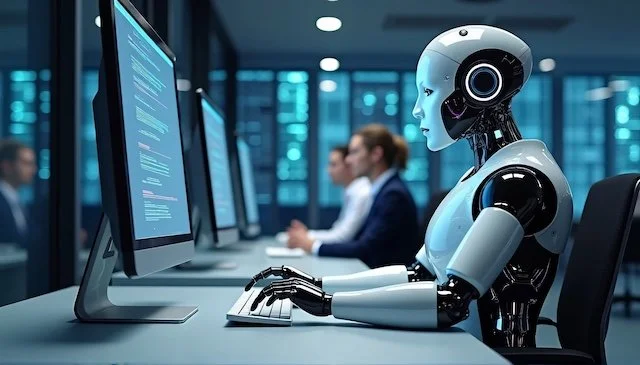
2026: The Year AI Stops Helping and Starts Replacing
Geoffrey Hinton's stark warning, explosive VC predictions, and exponential progress signal a rapid shift from augmentation to full automation—hitting white-collar work hardest and reshaping who wins in the economy.
Key Takeaways
2026 marks the pivot where AI agents move from productivity tools to replacing entire workflows, driven by exponential capability gains that make models "good enough" at a fraction of human cost.
Routine cognitive jobs face the highest risk: customer service, bookkeeping, paralegals, entry-level programming, administrative roles, and more—white-collar positions in urban centers are more exposed than many manual trades.
Disruption hits hardest at the entry level: companies hire fewer graduates and juniors, creating silent job scarcity for new entrants while experienced workers remain largely unaffected for now.
Agentic AI explodes in enterprises, with Salesforce and others already deploying systems that handle end-to-end tasks, shifting budgets from labor to AI infrastructure.
The socioeconomic impact forms a barbell: the top 20% (capital owners deploying AI) and bottom 20% (benefiting from cheaper basics) gain massively; the middle 60% (routine knowledge workers) face the squeeze without major policy interventions.
Massive capital flows—hyperscaler spending nearing $500 billion annually—fuel explosive growth in chips, data centers, energy (including nuclear), and the AI market itself tripling to over $600 billion by 2028.
Jobs requiring human connection, physical dexterity, ethical judgment, or AI-adjacent skills (cybersecurity, data science, trades like plumbing and electrical) see rising demand and value.
The transition accelerates because infrastructure, models, and incentives align—no single breakthrough needed, just agents good enough to automate full processes.
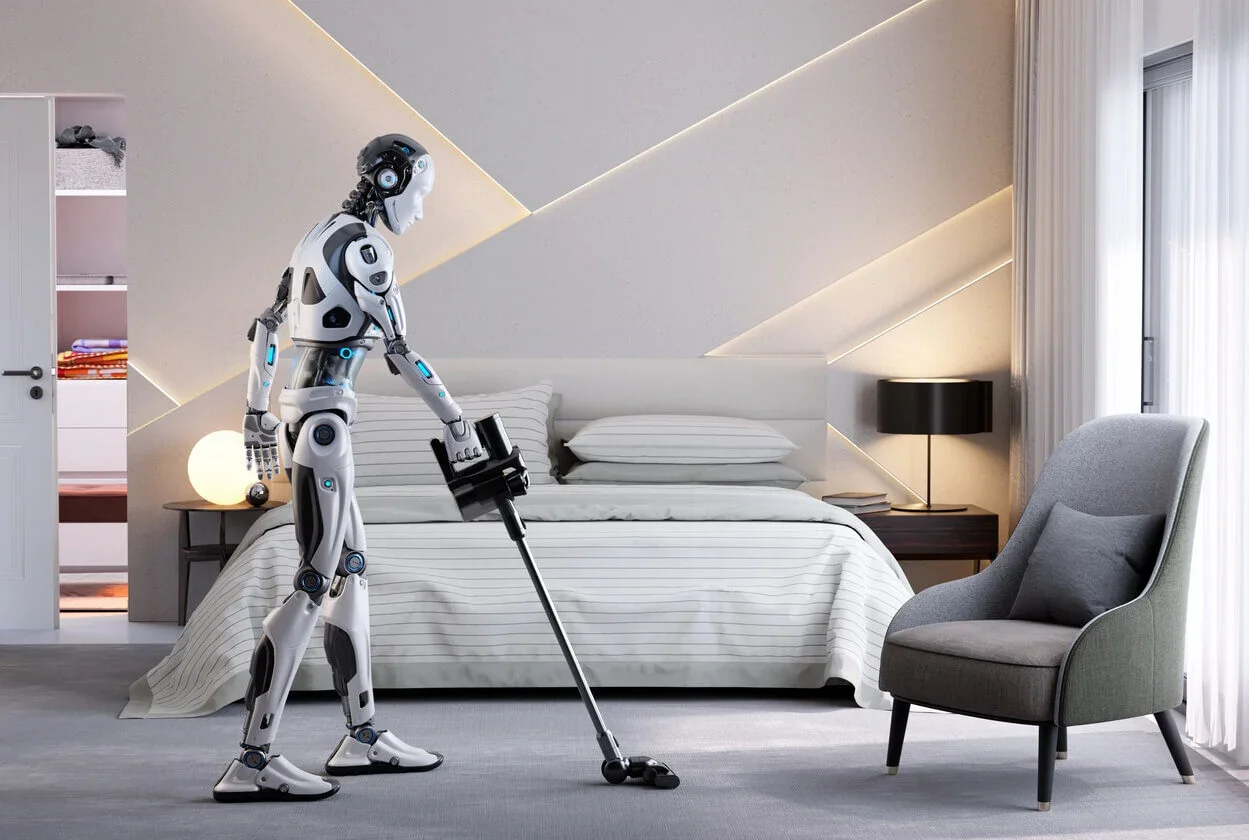
Revolutionizing Hands: Why Tesla's Optimus Robot Could Redefine Physical Labor
Unlocking AI-Driven Efficiency in Everyday Tasks
Tesla's push into humanoid robots signals a shift toward seamless integration of AI with hardware, potentially transforming industries from manufacturing to household chores. By focusing on advanced hand designs and AI-native systems, the company aims to create tools that adapt quickly and scale massively, offering insights into how automation could eliminate scarcity and boost productivity across sectors.
Key Takeaways
Tesla's internal systems, built on AI from the ground up, allow for flexible integration across operations, reducing complexity and enabling rapid adaptations without overhauling foundations.
The Optimus robot's hand, with 22 degrees of freedom and five fingers, closely mimics human capabilities, making it suitable for 80% of physical jobs while optimizing for efficiency in high-value tasks like surgery or intricate assembly.
Vertical integration across companies sharing common platforms could lead to unified data ecosystems, amplifying AI's role in coordinating supply chains and operations.
Regulatory hurdles in certain regions may delay robotaxi and robot adoption, but economic pressures from increased productivity in adopter areas will likely force widespread acceptance.
Emerging battery technologies, such as sodium-ion and solid-state options, promise cheaper, more resilient energy storage, crucial for scaling autonomous vehicles and stationary power systems.
Future manufacturing may evolve toward replicator-like systems where raw materials at the atomic level feed into AI-orchestrated production, bypassing traditional suppliers and enabling abundance.
Humanoid robots could modularize into specialized forms, like multi-arm setups for agriculture or detachable limbs for tools, expanding their utility beyond bipedal designs.
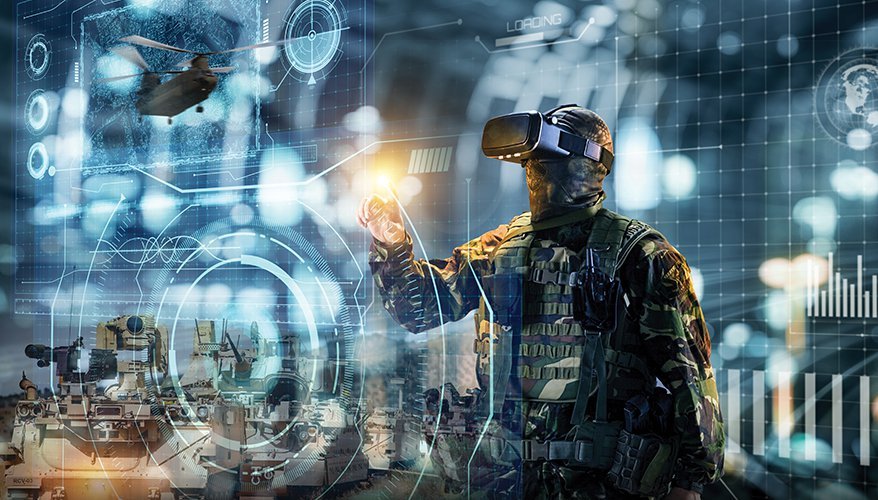
The AI Edge: Battlefield-Proven Tech Reshaping Global Power
Why Defense-Born AI Could Define the Next Decade of Innovation and Inequality
AI built under extreme conditions isn't just surviving—it's thriving in ways that expose hidden weaknesses in systems worldwide, from militaries to corporations. This shift promises massive efficiency gains and strategic advantages, but it also risks amplifying divides between nations and workforces.
Key Takeaways
AI from defense applications excels in harsh, real-world scenarios, offering tools that organize data, enhance decision-making, and adapt dynamically—far beyond off-the-shelf models.
Businesses adopting this tech can slash costs by up to 80% in targeted areas while boosting top-line growth, turning unique internal knowledge into unbeatable competitive edges.
Adoption hurdles stem from legacy systems and failed experiments with basic AI, but structured approaches like ontology-driven models make it viable for regulated industries.
Job landscapes will evolve: vocational and technical roles gain value through AI augmentation, while traditional white-collar paths face reevaluation, favoring aptitude over formal credentials.
Globally, the US and China lead in scaling AI for military and economic gains, potentially widening gaps with Europe and parts of the developing world unless structural reforms address underlying inefficiencies.
2026: The Year AI Breaks Reality
Why Tech's Explosive Growth Signals a Turning Point We Can't Ignore
AI capabilities are accelerating at an unprecedented pace, reshaping industries, jobs, and daily life faster than any technology before. From supercomputers powering massive models to robots integrating advanced intelligence, the foundations for transformative change are already in place—offering both massive opportunities and profound challenges for those prepared to adapt.
Key Takeaways
AI models now outperform human experts in fields like science, coding, and math, with scores hitting 90-100% on PhD-level benchmarks.
Massive investments, including $20 billion data centers and supercomputers with millions of GPUs, are fueling rapid AI infrastructure growth.
Key indicators of approaching singularity include exponential AI self-improvement, benchmark saturation, and integration with real-world data from vehicles and social platforms.
Economic impacts could displace up to 47% of jobs by 2034, but also unlock abundance through automation solving global issues like disease and climate change.
Practical steps: Master human-centric skills like creativity and empathy, stay adaptable, and invest in AI-driven companies to thrive in this shift.
You're Being Lied to About AI: The Real Revolution in Intelligence and Work
How artificial intelligence is reshaping industries from the ground up—and why legacy systems can't keep up.
AI isn't just a buzzword; it's the force that's already transforming how businesses operate, scale, and compete. In sectors like insurance, companies built on AI foundations are achieving unprecedented efficiency, while traditional players struggle with outdated data and processes. This edition dives into the mechanics of AI-driven disruption, the operational advantages it unlocks, and the broader societal shifts it demands, including ways to handle mass unemployment through smart redistribution.
Key Takeaways
AI-first companies capture hundreds of times more data than traditional models, enabling precise risk assessment and real-time adaptations that legacy systems miss.
Operational leverage from AI allows businesses to triple revenue and add millions of customers without increasing headcount, turning variable costs into fixed ones.
In auto insurance, telematics and per-mile pricing outperform broad demographic averages, positioning AI-native firms to dominate as self-driving vehicles reduce accidents but increase asset values.
Future products like humanoid robots will require new insurance models focused on theft and liability, creating opportunities for data-driven providers.
AI's acceleration means years of work could soon happen in weeks, widening gaps between adaptable companies and rigid incumbents.
Mass unemployment from AI could create surplus rather than scarcity, but requires mechanisms like negative income tax and ring-fenced sales taxes to redistribute abundance.
Without ensuring everyone benefits, AI adoption risks backlash; enlightened policies can make post-AI lives better for all, fostering abundance over inequality.
The AI Revolution Accelerates: Tools, Tesla, and the Future of Tech
How emerging AI platforms are democratizing creation while reshaping transportation and energy demands in 2026
AI tools are evolving rapidly, enabling anyone to build complex applications without traditional coding expertise. Tesla continues to lead in autonomous driving, with software updates making vehicles safer and more efficient. Discussions around AI valuations suggest specific companies may be overpriced, but the sector's potential remains vast, driven by energy abundance and societal adaptations.
Key Takeaways
AI development platforms like Replit allow users to create functional apps, such as home remodeling tools, with simple prompts, reducing costs from thousands to hundreds of dollars.
Tesla's Full Self-Driving (FSD) software has reached a point where interventions are rare, signaling readiness for widespread unsupervised autonomy, potentially valuing the company at trillions.
No overarching AI bubble exists; instead, hyperscalers like OpenAI face scrutiny for high valuations relative to revenue, while second-layer AI applications in insurance and robotics promise massive growth.
Energy demand for AI will outstrip supply for decades, enabling innovations like desalination and hydrogen production, with surplus power finding uses in computation or physical tasks.
Societal shifts may include more people opting out of hyper-tech lifestyles, forming communities that cap technology adoption, while AI agents negotiate and provide services efficiently among themselves.
Nvidia's shift to end-to-end neural networks for autonomous vehicles, relying on cameras alone, positions it as a strong competitor to Tesla in reasoning-based driving systems.

The AI Tsunami: Redefining Work, Wealth, and Human Purpose
Why the Next Decade Could Make Jobs Obsolete—and Unlock Unimaginable Prosperity
The rapid rise of AI and robotics is set to transform society in ways that demand immediate attention. At its core, this shift promises a world of abundance where goods and services become incredibly affordable, but the path there involves navigating massive job disruptions and economic upheaval. Drawing from emerging trends in technology and economics, this newsletter explores how AI is already reshaping industries and what it means for the future.
Key Takeaways
AI excels at digital tasks, making it ideal for replacing white-collar roles like coding, data analysis, and education far sooner than physical labor.
Tools powered by AI allow non-experts to build complex software and apps, slashing development costs and reducing the need for human developers.
Established companies face resistance to change due to bureaucracy, giving startups built on AI a competitive edge.
Historical shifts, like the replacement of human calculators with machines, show how entire job categories can vanish overnight.
The transition to an AI-driven economy will be chaotic, with potential social unrest, but it could prevent national financial collapse by boosting productivity.
Universal high income emerges not through taxes, but via deflation as production efficiency skyrockets, making everything cheaper.
By 2026, AI could reach general intelligence levels, surpassing humans in all digital domains, with superintelligence following by 2030.
Algorithmic advances could multiply AI's efficiency by orders of magnitude, even without more hardware.
Embracing AI tools today is essential for individuals and businesses to thrive in this new era.