

Private Market Investing: AI & Tech Revolution Opportunities
The tech landscape is undergoing a seismic shift, driven by AI, robotics, and healthcare breakthroughs. In this episode, we dive into the world of private market investing with seasoned investors Larry and Bradford. They share insights on spotting high-potential startups, navigating risks, and capitalizing on the next industrial revolution, offering a roadmap for tech enthusiasts eager to invest in humanity’s future.
Key Takeaways
Private markets offer unique opportunities absent from public exchanges, especially in AI and adjacent technologies.
Successful private investments hinge on product-market fit, strong founders, and sufficient funding.
Companies aligned with transformative missions, like those of Elon Musk, hold significant growth potential.
Risks are high, but careful selection can yield exponential returns compared to public markets.
LumaSenti focuses on curated, mission-driven investments, allowing investors to choose individual opportunities.
The episode unpacks the transformative potential of private market investments in an era defined by technological leaps. Larry and Bradford, experienced investors, highlight why private companies—not public ones—are at the forefront of innovation in fields like AI, robotics, and medical devices. They emphasize the importance of identifying startups with proven product-market fit, visionary founders with grit, and secure funding to scale. Unlike venture capital funds, their platform, LumaSenti, offers investors the flexibility to select individual companies, aligning with a mission to advance human consciousness and societal good. The discussion draws parallels to historical industrial revolutions, underscoring the exponential growth potential of today’s tech-driven economy. While acknowledging the risks—many startups fail—they stress that meticulous due diligence can unlock returns far surpassing public market investments. Examples include medical device companies addressing unmet needs and space ventures leveraging cost reductions from innovations like Starship. For accredited investors, this episode offers a compelling case for exploring private markets to shape and profit from the future.

Why Elon Musk Should Buy Apple
Unlocking Apple's hidden value through bold acquisition could reshape AI, devices, and space exploration.
Key Takeaways
Apple's innovation has stalled since Steve Jobs, relying on iPhone updates and facing manufacturing risks in China.
Acquiring control via 10% stake, leveraging alliances with institutions like Vanguard and banks like JP Morgan, is feasible without full buyout.
Core value lies in billions of users' private data, enabling Grok-powered digital twins for personalized AI in devices, robots, and vehicles.
Integration could double Apple's stock value, redirect cash flow from buybacks to fund Mars missions, and automate manufacturing globally.
Overcomes privacy hurdles by keeping data secure, outpacing competitors like OpenAI or Google in trusted AI ecosystems.
Apple's current trajectory shows massive revenue but little forward momentum, with failed projects like Vision Pro and Project Titan highlighting leadership gaps. An acquisition would infuse Elon Musk's vision, transforming iPhones into AI hubs synced with Optimus robots and Tesla vehicles. By automating production and shifting from China dependency, new revenue streams emerge from satellite-enabled devices and embodied AI. This move not only revitalizes Apple's hardware but channels its $110 billion annual cash flow—currently funneled into $77 billion buybacks and $15 billion dividends—toward groundbreaking advancements, potentially doubling cash flow through AI enhancements and eliminating redundant features.

US Healthcare Crisis: Costs, Fixes & Savings
The US shells out $5 trillion yearly on healthcare—17.6% of GDP—yet ranks dead last in outcomes among developed nations, with life expectancy at 78.4 years and infant mortality triple the OECD average. This episode exposes how monopolies, price opacity, and a focus on treatment over prevention fuel the fire, while outlining actionable reforms to slash costs and save lives.
Key Takeaways
Price Transparency First: Mandate upfront pricing and quality scores online, enabling patients to shop like on Amazon—projected $350B savings by year three.
Smash Monopolies: Enforce antitrust on hospital duopolies and scrap Certificate of Need laws blocking independent clinics, cutting post-merger price hikes of 6-18%.
Shift to Value-Based Pay: Reward providers for outcomes and prevention, not procedures—could save $200B via bundled payments and capitation models.
Tackle Preventable Diseases: Redirect <1% of spending to diet, exercise, and early detection; taxing sugar and ending corn subsidies might yield $1.5T in long-term gains.
Bipartisan Roadmap: An 8-year plan starting with transparency, no new spending—$800B-$1T annual savings, plus 4 extra healthy years for all.
Delving deeper, the system thrives on opacity: an MRI costs $500 at a clinic but $7,000 at a hospital, with no one shopping because prices hide until bills arrive. Monopolies—often "nonprofit" giants—squeeze out independents via rigged licensing boards, while insurers balloon admin costs to 30% (vs. Medicare's 2%), adding $400B in waste. Defensive medicine racks up $150B in unnecessary tests to dodge lawsuits. Globally, peers like Germany spend half per capita yet live 4 years longer, proving efficiency works. Prevention flips the script: catching issues early via telehealth or lifestyle tweaks avoids stage-4 catastrophes, preserving productivity and slashing $4T in chronic care for diabetes, obesity, and heart disease. Larry's 90-page analysis, vetted by experts, maps an 8-year overhaul: years 1-2 enforce transparency and competition; 3-6 reform payments; 5-8 push population health. It's capitalism unleashed—patients empowered, providers incentivized, government just refereeing. With RFK Jr. eyeing the helm, this isn't pie-in-the-sky; it's a fiscal lifeline amid ballooning deficits.

Tesla Robotaxi Beta: Rides, Insights, Future
Explore the transformative potential of Tesla's Robotaxi through real-world testing, revealing superior ride quality and strategic advantages that could redefine urban transport.
Key Takeaways
Tesla's Robotaxi offers effortless, consistent rides with minimal friction compared to traditional ride-hailing services.
Competitors like Waymo face scalability issues due to high vehicle costs and limited production, while Tesla leverages existing manufacturing for rapid fleet expansion.
Massive AI compute clusters, like Cortex, enable end-to-end neural networks for smoother autonomous driving.
Infrastructure, including service centers and charging networks, gives Tesla a global edge over rivals.
Risks include regulatory hurdles, potential accidents, and political factors, but successful rollout could generate immediate profitability.
Delve into the beta program's performance, where rides demonstrate seamless navigation through heavy traffic without jerkiness, unlike coded systems in other autonomous vehicles. Tesla's approach, using affordable Model Y units and upcoming Cyber Cab, positions it to achieve millions of units annually, far outpacing others limited to thousands. AI training on vast data sets refines decision-making, reducing hesitations and enhancing safety. However, challenges like expanding geofenced areas, removing safety drivers, and navigating federal standards remain critical. Profitability emerges quickly at $3-4 per mile without drivers, though initial capital for fleets will dip cash reserves before scaling yields returns. Overall, Tesla's integration of hardware, software, and ecosystem sets a path for dominance in self-driving tech.

SpaceX Valuation Forecast: 2030 & 2040 Projections Unveiled
Dive into an exciting analysis of SpaceX’s future as Ark Invest and Mach 33 unveil their detailed valuation model. This episode breaks down SpaceX’s trajectory, from dominating global connectivity with Starlink to pioneering Mars colonization, offering tech enthusiasts a glimpse into a transformative space economy.
Key Takeaways
SpaceX’s valuation could reach $2.5 trillion by 2030, driven by Starlink’s global expansion.
By 2040, Mars infrastructure development may push valuations to $12.8 trillion in the base case.
Monte Carlo simulations account for uncertainties, modeling 17 variables like Optimus costs and Starlink performance.
Starlink’s bandwidth growth follows Wright’s Law, projecting cost declines with scale.
Mars’ economic base, built by Optimus robots, could create trillions in book value without immediate profit.
This episode delves into a collaborative study by Ark Invest and Mach 33, forecasting SpaceX’s valuation over the next two decades. The model leverages Monte Carlo simulations to address uncertainties, using 17 variables such as Starlink satellite costs and Optimus robot productivity. By 2030, SpaceX’s dominance in satellite internet through Starlink is projected to drive a $2.5 trillion valuation, fueled by 6 million subscribers scaling toward billions. The study assumes Starlink maintains a competitive edge, though risks like emerging competitors (e.g., Amazon’s Kuiper) and market saturation are considered adjustable inputs.
Looking to 2040, the model explores SpaceX’s Mars ambitions, estimating a $12.8 trillion base case valuation. This hinges on deploying Optimus robots to build infrastructure, valued at book cost, without expecting near-term profits. The analysis simplifies Mars’ economic potential, focusing on robots constructing landing pads and habitats, reducing human mission risks and costs. While short-term projections rely on historical data like launch frequencies, Mars estimates embrace higher uncertainty, reflected in wider valuation ranges. The study also highlights SpaceX’s reusable Starship and Starlink’s bandwidth improvements, aligning with Wright’s Law for cost declines. This forward-looking model challenges conventional valuation methods, framing space as the next industrial frontier.

Debating Tesla's Robotaxi Future
Explore Tesla's bold pivot from EVs to autonomous ride-sharing, uncovering insights on scalability, competition, and economic impacts that could reshape transportation.
Key Takeaways
Tesla's autonomy strategy focuses on low-cost vehicles like Cybercab, potentially undercutting rivals in ride-sharing economics.
Competition from Waymo, Zoox, and Chinese firms could fragment market share, similar to EV adoption patterns.
Ride-sharing TAM expands dramatically at $1 per mile, shifting from displacing Uber to replacing personal car commutes.
Valuation hinges on non-auto segments like FSD and Optimus, with current market cap implying high success probabilities.
Regulatory and incident risks remain key hurdles for rapid Robotaxi rollout.
Delve into Tesla's transition beyond traditional auto manufacturing, emphasizing startups within the company for energy, AI-driven autonomy, and humanoid robots. Autonomy promises generalized unsupervised driving, but data on disengagements and mapping highlight scaling challenges. Competitors invest heavily, yet Tesla's integrated app, sensor tech, and compute efficiency offer edges in operational costs. Market assumptions price in massive growth, but EV price cuts and hybrid rises signal caution. Future metrics like market share gains in key cities will test viability.

Delaware Courts: Bias and Business Risks
In this episode, we uncover alarming shifts in Delaware's courts that threaten business stability and investor interests.
Key Takeaways
Delaware awards attorney fees at multipliers 100 times higher than federal cases, often exceeding 10x the standard loadstar.
Judicial activism since 2009 has led to a surge in high-multiplier rulings, with recent years seeing four times more such cases.
Companies face unprecedented bias, with courts favoring plaintiffs and granting excessive access to corporate records.
States like Texas and Nevada offer prescriptive laws based on statutes, reducing uncertainty compared to Delaware's precedent-driven system.
Reincorporation away from Delaware protects against escalating legal costs and unpredictable judgments.
Recent research highlights how Delaware's Chancery Court has deviated from norms, with multipliers reaching 25x in high-profile cases, far beyond the federal average of 1-2x. This trend, accelerating over the last two decades, stems from key judicial appointments that prioritize plaintiff awards, creating chaos in what was once a predictable business haven. Data shows federal cases rarely exceed 4x multipliers, occurring in just 0.023% of instances, while Delaware hits these levels in 2.36% of cases—indicating systemic favoritism. As a result, ventures are migrating to states with clearer, statute-based rules that limit broad discovery and ensure balanced rulings, fostering a more competitive environment for innovation.

Trump's Tariff Strategy: Risks and Reforms
In this episode, we dive into the bold push for trade reform through aggressive tariffs, uncovering strategies to prioritize national security, medical supplies, and raw materials amid global interdependencies.
Key Takeaways
Aggressive tariffs risk immediate economic disruption but aim to force negotiations for fairer trade terms.
Historical lessons from the 1930s show how sudden barriers can deepen recessions by halting global flows.
Onshoring requires phased approaches, starting with critical sectors like autos and tech hardware.
Supply chains demand redesign for U.S. labor costs, emphasizing automation and workforce reskilling.
End goals include lower permanent tariffs to drive domestic manufacturing without zero-balance mandates.
Delving deeper, the strategy targets imbalances by imposing high initial rates to spark urgent dialogues, potentially leading to deal-by-deal reductions with allies. Complexities arise in intertwined global networks, where goods cross multiple borders, amplifying costs if not managed layer by layer. Priorities focus on securing essentials like EVs, AI hardware, and medical goods, while avoiding low-value items like consumer electronics. Automation emerges as a key enabler to offset rising expenses, fostering innovation in production. Ultimately, a structured escalation—over years, not days—could realign trade, boosting U.S. jobs and resilience without the chaos of abrupt shocks.

Exposing Government Contract Nightmares
Uncover the systemic flaws in U.S. government operations, where billions vanish into failed projects and bureaucratic layers, and discover emerging strategies to overhaul it all with tech-driven efficiency.
Key Takeaways
Government contracts often prioritize hourly billing over results, leading to endless delays and cost overruns.
Legacy systems from the 1960s persist due to failed modernization attempts, wasting billions without progress.
Contractors exploit regulations like FAR to layer profits, using minority-owned fronts for bids.
Private sector models, like building software for free then selling globally, bypass red tape for faster implementation.
Structural changes, such as limiting NGO funding and enforcing transparency, are crucial for long-term reform.
Deflation risks outweigh benefits; balanced budgets with exceptions for crises could curb waste.
Media shifts to long-form discussions enable deeper public awareness of these issues.
Delve into decades of firsthand insights on federal projects, where IRS modernization in the early 2000s involved magnetic tape formats emulated on disks, resulting in a $2 billion failure after years of extensions. Similar patterns repeat across administrations, with projects halted during transitions, costing millions in sunk investments. Explore how beltway contractors game the system through set-asides for minority or veteran-owned firms, which often serve as pass-throughs taking a cut while major players handle the work. New approaches under recent leadership propose leveraging private companies to develop tools at no upfront cost, using U.S. adoption as a sales lever worldwide. This could modernize customs, tariffs, and more, avoiding procurement hell. Skepticism remains due to political cycles and judicial hurdles, but rapid action and audit-ready software offer hope for cutting waste in a $6.7 trillion annual budget. Economic debates highlight avoiding deflation's vicious cycles while curbing inflation through productivity growth.
Cathie Wood's Economic Vision and Innovation Drive
Discover how innovation can reshape economies amid global trade barriers and fiscal pressures, drawing from historical successes like Reagan-era policies.
Key Takeaways
Innovation accelerates productivity, enabling growth despite economic hurdles.
US manufacturing faces unfair global trade barriers, gutting communities and competitiveness.
Tariffs and regulations from other nations disadvantage American exports, requiring reciprocal measures.
Automation and AI offer a path to reshore production, reducing labor costs and boosting domestic output.
Past economic cycles, like high inflation in the 1980s, show delays in policy impacts but eventual recoveries through tax cuts and deregulation.
Europe's policies risk catastrophe, with declining productivity and unsustainable debt.
Immigration disrupts societies without integration, contrasting US resilience with European challenges.
Economic forecasts highlight innovation as a cure for societal issues, with historical patterns repeating today. Reagan's tax cuts, despite initial delays from inflation controls, led to revenue surges and balanced budgets through growth. Current US challenges mirror this, with excessive spending fueling inflation, necessitating fiscal restraint and trade reforms. Manufacturing hubs have decayed due to asymmetric global barriers, where US workers compete against subsidized labor abroad. Automation emerges as key, allowing competitive production domestically, as seen in high US-content manufacturing like electric vehicles. Tariffs aim to level the playing field, fostering resurgence before full robotic integration. Broader disruptions in technology, politics, and culture amplify these shifts, positioning innovation to drive prosperity.

Economic Turmoil: Recession Risks and Trump Policies
Rising economic uncertainty demands a closer look at recession indicators and policy shifts reshaping global trade and US fiscal health.
Key Takeaways
Recession risks are elevated, with selective impacts hitting small businesses and certain regions hardest.
Trump's tariffs aim to address long-standing imbalances, like Europe's 10% on US vehicles versus 2% reciprocal.
NATO funding shows US bearing disproportionate burden, roughly 6:1 per capita compared to Europe.
US debt trajectory is unsustainable, fueled by bureaucratic growth and unchecked NGO spending layers.
Foreign aid inefficiencies, as seen in Haiti, highlight potential harms from mismanaged interventions.
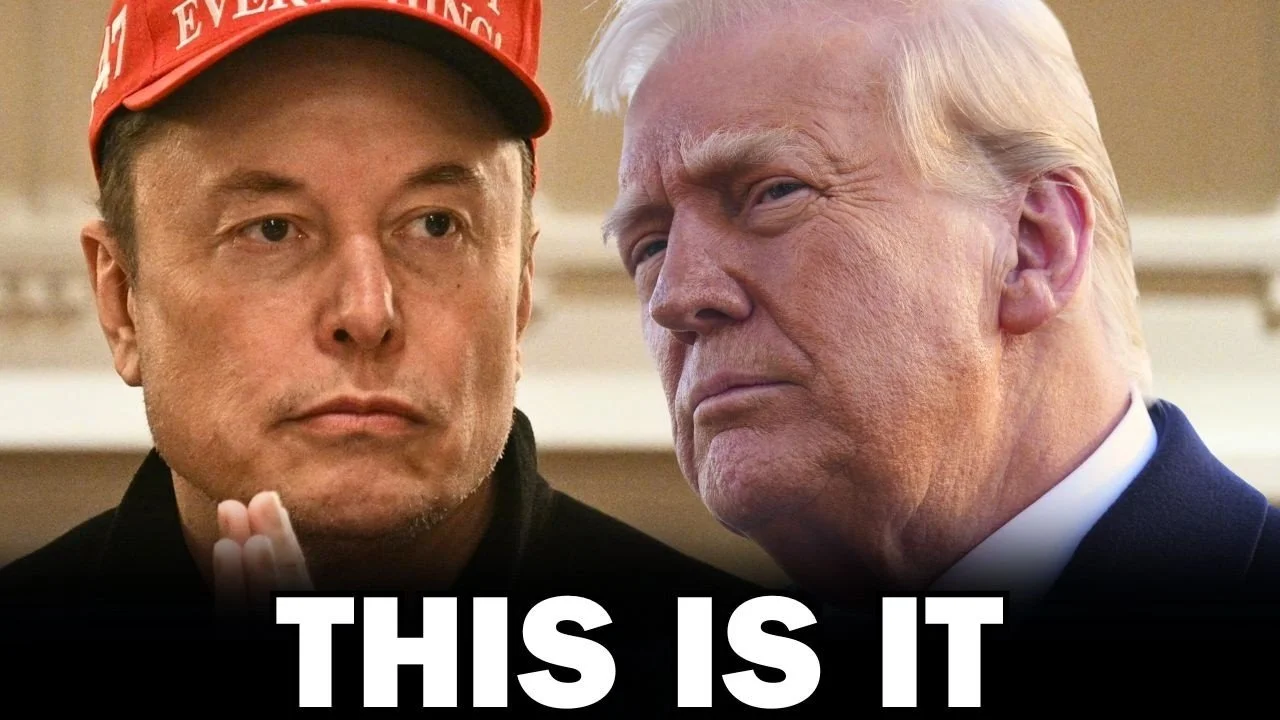
Elon Musk's cost-cutting prowess positions him uniquely to tackle government waste, though at personal risk.
Delving deeper, the conversation highlights how portions of the US population already face recession-like conditions, with high unemployment in specific sectors despite low overall rates. Trump's approach disrupts polite diplomatic norms by enforcing reciprocal tariffs and demanding allies pay fair shares in defense. This signals the close of an era where the US subsidized Europe's recovery and unity post-1945. Bureaucratic expansion has ballooned government spending to over 30% of GDP, far from founding-era levels under 3%, perpetuating debt through self-sustaining structures. NGOs, funded by billions annually, often layer contracts inefficiently, normalizing corruption via salaried networks tied to former officials. Foreign aid's mixed results raise questions on its value, especially when domestic manufacturing declines and communities suffer. Musk's involvement amplifies risks but offers hope for radical efficiency gains, while Tesla navigates intensified political scrutiny, balancing brand hatred from one side against newfound support from others.

Elon Musk's Government Efficiency Revolution
Elon Musk's involvement in federal reforms highlights innovative approaches to slashing bureaucracy and boosting accountability, offering fresh strategies for tech-driven governance.
Key Takeaways
Musk focuses on identifying and eliminating wasteful expenditures across agencies, emphasizing cost control honed from his companies.
The initiative repurposes existing frameworks to modernize systems, avoiding new legislation where possible.
Political resistance stems from fears of concentrated power, yet it aligns with original constitutional executive authority.
Media's failure to scrutinize spending has eroded public checks, allowing unchecked growth in federal budgets.
Successful cuts could halve deficits, enable tax reductions, and lower interest rates, benefiting consumers directly.
Leadership involves subservient execution under presidential direction, not independent policy-setting.
Musk's strategy leverages his expertise in incentive alignment, applying principles from high-stakes industries to government. By spotlighting untraceable funds and redundant programs, the effort targets epic-level waste in areas like aid and defense. This revolutionary push challenges entrenched systems, where Congress's perpetual laws and mandatory spending have ballooned deficits. If impoundment rulings shift, executives gain flexibility to withhold funds, potentially balancing budgets through efficiency and growth. The approach fosters broader coalitions, urging bipartisan scrutiny of all spending. Ultimately, it positions tech innovation as a tool for sustainable governance, reducing national debt's drag on security and prosperity.