

US Healthcare Crisis: Costs, Fixes & Savings
The US shells out $5 trillion yearly on healthcare—17.6% of GDP—yet ranks dead last in outcomes among developed nations, with life expectancy at 78.4 years and infant mortality triple the OECD average. This episode exposes how monopolies, price opacity, and a focus on treatment over prevention fuel the fire, while outlining actionable reforms to slash costs and save lives.
Key Takeaways
Price Transparency First: Mandate upfront pricing and quality scores online, enabling patients to shop like on Amazon—projected $350B savings by year three.
Smash Monopolies: Enforce antitrust on hospital duopolies and scrap Certificate of Need laws blocking independent clinics, cutting post-merger price hikes of 6-18%.
Shift to Value-Based Pay: Reward providers for outcomes and prevention, not procedures—could save $200B via bundled payments and capitation models.
Tackle Preventable Diseases: Redirect <1% of spending to diet, exercise, and early detection; taxing sugar and ending corn subsidies might yield $1.5T in long-term gains.
Bipartisan Roadmap: An 8-year plan starting with transparency, no new spending—$800B-$1T annual savings, plus 4 extra healthy years for all.
Delving deeper, the system thrives on opacity: an MRI costs $500 at a clinic but $7,000 at a hospital, with no one shopping because prices hide until bills arrive. Monopolies—often "nonprofit" giants—squeeze out independents via rigged licensing boards, while insurers balloon admin costs to 30% (vs. Medicare's 2%), adding $400B in waste. Defensive medicine racks up $150B in unnecessary tests to dodge lawsuits. Globally, peers like Germany spend half per capita yet live 4 years longer, proving efficiency works. Prevention flips the script: catching issues early via telehealth or lifestyle tweaks avoids stage-4 catastrophes, preserving productivity and slashing $4T in chronic care for diabetes, obesity, and heart disease. Larry's 90-page analysis, vetted by experts, maps an 8-year overhaul: years 1-2 enforce transparency and competition; 3-6 reform payments; 5-8 push population health. It's capitalism unleashed—patients empowered, providers incentivized, government just refereeing. With RFK Jr. eyeing the helm, this isn't pie-in-the-sky; it's a fiscal lifeline amid ballooning deficits.

Waymo vs Tesla: Austin Robotaxi Rivals
Autonomous ride-hailing is exploding, with Waymo's established scale clashing against Tesla's aggressive beta rollout—revealing key edges in fleet growth, ride quality, and market disruption that could redefine urban mobility for tech-savvy users.
Key Takeaways
Waymo operates over 1,500 vehicles across four cities, logging 250,000 paid rides weekly, while Tesla's Austin fleet sits at 11 Model Ys with safety monitors, targeting 30+ vehicles soon.
Tesla rides feel superior in smoothness and infotainment sync, outperforming Waymo's jerky stops and unprotected left turns observed in tests.
Waymo commands 25% market share in San Francisco, overtaking Lyft despite 30-40% higher prices than Uber, driven by privacy and no-tip appeal.
Tesla plans geofence expansions north of Austin's river, tackling pedestrian-heavy zones like Sixth Street, while prioritizing fleet growth before unsupervised ops.
Long-term, Tesla's visionless approach and billions of FSD miles enable faster scaling than Waymo's mapped, sensor-heavy method, potentially undercutting prices at 5-10% below Uber.
The discussion kicks off with Waymo's impressive footprint: 1,500 vehicles churning out 250,000 rides weekly across Phoenix, San Francisco, Los Angeles, and Austin, backed by Alphabet's deep pockets and partnerships like Uber for fleet ops in new markets. This scale took a decade of incremental mapping and sensor integration, yielding a service that's reliable but not flawless—rides often feel abrupt with hesitant braking and occasional aggressive merges, as noted in back-to-back tests against human-driven options. Despite these quirks, Waymo's captured 25% of San Francisco's ride-hailing gross bookings by April 2025, eroding Uber's dominance from 63% to under 55% and matching Lyft's share, even at premiums of $5-6 over Uber's $15.58 average fare. Riders cite the no-driver privacy and zero tipping as offsets, with 70% in surveys preferring the experience for comfort over cost.

Waymo vs. Tesla Robotaxi: Austin Ride Test
Join us for an in-depth comparison of Waymo’s autonomous ride service against Tesla’s Robotaxi in Austin, Texas. This episode dives into real-world testing, uncovering the strengths and quirks of Waymo’s self-driving experience, from smooth rides to unexpected navigation hiccups, all while cruising Austin’s vibrant streets.
Key Takeaways
Waymo offers a private, comfortable ride but struggles with pickup/drop-off locations, often stopping in traffic.
Ride quality is smooth but occasionally hesitant, with noticeable robotic moments compared to Tesla’s smoother Robotaxi.
App integration with Uber adds complexity, requiring specific settings to hail a Waymo.
Waymo’s larger geofence in Austin allows access to areas like the Texas Capitol, unlike Tesla’s limited range.
Both services outperform human-driven Ubers in consistency and privacy.
In this episode, we take multiple Waymo rides across Austin to evaluate its autonomous driving capabilities, comparing it to Tesla’s Robotaxi. Starting at Terry Black’s BBQ, we encounter issues with Waymo stopping in the middle of busy streets for pickups and drop-offs, despite available parking spaces. This behavior, observed in multiple rides, raises safety concerns as passengers exit into traffic. The Uber app integration, while functional, requires toggling preferences for electric vehicles and autonomous rides, adding steps compared to Tesla’s streamlined Robotaxi app.
Waymo’s ride quality is generally smooth, with comfortable seating and quiet operation, though it exhibits occasional hesitations and clunky maneuvers, like abrupt braking for cyclists or delayed lane changes. Navigation challenges arise, such as routing to incorrect locations (e.g., a deserted lot instead of an HEB pharmacy) or avoiding construction-heavy routes, suggesting room for improvement in GPS accuracy. In contrast, Tesla’s Robotaxi is noted for smoother, more human-like driving, though it’s confined to a smaller geofence.
Despite Waymo’s quirks, its service is reliable, arriving promptly and handling unscripted scenarios like erratic human drivers. The episode also highlights Waymo’s scale limitations—only 1,500 vehicles compared to Tesla’s potential to flood the market with Model Ys. Both services shine for privacy and consistency, outpacing traditional Ubers, but Waymo’s rough edges, like poor drop-off choices, suggest Tesla’s intense scrutiny may drive a more polished product in the long run.

Tesla Robotaxi Edges Waymo in Austin Chaos
In this episode, we dive into Tesla's Robotaxi rollout in Austin, contrasting its smooth performance against Waymo's chaotic operations, and explore rapid expansion signals in Central Texas.

RoboTaxi vs Waymo: Austin Chaos Test
Experience the thrill of Tesla's RoboTaxi navigating Austin's unpredictable roads, from smooth pickups to dodging Waymo-induced gridlock—proving self-driving tech's potential to outpace rivals in comfort and decision-making.
Key Takeaways
RoboTaxi delivers smoother acceleration, braking, and turns than Waymo, feeling more natural and human-like in everyday driving.
Tesla's massive production scale (1.2 million Model Ys yearly) enables rapid fleet expansion, unlike Waymo's limited 1,500 vehicles, potentially transforming urban ride-sharing economics.
In chaotic parking lots like Terry Black's, RoboTaxi patiently waits for clearances and maneuvers pedestrians effectively, while multiple Waymos blocked lanes, causing honks and delays.
Features like app-synced entertainment, temperature controls, and microphone-based audio detection enhance user privacy and safety over traditional rides.
Ethical challenges, like prioritizing safety over strict rules in emergencies, remain, but data-driven training reduces human-error crashes significantly.
This episode dives into a hands-on comparison of Tesla's RoboTaxi against Waymo in Austin's bustling environment. The ride starts with a seamless pickup in a standard Model Y, equipped with the latest unsupervised Full Self-Driving software that any new buyer can access. Unlike Waymo's Jaguar-based vehicles, the Model Y offers superior ride quality—centered lane positioning, gentle speed bump handling, and quick reactions to erratic drivers, such as navigating around a wrong-way parked truck or waiting for trailers to load. The guest, with background in ride-sharing and shuttles, notes immediate comfort, no swerving, and better drivetrain performance, making it preferable for longer trips.

Tesla Robotaxi Beta: Rides, Insights, Future
Explore the transformative potential of Tesla's Robotaxi through real-world testing, revealing superior ride quality and strategic advantages that could redefine urban transport.
Key Takeaways
Tesla's Robotaxi offers effortless, consistent rides with minimal friction compared to traditional ride-hailing services.
Competitors like Waymo face scalability issues due to high vehicle costs and limited production, while Tesla leverages existing manufacturing for rapid fleet expansion.
Massive AI compute clusters, like Cortex, enable end-to-end neural networks for smoother autonomous driving.
Infrastructure, including service centers and charging networks, gives Tesla a global edge over rivals.
Risks include regulatory hurdles, potential accidents, and political factors, but successful rollout could generate immediate profitability.
Delve into the beta program's performance, where rides demonstrate seamless navigation through heavy traffic without jerkiness, unlike coded systems in other autonomous vehicles. Tesla's approach, using affordable Model Y units and upcoming Cyber Cab, positions it to achieve millions of units annually, far outpacing others limited to thousands. AI training on vast data sets refines decision-making, reducing hesitations and enhancing safety. However, challenges like expanding geofenced areas, removing safety drivers, and navigating federal standards remain critical. Profitability emerges quickly at $3-4 per mile without drivers, though initial capital for fleets will dip cash reserves before scaling yields returns. Overall, Tesla's integration of hardware, software, and ecosystem sets a path for dominance in self-driving tech.

Tesla Robotaxi: First Day in Austin Unveiled
In this episode, tech enthusiasts get an exciting look at Tesla’s Robotaxi launch in Austin, Texas, on June 22. The video captures the thrill of riding in a driverless Tesla Model Y, showcasing the ride-hailing app and the seamless Full Self-Driving (FSD) experience. It’s a pivotal moment for autonomous vehicles, offering a front-row seat to the future of transportation.
Key Takeaways
Tesla’s Robotaxi service launched in Austin, using Model Y vehicles with FSD.
The ride-hailing app is user-friendly, though it lacks a pin-drop location feature.
Rides are smooth, predictable, and feel futuristic despite being familiar to Tesla FSD users.
A flat $4.20 fee covers rides within the geofenced South Austin area.
Safety monitors are present, with minimal intervention options like e-stop or pull-over.
Compared to Waymo, Tesla’s scalability is unmatched due to its production capacity.
The episode dives into the first day of Tesla’s Robotaxi service, set near Zilker Park and Auditorium Shores. Enthusiasts share their reactions to riding in a Model Y with no driver at the wheel, only a safety monitor. The app’s interface is clean, letting users select destinations like fast-food spots or specific addresses, though it needs minor tweaks, like enabling pin-drop functionality. The rides are described as exceptionally smooth, navigating city traffic, U-turns, and obstacles like a knocked-over sign with ease. Unlike Waymo’s costly, sensor-heavy vehicles, Tesla’s off-the-line Model Ys, priced at $38,000, are ready for robotaxi duty, highlighting their scalability advantage. The video notes Waymo’s strong presence in Austin but emphasizes Tesla’s potential to dominate due to its massive production capabilities. A minor hiccup—stopping briefly in an intersection—reveals areas for improvement, but the overall experience feels like a leap into the future, blending familiarity with awe-inspiring autonomy.
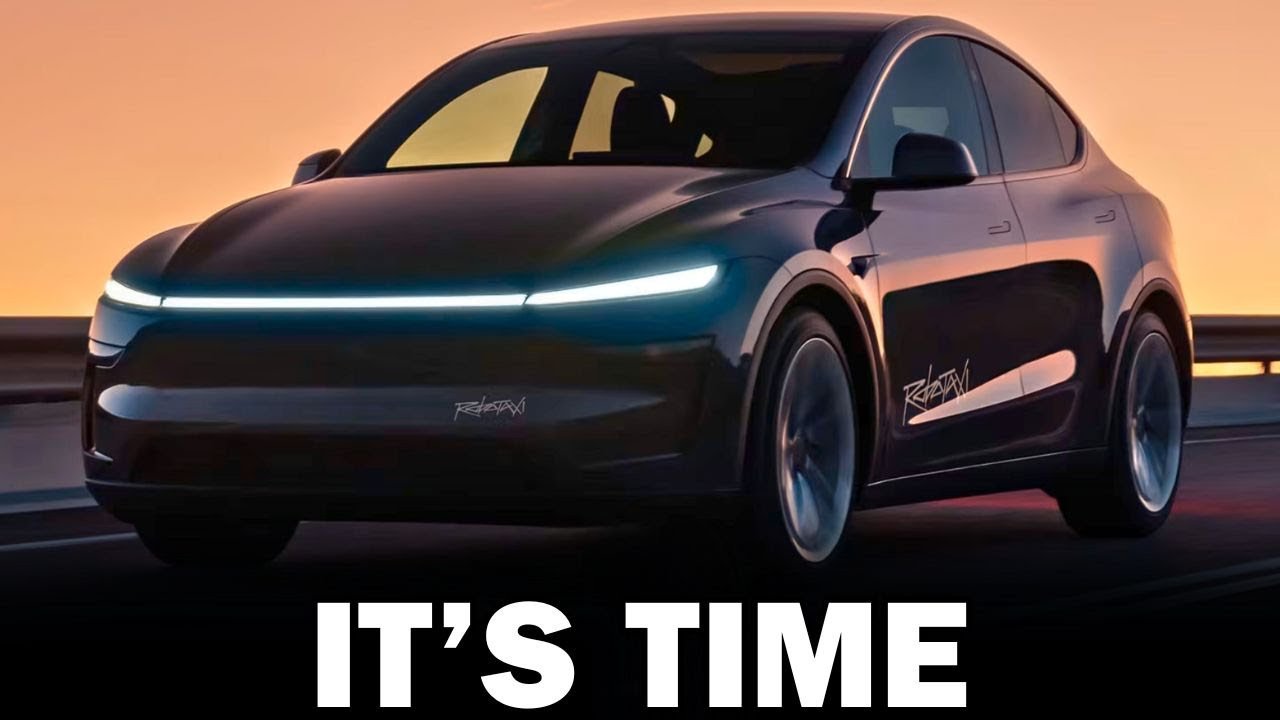
Tesla Robotaxi Launch Day in Austin
Tesla's Robotaxi service marks a pivotal shift in autonomous mobility, offering affordable, driverless rides that could redefine urban transport and boost vehicle utility through fleet integration.
Key Takeaways
Robotaxi launches with Model Y in Austin, geo-fenced initially to South Austin, expanding rapidly.
Standalone app for hailing rides, with notifications 30 minutes prior to service activation.
Flat fee of $4.20 per ride to start, signaling affordability and testing focus over immediate revenue.
Competition edges out Uber by eliminating driver costs, potentially squeezing margins for fleet operators.
Hardware upgrades promised for older vehicles to enable unsupervised autonomy, enhancing resale value.
Future includes Cyber Cab for wireless charging and easy-clean designs, plus incentives for fleet additions.
The service begins with invite-only access, using unmodified Model Y vehicles equipped with advanced FSD software. Riders experience a rear-screen map interface similar to ride-sharing apps, with safety monitors present initially. Expansion aims for larger areas and new cities, leveraging Tesla's network for seamless scaling. Pricing strategy undercuts traditional services, fostering adoption among everyday users while enabling personal vehicles to join fleets for passive income. Infrastructure challenges like charging and cleaning are addressed through bounties, bots, and wireless tech, ensuring operational efficiency as the network grows.

Tesla Robotaxi: Austin Launch Breakdown
Exponential neural net gains in vision-only autonomy finally deliver unsupervised rides, slashing costs below Uber while outpacing Waymo's lidar setup—unlocking trillions in ride-hail revenue.
Key Takeaways
Tesla's camera-based FSD hits superhuman safety faster than text AI analogs like AlphaGo, enabling 10x fleet growth in months.
South Austin geofence starts small but expands to 171 square miles, surpassing Waymo with 2 million app downloads on public launch.
Pricing starts at market average, then drops 20% to drive adoption; invite-only early access prioritizes feedback over volume.
Safety monitors fade out in 18 months, hitting tens of thousands of vehicles with minimal remote oversight—80% confidence.
Robotaxi boosts FSD take rates and Model Y sales, turning $38K vehicles into autonomous earners via owner fleet opt-ins.
Tesla's Austin pilot kicks off with Model Ys navigating South Congress autonomously, monitored remotely but driverless upfront. Neural nets process video inputs at densities rivaling early internet bandwidth leaps, proving vision-only works where lidar bloats costs. Eight years of data hoarding yields rides safer than humans, with exponential jumps mirroring chess engines—from laggy to godlike overnight.

Uber's Fate in a Self-Driving World
Dive into the disruptive forces reshaping transportation and tech, from autonomous vehicles threatening ride-sharing giants to AI redefining workforce skills.
Key Takeaways
Uber faces existential risks from Tesla's scalable robotaxi fleet, potentially eroding market share in developed regions.
Zipline's efficient drone system offers superior delivery solutions, bypassing ground traffic for faster, cheaper operations.
Grab dominates Southeast Asia's super app ecosystem, leveraging local advantages over global players like Uber.
AI accelerates economic growth but displaces traditional jobs, emphasizing creativity over technical skills.
Political dynamics, including spending bills and third-party ideas, highlight tensions in U.S. governance amid tech advancements.
The conversation examines how Tesla's self-driving technology could outpace Uber's aggregation model, limiting growth in key markets while enabling massive supply through owned fleets. Zipline demonstrates first-principles innovation in logistics, using hybrid drones for precise, low-energy deliveries that outperform robot-based alternatives. In emerging economies, Grab's integration of mobility, finance, and deliveries creates a resilient monopoly, resistant to immediate autonomous threats. Broader implications include AI's role in boosting productivity and GDP to counter national debt, yet it demands adaptation toward creative problem-solving as routine tasks automate. Discussions on U.S. politics reveal frustrations with congressional inefficiencies, suggesting growth-focused strategies over cuts, with potential for AI-driven deflation to sustain the economy.

US Debt Crisis and Elon-Trump Drama
The episode uncovers critical threats to US prosperity, from skyrocketing debt interest to demographic shifts, while examining how AI could reshape the economy and political landscape.
Key Takeaways
US faces dual crises of population collapse and unsustainable debt, risking economic stagnation like low-GDP European nations.
Elon Musk's public outbursts, including recent Trump feud, stem from emotional responses tied to existential missions like Mars colonization.
AI-driven productivity surges offer a path to outpace debt through rapid GDP growth, but risk displacing workers and fueling unrest.
GOP coalition tensions pit tech accelerationists against populists on issues like immigration and spending cuts.
Deregulation in healthcare and entitlements could leverage technology to reduce costs without austerity.
Birth rate decline overlaps economic and cultural challenges, ignored in DC due to political bubbles.
Midterm success for Republicans hinges on controlling inflation via tariffs and industrial incentives.
Delving deeper, the discussion highlights how unchecked federal spending, now at Biden-era levels, exacerbates inflation while structural reforms remain politically infeasible with slim congressional margins. Musk's regret over anti-Trump posts underscores the high-stakes alliance, strained by differing priorities on fiscal restraint versus populist agendas. AI emerges as a wildcard, potentially enabling multi-decade growth to mitigate debt, yet accelerating job displacement could spark populist backlash. Globally, US decline invites rivals like China to challenge dominance, especially amid shared demographic woes. Political bubbles in DC stifle urgent debates on birth rates and entitlements, perpetuating inefficiency. Ultimately, tech-led efficiency in sectors like healthcare promises sustainable fixes, but requires navigating coalition fractures in a disrupted political era.

SpaceX Valuation Forecast: 2030 & 2040 Projections Unveiled
Dive into an exciting analysis of SpaceX’s future as Ark Invest and Mach 33 unveil their detailed valuation model. This episode breaks down SpaceX’s trajectory, from dominating global connectivity with Starlink to pioneering Mars colonization, offering tech enthusiasts a glimpse into a transformative space economy.
Key Takeaways
SpaceX’s valuation could reach $2.5 trillion by 2030, driven by Starlink’s global expansion.
By 2040, Mars infrastructure development may push valuations to $12.8 trillion in the base case.
Monte Carlo simulations account for uncertainties, modeling 17 variables like Optimus costs and Starlink performance.
Starlink’s bandwidth growth follows Wright’s Law, projecting cost declines with scale.
Mars’ economic base, built by Optimus robots, could create trillions in book value without immediate profit.
This episode delves into a collaborative study by Ark Invest and Mach 33, forecasting SpaceX’s valuation over the next two decades. The model leverages Monte Carlo simulations to address uncertainties, using 17 variables such as Starlink satellite costs and Optimus robot productivity. By 2030, SpaceX’s dominance in satellite internet through Starlink is projected to drive a $2.5 trillion valuation, fueled by 6 million subscribers scaling toward billions. The study assumes Starlink maintains a competitive edge, though risks like emerging competitors (e.g., Amazon’s Kuiper) and market saturation are considered adjustable inputs.
Looking to 2040, the model explores SpaceX’s Mars ambitions, estimating a $12.8 trillion base case valuation. This hinges on deploying Optimus robots to build infrastructure, valued at book cost, without expecting near-term profits. The analysis simplifies Mars’ economic potential, focusing on robots constructing landing pads and habitats, reducing human mission risks and costs. While short-term projections rely on historical data like launch frequencies, Mars estimates embrace higher uncertainty, reflected in wider valuation ranges. The study also highlights SpaceX’s reusable Starship and Starlink’s bandwidth improvements, aligning with Wright’s Law for cost declines. This forward-looking model challenges conventional valuation methods, framing space as the next industrial frontier.

Tesla Robotaxi Revolution and Trillion-Dollar Bet
Tesla's Robotaxi push promises massive AI-driven profits, leveraging scale and vertical integration to outpace rivals, with federal regulations poised to unlock nationwide adoption.
Key Takeaways
Tesla's AI and battery tech leadership positions it to dominate autonomous vehicles, with robotaxi profits likely within a couple of years.
Market valuations reflect future growth from ride-sharing and humanoid bots, treating Tesla as an AI-energy hybrid.
Competitors like Uber face disruption without manufacturing scale, as Tesla controls production, insurance, and apps.
Regulation-friendly states like Texas and California enable rapid proof-of-concept, driving broader adoption via economic benefits.
Optimus bots could tap a labor market 10x larger than transportation, amplifying Tesla’s potential.
Tesla’s foundation in batteries and AI, initially built through cars, has scaled its supply chain for dominance. In-house self-driving tech has shifted its valuation toward AI success. Widespread robotaxi adoption could capture most ride-sharing miles, with simple math showing explosive growth. Despite current stagnation, the market prices in S-curves from autonomous tech, outshining traditional tech giants. Regulatory wins, potentially accelerated by new federal frameworks, benefit all players but favor Tesla’s production scale. In developed markets, high driver costs give Tesla an edge, potentially securing 90%+ of ride miles. Uber’s model falters without drivers, while Tesla’s control over manufacturing, apps, and insurance ensures superior economics. Beyond rides, vehicles enable logistics like deliveries, paired with bots for efficiency. Short-term sales dips pose risks, but the long-term AI and bot potential justifies Tesla’s premium valuation, akin to forward-valued software leaders.

Tesla Robotaxi Spotted in Austin: Self-Driving Revolution Begins
The electrifying moment has arrived: a Tesla Robotaxi, the bestselling car globally, was spotted driving autonomously in downtown Austin. This episode captures the excitement of tech enthusiasts as they react to this groundbreaking development, exploring its technological advancements and potential to reshape transportation.
Key Takeaways
Tesla’s Robotaxi, a driverless Model Y, was seen navigating Austin streets, signaling the start of real-world testing.
The software powering the Robotaxi is a new version, soon to be merged into Tesla’s main branch for broader use.
A more advanced model with four times the parameters is in alpha testing, expected for deployment in months.
The launch could drive up Model Y value and spark FSD licensing deals with other automakers.
Rapid expansion to other Texas cities is likely, with regulatory hurdles already cleared in the state.
The episode buzzes with excitement as hosts and guests react to a Tesla Model Y operating without a driver in Austin, a milestone in autonomous vehicle technology. This sighting confirms Tesla’s progress in delivering on its long-promised full self-driving (FSD) capabilities. The Robotaxi uses an updated software version, distinct from the current FSD in customer cars, but Tesla plans to integrate it soon, benefiting all FSD users. An alpha-stage model with significantly increased parameters promises even greater performance, though it requires further refinement. The discussion highlights Tesla’s unique approach: leveraging its massive fleet for data collection and vertical integration to outpace competitors like Waymo, which face scalability challenges. Enthusiasts predict rapid expansion across Texas cities, given the state’s favorable regulations, and speculate on a potential surge in Model Y demand as its Robotaxi potential drives up value. The episode also touches on competitive threats, like drone delivery and eVTOL taxis, and the transformative potential of Tesla’s network for logistics and ride-sharing.

Apollo 16 Moonwalker Charlie Duke
Discover engineering feats and human grit behind the Apollo program's final lunar rover mission, where precise maneuvers and manual piloting turned impossible odds into reality.
Key Takeaways:
Saturn V launch vibrations mimicked a limber fishing pole, with five engines gimbaling atop a 361-foot stack for trajectory control.
Manual landing at 500 feet involved redesignating spots amid unseen craters smaller than 45 feet in pre-mission photos.
Lunar rover enabled 17 miles of traversal, collecting highland rocks distinct from mare basalts, revolutionizing surface ops.
Post-landing quarantine dropped after no moon microbes found; pre-flight isolation stemmed from a measles exposure incident.
Return maneuvers included a spacewalk retrieving film canisters, with a serendipitous wedding ring recovery in zero-g.
The episode traces the path from a South Carolina textile town to Naval Academy prep, Air Force fighter intercepts over Germany, MIT navigation studies, and Edwards test pilot school under legends like Chuck Yeager. Selection for NASA's fifth astronaut group in 1966 led to support roles on Apollo 10-13, culminating in Apollo 16's 1972 highlands landing at 8,000 feet elevation. Training spanned global geology field trips, jungle/desert survival, and simulator hours for rendezvous docking. Mission highlights include powering down four hours post-landing for rest despite excitement, three EVAs with the rover's bouncy 80-pound frame on regolith, and jettisoning life support packs to lighten ascent. Back on Earth, a director role at NASA transitioned to energy sector leadership, followed by worldwide ministry sharing transformative faith experiences since 1979.

Elon-Trump Fallout: Nerds Reshape Tech & Politics
The Elon-Trump clash exposes raw tensions between visionary disruption and entrenched power, derailing key reforms and highlighting the limits of applying startup efficiency to bureaucracy.
Key Takeaways
The fallout sidelined Jared Isaacman from NASA leadership, a casualty of personal grudges in Washington politics.
Elon's methods—slashing inefficiencies like at Twitter—clash with the slow, ego-driven pace of government, risking backlash from regulators and markets.
A third-party push gains traction amid $36 trillion debt fears, but systemic barriers make it a long shot without a unifying, baggage-free leader.
Eccentric leaders like Elon and Palmer Luckey thrive by blending obsessive work ethic with existential missions, outpacing rivals through hands-on execution.
AI accelerates job shifts in white-collar fields first, but human elements like empathy and creativity remain irreplaceable, potentially boosting fulfillment for adapters.
Elon's alliance with Trump started as mutual leverage—revenge on Biden's snubs and a patriotic push for U.S. innovation—but egos and differing priorities ignited a public spat. Administration insiders chafed at Elon's demands for deficit cuts and regulatory overhauls, while he decried the "swamp's" resistance, echoing broader frustrations with a debt-laden system outpaced by China's focused ambitions. This isn't just drama; it underscores a core dilemma: can first-principles engineering fix Rome without burning it down? The media fixated on personal jabs, burying the fiscal crisis, yet Elon's poll on a third party drew 81% support, signaling widespread centrist hunger for practical fixes over polarization. Drawing parallels to his Twitter overhaul, Elon bets on breaking systems to rebuild essentials, but Washington's allergy to young disruptors amplified the pain, hitting Tesla's stock amid boycotts. Shifting to innovation's human side, the discussion spotlights traits separating successes like SpaceX from flops: relentless grit, adaptability over perfectionism, and cultures fueled by authentic existential stakes. Palmer Luckey emerges as a Musk analog—unapologetically bold, hands-on with hardware like retro Game Boys and defense tech at Anduril, even curating investor shakeouts to align backers with his vision. Broader, figures like Alex Karp at Palantir wield software for defense efficiency, while under-the-radar biotech leads like Jacob Kimmel at New Limit chase cellular reprogramming for longevity. AI looms as the great equalizer, automating admin drudgery but amplifying human scarcity in empathy-driven roles, from bedside pep talks to creative synthesis. Optimism tempers dread: robots could free us for planetary restoration and space pursuits, aligning talents with needs for unprecedented fulfillment, though extremes in outcomes risk social rifts if transitions lag.

Debating Tesla's Robotaxi Future
Explore Tesla's bold pivot from EVs to autonomous ride-sharing, uncovering insights on scalability, competition, and economic impacts that could reshape transportation.
Key Takeaways
Tesla's autonomy strategy focuses on low-cost vehicles like Cybercab, potentially undercutting rivals in ride-sharing economics.
Competition from Waymo, Zoox, and Chinese firms could fragment market share, similar to EV adoption patterns.
Ride-sharing TAM expands dramatically at $1 per mile, shifting from displacing Uber to replacing personal car commutes.
Valuation hinges on non-auto segments like FSD and Optimus, with current market cap implying high success probabilities.
Regulatory and incident risks remain key hurdles for rapid Robotaxi rollout.
Delve into Tesla's transition beyond traditional auto manufacturing, emphasizing startups within the company for energy, AI-driven autonomy, and humanoid robots. Autonomy promises generalized unsupervised driving, but data on disengagements and mapping highlight scaling challenges. Competitors invest heavily, yet Tesla's integrated app, sensor tech, and compute efficiency offer edges in operational costs. Market assumptions price in massive growth, but EV price cuts and hybrid rises signal caution. Future metrics like market share gains in key cities will test viability.

Tesla's Rise & Future Tech
Andrea James, Tesla's trailblazing analyst since pre-IPO days, shares raw insights on the company's explosive growth and what lies ahead in autonomy and beyond.
Key Takeaways
Tesla thrived on retail investor networks during legacy media's decline, dodging early misinformation pitfalls that could have sunk it a decade prior.
Elon's edge lies in ruthless execution, first-principles thinking, and ignoring public opinion—fueling crises navigation and parallel ventures like SpaceX and Neuralink.
Robotaxis will disrupt ridesharing more than car ownership, with Tesla's AI lead enabling seamless global deployment, outpacing rivals like Waymo.
AI's job disruptions risk unrest, but its talent-matching potential could democratize prosperity—if paired with robust rule of law and equitable access.
Healthcare demands root-cause fixes over symptom treatments; precision diagnostics like molecular assays promise faster, fairer outcomes amid endless demand.
From Tesla's scrappy Roadster era to today's trillion-dollar valuation, Andrea traces how Elon's unyielding mission—maximum competence for existential goals—built an innovation vortex. She unpacks recent political noise as a scapegoat for broader anxieties around debt, inequality, and tech upheaval, yet sees optimism in America's democratic resilience and independent media's rise. Shifting gears, robotaxis emerge as the real game-changer: not erasing ownership but slashing costs for personal fleets that double as chauffeurs, leveraging Tesla's edge-case mastery from China's cliffs to Austin streets. Peering into AI's double-edged sword, she flags transition pains—job losses amid hypergrowth—but highlights upsides like frictionless skill-to-value pairing. Finally, in her CFO role at a genomics startup, Andrea dives into healthcare's mess: infinite demand clashing with payer controls, regulatory hurdles stifling capital, and a bias toward oncology over prevention. Her push for decentralized diagnostics aims to empower local clinics with rapid rejection detection for transplants, blending physics rigor with biology's chaos for precision medicine wins.

Delaware Courts: Bias and Business Risks
In this episode, we uncover alarming shifts in Delaware's courts that threaten business stability and investor interests.
Key Takeaways
Delaware awards attorney fees at multipliers 100 times higher than federal cases, often exceeding 10x the standard loadstar.
Judicial activism since 2009 has led to a surge in high-multiplier rulings, with recent years seeing four times more such cases.
Companies face unprecedented bias, with courts favoring plaintiffs and granting excessive access to corporate records.
States like Texas and Nevada offer prescriptive laws based on statutes, reducing uncertainty compared to Delaware's precedent-driven system.
Reincorporation away from Delaware protects against escalating legal costs and unpredictable judgments.
Recent research highlights how Delaware's Chancery Court has deviated from norms, with multipliers reaching 25x in high-profile cases, far beyond the federal average of 1-2x. This trend, accelerating over the last two decades, stems from key judicial appointments that prioritize plaintiff awards, creating chaos in what was once a predictable business haven. Data shows federal cases rarely exceed 4x multipliers, occurring in just 0.023% of instances, while Delaware hits these levels in 2.36% of cases—indicating systemic favoritism. As a result, ventures are migrating to states with clearer, statute-based rules that limit broad discovery and ensure balanced rulings, fostering a more competitive environment for innovation.

AI Boom: Tesla, Palantir, and Market Surge
In this episode, we unpack how AI is reshaping valuations for innovative tech firms, emphasizing forward-thinking leadership and cultural edges over traditional metrics.
Key Takeaways
Retail investors prioritize CEO vision and company culture, leading to higher valuations for firms like Tesla and Robinhood compared to Wall Street's focus on earnings and cash flow.
Palantir's ontology layer enables predictive simulations across industries, from insurance to defense, positioning it as a core AI platform with massive scalability potential.
Tesla's advancements in robotics and autonomous driving could unlock trillion-dollar opportunities, but hinge on execution in data, compute, and fleet expansion.
The AI market mirrors the internet boom, with evidence from user adoption curves suggesting sustained growth for another 5-10 years, barring black swan events.
Economic displacement from AI and robots raises concerns about wealth inequality, potentially requiring new models like robot taxes or shared ownership to maintain societal stability.
Tech firms are accelerating toward unprecedented market caps as AI integrates into everything from autonomous vehicles to enterprise workflows. Tesla stands out with its scalable robot production and FSD tech, potentially generating sticky revenue streams immune to market cycles. Palantir, valued at over $300 billion despite modest revenue, benefits from its agentic solutions that boost client growth rates dramatically, like doubling projections for major insurers. Broader implications include a shift where compute and data dominate, fueling demand for chips and energy. However, rapid job automation across coding, driving, and manufacturing could trigger social upheaval unless balanced by inclusive policies, such as distributing non-voting shares in AI giants to ensure widespread participation in prosperity.