

Tesla's Robot Revolution Unleashed
In this episode, Cern Basher, uncovers how Tesla's humanoid robots and robo-taxis promise trillion-dollar disruptions, revealing why visionary leadership trumps quarterly forecasts and creates unbeatable moats through relentless first-principles execution.
Key Takeaways
Humanoid robots represent Tesla's core long-term value, with scalable unit economics projecting massive profits at high production volumes.
Robo-taxis follow closely, unlocking autonomous mobility markets ripe for transformation.
Wall Street's short-term focus consistently misses explosive growth in innovators like Tesla and Nvidia, favoring immediate results over future potential.
Retail investors excel by understanding deep tech narratives, testing theses patiently, and embracing high-risk, high-reward opportunities.
Exceptional leaders build moats by tackling unsexy, monumental challenges, fostering innovation that incumbents can't match.
First-principles thinking prioritizes mission-critical features, enabling breakthroughs in EVs, rockets, and beyond.
Tesla's trajectory hinges on disrupting stagnant industries through advanced robotics and autonomy. Economic modeling by Basher highlights humanoid bots generating substantial per-unit profits once scaled, assuming millions produced annually. Robo-taxis amplify this by tapping into untapped mobility demands. Critics overlook these due to non-existent products lacking immediate demand data, yet historical precedents like reusable rockets and mass EVs prove visionary bets pay off. Retail edges Wall Street by prioritizing long-term theses over quarterly pressures, leveraging community insights and patience. Leadership quality drives success, as seen in firms betting on people over pure numbers. Embracing painful innovation builds enduring advantages, while singular focus on essentials—like superior driving experiences—ensures dominance.

Art Laffer on Taxes, Tariffs, and Economic Growth
Uncover the economic truths behind tax policies and trade strategies that fuel prosperity, as Art Laffer shares data-driven insights on growth.
Key Takeaways
Higher tax rates on top earners often cut revenue and hurt economic performance.
Lower tax rates on the wealthy boost revenues and benefit lower-income groups.
Tariffs can disrupt trade gains but may be used strategically to ensure fair global markets.
Growth thrives on low taxes, spending restraint, sound money, minimal regulation, and free trade.
Income redistribution reduces total output, with full equality leading to zero income.
Art Laffer draws on U.S. tax history from 1913 to show that high rates, like those in the 1930s–1970s, stifled growth and worsened inequality by curbing incentives. Kennedy’s tax cuts and Reagan’s reforms sparked booms, while protectionist moves like the Smoot-Hawley Tariff fueled downturns. Modern tariffs, flexible and leveraging U.S. market power, can push for reciprocal trade. Focusing on five macroeconomic pillars—low taxes, spending control, sound money, light regulation, and free trade—drives sustainable growth, sidelining deficit concerns.

TESBROS: DIY Tesla Wrap Kits Unveiled in Chattanooga
In this episode, dive into the world of TESBROS, a Chattanooga-based company revolutionizing Tesla customization with DIY wrap kits. From their origins in 2018 to creating user-friendly paint protection film (PPF) and vinyl kits, Tesbros empowers car enthusiasts to personalize their vehicles affordably, with a focus on quality and community-driven innovation.
Key Takeaways
TESBROS started in 2018, inspired by the need for better Tesla accessory solutions.
Their DIY kits include everything needed for vinyl and PPF wraps, designed for beginners.
Kits feature pre-cut films, tools, and slip solutions, with a course for guidance.
They prioritize customer experience with vertical integration and real human support.
Expanding beyond Tesla, with Rivian kits and more planned soon.
TESBROS began when its founder, inspired by his 2018 Tesla Model 3, identified gaps in the customization market. Initially a blog sharing Tesla insights, it evolved into a business offering DIY wrap kits for Tesla models like the Model 3, Model Y, and Cybertruck. These kits, developed through meticulous scanning and design, cater to beginners by including pre-cut PPF or vinyl, tools like squeegees and heat guns, and even pre-measured slip solutions to eliminate guesswork. Their vertically integrated approach ensures quality control and rapid iteration based on customer feedback, such as adding extra material for Cybertruck kits. A standout feature is their online course, tailored to guide users through the installation process, making it approachable for novices. Tesbros also fosters community engagement through a Facebook group for real-time support. The episode showcases a Cybertruck wrap with a subtle embossed logo in frozen lily PPF, highlighting their focus on durability and aesthetics. With plans to expand to Rivian and other brands, TESBROS is redefining vehicle customization for tech enthusiasts.

AI's Hype vs. Reality: Future Disruptions
In this episode, uncover AI's true trajectory: overhyped short-term gains mask profound long-term transformations, including physical world disruptions and evolving human roles.
Key Takeaways
AI struggles with scalable, repetitive tasks today, requiring extensive human oversight and scaffolding.
Long-term evolution mirrors biology, building advanced reasoning on foundational intelligences yet to be developed.
Economic models face disruption from robo-taxis and humanoid bots, potentially leading to deflation and redefined wages.
Workforce shifts prioritize human-centric fields like sports, entertainment, and exploration amid automation.
Societal changes include rising faith-based communities and new economies focused on scarce resources like attention and land.
Dive deeper into AI's current hurdles, where brilliance flashes but consistency demands heavy engineering, akin to early internet development. Progress feels incremental, with digital applications limited compared to vast physical opportunities like autonomous construction or Mars habitats. Investments pour in assuming quick returns, yet realities like energy and compute constraints slow sudden breakthroughs. Disruptions unfold gradually, starting in unregulated sectors, displacing jobs but potentially creating abundance through cheaper goods. Future economies center on irreplaceable human elements—intense competitions, real-time betting, interstellar ventures—while addressing risks like inequality through mechanisms resembling UBI. Amid uncertainty, optimism hinges on adaptive frameworks, reversing trends toward faith for meaning in an automated world.

Tesla Shifts AI Strategy: DOJO Scaled Down for AI6 Focus
In this episode, we dive into Tesla’s bold decision to scale back its DOJO supercomputer project, redirecting efforts toward AI6 chips in partnership with Samsung. This strategic shift highlights Tesla’s focus on overcoming AI validation challenges and securing chip supply amidst global uncertainties, offering key insights for tech enthusiasts tracking AI and automotive innovation.
Key Takeaways
Tesla is winding down the DOJO project, originally an insurance policy against Nvidia’s dominance, to focus on AI6 chips.
AI6 will integrate training and inference, streamlining Tesla’s AI architecture for faster validation cycles.
The shift to Samsung for AI6 production reduces reliance on TSMC, mitigating supply chain risks amid geopolitical concerns.
Validation, not training, is the current bottleneck for Tesla’s Full Self-Driving (FSD) and robotaxi development.
DOJO’s team expertise in exotic chip packaging is less relevant for AI6, leading to staff transitions and potential spin-offs.
Tesla’s DOJO project, launched around 2019 as a hedge against Nvidia’s AI chip dominance, aimed to build in-house supercomputing capacity for training AI models, particularly for video-heavy Full Self-Driving (FSD) data. However, the project underperformed compared to Nvidia’s robust CUDA ecosystem, which excels in coordinating massive AI training tasks. Tesla’s pivot to AI6 chips, developed with Samsung, reflects a strategic consolidation, merging training and inference capabilities into a single, versatile chip to accelerate FSD validation—a critical bottleneck. By moving away from TSMC’s advanced packaging, Tesla sacrifices cutting-edge chip designs for supply chain certainty, especially given potential geopolitical risks to TSMC’s Taiwan-based production. The AI6-focused DOJO 3 will likely power both in-vehicle inference and data center validation, aligning with Tesla’s broader AI ambitions, including Optimus robotics and potential synergies with xAI’s massive Nvidia-based clusters. This move underscores Tesla’s adaptability in prioritizing practical, scalable solutions over ambitious but resource-intensive projects like DOJO.

Tesla's AI Strategy vs. NVIDIA's Dominance
Tesla's aggressive push into AI, from custom chips to autonomous driving, positions it as a formidable player against NVIDIA. Amit shares insights on why Tesla's ecosystem, paired with xAI and innovative energy use, could redefine the AI landscape.
Key Takeaways
Tesla's Samsung partnership for HW6 chips ensures manufacturing control, enhancing FSD and Optimus robot capabilities.
Distributed inference via Megapacks and Starlink could turn stored energy into AI compute, offering flexible monetization.
Robotaxi dynamic pricing yields 40 cents profit per mile at $1, undercutting Uber and signaling market disruption.
Dojo's video-specialized architecture taps infinite data, potentially surpassing NVIDIA's general-purpose chips.
xAI's Grok 4, outperforming GPT models, integrates with Tesla vehicles, boosting enterprise value through AI synergy.
Tesla’s chip strategy with Samsung secures supply chain autonomy, critical for scaling FSD and Optimus, which demand massive compute power. This move, while competitive with NVIDIA, addresses supply constraints as NVIDIA’s demand remains insatiable. Amit highlights Tesla’s potential to leverage its vast video data from vehicle cameras, feeding Dojo’s specialized architecture to build superior world models, unlike NVIDIA’s broader platform approach. If Dojo iterations close the gap, Tesla could save significantly on chip costs, even if trailing NVIDIA’s performance by 30%.
Energy innovation is pivotal, with Megapacks and vehicle batteries enabling distributed inference during downtime, connected via Starlink. This transforms energy into intelligent labor, far more adaptable than Bitcoin mining, addressing global supply-demand mismatches. Robotaxi economics further solidify Tesla’s edge, with dynamic pricing already outpacing Uber’s model. In San Francisco, Waymo’s premium-priced rides capture market share, hinting at Tesla’s potential to dominate at 20 cents per mile with Cybercab.
xAI’s rapid progress, with Grok 4 rivaling top models, enhances Tesla’s ecosystem by embedding advanced AI in vehicles, driving user engagement and stock valuation. Amit sees Tesla’s unique convergence of data, compute, and energy as a long-term bet, potentially pushing its market cap toward $10 trillion, challenging NVIDIA’s trajectory despite its current $4 trillion valuation.

Tesla-Samsung AI Chip Partnership
This partnership unlocks scalable AI hardware that integrates processing, memory, and networking on massive panels, enabling seamless training of multimodal models on video, audio, and text data—key for real-world autonomy and robotics.
Key Takeaways
AI6 chips support both training and inference on the same architecture, mirroring brain-like efficiency and slashing costs through unified production.
Wafer-scale tiles evolve to rectangular panels for Dojo 3, packing 512 chips into superchips that boost data flow and thermal management for trillion-parameter models.
Distributed compute via robotaxis and energy storage turns idle vehicles into a global inference cloud, layering revenue from transport, energy, and AI queries.
Samsung's Texas fab ensures supply chain resilience, decoupling from Taiwan risks while leveraging Tesla's design input for custom 2.5D/3D packaging.
AI demand accelerates sustainable energy, with solar and batteries powering terawatt-scale compute at near-zero marginal cost.
The discussion dives into chip evolution, where parallel processing outpaces Moore's Law, delivering 100x gains in compute per watt through integrated boards that minimize latency. From Dojo's video-optimized training to edge inference in Cybercabs, the focus is on modularity: produce versatile AI6 units deployable in cars (two for redundancy), bots, or mega training clusters. Samsung's role addresses TSMC bottlenecks, prioritizing Tesla's volume for faster ramps and cost edges—potentially halving data center builds. Broader implications tie into embodied AI, where Tesla's full-stack control (hardware, software, energy) creates capital-efficient platforms like robotaxis generating $100K annual revenue while idling as compute nodes. Energy integration is pivotal: excess solar powers inference at remote sites, turning stranded renewables into profitable work. Health detours highlight blood sugar stabilization via ketosis and vinegar hacks for sustained focus, but the core stays on AI's trajectory toward swarm learning and physics-discovering models by 2025.

Tesla's AI6 Chip Revolution and Supply Chain Mastery
Dive into Tesla's bold moves in AI hardware and supply chains, revealing how partnerships and vertical integration position the company at the forefront of robotics and autonomous tech. Gain insights into the economic and strategic advantages driving these developments.
Key Takeaways
Tesla's $16.5B Samsung deal secures priority access to a Texas fab for AI6 chips, enabling high-yield production for diverse uses.
AI6 supports robo-taxis, humanoids, and data centers, providing redundancy and massive growth potential across industries.
Partnerships with LG add battery capacity, emphasizing Tesla's expertise in integration to avoid issues like fires seen in competitors.
Localizing manufacturing in the US reduces latency, enhances security, and leverages the CHIPS Act for competitive edge.
Humanoids face challenges in actuators, precision, and power, but Tesla's OS for manufacturing sets it apart in scaling production.
Supplier relationships thrive on Tesla's demand certainty, creating win-win dynamics and negotiation leverage.
Tesla's AI6 chip emerges as a cornerstone for multiple high-growth sectors, with applications spanning inference in vehicles and robots to training in data centers. The Samsung partnership, starting at $16.5B, dedicates a Taylor, Texas fab to Tesla, ensuring priority and high utilization while avoiding bottlenecks. This mirrors Apple's silicon strategy, optimizing hardware-software integration for superior performance at lower costs. LG's $4B deal bolsters battery supply, highlighting Tesla's pack design prowess. Broader trends include deglobalization, driven by tariffs and tensions, prompting US reindustrialization—exemplified by Starlink's Bastrop factory. Discussions extend to potential drone ventures, blending Tesla's AI navigation with SpaceX avionics, though focus remains on core products. Humanoids promise disruption but require solving dexterity, repeatability, and geopolitical hurdles. Overall, Tesla's flywheel—fueled by visionary leadership—turns uncertainty into supplier loyalty, accelerating innovation in AI factories and beyond.
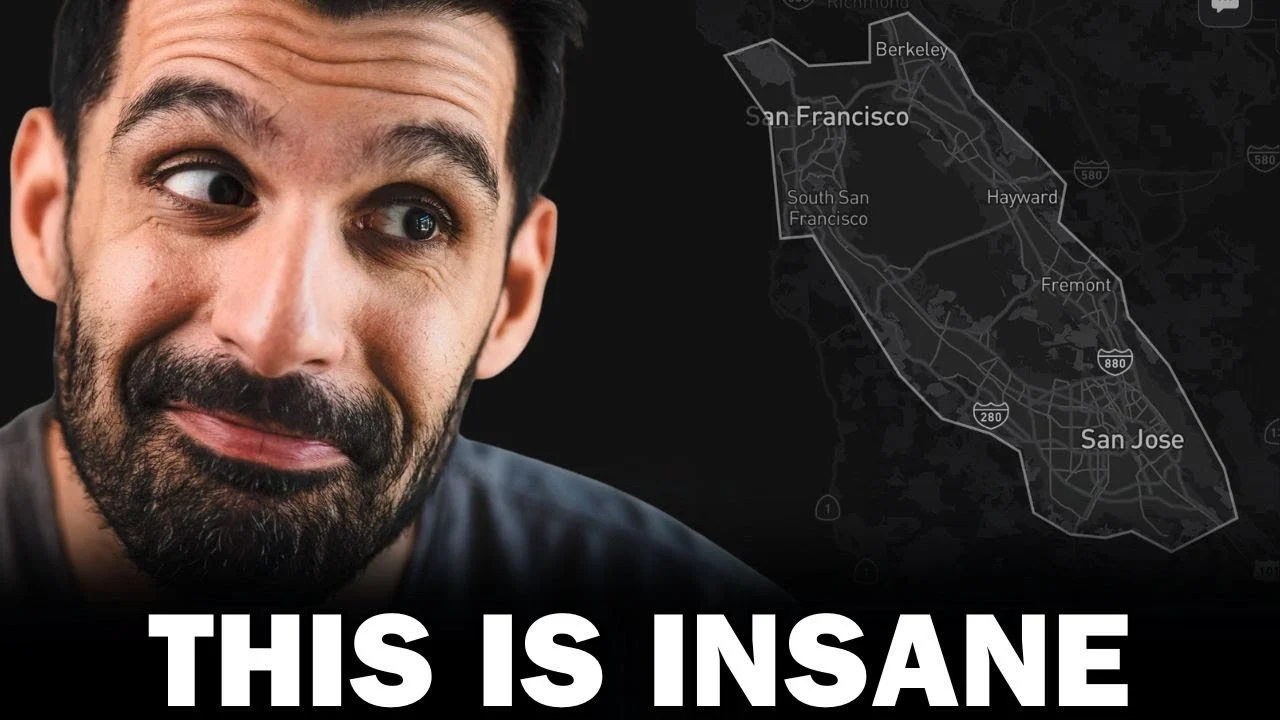
Tesla Robotaxi Expands to Bay Area
Tesla's Robotaxi expansion into the Bay Area marks a pivotal shift in autonomous ride-hailing, outpacing competitors in scale and pricing while leveraging AI for swift deployment.
Key Takeaways
Bay Area geofence covers populous cities like San Jose and Berkeley, serving about 7 million people—far larger than Austin's initial rollout.
Tesla's coverage exceeds Waymo's operational zones, starting with safety drivers as required by California regulations.
Pricing starts at roughly $1 per mile, undercutting Uber, Lyft, and Waymo's $2–3 rates, enabling market disruption.
Operational costs drop to 61–85 cents per mile without drivers, yielding profits at current pricing with efficient teleoperation.
Hiring in multiple states hints at nationwide expansion, powered by Tesla's manufacturing capacity of 3,000–5,000 vehicles daily.
The Bay Area launch builds on Austin's driverless model but incorporates safety drivers initially, mirroring Waymo's regulatory path. This allows Tesla to flood the market with affordable rides, gathering data for full autonomy. With end-to-end AI and low-cost hardware, Tesla can deploy fleets rapidly, potentially displacing traditional services. Profitability emerges post-driver removal, with teleoperator ratios optimizing margins. Broader implications include transforming delivery, airport transport, and even challenging car ownership, all while prioritizing safety to avoid setbacks seen in competitors.

Epstein Blackout: Media, Policy, and Politics
Dive into the shadowy intersections of media silence, political maneuvering, and technological shifts that could redefine U.S. governance, offering fresh perspectives on transparency, foreign influence, and economic priorities.
Key Takeaways
Epstein allegations suggest intelligence ties influencing current foreign policy decisions, particularly with allies like Israel.
Trump's major tax and spending bill passed amid scandals, but media focus on Epstein overshadows economic wins like manufacturing incentives.
Independent media fosters deeper discussions on systemic issues, challenging mainstream narratives and building public awareness.
Congressional dysfunction stems from delegated powers to agencies, leading to omnibus bills and eroded legislative muscle.
Elon Musk could impact politics by funding deficit-focused candidates in House primaries, creating influential voting blocs.
Democrats face midterm challenges due to low approval on key issues and lingering COVID policy resentments.
AI disruptions may fuel demands for systemic change, potentially increasing political engagement or apathy.
The discussion unpacks how the Epstein case, revealed through credible outlets, points to potential foreign intelligence leverage over U.S. decisions, especially in regions like Iran and Ukraine. Against this, the Trump administration secured a sweeping bill blending tax reforms, spending cuts, and immigration measures, yet public frustration grows over transparency lapses. Independent platforms enable nuanced explorations of these topics, contrasting with traditional media's surface-level coverage. Broader systemic flaws emerge: Congress's reliance on executive agencies hampers consensus-building, resulting in bloated legislation. Speculation on Musk's involvement highlights strategies for fiscal reform via targeted political funding. Democratic woes, amplified by COVID-era policies, signal voter disillusionment, while AI's impending job shifts could spark a reevaluation of economic structures. Overall, the conversation balances pessimism over cultural decay with optimism from tech-driven abundance.

Tesla Robotaxi Austin Expansion & AI Insights
Discover Tesla's rapid Robotaxi rollout in Austin, unlocking practical urban mobility while exposing gaps in competitors like Waymo. Gain insights into AI-driven ecosystems reshaping transportation and tech giants' trajectories.
Key Takeaways
Tesla's geofence expansion enables seamless suburban-to-urban rides, reducing costs and boosting user productivity.
Robotaxi outperforms supervised FSD by allowing full passenger focus on tasks like research or content creation.
Apple's AI integration lags, risking ecosystem dominance amid shifts to multimodal AI and new interfaces.
Highways and larger fleets signal Tesla's path to statewide coverage, outpacing rivals in scalability.
AI ecosystems like Grok in vehicles pave the way for personalized, cross-device memory and long-distance autonomous travel.
Emerging tech like drone and underground delivery complements Robotaxi, slashing costs for lightweight goods.
Automation promises cheaper services but demands societal solutions for job displacement through temporary redistribution.
Tesla's Robotaxi service has evolved from novelty to utility, with recent Austin expansions covering key areas like Georgetown and Bastrop. Rides now cost around $14 total, adding minimal time compared to personal driving while freeing users for work. Geofencing shapes suggest deliberate, flexible mapping for maximum impact, potentially encompassing the full city soon. Validation in areas like Kyle hints at highway integration, enabling factory access and broader metro connectivity. This scalability contrasts with Waymo's slower growth, positioning Tesla for dominance in transportation-as-a-service models, including memberships for unlimited rides. Integrating Grok enhances vehicles with persistent AI memory, bridging cars, apps, and future devices for seamless experiences. Broader implications include AI's role in ecosystems, where pace of innovation trumps initial leads—evident in Apple's stalled OS-native AI amid talent losses and conservative strategies. Predictions foresee Apple facing hostile takeovers or stagnation as valuations shift to agile players. Innovations in physical e-commerce, like silent drone drops for 5-pound packages or high-speed underground robots, reduce delivery friction using batteries and autonomy. Overall, AI's physical world disruption starts with Robotaxi, promising efficiency but requiring balanced policies to redistribute gains from automation.

Michael Gorton's Maverick Journey: From ISP to Telemedicine
Dive into the extraordinary life of Michael Gorton, a serial entrepreneur who built one of the first internet service providers (ISPs), pioneered telemedicine with Teladoc, and faced down the DEA to change healthcare. With degrees in engineering, physics, and law, Gorton’s story is a masterclass in resilience, innovation, and visionary leadership that tech enthusiasts will find inspiring.
Key Takeaways
Pioneered one of the first ISPs in the 1990s, scaling it to a $122 million acquisition.
Founded Teladoc after a Kilimanjaro epiphany, transforming healthcare access.
Overcame regulatory battles, including a DEA raid, to legitimize telemedicine.
Authored bestselling books, including historical fiction and telemedicine histories.
Mentors entrepreneurs and draws inspiration from figures like Leonidas to lead with purpose.
In this episode, we explore Michael Gorton’s remarkable career, from his early days as an Air Force brat to becoming a trailblazer in tech and healthcare. Gorton’s journey began with a childhood dream of walking on Mars, inspired by Apollo astronauts and a mentor who helped him craft a life plan. This led to degrees in engineering, physics, and law, which he leveraged to innovate at a power company, automating meter reading in the 1980s. His entrepreneurial spirit took flight with Internet Global, one of the first ISPs, where he introduced voice-over-IP and DSL, scaling the company until its $122 million acquisition in 2000. A near-miss with the dot-com crash didn’t deter him; instead, it fueled his next venture.
While climbing Kilimanjaro, Gorton witnessed a colleague treating patients remotely via satellite, sparking the idea for Teladoc. Launched in 2002, Teladoc faced fierce resistance from medical boards and a dramatic DEA raid in 2005, suspecting illegal prescriptions. Gorton’s team, inspired by his “Leonidas mindset” of fighting for a cause, persevered, proving telemedicine’s value and paving the way for its 2015 IPO. Beyond entrepreneurship, Gorton is a bestselling author, weaving complex science into accessible stories, and a mentor to the next generation. His story is a testament to turning bold ideas into reality against all odds.

US Healthcare Crisis: Costs, Fixes & Savings
The US shells out $5 trillion yearly on healthcare—17.6% of GDP—yet ranks dead last in outcomes among developed nations, with life expectancy at 78.4 years and infant mortality triple the OECD average. This episode exposes how monopolies, price opacity, and a focus on treatment over prevention fuel the fire, while outlining actionable reforms to slash costs and save lives.
Key Takeaways
Price Transparency First: Mandate upfront pricing and quality scores online, enabling patients to shop like on Amazon—projected $350B savings by year three.
Smash Monopolies: Enforce antitrust on hospital duopolies and scrap Certificate of Need laws blocking independent clinics, cutting post-merger price hikes of 6-18%.
Shift to Value-Based Pay: Reward providers for outcomes and prevention, not procedures—could save $200B via bundled payments and capitation models.
Tackle Preventable Diseases: Redirect <1% of spending to diet, exercise, and early detection; taxing sugar and ending corn subsidies might yield $1.5T in long-term gains.
Bipartisan Roadmap: An 8-year plan starting with transparency, no new spending—$800B-$1T annual savings, plus 4 extra healthy years for all.
Delving deeper, the system thrives on opacity: an MRI costs $500 at a clinic but $7,000 at a hospital, with no one shopping because prices hide until bills arrive. Monopolies—often "nonprofit" giants—squeeze out independents via rigged licensing boards, while insurers balloon admin costs to 30% (vs. Medicare's 2%), adding $400B in waste. Defensive medicine racks up $150B in unnecessary tests to dodge lawsuits. Globally, peers like Germany spend half per capita yet live 4 years longer, proving efficiency works. Prevention flips the script: catching issues early via telehealth or lifestyle tweaks avoids stage-4 catastrophes, preserving productivity and slashing $4T in chronic care for diabetes, obesity, and heart disease. Larry's 90-page analysis, vetted by experts, maps an 8-year overhaul: years 1-2 enforce transparency and competition; 3-6 reform payments; 5-8 push population health. It's capitalism unleashed—patients empowered, providers incentivized, government just refereeing. With RFK Jr. eyeing the helm, this isn't pie-in-the-sky; it's a fiscal lifeline amid ballooning deficits.

Waymo vs Tesla: Austin Robotaxi Rivals
Autonomous ride-hailing is exploding, with Waymo's established scale clashing against Tesla's aggressive beta rollout—revealing key edges in fleet growth, ride quality, and market disruption that could redefine urban mobility for tech-savvy users.
Key Takeaways
Waymo operates over 1,500 vehicles across four cities, logging 250,000 paid rides weekly, while Tesla's Austin fleet sits at 11 Model Ys with safety monitors, targeting 30+ vehicles soon.
Tesla rides feel superior in smoothness and infotainment sync, outperforming Waymo's jerky stops and unprotected left turns observed in tests.
Waymo commands 25% market share in San Francisco, overtaking Lyft despite 30-40% higher prices than Uber, driven by privacy and no-tip appeal.
Tesla plans geofence expansions north of Austin's river, tackling pedestrian-heavy zones like Sixth Street, while prioritizing fleet growth before unsupervised ops.
Long-term, Tesla's visionless approach and billions of FSD miles enable faster scaling than Waymo's mapped, sensor-heavy method, potentially undercutting prices at 5-10% below Uber.
The discussion kicks off with Waymo's impressive footprint: 1,500 vehicles churning out 250,000 rides weekly across Phoenix, San Francisco, Los Angeles, and Austin, backed by Alphabet's deep pockets and partnerships like Uber for fleet ops in new markets. This scale took a decade of incremental mapping and sensor integration, yielding a service that's reliable but not flawless—rides often feel abrupt with hesitant braking and occasional aggressive merges, as noted in back-to-back tests against human-driven options. Despite these quirks, Waymo's captured 25% of San Francisco's ride-hailing gross bookings by April 2025, eroding Uber's dominance from 63% to under 55% and matching Lyft's share, even at premiums of $5-6 over Uber's $15.58 average fare. Riders cite the no-driver privacy and zero tipping as offsets, with 70% in surveys preferring the experience for comfort over cost.

Waymo vs. Tesla Robotaxi: Austin Ride Test
Join us for an in-depth comparison of Waymo’s autonomous ride service against Tesla’s Robotaxi in Austin, Texas. This episode dives into real-world testing, uncovering the strengths and quirks of Waymo’s self-driving experience, from smooth rides to unexpected navigation hiccups, all while cruising Austin’s vibrant streets.
Key Takeaways
Waymo offers a private, comfortable ride but struggles with pickup/drop-off locations, often stopping in traffic.
Ride quality is smooth but occasionally hesitant, with noticeable robotic moments compared to Tesla’s smoother Robotaxi.
App integration with Uber adds complexity, requiring specific settings to hail a Waymo.
Waymo’s larger geofence in Austin allows access to areas like the Texas Capitol, unlike Tesla’s limited range.
Both services outperform human-driven Ubers in consistency and privacy.
In this episode, we take multiple Waymo rides across Austin to evaluate its autonomous driving capabilities, comparing it to Tesla’s Robotaxi. Starting at Terry Black’s BBQ, we encounter issues with Waymo stopping in the middle of busy streets for pickups and drop-offs, despite available parking spaces. This behavior, observed in multiple rides, raises safety concerns as passengers exit into traffic. The Uber app integration, while functional, requires toggling preferences for electric vehicles and autonomous rides, adding steps compared to Tesla’s streamlined Robotaxi app.
Waymo’s ride quality is generally smooth, with comfortable seating and quiet operation, though it exhibits occasional hesitations and clunky maneuvers, like abrupt braking for cyclists or delayed lane changes. Navigation challenges arise, such as routing to incorrect locations (e.g., a deserted lot instead of an HEB pharmacy) or avoiding construction-heavy routes, suggesting room for improvement in GPS accuracy. In contrast, Tesla’s Robotaxi is noted for smoother, more human-like driving, though it’s confined to a smaller geofence.
Despite Waymo’s quirks, its service is reliable, arriving promptly and handling unscripted scenarios like erratic human drivers. The episode also highlights Waymo’s scale limitations—only 1,500 vehicles compared to Tesla’s potential to flood the market with Model Ys. Both services shine for privacy and consistency, outpacing traditional Ubers, but Waymo’s rough edges, like poor drop-off choices, suggest Tesla’s intense scrutiny may drive a more polished product in the long run.

Tesla Robotaxi Edges Waymo in Austin Chaos
In this episode, we dive into Tesla's Robotaxi rollout in Austin, contrasting its smooth performance against Waymo's chaotic operations, and explore rapid expansion signals in Central Texas.

RoboTaxi vs Waymo: Austin Chaos Test
Experience the thrill of Tesla's RoboTaxi navigating Austin's unpredictable roads, from smooth pickups to dodging Waymo-induced gridlock—proving self-driving tech's potential to outpace rivals in comfort and decision-making.
Key Takeaways
RoboTaxi delivers smoother acceleration, braking, and turns than Waymo, feeling more natural and human-like in everyday driving.
Tesla's massive production scale (1.2 million Model Ys yearly) enables rapid fleet expansion, unlike Waymo's limited 1,500 vehicles, potentially transforming urban ride-sharing economics.
In chaotic parking lots like Terry Black's, RoboTaxi patiently waits for clearances and maneuvers pedestrians effectively, while multiple Waymos blocked lanes, causing honks and delays.
Features like app-synced entertainment, temperature controls, and microphone-based audio detection enhance user privacy and safety over traditional rides.
Ethical challenges, like prioritizing safety over strict rules in emergencies, remain, but data-driven training reduces human-error crashes significantly.
This episode dives into a hands-on comparison of Tesla's RoboTaxi against Waymo in Austin's bustling environment. The ride starts with a seamless pickup in a standard Model Y, equipped with the latest unsupervised Full Self-Driving software that any new buyer can access. Unlike Waymo's Jaguar-based vehicles, the Model Y offers superior ride quality—centered lane positioning, gentle speed bump handling, and quick reactions to erratic drivers, such as navigating around a wrong-way parked truck or waiting for trailers to load. The guest, with background in ride-sharing and shuttles, notes immediate comfort, no swerving, and better drivetrain performance, making it preferable for longer trips.

Tesla Robotaxi Beta: Rides, Insights, Future
Explore the transformative potential of Tesla's Robotaxi through real-world testing, revealing superior ride quality and strategic advantages that could redefine urban transport.
Key Takeaways
Tesla's Robotaxi offers effortless, consistent rides with minimal friction compared to traditional ride-hailing services.
Competitors like Waymo face scalability issues due to high vehicle costs and limited production, while Tesla leverages existing manufacturing for rapid fleet expansion.
Massive AI compute clusters, like Cortex, enable end-to-end neural networks for smoother autonomous driving.
Infrastructure, including service centers and charging networks, gives Tesla a global edge over rivals.
Risks include regulatory hurdles, potential accidents, and political factors, but successful rollout could generate immediate profitability.
Delve into the beta program's performance, where rides demonstrate seamless navigation through heavy traffic without jerkiness, unlike coded systems in other autonomous vehicles. Tesla's approach, using affordable Model Y units and upcoming Cyber Cab, positions it to achieve millions of units annually, far outpacing others limited to thousands. AI training on vast data sets refines decision-making, reducing hesitations and enhancing safety. However, challenges like expanding geofenced areas, removing safety drivers, and navigating federal standards remain critical. Profitability emerges quickly at $3-4 per mile without drivers, though initial capital for fleets will dip cash reserves before scaling yields returns. Overall, Tesla's integration of hardware, software, and ecosystem sets a path for dominance in self-driving tech.

Tesla Robotaxi: First Day in Austin Unveiled
In this episode, tech enthusiasts get an exciting look at Tesla’s Robotaxi launch in Austin, Texas, on June 22. The video captures the thrill of riding in a driverless Tesla Model Y, showcasing the ride-hailing app and the seamless Full Self-Driving (FSD) experience. It’s a pivotal moment for autonomous vehicles, offering a front-row seat to the future of transportation.
Key Takeaways
Tesla’s Robotaxi service launched in Austin, using Model Y vehicles with FSD.
The ride-hailing app is user-friendly, though it lacks a pin-drop location feature.
Rides are smooth, predictable, and feel futuristic despite being familiar to Tesla FSD users.
A flat $4.20 fee covers rides within the geofenced South Austin area.
Safety monitors are present, with minimal intervention options like e-stop or pull-over.
Compared to Waymo, Tesla’s scalability is unmatched due to its production capacity.
The episode dives into the first day of Tesla’s Robotaxi service, set near Zilker Park and Auditorium Shores. Enthusiasts share their reactions to riding in a Model Y with no driver at the wheel, only a safety monitor. The app’s interface is clean, letting users select destinations like fast-food spots or specific addresses, though it needs minor tweaks, like enabling pin-drop functionality. The rides are described as exceptionally smooth, navigating city traffic, U-turns, and obstacles like a knocked-over sign with ease. Unlike Waymo’s costly, sensor-heavy vehicles, Tesla’s off-the-line Model Ys, priced at $38,000, are ready for robotaxi duty, highlighting their scalability advantage. The video notes Waymo’s strong presence in Austin but emphasizes Tesla’s potential to dominate due to its massive production capabilities. A minor hiccup—stopping briefly in an intersection—reveals areas for improvement, but the overall experience feels like a leap into the future, blending familiarity with awe-inspiring autonomy.
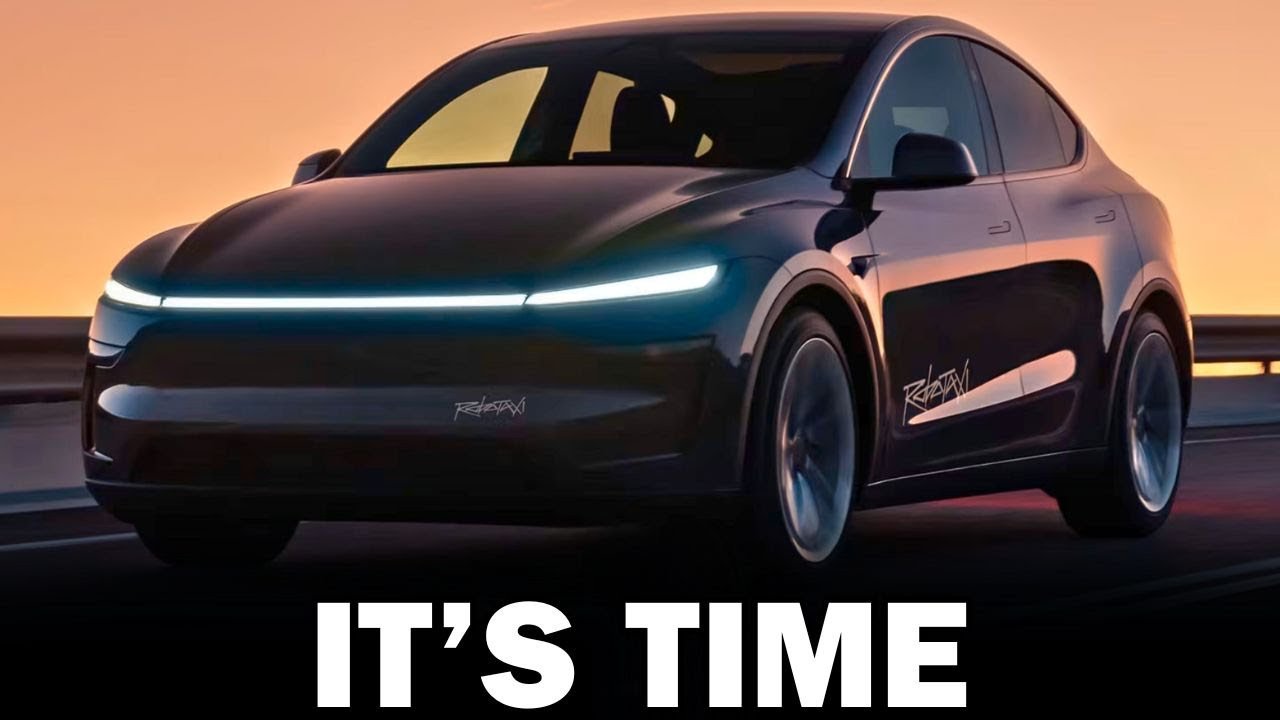
Tesla Robotaxi Launch Day in Austin
Tesla's Robotaxi service marks a pivotal shift in autonomous mobility, offering affordable, driverless rides that could redefine urban transport and boost vehicle utility through fleet integration.
Key Takeaways
Robotaxi launches with Model Y in Austin, geo-fenced initially to South Austin, expanding rapidly.
Standalone app for hailing rides, with notifications 30 minutes prior to service activation.
Flat fee of $4.20 per ride to start, signaling affordability and testing focus over immediate revenue.
Competition edges out Uber by eliminating driver costs, potentially squeezing margins for fleet operators.
Hardware upgrades promised for older vehicles to enable unsupervised autonomy, enhancing resale value.
Future includes Cyber Cab for wireless charging and easy-clean designs, plus incentives for fleet additions.
The service begins with invite-only access, using unmodified Model Y vehicles equipped with advanced FSD software. Riders experience a rear-screen map interface similar to ride-sharing apps, with safety monitors present initially. Expansion aims for larger areas and new cities, leveraging Tesla's network for seamless scaling. Pricing strategy undercuts traditional services, fostering adoption among everyday users while enabling personal vehicles to join fleets for passive income. Infrastructure challenges like charging and cleaning are addressed through bounties, bots, and wireless tech, ensuring operational efficiency as the network grows.