
Tesla Solves Autonomy: FSD Breakthroughs
Tesla's advancements in full self-driving technology signal a pivotal shift, enabling scalable autonomy without radar or LIDAR, poised to boost vehicle demand and unlock new revenue streams through high-margin software.
Key Takeaways
Tesla's AI-driven approach achieves unsupervised driving at scale, using cameras and billions of miles of data for safer, more efficient vehicles.
Current FSD penetration supports $1.2 billion annualized revenue, contributing 15-20% to company EBIT with 85% margins.
Vision-only systems challenge traditional robotics, extending to aviation, marine, and other sectors.
Regulatory approval hinges on proven safety, with potential to reduce road deaths and lower transportation costs dramatically.
FSD v14 shows flawless highway performance and adaptive maneuvers, though minor comfort issues persist, improving rapidly.
Delving deeper, Tesla's strategy leverages a vast global fleet of over 8 million vehicles, with 12% FSD adoption translating to 1 million active users. This positions the company uniquely against competitors reliant on costlier sensors, allowing production of affordable self-driving cars under $35,000. As software matures, expect surged demand for models like the Model 3, where buyers opt for autonomy over traditional gas vehicles requiring maintenance and attention. Robotaxi operations could soon expand to major U.S. metros like Austin and LA, with global rollout following as AI adapts to regional rules via contextual learning. Regulators may accelerate approvals due to safety gains—systems avoid distractions, emotions, and fatigue—while economic benefits include cheaper goods transport and new event-driven mobility. Challenges remain in smoothing comfort for broader adoption, but pace of iteration suggests quick resolutions, fostering a luxurious, private ride experience far superior to rivals.

Farzad Q&A - 10/28/2025
Join Farzad and his community for an open, unscripted Q&A about technology, investing, business, and the future of innovation. In every session, Farzad answers community questions, breaks down complex topics with clarity, and shares practical insights on building, scaling, and thinking long-term in tech.

Tesla's AI Breakthroughs in Autonomous Driving Unveiled
Dive into the future of autonomous driving with Tesla’s AI innovations. This episode unveils how Tesla’s cutting-edge end-to-end neural networks, powered by vast datasets, are revolutionizing self-driving technology, enabling robotaxis, and paving the way for scalable robotics.
Key Takeaways
Tesla’s robotaxi service operates in Austin and the Bay Area, using production vehicles with no driver.
End-to-end neural networks process raw sensor data to produce driving actions, improving safety and comfort.
Massive fleet data (500 years of driving) refines models to handle rare scenarios.
Gaussian Splatting enhances 3D scene rendering for debugging and simulation.
Neural network simulators generate consistent multi-camera views for evaluation.
Tesla’s AI extends beyond cars to humanoid robots like Optimus.
Tesla’s AI team has made significant strides in autonomy, launching a robotaxi service in Austin and the Bay Area, where passengers can hail fully driverless vehicles. Production cars now deliver themselves from factories to customers, navigating highways and city streets using standard cameras and computers. The core innovation lies in Tesla’s shift to end-to-end neural networks, which process raw video and sensor data to directly output driving actions, bypassing traditional modular perception systems. This approach aligns driving with human preferences, balancing safety and smoothness without hard-coded rules, which are difficult to scale for complex scenarios like avoiding puddles or waiting for animals to cross.
Tesla leverages its massive fleet data—equivalent to 500 years of driving—to train models on diverse edge cases, such as vehicles spinning out on highways. This data-driven approach ensures proactive safety, as demonstrated by a Tesla braking early to avoid a spinning car before it hits a barrier. Debugging is enhanced through techniques like Gaussian Splatting, which renders high-fidelity 3D scenes, and natural language prompts that explain model decisions. A neural network simulator generates consistent eight-camera video streams, allowing real-time testing of driving policies against synthetic edge cases, like vehicles cutting across paths. These tools enable rapid evaluation and closed-loop learning, ensuring robust performance. Tesla’s AI also extends to its Cybercab robotaxi and Optimus humanoid robot, showcasing the scalability of its technology across robotics platforms.
Tesla's Bold Bets on AI and Autonomy
Tesla stands at a pivotal moment, pushing boundaries in AI integration for vehicles and robotics to revolutionize transportation and energy.
Key Takeaways
Tesla leads in real-world AI with high intelligence density in vehicles, enabling unsupervised full self-driving via software updates.
Production expansion targets millions of vehicles annually, including the Cybercab optimized for autonomy without steering wheels or pedals.
Optimus humanoid robots aim for mass production, potentially creating abundance by making work optional through 24/7 operation.
Battery storage like Megapack could double U.S. energy output without new power plants.
AI5 chip design promises 40x performance gains over AI4, focusing on simplicity for cars, robots, and data centers.
Robotaxi operations expected in multiple U.S. states by year-end, with cautious deployment for safety.
Distributed inference from idle vehicles could create massive computing power.
Tesla's strategy centers on scaling AI for real-world applications, starting with vehicles that update to full autonomy, shocking the industry with rapid adoption. Energy advancements through battery buffering address grid inefficiencies, enabling higher output globally. Optimus represents a leap in robotics, requiring vertical integration for production at vehicle-scale volumes, with dexterous hands as a key engineering feat. The AI5 chip eliminates unnecessary components for radical efficiency, supporting training and inference across Tesla's ecosystem. Robotaxi rollout prioritizes safety with initial drivers, aiming for widespread metro operations. Overall, these initiatives target a future of abundance, where AI eliminates poverty and enhances access to services like advanced surgery.
Tesla's FSD V14 Masters Manhattan's Toughest Drives
Witness the future of driving as Tesla’s Full Self-Driving (FSD) V14 takes on Manhattan’s unpredictable streets, executing maneuvers with the confidence and finesse of a seasoned New Yorker. From dodging cabs to handling emergency vehicles, this episode showcases why FSD V14 is a game-changer for urban autonomous driving.
Key Takeaways
FSD V14 drives like a top-tier New York driver, mastering lane changes and quick reactions.
The system handles complex urban scenarios, like backing up to avoid obstacles, with ease.
Drop-off and pickup functionality works seamlessly, enhancing urban mobility.
Improved decision-making reduces drive times, critical for future robotaxi networks.
User education and UI improvements are needed to boost adoption among non-tech users.
This episode dives into Tesla’s FSD V14, tested in the chaotic streets of Manhattan, arguably the USA’s toughest driving environment. The system’s ability to weave through traffic, avoid obstacles like smoke cones, and pull over for emergency vehicles demonstrates a near-sentient level of awareness. Unlike its predecessor, V13, which performed well but lacked local finesse, V14’s “Mad Max” mode delivers rapid, smooth decisions, shaving minutes off drives by navigating like a native. The software’s handling of tight turns and unpredictable scenarios, such as backing up to clear a blocked path, highlights its advanced reasoning. Drop-offs and pickups are executed with precision, though parking in complex garages needs refinement. While the technology is impressive, challenges remain in user education and system fragmentation, which could hinder widespread adoption. The episode also explores the potential for FSD V14 to transform urban mobility, reducing parking costs and stress in cities like New York, where garage fees can hit $800 monthly. A planned test drive from Manhattan to JFK and LaGuardia airports promises to further showcase V14’s capabilities in high-pressure scenarios.
Tesla's Autonomous Vehicles: Future of Travel & RVs
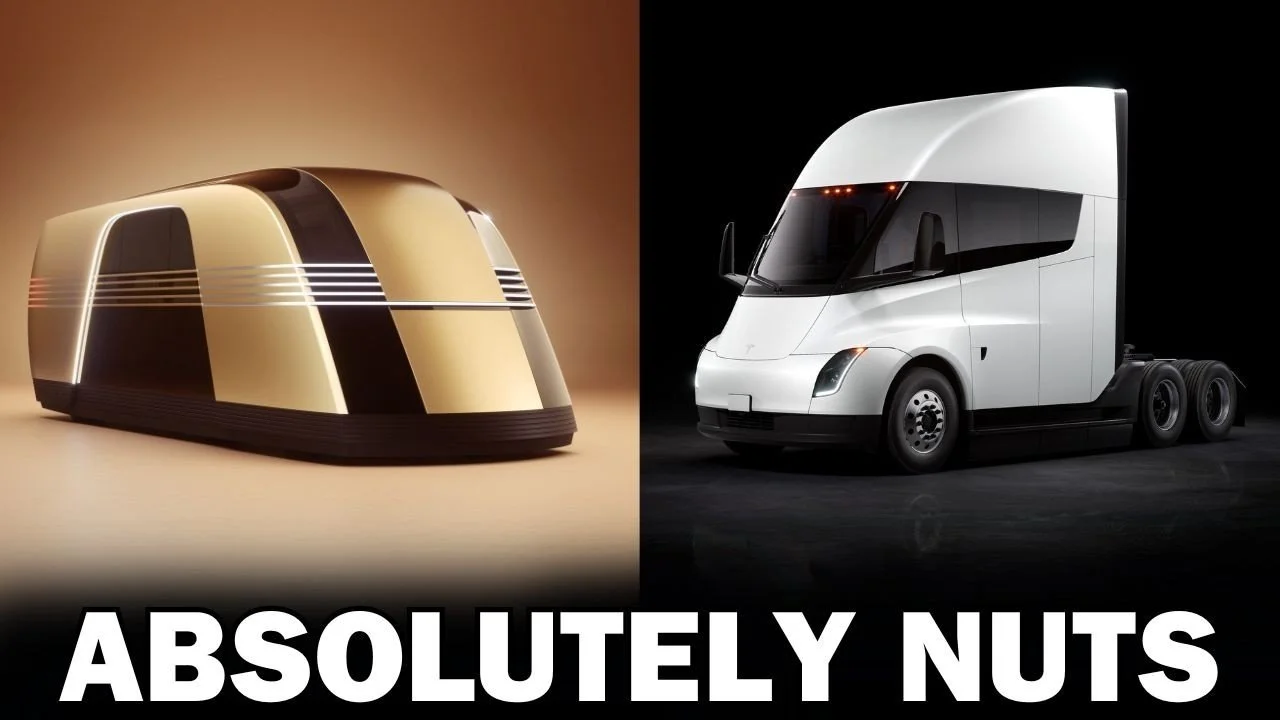
Tesla's vision for autonomous vehicles promises to redefine travel, turning vehicles into customizable, self-driving spaces. From RV conversions on the semi platform to robo vans tailored for partying or commuting, the possibilities are endless. This episode dives into how Tesla's autonomous tech could transform mobility, accessibility, and social outings, making travel safer, more inclusive, and fun.
Key Takeaways
Tesla's autonomous tech enables vehicles to become movable, customizable rooms for work, sleep, or leisure.
Semi platform RVs face safety challenges due to their size but offer supersized travel potential.
Robo vans are better suited for RV life, with third-party customization likely for fleet providers.
Autonomous vehicles could replace short flights for intercity travel, offering cheaper, hassle-free trips.
Self-driving tech enhances accessibility, allowing disabled individuals to travel independently.
The discussion highlights Tesla's autonomous vehicle future, where self-driving technology turns vehicles into versatile spaces. The semi platform, while ideal for large-scale RVs, poses safety risks due to its size and weight, requiring rigorous safety standards. Smaller robo vans are seen as a more practical RV solution, with customizable interiors for uses like partying or sightseeing. Tesla may focus on producing autonomous shells, leaving interior customization to third-party fleet providers, who can tailor vehicles for specific experiences like group travel or event shuttles. This model could create a network where users book specialized vehicles via a Tesla app, similar to choosing an airline. The technology also promises to simplify intercity travel, making trips like Austin to Dallas faster and cheaper than flying. For disabled individuals, steer-by-wire and voice controls open new mobility options, bypassing traditional driving barriers. This vision could lower friction for social outings, boost accessibility, and create vibrant markets for customized autonomous travel.
Tesla's Q3 2025: Record Deliveries & AI-Driven Growth
Dive into the future of autonomous driving with Tesla’s AI innovations. This episode unveils how Tesla’s cutting-edge end-to-end neural networks, powered by vast datasets, are revolutionizing self-driving technology, enabling robotaxis, and paving the way for scalable robotics.
Key Takeaways
Tesla’s robotaxi service operates in Austin and the Bay Area, using production vehicles with no driver.
End-to-end neural networks process raw sensor data to produce driving actions, improving safety and comfort.
Massive fleet data (500 years of driving) refines models to handle rare scenarios.
Gaussian Splatting enhances 3D scene rendering for debugging and simulation.
Neural network simulators generate consistent multi-camera views for evaluation.
Tesla’s AI extends beyond cars to humanoid robots like Optimus.
Tesla’s AI team has made significant strides in autonomy, launching a robotaxi service in Austin and the Bay Area, where passengers can hail fully driverless vehicles. Production cars now deliver themselves from factories to customers, navigating highways and city streets using standard cameras and computers. The core innovation lies in Tesla’s shift to end-to-end neural networks, which process raw video and sensor data to directly output driving actions, bypassing traditional modular perception systems. This approach aligns driving with human preferences, balancing safety and smoothness without hard-coded rules, which are difficult to scale for complex scenarios like avoiding puddles or waiting for animals to cross.
Tesla leverages its massive fleet data—equivalent to 500 years of driving—to train models on diverse edge cases, such as vehicles spinning out on highways. This data-driven approach ensures proactive safety, as demonstrated by a Tesla braking early to avoid a spinning car before it hits a barrier. Debugging is enhanced through techniques like Gaussian Splatting, which renders high-fidelity 3D scenes, and natural language prompts that explain model decisions. A neural network simulator generates consistent eight-camera video streams, allowing real-time testing of driving policies against synthetic edge cases, like vehicles cutting across paths. These tools enable rapid evaluation and closed-loop learning, ensuring robust performance. Tesla’s AI also extends to its Cybercab robotaxi and Optimus humanoid robot, showcasing the scalability of its technology across robotics platforms.
Tesla's FSD V14: Self-Driving Breakthrough Unveiled
In this live session, we explore Tesla's FSD V14, showcasing near-flawless autonomous driving in cities like Boston and Manhattan. Regulatory hurdles and industry disruption are discussed, highlighting Tesla's lead in self-driving tech.
Farzad Q&A - 10/21/2025
Join Farzad and his community for an open, unscripted Q&A about technology, investing, business, and the future of innovation. In every session, Farzad answers community questions, breaks down complex topics with clarity, and shares practical insights on building, scaling, and thinking long-term in tech.
ChatGPT Orders Groceries for Your Potluck!
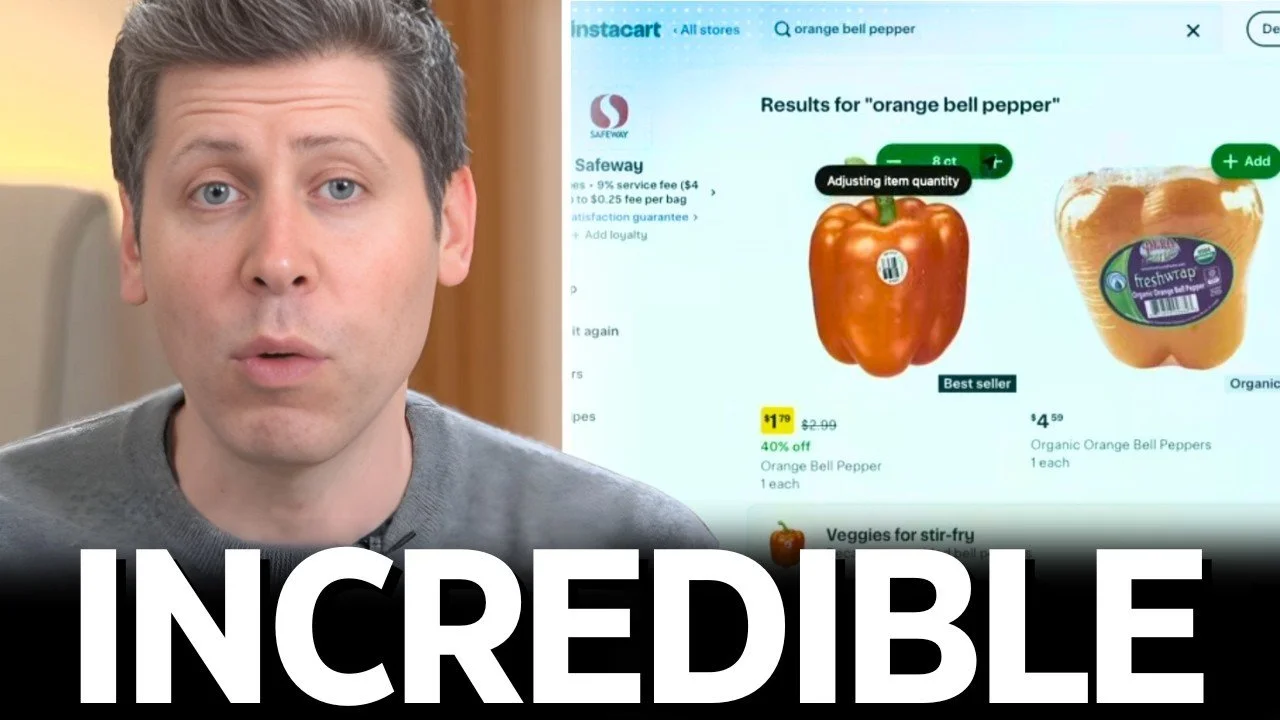
Discover how ChatGPT transforms everyday tasks like grocery shopping for a potluck into a seamless experience using its agent mode in the Atlas browser. This episode dives into the power of AI to handle real-world tasks efficiently, offering practical insights for tech enthusiasts looking to streamline their lives.
Key Takeaways
ChatGPT calculates ingredient quantities for recipes, adjusting for serving sizes like a potluck for eight.
Agent mode in Atlas browser enables ChatGPT to order groceries on platforms like Instacart.
Built-in safeguards ensure ChatGPT only accesses browser tabs, with user control over logged-in site permissions.
Optional browser memories enhance personalized suggestions but can be managed or disabled for privacy.
Users can review and modify AI-generated orders before finalizing purchases.
The video showcases ChatGPT’s ability to simplify meal prep by analyzing a recipe webpage, calculating ingredient needs for eight people, and organizing a shopping list by grocery aisle. With a single click, the agent mode takes over the browser to order meat and produce via Instacart, leveraging user preferences like preferred stores. The process is fast, intuitive, and collaborative, allowing users to intervene at any point. Safety is prioritized with strict tab-only access and options to limit data sharing, such as using incognito mode for sensitive tasks. This technology hints at a future where AI agents handle personal and professional tasks, adapting to user needs with custom instructions and proactive suggestions.
Tesla Cybercab: Steering Wheel Version Ahead?
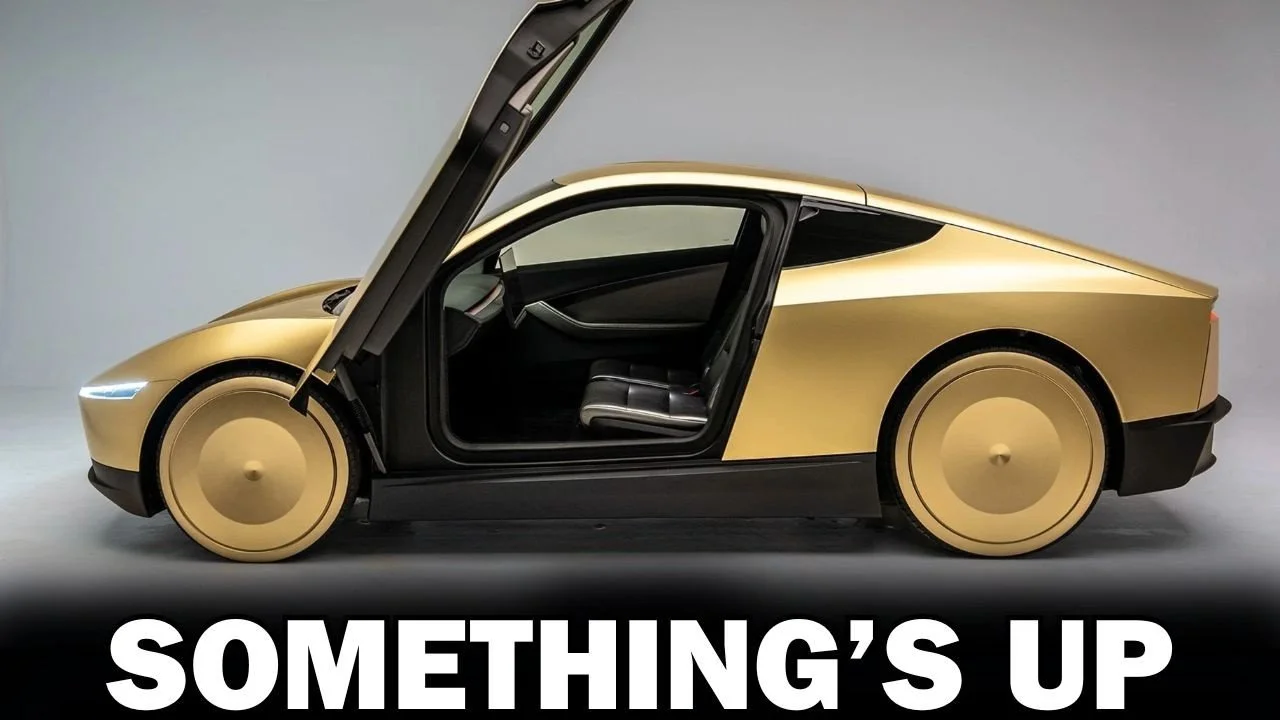
Tesla's unboxed manufacturing for Cybercab promises the fastest production line yet, targeting 2 million units annually by 2027-2028. Yet regulatory caps limit driverless vehicles to 2,500 per year in the US, creating risks of idle capacity without a fallback plan.
Key Takeaways
Unboxed process enables parallel assembly for smaller, faster Cybercab production using fewer materials.
US regulations cap driverless fleets at 2,500 vehicles yearly; federal changes expected but uncertain timeline.
Existing Tesla fleet (Model 3/Y) can supplement robotaxi networks via owner opt-in during peak demand.
Cybercab slashes operating costs to 30¢/mile vs. Uber's $1.80+, offering consistent, safer rides at $1/mile.
Global markets like Europe, China, India favor affordable steered variants for immediate sales.
This setup demands high-volume orders to justify billion-dollar lines, where fixed costs dominate. Driverless approvals hinge on evolving federal frameworks, data requirements, and interstate compatibility—variables too risky for full reliance. A Cybercab-like vehicle with controls bridges the gap: same chassis, ~$30K price, self-driving capable, sellable now in weeks. It counters EV tax credit loss, competes in price-sensitive regions, and keeps factories humming at 100% utilization. Tesla's pivot-prone strategy favors this over betting solely on rapid regulatory shifts across US, Europe, and China, where data security concerns loom for foreign AVs.
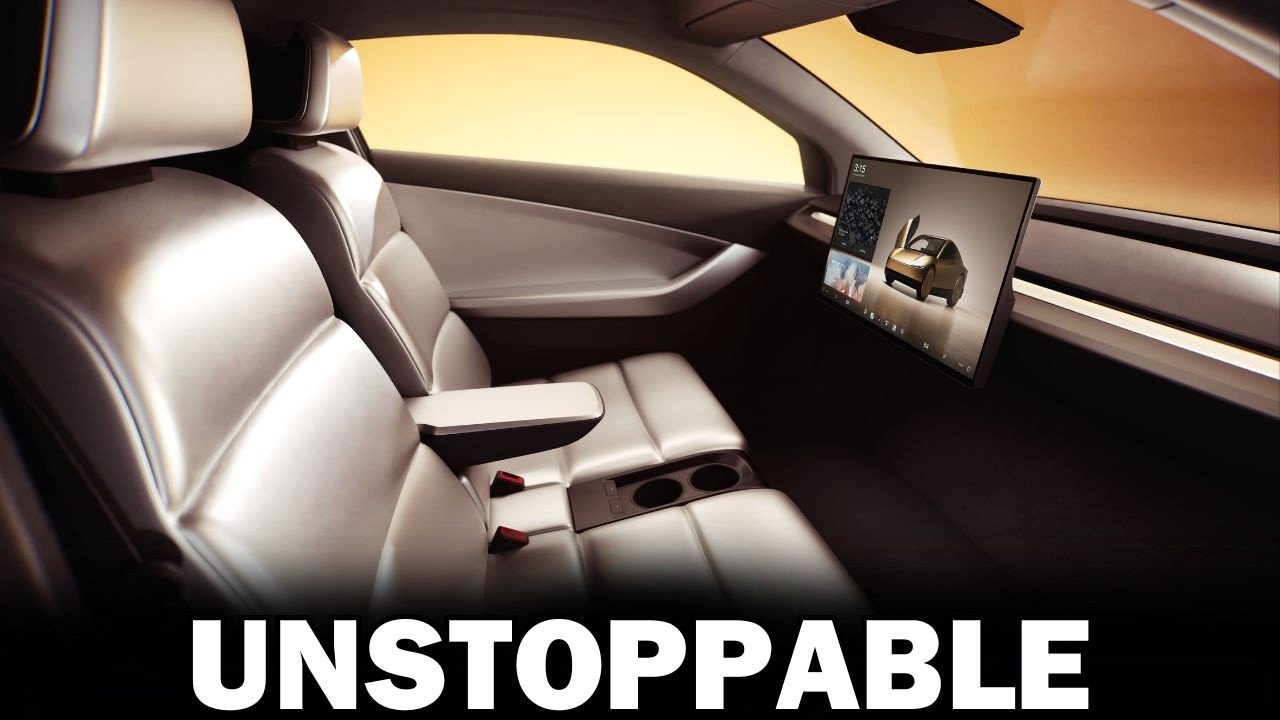
Tesla's Autonomous Revolution: Disruption Ahead
Tesla's advancements in autonomy and robotics promise transformative efficiency gains, reshaping industries and offsetting economic pressures through lower operational costs.
Key Takeaways
Tesla's self-driving tech could dominate global fleets, rendering human-driven services uncompetitive.
Ride-sharing platforms face collapse without adopting autonomous networks, with disruptions hitting by 2030.
Humanoid robots, trained via AI like autonomous vehicles, will handle repetitive tasks in factories within five years.
Broader adoption of robotics may drive deflation, countering inflation from excessive money printing.
Economic policies lag behind rapid tech changes, leading to unforeseen unemployment and societal readjustments.
Delving deeper, Tesla's full self-driving capabilities position it to capture a vast market of over a billion vehicles worldwide, gradually replacing traditional cars with autonomous ones. This shift threatens established players, as self-driving options offer superior cost, safety, and privacy. In robotics, the same AI framework enables humanoid units to learn tasks through video training, starting with simple repetitions and evolving to complex operations by 2040, with production scaling to millions annually. Software improvements, not hardware, will drive progress, reducing per-hour costs to under $5. Amid fiscal excesses, this tech influx could create deflationary pressures by slashing labor expenses, potentially stabilizing economies despite policy shortcomings like short-term political focus and lack of proactive planning.
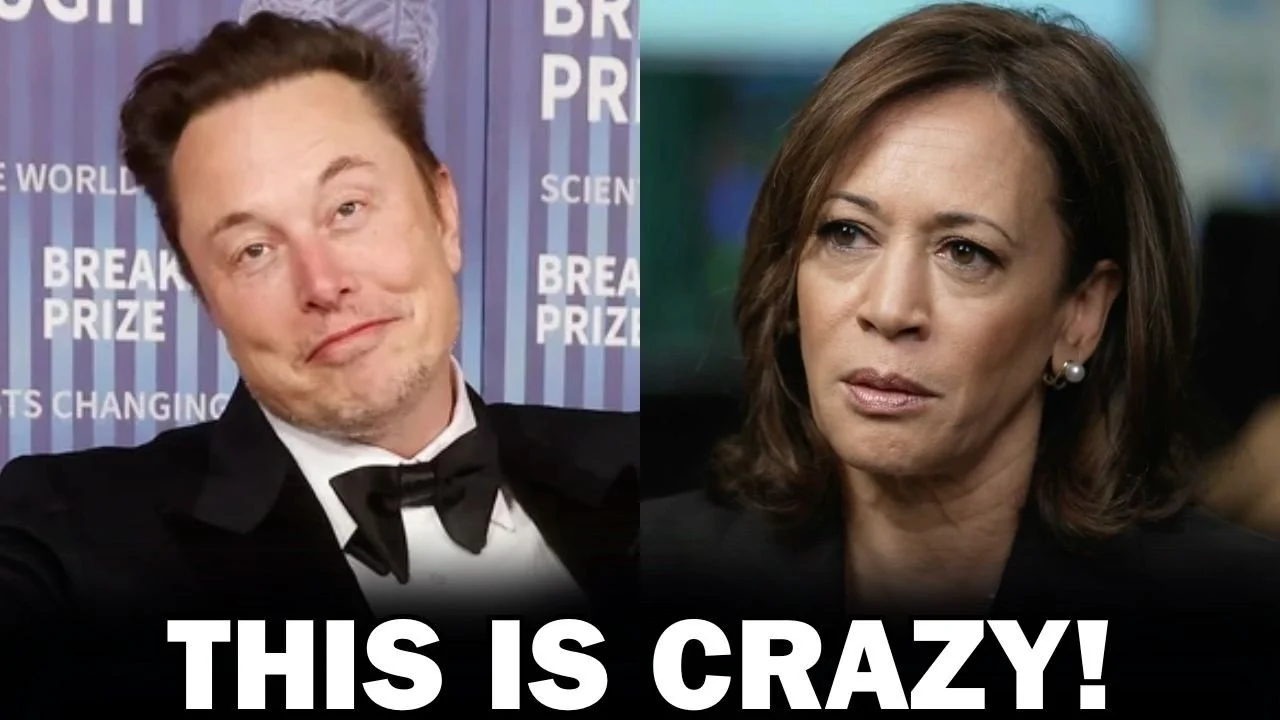
Kamala Harris Apologizes to Elon Musk
This video unpacks a pivotal moment in tech and politics: Kamala Harris’ public apology to Elon Musk for snubbing him at a 2021 EV summit, highlighting his transformative contributions. It explores Musk’s dramatic political shift and the far-reaching impact of his companies, from Tesla’s self-driving cars to SpaceX’s reusable rockets, setting the stage for a redefined global economy.
Key Takeaways
Kamala Harris acknowledges the mistake of excluding Elon Musk from a 2021 EV summit.
Musk’s shift from Democrat to Republican support reshapes political dynamics.
Tesla’s Full Self-Driving (FSD) software nears human-free operation, revolutionizing transport.
SpaceX’s Starship aims to make space travel economical with full reusability.
Musk’s innovations could counter global competition, especially from China.
The video begins with Harris’ apology, recognizing Musk as a key innovator in electric vehicles and space exploration. This follows a 2021 incident where Tesla was overlooked at an EV summit, prompting Musk’s pivot to supporting Republicans. Tesla’s advancements in Full Self-Driving (FSD) software, trained on millions of hours of driving data, are nearing a point where vehicles may not require human oversight. This could slash transportation costs to 25–50 cents per mile, compared to 70–80 cents for traditional car ownership, paving the way for a transportation-as-a-service model. Meanwhile, SpaceX’s Starship, designed for full reusability, could reduce space travel costs dramatically, enabling frequent launches and even intercontinental transport. These innovations, alongside projects like Tesla’s humanoid robots and Neuralink, position Musk’s companies as critical to U.S. competitiveness, particularly against China’s manufacturing prowess. The episode underscores the need for regulatory changes to accommodate these disruptions and highlights a new website, Farzad.fm, for exclusive Musk-related content.

Kim Java's EV Journey: From Hollywood to YouTube Star
Kim Java, a prominent figure in the electric vehicle (EV) community, shares her inspiring story in this engaging episode. From her early days chasing an acting career in Hollywood to becoming a leading voice in the EV space, Kim’s journey is one of resilience, reinvention, and relatability. Tech enthusiasts will appreciate her candid insights into building a successful YouTube channel, her approach to staying neutral in polarized discussions, and how she leverages her background to connect with a diverse audience.
Key Takeaways
Kim transitioned from acting in LA to creating a family-oriented EV and smart home tech YouTube channel.
Her channel evolved from casual Tesla videos to a broad platform covering EVs, solar, and lifestyle tech.
She emphasizes consistency and audience engagement as critical to building a successful content career.
Kim uses AI to gauge audience sentiment and refine content, while staying mindful of its limitations.
Her balanced perspective helps navigate the divisive politics surrounding EV culture and industry figures.
Kim’s story begins in Everett, Washington, where her early passion for acting led her to LA after high school. After facing the challenges of the acting world, she returned to Seattle to study nutrition, eventually meeting her husband, a meteorologist. Together, they moved to Atlanta, where their shared interest in EVs sparked a YouTube channel. Starting with a Nissan Leaf and later a Tesla Model X, Kim and her husband built a platform that resonates with families and EV enthusiasts alike. Her channel now covers electric cars, smart home tech, and sustainable energy, reflecting her holistic approach to content creation. Kim’s ability to connect with her audience through authenticity and her focus on real-world consumer perspectives sets her apart. She also shares how she manages dyslexia, uses AI to inform her content strategy, and maintains neutrality in a polarized online landscape, offering valuable lessons for aspiring creators.
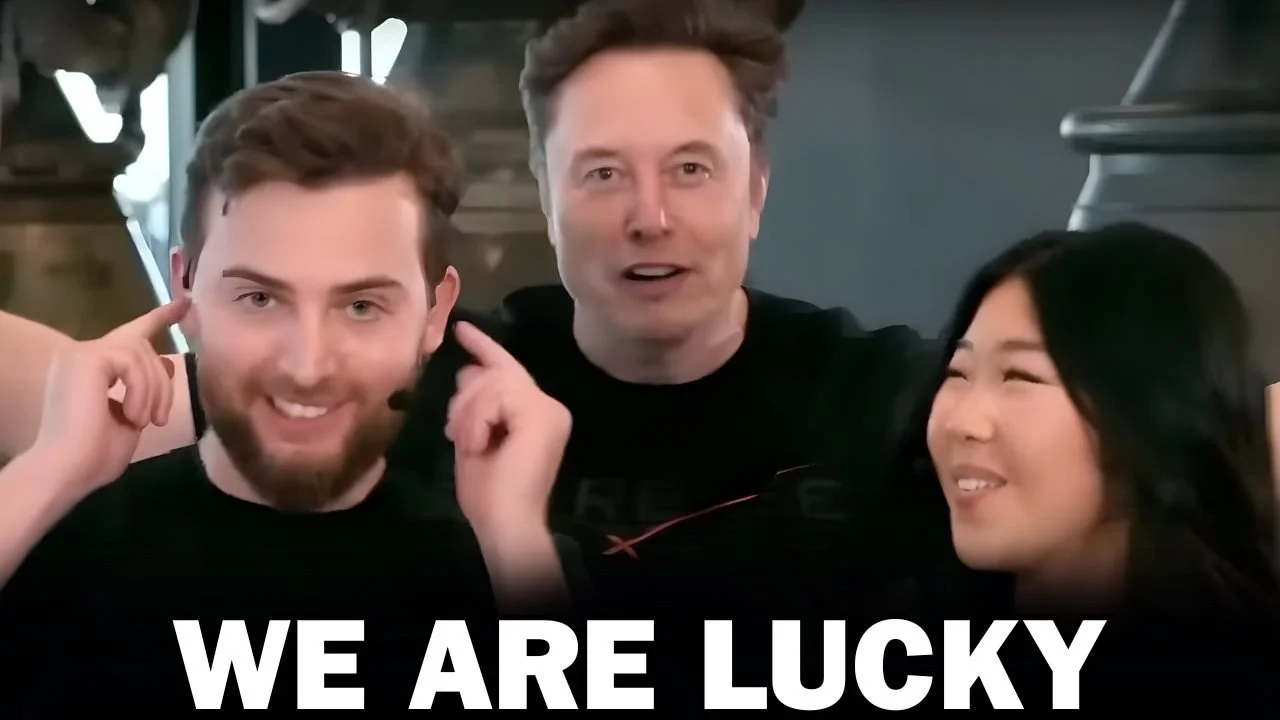
Elon Musk's Impact on Tech and National Security
This video dives into the profound influence of Elon Musk on American innovation and national security, highlighting his relentless drive to push technological boundaries. From pioneering electric vehicles to enabling American astronauts to reach space, Musk’s vision and execution have accelerated progress that might have been delayed by decades. His unique approach, rooted in first-principles thinking and a hyperfocus on purpose, sets him apart as a rare blend of visionary and executor, making him a pivotal figure in shaping the future.
Key Takeaways
Musk’s companies, like Tesla and SpaceX, have driven breakthroughs in electric vehicles and space exploration.
His first-principles approach challenges conventional industry practices, bypassing unnecessary research.
Musk’s purpose-driven mindset fuels his ability to tackle complex challenges with clarity and focus.
His accessibility and direct engagement on platforms like X make him uniquely relatable for a global figure.
Musk’s work aligns with a mission to make humanity multi-planetary, addressing existential risks.
The discussion emphasizes Musk’s role in transforming industries by rejecting traditional methods, such as excessive market research, and instead relying on intuitive, purpose-driven decisions. For example, Tesla’s bold entry into China succeeded without conventional consumer studies, showcasing Musk’s confidence in universal demand for innovative products. His companies—SpaceX, Starlink, and others—form a cohesive strategy to advance humanity’s survival, from sustainable energy to interplanetary colonization. Despite personal flaws, his contributions to national security and technological leadership are undeniable, fueled by an intense sense of urgency to safeguard humanity’s future. His neurodivergent traits, like hyperfocus, enable him to manage multiple ventures with unparalleled dedication, making him a standout example of the American Dream.
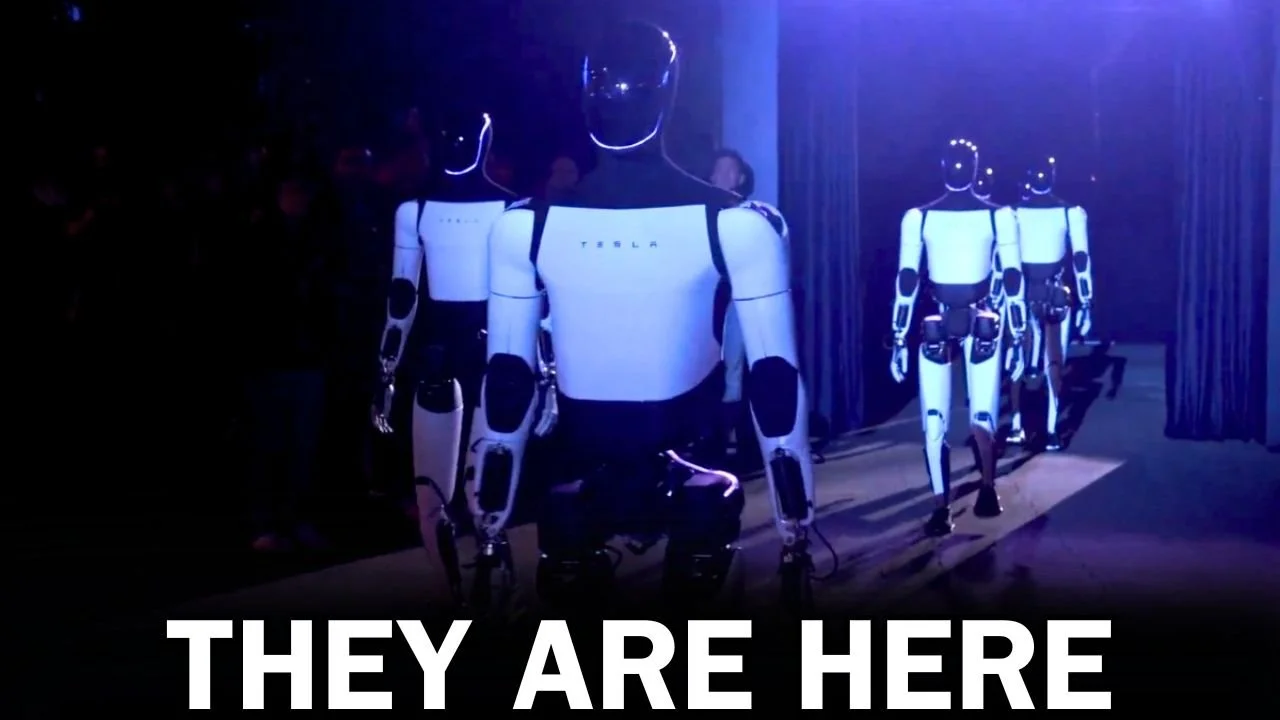
Humanoid Robots & Robotaxis: The Future Arrives by 2026
Get ready for a transportation revolution! This episode dives into the imminent arrival of Tesla’s unsupervised Full Self-Driving (FSD) and the game-changing Cybercab, set to redefine mobility. We unpack how these innovations could outpace competitors like Uber and Waymo, transforming urban travel by mid-2026.
Key Takeaways
Tesla’s FSD V14 rollout expected by late 2025, with unsupervised driving by mid-2026.
Robotaxis without safety drivers could scale in cities like Austin and Arizona soon.
Cybercab’s design may require steering wheels initially due to regulatory hurdles.
Autonomous ridesharing offers cheaper, safer, and more private experiences than Uber.
Tesla’s fleet synergy enhances data collection, accelerating robotaxi deployment.
The conversation highlights Tesla’s aggressive push toward fully autonomous vehicles, with FSD V14 expected to roll out to the public by late 2025, potentially enabling unsupervised driving by mid-2026. This leap could allow drivers to ride in the backseat, fundamentally changing personal transport. The discussion also covers Tesla’s robotaxi strategy, starting with expansions in Austin and Arizona, where safety drivers may be phased out within months. This move signals confidence in Tesla’s AI, poised to collect critical data from diverse driving scenarios, enhancing system reliability.
The Cybercab, Tesla’s dedicated robotaxi, sparks debate about whether it will launch without a steering wheel, given regulatory uncertainties. While some expect rapid regulatory alignment, others see a phased approach with initial manual controls. The episode draws parallels with Waymo’s success in the Bay Area, where users prefer autonomous rides for privacy, safety, and convenience, despite higher costs. Tesla’s ability to undercut prices while offering these benefits could disrupt ridesharing giants like Uber, potentially replacing their fleet with millions of Cybercabs. This shift, driven by Tesla’s data-driven “flywheel effect,” positions the company to dominate urban mobility, making driverless transport the norm in major cities by 2028.
China's Tech Dominance and US Response
China's manufacturing prowess in EVs and batteries positions it as a global powerhouse, controlling essential resources for future technologies like robotics and AI. This dominance challenges US and European automakers, urging a reevaluation of trade and innovation strategies to secure independence.
Key Takeaways
China's EV sales surged from 5% to 50% of its market in five years, outpacing global competitors.
Control over 90% of magnet production enables potential shutdowns of Western assembly lines.
Dependencies on Chinese batteries extend to AI data centers and military tech, creating national security vulnerabilities.
Negotiations highlight needs for diversified supply chains and alliances with democracies like Europe, Japan, and Korea.
Automation and AI adoption in the US could reduce reliance on foreign manufacturing, fostering domestic innovation.
Delving deeper, China's strategic investments since the 1990s have built monopolies in rare earths, magnets, and battery tech, fueling advancements in drones, fighter jets, and energy storage. This leverage stems from policies like Made in China 2025, which accelerated electrification and reduced oil imports. In autos, foreign brands once dominated, but now Chinese EVs lead, with exports flooding Europe at over 10% of new sales. The US faces risks from overcapacity in China, prompting tariffs and potential decoupling into democratic and authoritarian blocs. Embracing AI and robotics domestically offers a path to counter this, ensuring competitiveness without full isolation.
Starship's Epic Flight 11: Rocket Launch & Reentry Breakdown
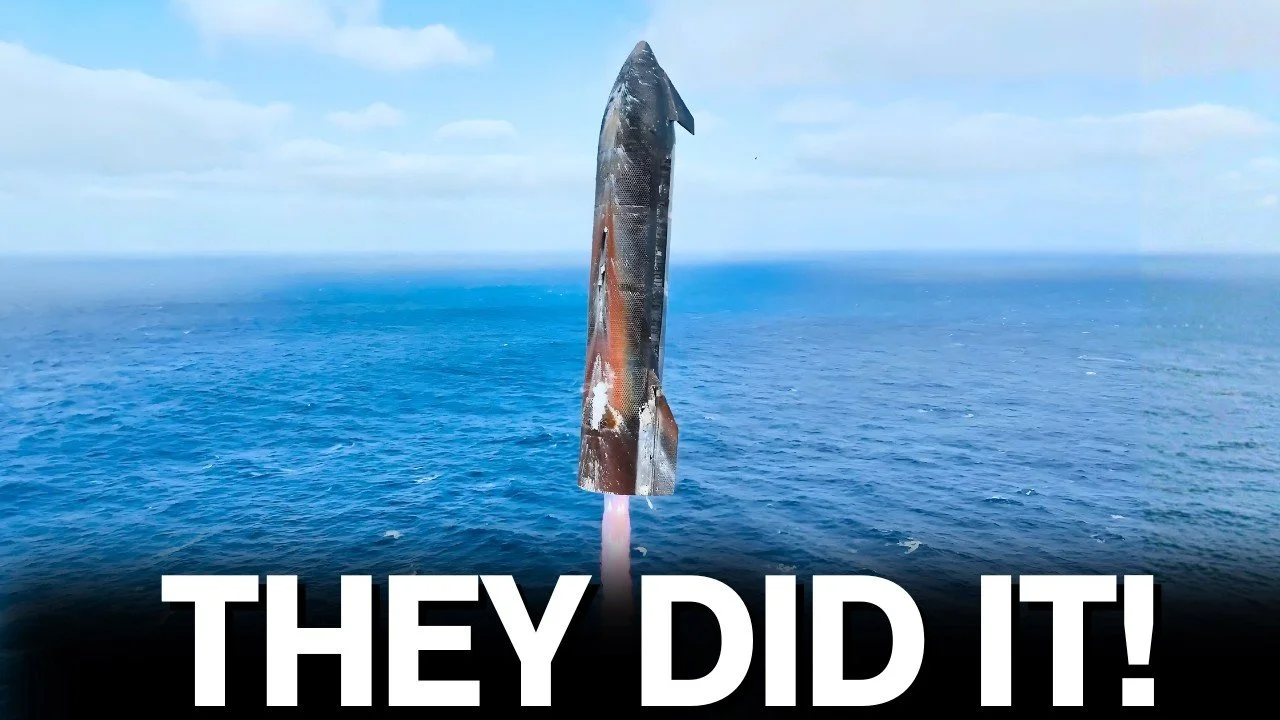
Get ready for an inside look at SpaceX’s Starship Flight 11, a thrilling test flight packed with groundbreaking moments. From a flawless liftoff to a high-stakes reentry, this episode captures the raw power and innovation driving the future of space exploration, with key experiments like missing tile tests and payload deployment stealing the show.
Key Takeaways
Starship achieves successful liftoff with all 33 Raptor engines firing on the Super Heavy booster.
Hot staging executed perfectly, separating Starship for its suborbital trajectory.
Payload deployment of eight Starlink simulators completed, testing future V3 satellite capabilities.
Raptor relight in space marks a critical step toward orbital missions.
Reentry tests with missing heat shield tiles push Starship’s resilience to the limit.
Banking maneuver during reentry simulates future return-to-launch-site landings.
Starlink’s real-time data and video feed provide stunning views and critical engineering insights.
This video takes you through the high-octane journey of Starship’s Flight 11, starting with a thunderous liftoff powered by 33 Raptor engines on the Super Heavy booster. The mission nails hot staging, where Starship separates mid-flight, igniting its six Raptor engines to continue its ascent. The booster performs a boost-back burn and a V3-style landing burn, splashing down in the Gulf of Mexico, while Starship heads for a suborbital trajectory. In space, the payload door opens to deploy eight Starlink simulators, mimicking the V3 satellites that will add 60 terabits per second of capacity per launch—20 times more than Falcon 9. A single Raptor engine relights in space, a key test for future orbital burns. The reentry phase is a nail-biter, with intentional missing heat shield tiles exposing bare steel to extreme heat, testing the vehicle’s limits. A banking maneuver simulates a return-to-launch-site approach, while Starlink’s 120 megabits of bandwidth delivers real-time HD video and telemetry, even through the plasma field of reentry. The episode wraps with a soft splashdown in the Indian Ocean, marking another milestone in Starship’s quest for rapid reusability and interplanetary travel.
SpaceX Starship Flight 11: Epic Launch and Landing
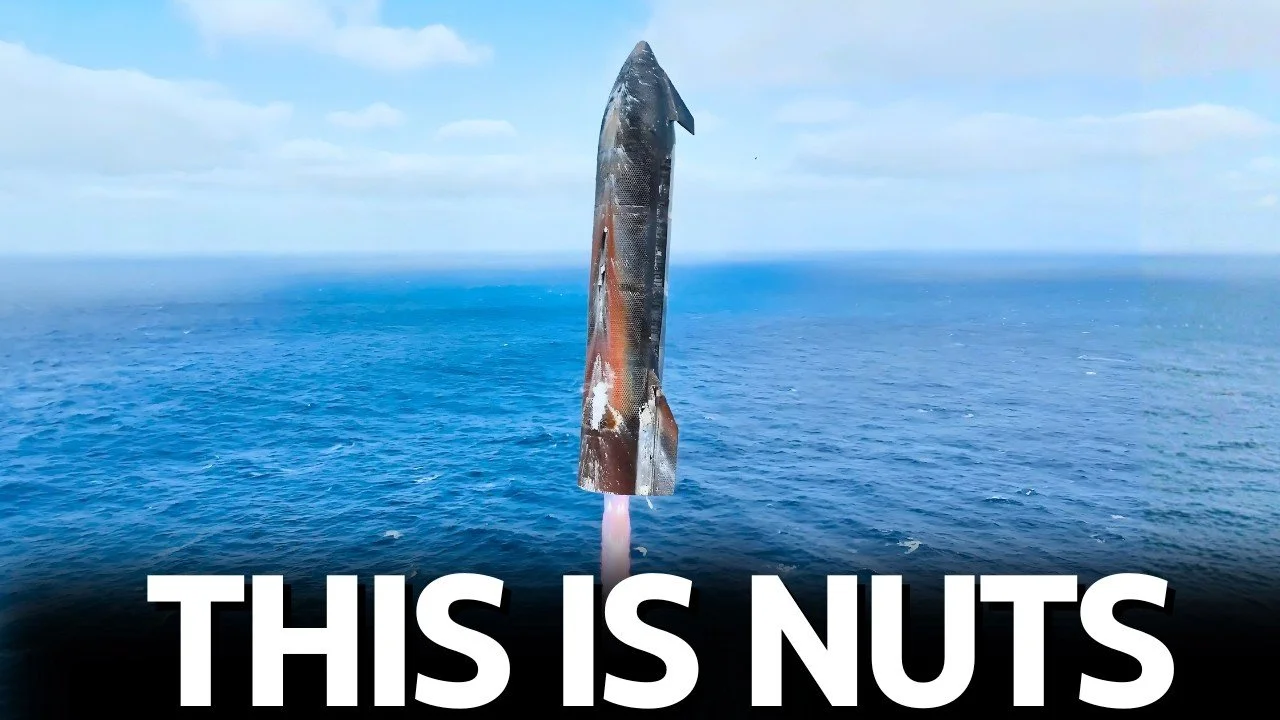
SpaceX’s Starship Flight 11 delivers jaw-dropping moments, from a successful booster landing to Starship’s suborbital ascent. This episode captures the raw power and precision of the launch, showcasing engineering milestones like hot staging and payload deployment, offering tech enthusiasts a front-row seat to space exploration’s future.
Key Takeaways
Successful 13-engine booster landing burn mimics future tower catches.
Hot staging executed flawlessly, with all six Starship Raptor engines igniting.
Starship deploys eight Starlink simulators, proving payload capabilities.
Suborbital trajectory achieved, with Starship landing in the Indian Ocean.
Booster splashes down in the Gulf after a precise boost-back burn.
The video kicks off with the Super Heavy booster’s liftoff, powered by 33 Raptor engines, soaring over the Gulf. The hot staging maneuver separates Starship, igniting its six Raptor engines for its suborbital climb. The booster performs a boost-back burn with 13 engines, followed by a landing burn using a V3 configuration, splashing down in the Gulf. Starship, meanwhile, deploys eight Starlink simulators, showcasing its potential to deliver 60 terabits per second of network capacity per launch—20 times more than Falcon 9. The spacecraft achieves nominal orbit insertion and lands in the Indian Ocean, marking a successful test of its in-space objectives. The energy at Starbase is electric, with the crowd celebrating each milestone.
Farzad Q&A - 10/14/25
Join Farzad and his community for an open, unscripted Q&A about technology, investing, business, and the future of innovation. In every session, Farzad answers community questions, breaks down complex topics with clarity, and shares practical insights on building, scaling, and thinking long-term in tech.