
Tesla's AI Revolution: Robots, Cars, and Society's Shift
Dive into Tesla's bold AI-driven future, where self-driving tech and humanoid robots promise to slash accident rates and transportation costs while boosting efficiency across industries.
Key Takeaways
Self-driving systems will soon allow hands-free operation, reducing fatalities through constant vigilance and 360-degree awareness.
Humanoid robots aim for mass production, handling tasks from factory work to home chores at under $3 per hour equivalent.
Transportation costs could drop to below 30 cents per mile, making private rides as affordable as public transit.
Job displacement in driving and manual labor looms, but lower costs could revitalize communities and improve living standards.
Regulations must evolve quickly to harness these technologies for broad societal gains, prioritizing underserved areas.
Tesla's advancements in AI are set to outpace current laws, creating both opportunities and challenges. Self-driving vehicles, equipped with multiple cameras and trained on vast datasets, will navigate safer than humans by avoiding fatigue or distractions. This could soon enable fully unattended operation, transforming daily commutes into productive time. Meanwhile, humanoid robots target annual production ramps to millions, starting with simple tasks and evolving to precise operations like surgery. At scale, their low operational costs—factoring in energy and maintenance—make them irresistible for businesses, potentially displacing human labor but driving down prices for services like rides and home maintenance. The key lies in directing these innovations to uplift low-income areas, fostering equitable growth and countering economic divides.
Tesla's Bold Leap into AI Robotics and Autonomy
Tesla unveils a transformative roadmap blending AI, robotics, and energy to forge sustainable abundance, where advanced tech meets global needs without environmental harm.
Key Takeaways
Humanoid robots poised to boost global economy by 10-100x through mass production and applications in healthcare and crime prevention.
Cybercab production starts April, optimized for autonomy with cycle times under 10 seconds, targeting millions of units annually.
AI5 chip design focuses on power efficiency, outperforming rivals at lower cost for specialized Tesla software.
Vehicle production aims for 50% growth by end of next year, reaching 4-5 million annualized by 2028.
Solar and battery tech to double U.S. energy output without new plants, emphasizing space-based solar for AI satellites.
Autonomy advancements in FSD version 14 enable safer driving, with regulatory pushes in Europe and China.
This blueprint details scaling Optimus robots from prototypes to high-volume lines, achieving $20,000 unit costs at over a million annually. Cybercab redefines manufacturing like consumer electronics, slashing costs per mile below 20 cents. AI chips prioritize integer operations for efficiency, enabling distributed inference across idle vehicles. Energy strategies leverage massive solar potential, including orbital AI farms accessing billion-fold more power. Future vehicles adapt for accessibility and space exploration, while supercharger networks expand globally. Overall, these innovations promise deflation from productivity surges, reshaping fleets and economies.
Tesla's Bold Future: Robots, Autonomy, and Growth
Tesla's latest moves signal a seismic shift in AI-driven tech, from trillion-dollar valuations to robot armies transforming work and transport.
Key Takeaways
Humanoid robots poised as Tesla's biggest product, costing around $20,000 each with AI brains for versatile tasks.
Industry adoption expected to outpace home use by 3-5:1 due to safer, repeatable environments.
Unsupervised full self-driving targeted by year-end, but regulations lag behind tech capabilities.
Vehicle production to hit 2.6-2.7 million units by end-2026, scaling to 5 million by 2028.
Potential entry into chip manufacturing to support massive robot and vehicle scales.
Diving deeper, the approval of a compensation package locking in leadership for a decade aligns with goals to produce tens of millions of Optimus robots annually, starting with a million-unit capacity in Fremont and expanding to Austin's Gigafactory for 10 million, eventually aiming for over 100 million. Early focus on industrial settings minimizes risks like navigating dynamic home environments, requiring billions in compute for training. On autonomy, software advances suggest safe, hands-free driving is imminent, with drives from California to Austin showing zero interventions, yet laws on distracted driving pose barriers—potentially delaying full rollout. Cybercab production ramps up next year, with confidence that approvals will match output, leveraging data from billions of miles to prove safety gains over human drivers. If regs falter, adaptable vehicles with steering could fill gaps, targeting global markets. Chip fab plans address supply shortages, echoing past battery innovations to fuel this unprecedented manufacturing surge.
The Hidden War of the 21st Century (Zohran Mamdani v Elon Musk)
In this video, we uncover how AI-driven innovations could bridge capitalism and socialism, creating sustainable abundance while risking massive labor shifts and widening wealth gaps.
Key Takeaways
New York City's shift toward socialism reflects disillusionment with the current system, especially among younger voters seeking better protections.
Tech leaders envision a future where AI enables universal high income, eliminating the need for work and providing goods, services, and medical care for everyone.
Capitalism's incentives drive entrepreneurial risks, but socialism often caps potential rewards, leading to stagnation in progress.
AI advancements in self-driving cars and humanoid robots promise deflationary forces, slashing costs for transportation and chores.
Without policies like universal basic income, job disruptions from AI could fuel socialist movements and increase inequality.
Explore the convergence of political shifts and technological leaps reshaping society. Recent elections signal a turn toward socialist ideals in major urban centers, driven by economic frustrations like student debt and job scarcity. Meanwhile, companies advancing AI hardware and software aim for a post-scarcity era, where automation handles mundane tasks, freeing humans for personal pursuits. This could lower living expenses dramatically—think affordable autonomous transport and robotic assistants for homes and communities. Yet, the transition risks leaving workers behind if the economy fails to adapt, potentially necessitating wealth-sharing mechanisms to maintain stability and improve quality of life across the board.

Farzad Q&A - 11/04/2025
Join Farzad and his community for an open, unscripted Q&A about technology, investing, business, and the future of innovation. In every session, Farzad answers community questions, breaks down complex topics with clarity, and shares practical insights on building, scaling, and thinking long-term in tech.
Tesla's AI Revolution: Robots & Future Tech
Dive into Tesla's accelerating innovations and the broader AI boom reshaping industries and daily life.
Key Takeaways
Tesla's stock poised for surge with comp package approval removing major overhang.
Optimus V3 set for Q1 2026 unveil, focusing on functional production for factory use.
Robotaxi network expanding in Austin, facing geofence and fleet scaling hurdles.
AI growth outpacing internet, with 10% global weekly usage already.
Humanoid robots to disrupt repetitive workplaces first, homes later due to safety.
Potential societal split: tech adopters vs. those resisting automation.
AI enabling new businesses, reducing friction for human experiences.
Transition to AI economy involves disruption, requiring adaptation for abundance.
Tesla stands at a pivotal moment with its compensation package likely passing, unlocking focus on AI-driven growth. Optimus evolves toward practical deployment, starting in factories to prove value before consumer sales. Robotaxi tests reveal real-world calibration needs, like optimizing wait times and geofences for usability. Broader AI trends show explosive adoption, fueling an arms race in chips and data centers. Humanoids promise efficiency in structured environments, but home integration lags due to complexity and liability. Society may bifurcate, with some embracing bots for convenience while others opt out, echoing historical tech shifts. Ultimately, AI removes barriers, fostering creativity and connections in an era of potential abundance.
Tesla Robotaxi Rollout and Musk's Comp Package
Tesla stands on the brink of major milestones with its shareholder vote and autonomous tech breakthroughs, promising trillion-dollar valuations and affordable self-driving cars that could redefine transportation.
Key Takeaways
Tesla's robotaxi network aims for 1,000 vehicles in the Bay Area and 500 in Austin by year-end, likely without safety drivers to slash costs.
FSD V14 rollout to Cybertruck shows strong performance across vehicle types, paving the way for versatile AI software.
Elon Musk's $1 trillion comp package ties to hitting $8.5 trillion valuation, offering investors sixfold returns.
Cybercab unveiling expected soon as a steering-wheel-free robotaxi, with potential variants for consumer sales.
Tesla positions to license self-driving tech to rivals, accelerating EV adoption amid falling production costs.
Tesla's momentum builds ahead of Thursday's shareholder meeting in Austin, where votes on Elon Musk's compensation plan could unlock unprecedented growth. The package, potentially worth $1 trillion, requires achieving ambitious targets like an $8.5 trillion market cap, multiplying investor value significantly. Robotaxi progress hints at unsupervised operations imminently, with fleets expanding rapidly in the Bay Area and Austin. Removing safety drivers would halve ride costs compared to competitors like Uber, enhancing privacy and efficiency. FSD V14's success on Cybertruck, despite its unique design and limited numbers, demonstrates the software's adaptability to various form factors. This flexibility extends to upcoming models like the steering-wheel-free Cybercab, set for reveal in months, and possible variants with manual controls to navigate regulations. Beyond that, Tesla eyes a Cyber van for family transport and a sub-$30,000 compact vehicle with full autonomy. Licensing the AI stack to other manufacturers could bridge gaps in their EV and software capabilities, making self-driving ubiquitous as vehicle costs drop below $30,000.
Elon Musk Unveils Flying Tesla Roadster Prototype
Revolutionary advancements in electric vehicles and AI take center stage, revealing how Tesla pushes boundaries with insane technology and why AI's trajectory demands urgent innovation for efficiency and safety.
Key Takeaways
Tesla's Roadster prototype demo, set for soon, integrates wild tech that could redefine mobility, potentially including flight capabilities.
OpenAI shifted from nonprofit open-source roots to a closed, profit-maximizing entity, contrasting its original intent as a Google counterweight.
Leveraging a 100-million-vehicle Tesla fleet could yield 100 gigawatts of distributed AI inference compute during downtime.
Future devices evolve beyond traditional phones into AI edge nodes, eliminating apps and OS, with all interactions handled by AI in 5-6 years.
AI content generation dominates soon, with most media like videos and music produced by AI, already showing coherent long-form results.
AI compute efficiency has vast room for growth, as human brains achieve wonders with just 10 watts, far surpassing current supercomputers.
Delving deeper, the Roadster's prototype embodies cutting-edge engineering, blending car design with aviation elements for a demo that outshines iconic fictional vehicles. This ties into broader AI concerns, where initial efforts to balance power in the field led to unexpected commercial pivots. Harnessing idle Tesla resources for AI processing presents a scalable solution to data center demands, potentially revolutionizing inference at massive scales. Device evolution points to seamless AI integration, where servers and local nodes collaborate for real-time, anticipatory experiences without rigid software structures. Efficiency gains in AI draw from biological models, underscoring the gap between today's power-hungry systems and optimized future designs capable of civilization-level feats. Societal shifts, including platforms prioritizing truth over suppression, underline the need for vigilant tech development to prevent unchecked dominance.
Elon Musk on AI Revolution and Future Jobs
Dive into groundbreaking views on AI's transformative power, from job disruptions to a world of optional work and sustainable prosperity.
Key Takeaways
AI will swiftly replace digital desk jobs like coding and email processing, akin to computers overtaking manual calculations.
Physical jobs involving hands-on work, such as welding or farming, will endure longer due to AI's current digital limitations.
Autonomous vehicles and robots will eliminate roles like trucking and longshoremen, exacerbating labor shortages but risking safety without proper skills.
A benign AI future could lead to universal high income, providing abundance and eliminating poverty, making work optional.
AI safety demands maximal truth-seeking to avoid dystopian scenarios, with competition among systems fostering fairness and curiosity.
Human meaning may shift from work to personal pursuits like hobbies, reducing crime through economic security.
Transitioning to this era involves trauma, requiring government intervention to support displaced workers and prevent wealth gaps.
Explore how AI advances could reshape society profoundly. Digital professions face immediate obsolescence as AI handles information processing with unmatched speed. Meanwhile, robotics will automate physical tasks, from driving to household chores, slashing costs—like transportation dropping to 25 cents per mile. This shift promises affordable housing and goods via efficient construction and manufacturing. Yet, mass job displacement looms, demanding mechanisms to redistribute AI-generated wealth. Emphasizing curious, unbiased AI models ensures humanity thrives, preserving nature while achieving utopian abundance where individuals pursue passions freely.
Tesla's Cybercab Future and AI Singularity
Dive into Tesla's ambitious roadmap for autonomous vehicles and the broader implications of AI advancements, uncovering strategies that could redefine mobility and technology integration.
Key Takeaways
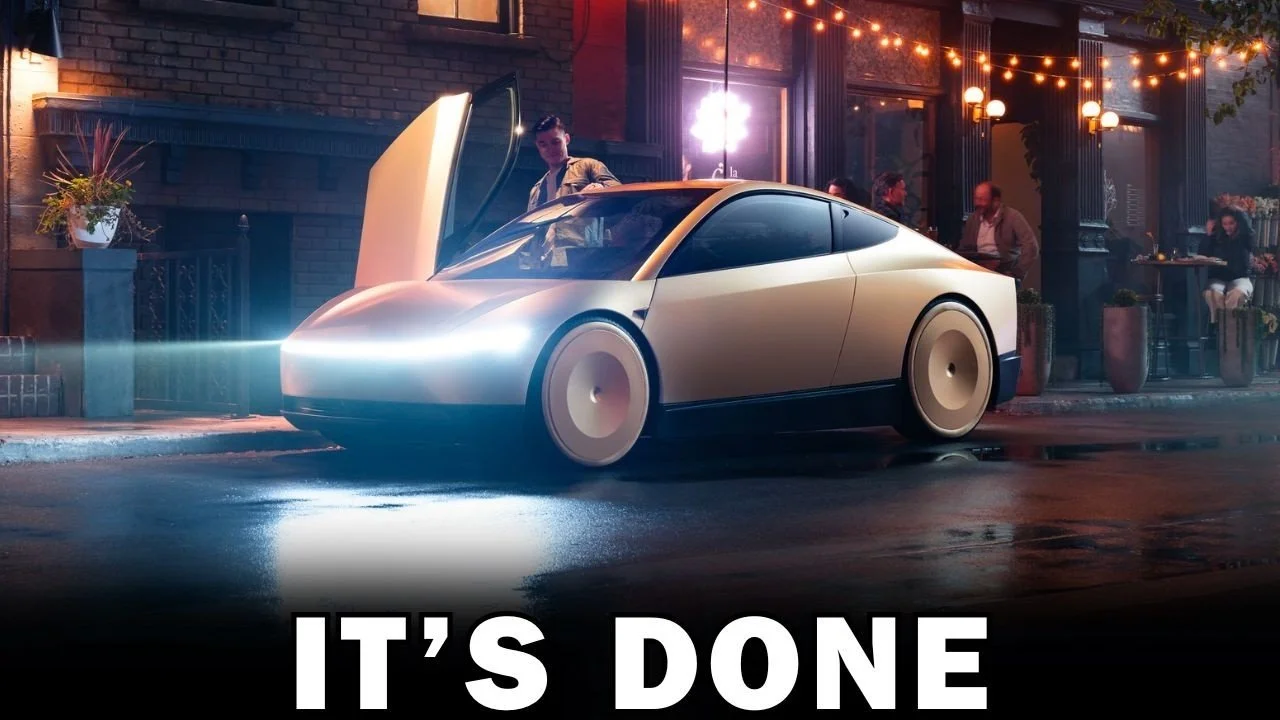
Tesla plans to ramp up Cybercab production mid-next year, initially focusing on units without steering wheels, but likely introducing drivable versions to meet demand and regulatory realities.
Each autonomous vehicle could replace 3-5 traditional cars due to constant operation, accelerating market disruption.
Manufacturing breakthroughs like the unboxed process enable high-volume output of low-cost EVs, optimizing for scale over premium features.
Global tariffs on Chinese EVs protect national security, preventing foreign control over connected transportation systems.
AI progress points to superhuman capabilities in various domains within years, leading to job shifts and potential universal basic income needs.
Humanoid robots will require tailored AI models with strict obedience for physical tasks, differing from conversational LLMs.
Tesla's strategy hinges on achieving unsupervised self-driving to launch the Cybercab, a two-seater optimized for autonomy with features like wireless charging and easy access doors. Production could start with limited units under federal allowances, scaling to thousands weekly by late next year. To bridge regulatory gaps, a drivable variant sharing most components might emerge, priced under $30,000, ensuring manufacturing lines run at full capacity. This approach avoids cannibalizing existing models while preparing for widespread robotaxi adoption.
Broader discussions highlight EV market dynamics, with legacy automakers retreating from electrics amid subsidy losses. Tariffs on Chinese imports safeguard against data risks in connected vehicles, akin to concerns with foreign-owned tech like smartphones. AI's exponential growth, already generating most internet content, forecasts singularity-like changes by 2030, enabling superhuman performance in fields from driving to research. Transitions may involve economic turbulence, with one-person companies rising and workforce reductions, but curiosity and adaptation will drive personal growth in this era.
Tesla Cybercab Public Road Testing Begins
Tesla's Cybercab advancements highlight a shift toward autonomous mobility, with public testing underway and production gearing up, contrasting sharply with industry pullbacks.
Key Takeaways
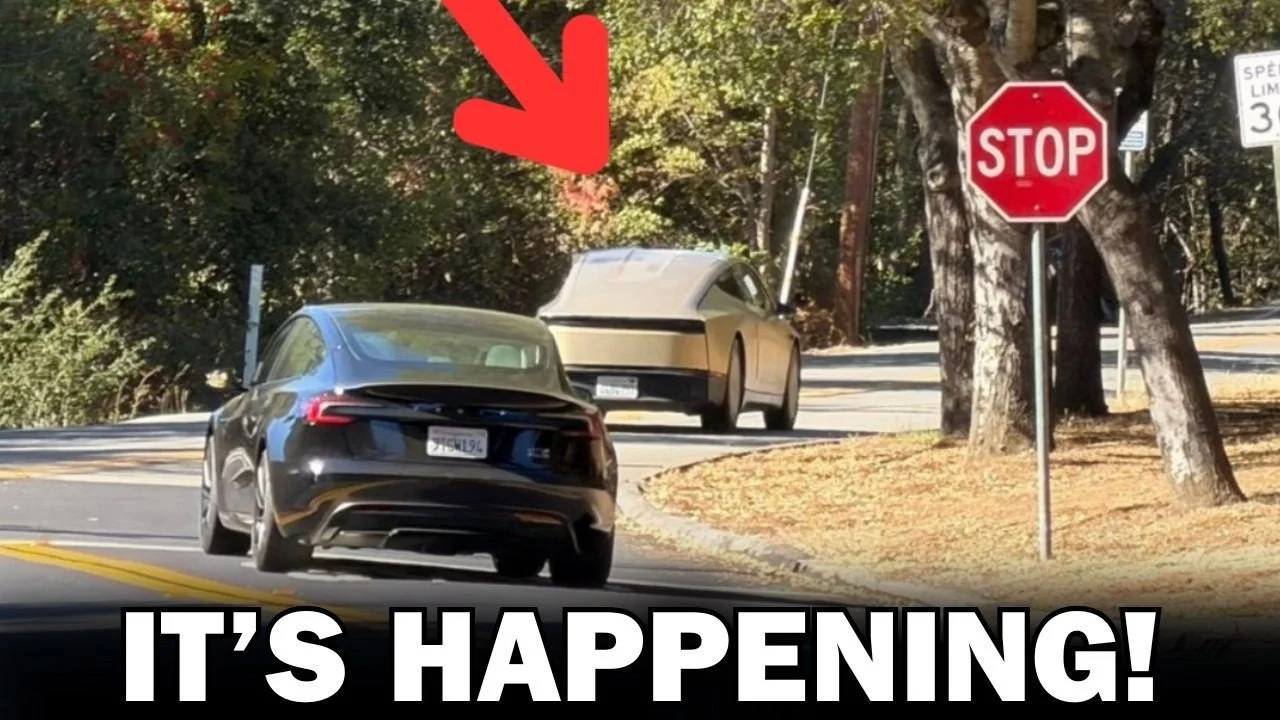
Tesla spotted testing Cybercab on public roads in Los Altos, CA, with a safety driver and required mirrors.
Production ramp targeted for Q2 2026 at Gigafactory Texas, supported by recent hiring for manufacturing roles.
Federal regulations limit vehicles without steering wheels to 2,500 units annually, but exemptions could enable higher volumes.
Legacy automakers like GM are laying off workers and scaling back EV production due to expiring tax credits.
Tesla's integrated ecosystem could offer sub-$30,000 vehicles with all-in-one monthly plans covering maintenance, insurance, and charging.
Tesla has transitioned Cybercab testing from private factory grounds in Austin to public streets, marking a key validation phase. This prototype features no rear glass, emphasizing its trunk design, and aligns with equipment installations at Gigafactory Texas. A hiring push for roles in battery, drive units, and production control underscores readiness for scaled manufacturing. Regulatory clarity is crucial, as current U.S. limits on pedal-less vehicles cap sales, though upcoming discussions with NHTSA may reveal paths to exemptions for mass production. Meanwhile, competitors face setbacks: without tax incentives, EVs become uncompetitive, prompting layoffs and reduced output. This positions Tesla to lead with cost-effective, attention-free driving solutions, potentially extending to robotics, transforming transportation accessibility.

Tesla Robotaxi Austin Expansion Strategy
Tesla's Robotaxi network in Austin has grown dramatically in just four months, covering most of the city and highlighting the power of AI-driven autonomy. Yet, long wait times reveal the need for fleet expansion, while regulatory hurdles shape a hybrid approach to self-driving vehicles that balances innovation with practical deployment.
Key Takeaways
Tesla expanded its Robotaxi geofence in Austin to include high-traffic areas like the Domain and east Austin, achieving city-wide coverage faster than competitors.
Current fleet limitations cause 30-minute waits, signaling the urgency to scale from 20 cars to at least 50-100 for reliable service.
Cybercab designs will include steering wheels and pedals to comply with U.S. regulations capping driverless units at 2,500 annually without exemptions.
Tesla's strategy prioritizes selling affordable self-driving vehicles for personal use, potentially generating more revenue than ride-hailing fleets in the next 3-5 years.
Features like auto-parking and self-service could transform urban mobility, with monthly costs rivaling traditional cars but eliminating driving hassles.
This expansion demonstrates Tesla's AI advantage, enabling quick adaptation across U.S. regions with maneuvers proven in FSD V14. However, adding vehicles hinges on safety data and possibly removing safety drivers to cut costs and boost affordability. Regulatory challenges, including federal limits and state laws, push Tesla toward versatile models like modified Cybercabs—built on the same line as ride-hail units but adapted for ownership. At scale, these could cost under $20,000 to produce, offered via subscriptions around $400-600 monthly, covering insurance, charging, and maintenance. Users benefit from hands-free transport, where vehicles self-park, summon on demand, and even handle service visits autonomously. This model sidesteps logistics issues with immobile driverless fleets, allowing easy relocation or resale. As unsupervised FSD nears, Tesla positions itself to ramp production, redefining vehicle ownership beyond geofenced ride-sharing.

Tesla's Cybercab: Steering Wheel Backup Plan
Tesla's Cybercab represents a pivotal shift in affordable EV production, blending autonomy ambitions with practical regulatory adaptations to maximize factory output and market reach.
Key Takeaways
Cybercab production ramps mid-2026 on a new unboxed process with 800,000-unit annual capacity.
U.S. regulations cap driverless vehicles at 2,500 units yearly without traditional controls.
Adding steering wheels and pedals enables high-volume sales, avoiding idle factories.
Positions Cybercab as sub-$30,000 EV, below Model 3, with unsupervised full self-driving.
Overcomes data and regulatory hurdles in markets like Europe and China for broader adoption.
The Cybercab emerges as Tesla's long-awaited affordable model, initially unveiled without controls to push autonomy boundaries. Regulatory realities, including strict U.S. safety standards and slow exemption processes, necessitate design flexibility. This allows scaling production beyond niche limits, ensuring economic viability. With potential pricing starting around $29,000-$32,000, it offers unsupervised autonomy, making it a game-changer for daily commuting—affordable, safe, and feature-rich with entertainment systems. This evolution aligns with prior pivots, like the Model Y, and sets the stage for widespread EV adoption through the decade.
Tesla Solves Autonomy: FSD Breakthroughs
Tesla's advancements in full self-driving technology signal a pivotal shift, enabling scalable autonomy without radar or LIDAR, poised to boost vehicle demand and unlock new revenue streams through high-margin software.
Key Takeaways
Tesla's AI-driven approach achieves unsupervised driving at scale, using cameras and billions of miles of data for safer, more efficient vehicles.
Current FSD penetration supports $1.2 billion annualized revenue, contributing 15-20% to company EBIT with 85% margins.
Vision-only systems challenge traditional robotics, extending to aviation, marine, and other sectors.
Regulatory approval hinges on proven safety, with potential to reduce road deaths and lower transportation costs dramatically.
FSD v14 shows flawless highway performance and adaptive maneuvers, though minor comfort issues persist, improving rapidly.
Delving deeper, Tesla's strategy leverages a vast global fleet of over 8 million vehicles, with 12% FSD adoption translating to 1 million active users. This positions the company uniquely against competitors reliant on costlier sensors, allowing production of affordable self-driving cars under $35,000. As software matures, expect surged demand for models like the Model 3, where buyers opt for autonomy over traditional gas vehicles requiring maintenance and attention. Robotaxi operations could soon expand to major U.S. metros like Austin and LA, with global rollout following as AI adapts to regional rules via contextual learning. Regulators may accelerate approvals due to safety gains—systems avoid distractions, emotions, and fatigue—while economic benefits include cheaper goods transport and new event-driven mobility. Challenges remain in smoothing comfort for broader adoption, but pace of iteration suggests quick resolutions, fostering a luxurious, private ride experience far superior to rivals.
Farzad Q&A - 10/28/2025
Join Farzad and his community for an open, unscripted Q&A about technology, investing, business, and the future of innovation. In every session, Farzad answers community questions, breaks down complex topics with clarity, and shares practical insights on building, scaling, and thinking long-term in tech.

Tesla's AI Breakthroughs in Autonomous Driving Unveiled
Dive into the future of autonomous driving with Tesla’s AI innovations. This episode unveils how Tesla’s cutting-edge end-to-end neural networks, powered by vast datasets, are revolutionizing self-driving technology, enabling robotaxis, and paving the way for scalable robotics.
Key Takeaways
Tesla’s robotaxi service operates in Austin and the Bay Area, using production vehicles with no driver.
End-to-end neural networks process raw sensor data to produce driving actions, improving safety and comfort.
Massive fleet data (500 years of driving) refines models to handle rare scenarios.
Gaussian Splatting enhances 3D scene rendering for debugging and simulation.
Neural network simulators generate consistent multi-camera views for evaluation.
Tesla’s AI extends beyond cars to humanoid robots like Optimus.
Tesla’s AI team has made significant strides in autonomy, launching a robotaxi service in Austin and the Bay Area, where passengers can hail fully driverless vehicles. Production cars now deliver themselves from factories to customers, navigating highways and city streets using standard cameras and computers. The core innovation lies in Tesla’s shift to end-to-end neural networks, which process raw video and sensor data to directly output driving actions, bypassing traditional modular perception systems. This approach aligns driving with human preferences, balancing safety and smoothness without hard-coded rules, which are difficult to scale for complex scenarios like avoiding puddles or waiting for animals to cross.
Tesla leverages its massive fleet data—equivalent to 500 years of driving—to train models on diverse edge cases, such as vehicles spinning out on highways. This data-driven approach ensures proactive safety, as demonstrated by a Tesla braking early to avoid a spinning car before it hits a barrier. Debugging is enhanced through techniques like Gaussian Splatting, which renders high-fidelity 3D scenes, and natural language prompts that explain model decisions. A neural network simulator generates consistent eight-camera video streams, allowing real-time testing of driving policies against synthetic edge cases, like vehicles cutting across paths. These tools enable rapid evaluation and closed-loop learning, ensuring robust performance. Tesla’s AI also extends to its Cybercab robotaxi and Optimus humanoid robot, showcasing the scalability of its technology across robotics platforms.
Tesla's Bold Bets on AI and Autonomy
Tesla stands at a pivotal moment, pushing boundaries in AI integration for vehicles and robotics to revolutionize transportation and energy.
Key Takeaways
Tesla leads in real-world AI with high intelligence density in vehicles, enabling unsupervised full self-driving via software updates.
Production expansion targets millions of vehicles annually, including the Cybercab optimized for autonomy without steering wheels or pedals.
Optimus humanoid robots aim for mass production, potentially creating abundance by making work optional through 24/7 operation.
Battery storage like Megapack could double U.S. energy output without new power plants.
AI5 chip design promises 40x performance gains over AI4, focusing on simplicity for cars, robots, and data centers.
Robotaxi operations expected in multiple U.S. states by year-end, with cautious deployment for safety.
Distributed inference from idle vehicles could create massive computing power.
Tesla's strategy centers on scaling AI for real-world applications, starting with vehicles that update to full autonomy, shocking the industry with rapid adoption. Energy advancements through battery buffering address grid inefficiencies, enabling higher output globally. Optimus represents a leap in robotics, requiring vertical integration for production at vehicle-scale volumes, with dexterous hands as a key engineering feat. The AI5 chip eliminates unnecessary components for radical efficiency, supporting training and inference across Tesla's ecosystem. Robotaxi rollout prioritizes safety with initial drivers, aiming for widespread metro operations. Overall, these initiatives target a future of abundance, where AI eliminates poverty and enhances access to services like advanced surgery.
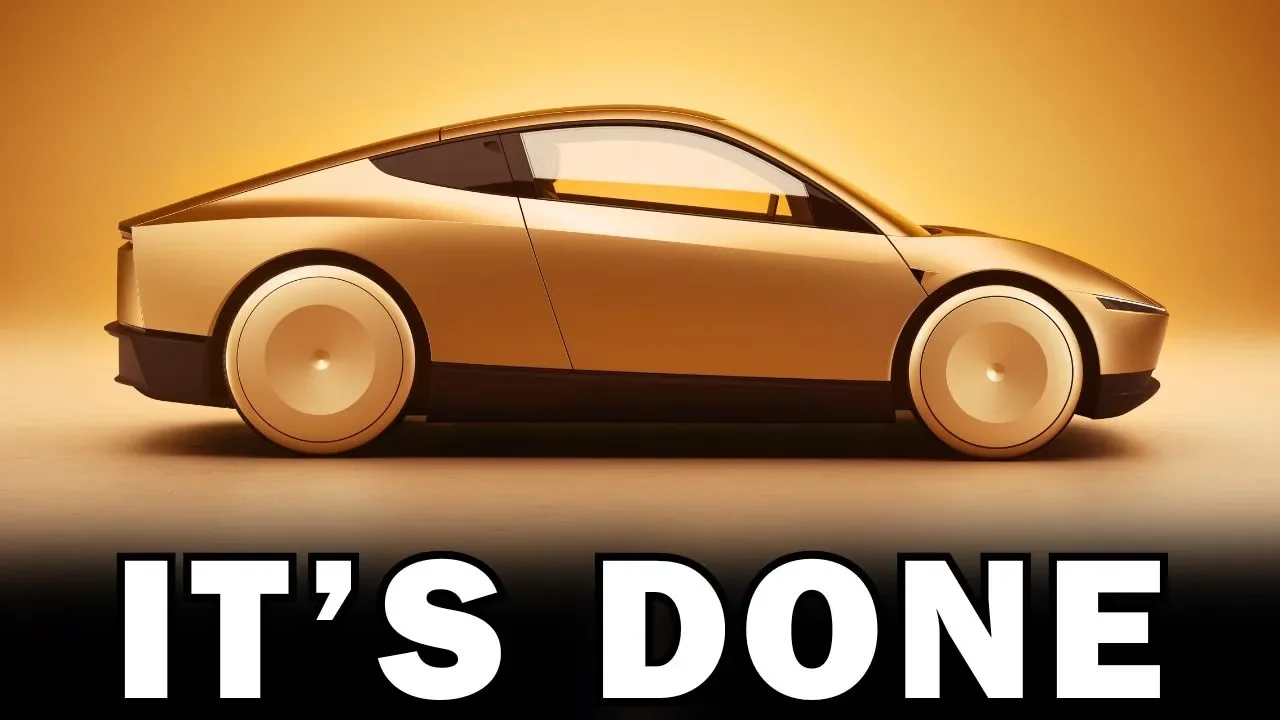
Tesla's FSD V14 Masters Manhattan's Toughest Drives
Witness the future of driving as Tesla’s Full Self-Driving (FSD) V14 takes on Manhattan’s unpredictable streets, executing maneuvers with the confidence and finesse of a seasoned New Yorker. From dodging cabs to handling emergency vehicles, this episode showcases why FSD V14 is a game-changer for urban autonomous driving.
Key Takeaways
FSD V14 drives like a top-tier New York driver, mastering lane changes and quick reactions.
The system handles complex urban scenarios, like backing up to avoid obstacles, with ease.
Drop-off and pickup functionality works seamlessly, enhancing urban mobility.
Improved decision-making reduces drive times, critical for future robotaxi networks.
User education and UI improvements are needed to boost adoption among non-tech users.
This episode dives into Tesla’s FSD V14, tested in the chaotic streets of Manhattan, arguably the USA’s toughest driving environment. The system’s ability to weave through traffic, avoid obstacles like smoke cones, and pull over for emergency vehicles demonstrates a near-sentient level of awareness. Unlike its predecessor, V13, which performed well but lacked local finesse, V14’s “Mad Max” mode delivers rapid, smooth decisions, shaving minutes off drives by navigating like a native. The software’s handling of tight turns and unpredictable scenarios, such as backing up to clear a blocked path, highlights its advanced reasoning. Drop-offs and pickups are executed with precision, though parking in complex garages needs refinement. While the technology is impressive, challenges remain in user education and system fragmentation, which could hinder widespread adoption. The episode also explores the potential for FSD V14 to transform urban mobility, reducing parking costs and stress in cities like New York, where garage fees can hit $800 monthly. A planned test drive from Manhattan to JFK and LaGuardia airports promises to further showcase V14’s capabilities in high-pressure scenarios.
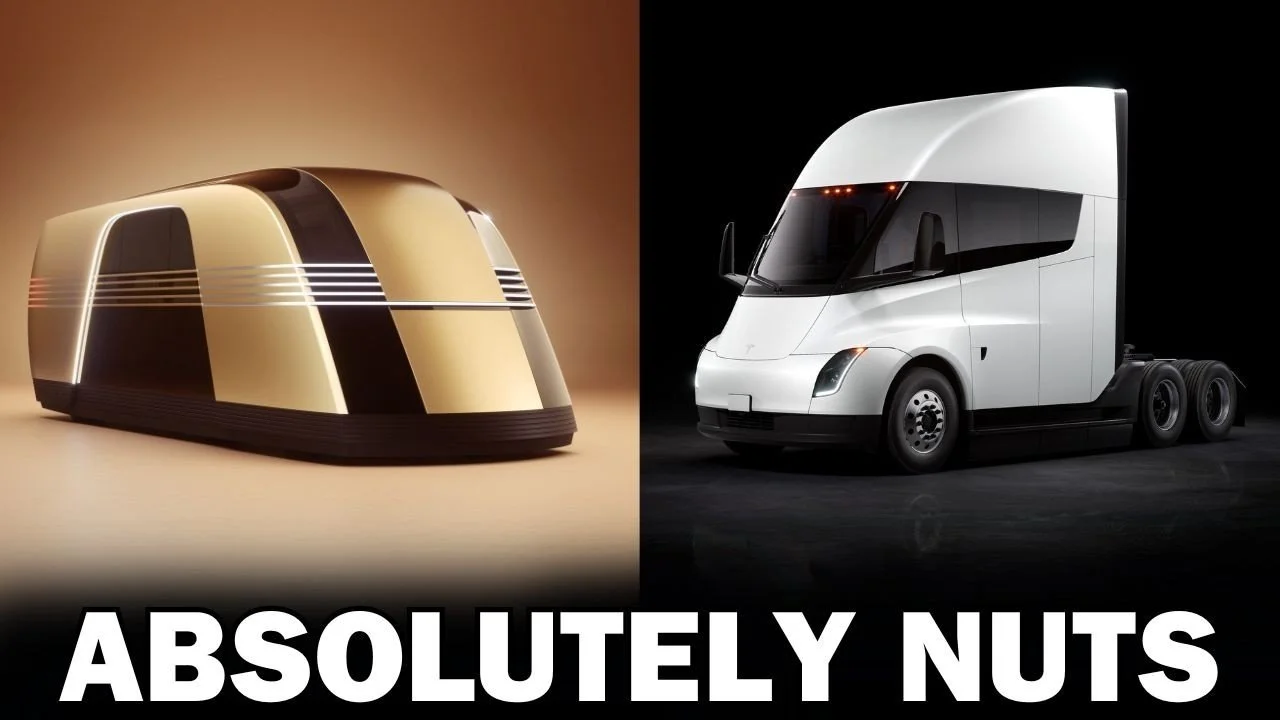
Tesla's Autonomous Vehicles: Future of Travel & RVs
Tesla's vision for autonomous vehicles promises to redefine travel, turning vehicles into customizable, self-driving spaces. From RV conversions on the semi platform to robo vans tailored for partying or commuting, the possibilities are endless. This episode dives into how Tesla's autonomous tech could transform mobility, accessibility, and social outings, making travel safer, more inclusive, and fun.
Key Takeaways
Tesla's autonomous tech enables vehicles to become movable, customizable rooms for work, sleep, or leisure.
Semi platform RVs face safety challenges due to their size but offer supersized travel potential.
Robo vans are better suited for RV life, with third-party customization likely for fleet providers.
Autonomous vehicles could replace short flights for intercity travel, offering cheaper, hassle-free trips.
Self-driving tech enhances accessibility, allowing disabled individuals to travel independently.
The discussion highlights Tesla's autonomous vehicle future, where self-driving technology turns vehicles into versatile spaces. The semi platform, while ideal for large-scale RVs, poses safety risks due to its size and weight, requiring rigorous safety standards. Smaller robo vans are seen as a more practical RV solution, with customizable interiors for uses like partying or sightseeing. Tesla may focus on producing autonomous shells, leaving interior customization to third-party fleet providers, who can tailor vehicles for specific experiences like group travel or event shuttles. This model could create a network where users book specialized vehicles via a Tesla app, similar to choosing an airline. The technology also promises to simplify intercity travel, making trips like Austin to Dallas faster and cheaper than flying. For disabled individuals, steer-by-wire and voice controls open new mobility options, bypassing traditional driving barriers. This vision could lower friction for social outings, boost accessibility, and create vibrant markets for customized autonomous travel.
Tesla's Q3 2025: Record Deliveries & AI-Driven Growth
Dive into the future of autonomous driving with Tesla’s AI innovations. This episode unveils how Tesla’s cutting-edge end-to-end neural networks, powered by vast datasets, are revolutionizing self-driving technology, enabling robotaxis, and paving the way for scalable robotics.
Key Takeaways
Tesla’s robotaxi service operates in Austin and the Bay Area, using production vehicles with no driver.
End-to-end neural networks process raw sensor data to produce driving actions, improving safety and comfort.
Massive fleet data (500 years of driving) refines models to handle rare scenarios.
Gaussian Splatting enhances 3D scene rendering for debugging and simulation.
Neural network simulators generate consistent multi-camera views for evaluation.
Tesla’s AI extends beyond cars to humanoid robots like Optimus.
Tesla’s AI team has made significant strides in autonomy, launching a robotaxi service in Austin and the Bay Area, where passengers can hail fully driverless vehicles. Production cars now deliver themselves from factories to customers, navigating highways and city streets using standard cameras and computers. The core innovation lies in Tesla’s shift to end-to-end neural networks, which process raw video and sensor data to directly output driving actions, bypassing traditional modular perception systems. This approach aligns driving with human preferences, balancing safety and smoothness without hard-coded rules, which are difficult to scale for complex scenarios like avoiding puddles or waiting for animals to cross.
Tesla leverages its massive fleet data—equivalent to 500 years of driving—to train models on diverse edge cases, such as vehicles spinning out on highways. This data-driven approach ensures proactive safety, as demonstrated by a Tesla braking early to avoid a spinning car before it hits a barrier. Debugging is enhanced through techniques like Gaussian Splatting, which renders high-fidelity 3D scenes, and natural language prompts that explain model decisions. A neural network simulator generates consistent eight-camera video streams, allowing real-time testing of driving policies against synthetic edge cases, like vehicles cutting across paths. These tools enable rapid evaluation and closed-loop learning, ensuring robust performance. Tesla’s AI also extends to its Cybercab robotaxi and Optimus humanoid robot, showcasing the scalability of its technology across robotics platforms.