

Matic Robot Vacuum: AI-Powered Cleaning Review
Experience cutting-edge AI in everyday cleaning with the Matic robot vacuum, offering vision-based navigation that evolves via over-the-air updates for unmatched reliability.
Key Takeaways
Vision-only system with five cameras ensures precise mapping and rare stuck incidents.
Intuitive app allows custom cleaning zones, schedules, and modes like targeted stain removal.
Easy maintenance: Self-contained dust bag with integrated filter, magnetic brushes, and quick-swap parts.
Strong object avoidance for pets and kids, though it struggles with flat items like books.
Quiet operation and compact dock make it family-friendly, but high cost and taller profile limit under-furniture access.
Delve into Matic's innovative design, where AI processes camera feeds to adapt to home environments dynamically. It vacuums and mops efficiently, with modes ranging from quick to heavy-duty, and handles spills via app-directed ultra-cleaning. The self-docking system saves space, while pet waste avoidance adds practicality. Despite the $1,095 price tag, its longevity and ongoing improvements justify the investment for those prioritizing tech-forward reliability over budget options.
NVIDIA's AI Shifts: Accelerated Future Ahead
Discover how computing is evolving through three pivotal transitions, offering unprecedented opportunities in efficiency and innovation for data centers and beyond.
Key Takeaways
Accelerated computing shifts from general-purpose CPUs to GPUs, addressing Moore's Law slowdowns and optimizing massive non-AI software investments.
Generative AI enhances existing apps like search and recommender systems, driving revenue gains for hyperscalers through better ad conversions.
Agentic AI introduces reasoning and tool-using systems, spawning new frontiers in coding aids, radiology, legal tools, and autonomous driving.
NVIDIA's unified architecture supports all AI phases—pre-training, post-training, inference—across clouds, enterprises, and robotics.
Infrastructure investments focus on energy efficiency, with each GPU generation improving performance per watt for better TCO.
Global expansion includes sovereign clouds and industries like digital biology, with diverse ecosystems ensuring resilient supply chains.
These transitions highlight a robust foundation for growth, where NVIDIA's platform excels in every AI modality and industry. The move to GPUs tackles escalating compute demands in a post-Moore's Law world, enabling faster data processing and simulations. Generative AI redefines hyperscaler operations, shifting from classical methods to advanced models that boost engagement and monetization. Agentic AI, the next wave, empowers systems to plan and act, accelerating breakthroughs in fields like healthcare and transportation. With a focus on co-design across stacks, energy efficiency remains paramount, ensuring one architecture delivers maximum revenue from limited power. This ecosystem extends to startups and global infrastructures, fostering innovation without excess.
Elon & Jensen's AI-Robotics Revolution
Unlock groundbreaking perspectives on tech's role in reshaping economies and daily life, from pioneering robotics to interstellar AI systems that promise boundless efficiency.
Key Takeaways
Humanoid robots emerge as universal tools, blending utility and appeal to revolutionize personal and industrial tasks.
AI factories enable real-time generative content, shifting from retrieval-based systems to context-aware intelligence.
Work evolves into an optional pursuit, akin to hobbies, amid rising productivity from automation.
Massive partnerships build gigawatt-scale data centers, accelerating AI infrastructure in key regions.
Space-based AI compute offers superior cooling and solar power, outpacing earthly limits for terawatt ambitions.
Accelerated computing counters Moore's Law slowdown, powering data processing and recommendations at scale.
Delve deeper: Innovations in reusable rockets and electric vehicles set the stage for broader creation over mere disruption. Humanoid robotics stand poised as the ultimate product, offering versatile assistance that could universally boost wealth via AI synergy. AI refineries process generative outputs tailored to users, demanding global factories for instant, personalized intelligence. Amid job shifts, automation simplifies the mundane, freeing time for ideas and pursuits, as seen in fields like radiology where AI enhances diagnostics without reducing roles. Major collaborations announce 500-megawatt data centers with expansions to gigawatts, integrating omniverse for robotic training and quantum simulations. Space integration becomes essential for scaling compute, leveraging continuous solar energy and radiative cooling to bypass terrestrial constraints. Overall, this signals a sustained tech boom, driven by foundational shifts in computing paradigms.

Farzad Q&A - 11/18/2025
Join Farzad and his community for an open, unscripted Q&A about technology, investing, business, and the future of innovation. In every session, Farzad answers community questions, breaks down complex topics with clarity, and shares practical insights on building, scaling, and thinking long-term in tech.

Self-Driving Tech Reshapes Cities Forever
Autonomous driving isn't just about ditching the wheel; it's set to overhaul how cities look and feel, turning car-dominated spaces into vibrant, livable areas with massive quality-of-life boosts.
Key Takeaways
Reclaim 30-50% of urban land from parking for parks, housing, and community spaces.
Narrow roads and reduce noise pollution for calmer, more enjoyable neighborhoods.
Slash annual road deaths from 40,000 by eliminating human error, enabling safer street designs.
Free up daily commute hours for productivity, reading, or rest, boosting human potential.
Plummet delivery costs, reshaping retail and logistics toward on-demand access over ownership.
Self-driving tech will liberate vast swaths of land currently wasted on idle vehicles, allowing cities to prioritize people over parking. Roads can slim down as vehicles coordinate seamlessly, cutting buffers and intersections for efficiency. Electric autonomy quiets the urban roar, letting nature and conversations thrive. Safer streets mean fewer barriers, more pedestrian-friendly zones, and kids playing freely. Commuters gain back precious time, potentially fueling creativity and entrepreneurship. Logistics evolve with cheap, constant transport, favoring frequent deliveries and minimal storage. While the transition spans decades with regulatory hurdles and job shifts, the endgame is transformative: new cities built from scratch for autonomy, quieter and greener than ever. Risks like privacy and workforce disruption demand attention, but the momentum toward this reimagined world is unstoppable.

Tesla Robotaxi Access Expands Nationwide
Tesla's Robotaxi rollout hits a tipping point, with wide iOS access unlocking safer, scalable autonomy that could redefine transportation economics and safety standards.
Key Takeaways
Robotaxi service now available to all iOS users in Austin and Bay Area, with immediate access reported across US regions like Dallas, Boston, and North Carolina.
FSD v14 boosts safety dramatically, enabling no-intervention drives and miles-between-critical-events spikes, backed by crowdsourced data.
Tesla plans fleet expansion to 500 vehicles in Austin and 1,000 in Bay Area by year-end, targeting 8-10 US metros, including unexpected spots like Harrisburg, PA.
Competitors like Waymo expand to Miami and Texas cities with 2,500-3,000 cars, but Tesla's manufacturing edge allows faster, cheaper scaling.
Zoox enters SF with futuristic pods, yet limited to urban zones due to highway safety constraints, unlike Tesla's highway-capable Model Ys.
Future robo-taxi wars loom, with Tesla's AI-driven, low-cost model poised to undercut prices at $1/mile versus rivals' $2.50-$3/mile.
Tesla's move opens Robotaxi hailing to iOS users nationwide, leveraging FSD v14's advancements for smoother, safer rides. This upgrade minimizes interventions, aligning with data showing FSD users are safer than average drivers. As fleets grow toward ambitious year-end targets, Tesla positions itself for rapid urban expansion, potentially influencing policy in state capitals. Against Waymo's autonomous pushes in new cities and Zoox's SF debut, Tesla's vertical integration—from AI training to manufacturing—enables lower operational costs and broader deployment, including highways. This could drive down per-mile fares, accelerate adoption, and spark intense competition in self-driving tech, saving lives through reduced human error.
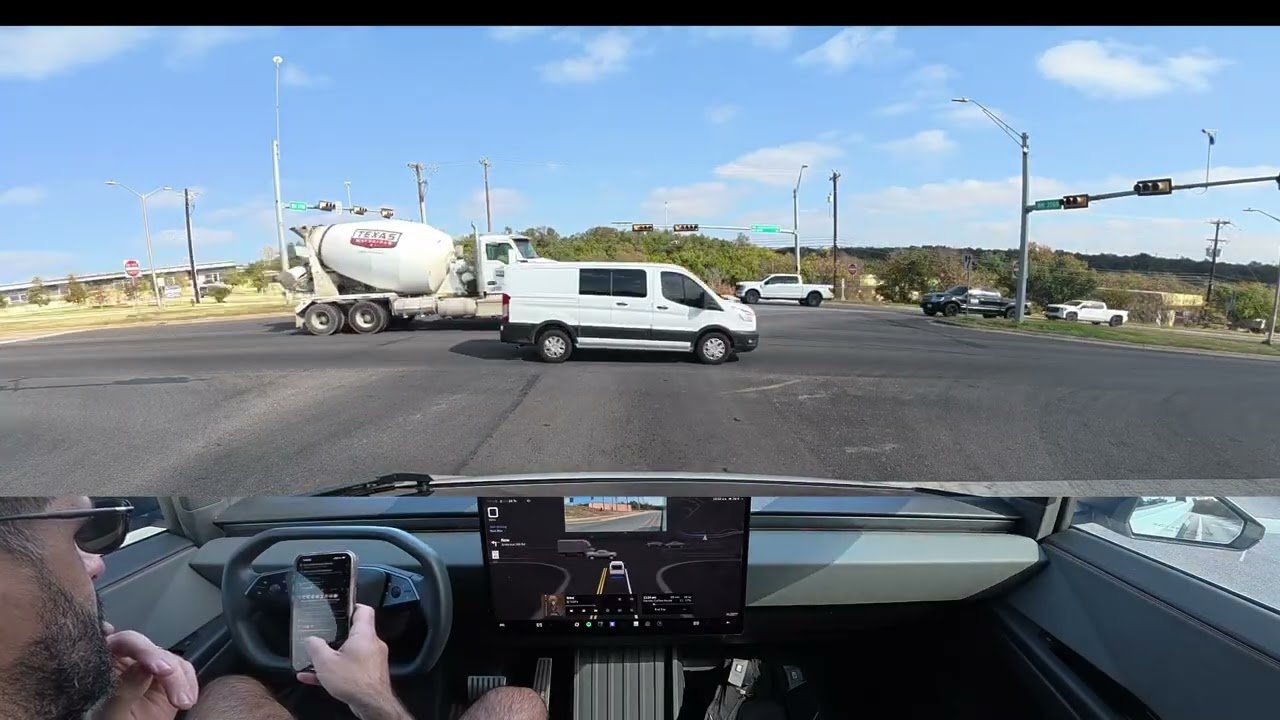
Cybertruck Navigates Austin Chaos
Dive into the Cybertruck's real-time performance on Austin's demanding streets, revealing how advanced autonomy turns obstacles into opportunities for efficiency and safety.
Key Takeaways
Autonomous systems excel in evading roadblocks like tractor trailers on inclines.
Navigation adapts quickly to unfinished toll roads and construction zones.
High toll costs in urban areas underscore the need for optimized EV routing.
Spotting poor driving behaviors emphasizes the value of AI-assisted vigilance.
Effortless parking in crowded spots demonstrates end-to-end self-driving reliability.
This footage captures the Cybertruck in action during a typical Austin drive, where a semi-truck obstruction tests uphill capabilities, resulting in a smooth bypass. Toll expenses highlight regional infrastructure pricing, while a navigation glitch from ongoing roadwork is swiftly corrected. Encounters with distracted drivers and rapid signage changes further illustrate the vehicle's responsive handling, culminating in a flawless, intervention-free arrival.

Tesla's FSD v14 Revolutionizes Robotaxis
Dive into Tesla's cutting-edge autonomy that's set to reshape mobility and urban economies.
Key Takeaways
Tesla trials Robotaxi in small cities like Harrisburg, PA, highlighting scalability beyond big urban centers.
FSD v14 enables seamless self-driving in diverse environments, from U.S. suburbs to European streets.
Unlike sensor-heavy rivals, Tesla relies on camera-based AI trained on vast real-world data.
Autonomous tech could lower transport costs to under 50 cents per mile, transforming affordability.
Smaller markets gain economic boosts through cheaper, driverless rides, spurring business and events.
Tesla's Full Self-Driving (FSD) version 14 demonstrates advanced autonomy in vehicles like the Cybertruck, navigating complex scenarios without intervention. Trials in modest locales like Harrisburg underscore Tesla's ability to deploy widely, thanks to producing millions of hardware-equipped cars annually. This contrasts with competitors reliant on lidar and detailed mapping, limiting them to dense, affluent areas. By uploading AI improvements fleet-wide, Tesla achieves general driving intelligence that adapts globally, even in unmapped regions. The result? Profound economic shifts in underserved areas, where low-cost robotaxis remove barriers to mobility, encouraging more outings, commerce, and investment while handling varied weather and traffic.
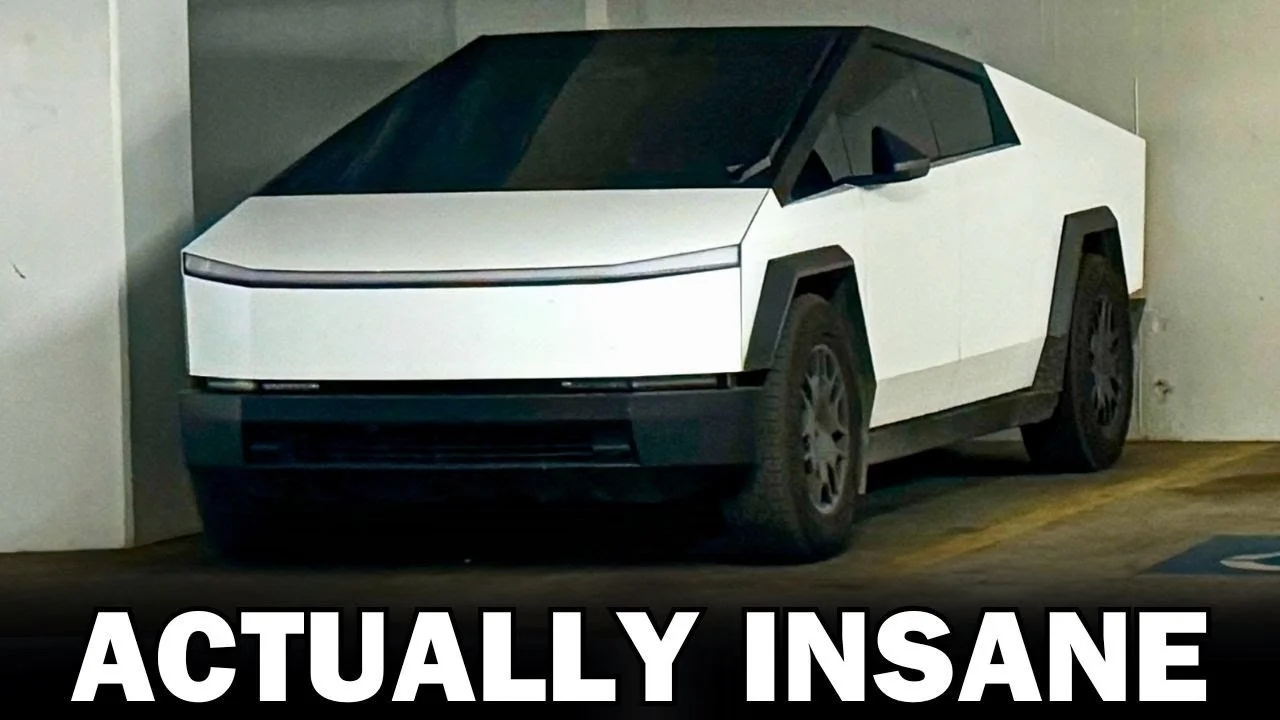
Tesla Cybertruck FSD v14.1.7 Rush Hour Drive
Tesla's FSD v14.1.7 shines in the Cybertruck, mastering complex urban and highway scenarios with human-like finesse, minimal interventions, and enhanced politeness in crowded areas.
Key Takeaways
Handles rush hour traffic fluidly, maintaining safe spacing and adapting to speeds above limits.
Navigates construction, merges, and exits confidently without overreactions.
Prioritizes pedestrians and yields assertively in busy zones like shopping districts.
Performs well in school zones and parking lots, though garage routing needs tweaks.
Mad Max mode delivers controlled aggression, blending speed with empathy for smoother drives.
In this full drive from North Austin to the Domain and back, the system demonstrates remarkable progress. It cruises at up to 85 mph on toll roads, flows with fast-moving Texas traffic, and adjusts dynamically to wind, debris warnings, and erratic drivers. Urban maneuvers stand out: stopping smoothly for crosswalks, weaving through school zones at reduced speeds, and managing four-way stops amid pedestrians. Highway behavior improves with middle-lane cruising and timely passes, avoiding left-lane camping. Challenges like hesitant right-on-red turns or suboptimal parking spots highlight areas for refinement, but overall, it feels like a reliable, attentive driver. This version pushes boundaries toward unsupervised autonomy, especially in varied conditions like sun glare and heavy congestion.
Elon Musk's $300B Economic Boost to US
Explore the staggering economic impact of innovative companies reshaping industries, delivering billions in value to workers, suppliers, and the government while driving forward-thinking manufacturing.
Key Takeaways
Over five years, $110 billion paid in global salaries, with 83% in the US at an average of $170,000 per employee—far above the national $38,000 average.
Total taxes from employees and companies reach $45 billion, including $31 billion in personal taxes, supporting national infrastructure.
$182 billion funneled to US suppliers, bolstering over 1,000 businesses and their extended networks.
Economic contribution equals $300 billion in five years, matching a state's GDP and employing 150,000 people, many gaining millionaire status through stock growth.
Leading US reindustrialization with revolutionary production in vehicles, space tech, energy, and AI, with future expansion set to multiply impacts.
This analysis highlights how these enterprises generate wealth from groundbreaking advancements, creating high-value jobs and supplier ecosystems that ripple through the economy. By accelerating future technologies today, they transform a service-based nation back into a manufacturing powerhouse, countering misconceptions about subsidies and workforce changes. Projected growth in AI integration and production scales promises even greater contributions ahead, emphasizing capitalism's potential when tied to innovation.
Elon Musk's Cyborg and AI Breakthroughs
Discover how cutting-edge innovations are bridging digital intelligence with physical reality, from brain implants enabling superhuman abilities to AI models rivaling global leaders.
Key Takeaways
Neuralink implants allow paralyzed individuals to communicate rapidly and control movements via brain signals.
Combining Neuralink with robotic limbs creates affordable cyborg enhancements for superior speed and strength.
xAI leverages real-time social data and massive compute power to accelerate toward advanced, multimodal AI.
Tesla achieves unprecedented manufacturing speeds, aiming for cars produced every five seconds through optimized factory designs.
Future AI could reach general intelligence, with plans for orbital data centers and interstellar knowledge preservation.
Explore the convergence of brain tech and robotics, where implants read motor signals to drive artificial limbs, granting abilities beyond natural human limits. xAI stands out with access to vast, live data streams and rapid hardware scaling, outpacing competitors in talent recruitment and innovation. Tesla's focus on efficient chip design and autonomous driving software promises safety levels far exceeding human drivers. Visions extend to creating an open-source galactic encyclopedia, ensuring humanity's knowledge endures across space, while massive solar-powered AI expansions hint at unlimited computational growth.
Karpathy Praises Tesla's FSD Breakthrough
Tesla's Full Self-Driving (FSD) advances are turning heads, with AI expert Andrej Karpathy spotlighting its game-changing capabilities in real-world driving and societal impact.
Key Takeaways
Tesla's FSD v13 excels in complex scenarios like tight lanes, construction zones, and multi-way stops without interventions.
Vision-only AI, trained on billions of miles of fleet data, outperforms traditional sensor-heavy approaches.
Self-driving tech promises to reduce parking needs, noise pollution, and human error while freeing up mental energy.
Scalable software updates enable rapid deployment across millions of vehicles, outpacing competitors.
Embodied AI extends beyond cars to robots, potentially disrupting labor markets and enabling post-scarcity economies.
Tesla's FSD represents a leap in AI-driven autonomy, relying on end-to-end neural networks fed with vast real-world data to mimic and surpass human driving. Unlike rivals using lidar and coded rules, Tesla's camera-based system handles nuanced situations effortlessly, from overtaking buses to parking autonomously. This scalability stems from over-the-air updates, positioning Tesla to dominate physical AI applications. Broader effects include urban redesign with fewer cars and lots, enhanced safety, and cheaper goods delivery. As AI integrates into robotics, it challenges traditional jobs, urging a rethink of human value in an automated world focused on existence over labor.
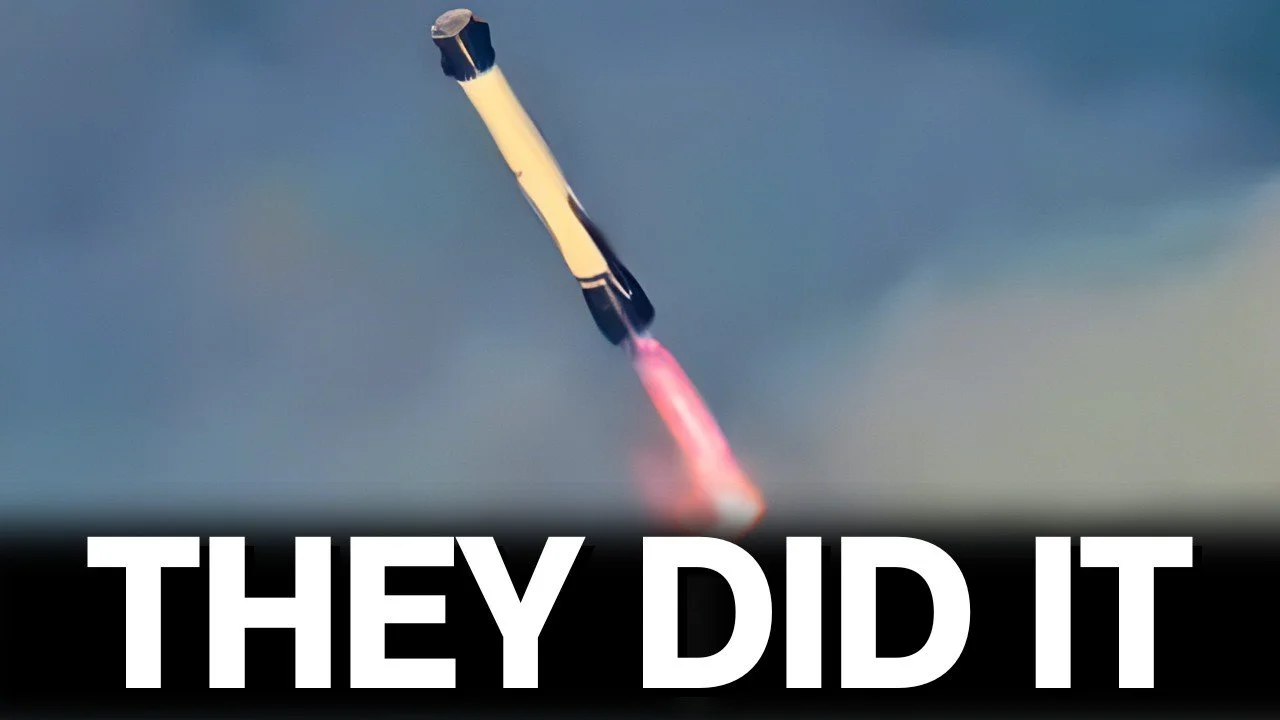
Blue Origin's Epic New Glenn Booster Landing
Experience the thrill of reusable rocket tech as Blue Origin's New Glenn aces key milestones, from supersonic ascent to precise orbital insertion, setting new standards in heavy-lift capabilities.
Key Takeaways
Achieved main engine cutoff and clean stage separation at around three minutes into flight.
Second stage ignited successfully, carrying NASA satellites toward Mars trajectory.
Fairing separation exposed payloads smoothly during ascent.
First stage executed reentry and landing burns for drone ship recovery.
Demonstrated advanced control with grid fins and reaction systems for guided descent.
This mission highlights New Glenn's robust design: seven BE-4 engines propelled the first stage through max dynamic pressure, while the second stage's BE-3U engines ensured stable thrust for payload deployment. The booster's return involved a flip maneuver at high altitude, followed by aerodynamic guidance to the Jacqueline drone ship offshore. Overall, it advances cost-effective, reusable launches for interplanetary exploration.
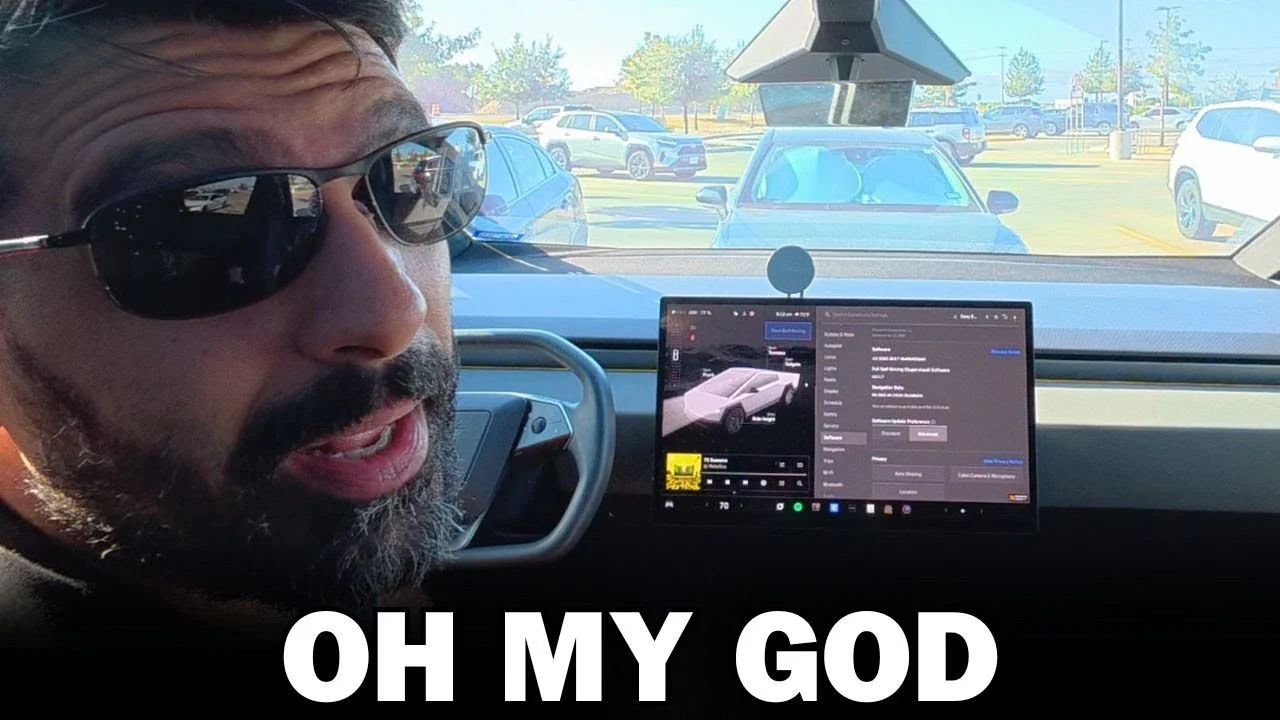
Tesla Cybertruck FSD 14.1 Mad Max Test Drive
Experience Tesla's latest Full Self-Driving advancements in action, from bold highway maneuvers to precise urban parking, signaling a shift toward unsupervised autonomy and transformative economics.
Key Takeaways
Mad Max mode enables assertive driving, optimizing speed and lane selection for faster trips.
Hardware 4-equipped Cybertruck handles construction zones, traffic, and right-on-red turns smoothly.
Unsupervised FSD could unlock robotaxi fleets, turning idle vehicles into revenue generators.
Tesla's production scale dwarfs competitors, potentially driving ride costs below $1 per mile.
Enhanced user experiences like personalized cabins position robotaxis as premium, driverless options.
This test showcases Tesla's FSD 14.1 on a Cybertruck during a 19-minute suburban loop, demonstrating confident handling of moderate traffic, flaggers, and cones without interventions. The system's parking feature—from lot exits to street-side stops—marks a leap in end-to-end autonomy. Looking ahead, software updates promise eyes-off operation, enabling vehicles to operate continuously, multiplying utility fivefold or more. Economically, this could deflate ride-hailing prices through supply surges or inflate profits via premium demand, with operational costs at 50 cents per mile yielding high margins. Tesla's vertical integration contrasts sharply with sensor-heavy rivals, facilitating rapid global expansion without HD maps or third-party dependencies.

Building a $1B Mental Health AI Empire
Discover groundbreaking advancements in AI-powered mental health tools that leverage eye movements and biometrics for accurate diagnostics, offering hope for millions struggling with conditions like PTSD and anxiety.
Key Takeaways
Eye-tracking via smartphone cameras measures pupil changes, blinks, and heart rate to detect mental states objectively.
Traditional diagnostics rely on flawed questionnaires; new tech enables precise severity monitoring over time.
Tech interfaces evolved from Google Glass inspired research into brain-linked eye metrics for broader applications.
Scaling diagnostics could subtype conditions, match treatments, and inform population health strategies.
Building such tech requires blending neuroscience, software, and business acumen for long-term impact.
This exploration dives into how eye-based AI decodes brain activity through stimuli responses, far beyond gaze tracking. By analyzing iris muscle activations tied to nervous system branches, it provides multimodal data—up to 45 metrics—for conditions often misdiagnosed. The vision extends to phenotyping for tailored therapies, potentially transforming insurance models and drug development, while emphasizing accessible tools for widespread adoption.
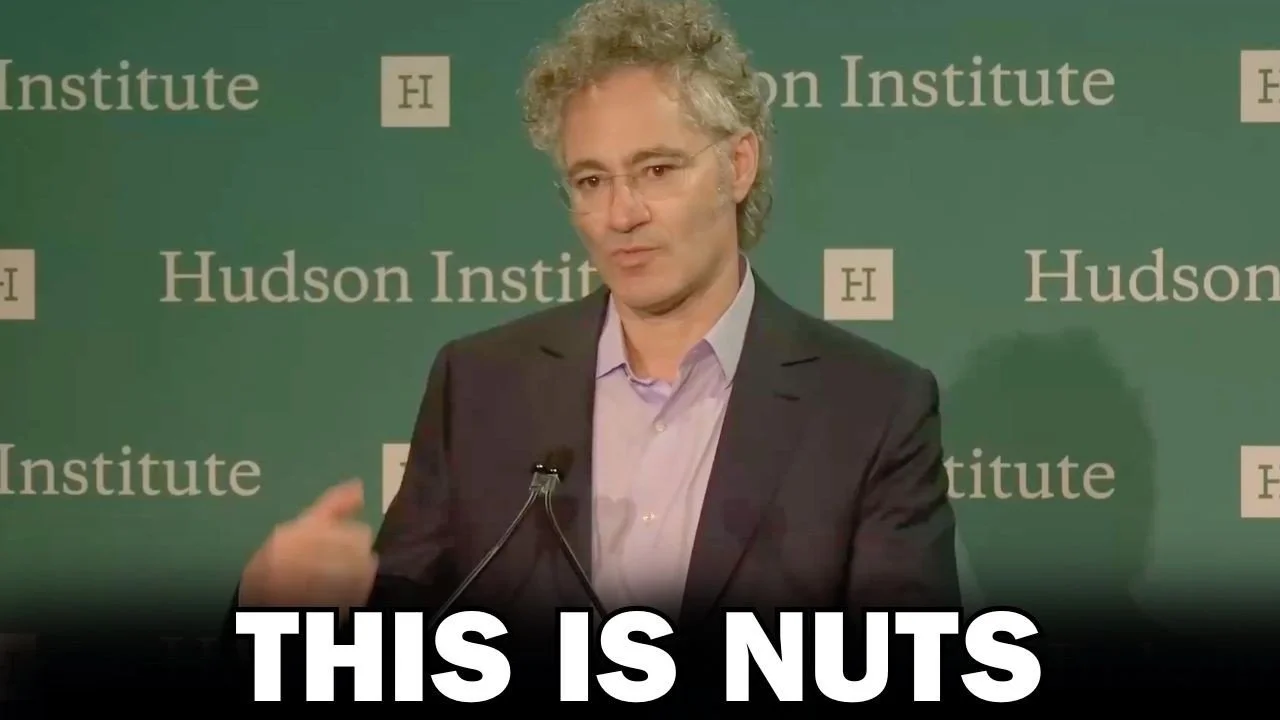
America's AI Dominance and Cultural Shift
AI's rapid evolution exposes unique American advantages, from inalienable rights grounding human superiority to vocational expertise fueling economic value—urging a pivot toward merit-based systems amid global competition.
Key Takeaways
AI underscores America's edge in tech, rooted in constitutional rights from a higher power, distinct from consensus-based European models.
Value creation shifts to specific, hands-on skills like building and protecting systems, leveraging AI to amplify working-class contributions.
Moral dilemmas arise as machines outperform cognitive tasks, challenging traditional human rights justifications beyond intellectual superiority.
Political turbulence stems from misaligned empathy, favoring elite interests while neglecting frontline workers facing real threats like fentanyl crises.
Meritocracy emerges as a revolutionary force, demanding organized defense of progressive values against radical influences undermining borders and labor.
In this exploration, AI's breakthroughs trace back to mathematical foundations from Europe and Russia, yet thrive uniquely in the U.S. due to concentrated resources in chips, ontology, and talent. This dominance addresses profound philosophical shifts: human rights, once tied to cognitive prowess, now rely on inherent, divinely granted principles to justify superiority over intelligent machines. Economically, AI devalues generic high-end labor, like nonprofit roles, while boosting specialized vocational work in fields like nursing, data protection, and military scripting—creating massive leverage and demanding societal empathy for those generating real value. Politically, this fuels shifts toward experienced leadership focused on functional governance, border security, and worker protection, rejecting open policies that erode labor worth. Globally, AI's dual-use nature pits the U.S. against China, with Europe lagging; success hinges on embracing meritocracy, self-reliance in tech building, and fighting internal radicals to maintain control over violence and rule of law.
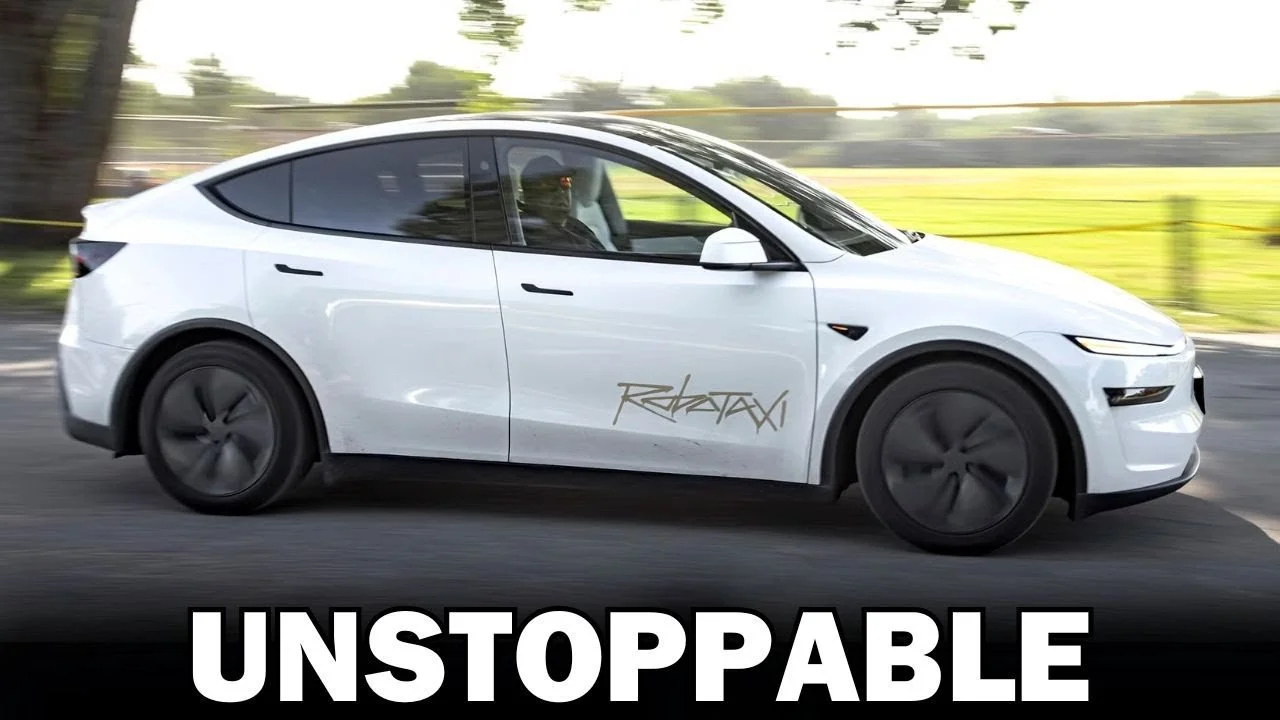
Tesla Robotaxi V14: Austin Ride Review
Dive into Tesla's Robotaxi testing V14 software in Austin's bustling streets, where self-driving tech navigates real-world chaos with growing confidence, slashing ride costs while exposing network growing pains.
Key Takeaways
V14 delivers assertive lane changes and detour handling, boosting passenger comfort amid unpredictable traffic.
Handles pedestrians and road work seamlessly, often outperforming human caution in tight spots.
Costs $15 for an 11-mile trip—half Uber's fare—but adds 20 minutes via local roads, skipping highways.
Wait times hit 11 minutes versus Uber's 2, signaling the need for fleet expansion to match demand.
Minor hesitations occur during decision points, yet overall safety and capability feel production-ready.
This ride from The Domain to Capital Factory clocks in at 11 miles, showcasing FSD V14's edge in urban navigation. The vehicle anticipates encroaching cars at four-way stops, yields politely to crosswalks, and threads through cone-lined detours without a hitch. A safety attendant rides shotgun, eyes on the road, as the system treats red-light pedestrian signals like stop signs for extra caution. Speed quirks pop up—like a brief 15 mph crawl or a 50 mph burst on a 40 limit—but assertive maneuvers, including sudden lane shifts, keep momentum. Post-ride, the car departs solo, creeping forward until clear, underscoring its independent prowess. At half the price of rivals, the tech tempts, but extended ETAs from surface-street routing and sparse availability curb mass appeal. Tesla's path forward? Ramp up vehicles and highway access for seamless integration.
Tesla EV Sales Surge Amid Tax Credit End
Electric vehicle adoption is accelerating fast, driven by proven cost savings and advanced autonomy features that outpace traditional cars.
Key Takeaways
EV consideration among new vehicle shoppers hit 59.7% in October, up despite tax credit removal.
94% of current EV owners plan to buy another, citing reliability and low maintenance.
Ownership costs for EVs are seen as much lower (60%) or slightly lower (26%) than gas vehicles.
Legacy automakers are scaling back EV production due to losses, boosting Tesla's market dominance.
Tesla aims for 5 million units annually by 2028, enhanced by sentient-like self-driving capabilities.
Diving deeper, recent data reveals robust interest in EVs, with "very likely" buyers reaching the highest point since early 2025. This resilience stems from real-world benefits like minimal upkeep—no oil changes, fewer breakdowns—making EVs a smarter long-term investment. As traditional manufacturers cite demand woes to justify cutbacks, the truth lies in their inability to produce profitably, eroding their gas car profits too. Tesla, however, is scaling aggressively, integrating AI-driven autonomy that handles complex scenarios seamlessly, solidifying its lead in a shifting auto landscape.
Farzad Q&A - 11/11/2025
Join Farzad and his community for an open, unscripted Q&A about technology, investing, business, and the future of innovation. In every session, Farzad answers community questions, breaks down complex topics with clarity, and shares practical insights on building, scaling, and thinking long-term in tech.
Tesla's $60/Day Rental Revolution
Tesla's rental initiative paves the way for subscription-based transport, leveraging self-driving advancements to outpace traditional automakers and boost vehicle utility.
Key Takeaways
$60/day rentals cover Model 3 or Y, including charging, maintenance, and insurance for 3-7 days.
Signals shift to flexible models: ride-hailing, short-term subscriptions, long-term plans, or ownership.
Self-driving enables cars to deliver themselves, reducing idle time and increasing revenue per vehicle.
Compares favorably to dealership-dependent rivals, with Tesla controlling sales, service, and fleet.
Potential expansions include package delivery and logistics partnerships, lowering costs via AI.
This program tests a broader ecosystem where vehicles operate autonomously, transforming from static assets to dynamic units. Users summon cars via app for temporary use, with options scaling from single rides to monthly subscriptions at $500-600. Unlike competitors reliant on human drivers or complex sensors, Tesla's software updates millions of vehicles, enabling scalable robotaxi networks. This maximizes revenue through diverse pricing—rides, rentals, subs, sales—while minimizing waste from parked inventory. Future integrations could handle overnight deliveries, displacing labor but exploding utility in transportation.