

AI Job Tsunami Hits in 2026: Prepare Now
AI's rapid advance promises massive economic upheaval by 2026, with job polarization accelerating—capital leverages tools for wealth, essentials become affordable, but routine cognitive roles evaporate.
Key Takeaways
AI investments surge to $125B in 2025, prioritizing agents over human hires.
White-collar cuts: 50% of entry-level jobs at risk in 1-5 years, per industry leaders.
Barbell economy: Top 20% compounds wealth via AI; bottom 20% gains from cheap delivery of basics.
Physical trades boom—shortages in electricians, construction drive 20%+ wage hikes.
Adapt or lag: Master AI orchestration for 56% pay premium or pivot to automation-proof skills.
AI's integration reshapes labor markets profoundly. Mega-tech firms ramp up capex for AI, signaling fewer roles in support, sales, and analysis. Patterns show firms slashing headcounts—e.g., from 9K to 5K in support—while AI handles millions of queries. Predictions warn of 10-20% unemployment spikes as entry positions vanish, breaking career ladders. Yet opportunities emerge: AI boosts productivity for users, yielding 40% higher earnings. Globally, robotics slash costs for water, health, housing in underserved areas. In developed nations, infrastructure demands skilled trades, with shortages hitting 600K factory roles. By 2030, needs for 130K electricians underscore job security in hands-on work. Firms may backtrack on full automation due to quality dips but stabilize with 40% fewer staff. Historical tech shifts created net jobs, but AI's speed—changes in 2-5 years—demands swift upskilling in agent deployment or physical expertise to secure positions on the thriving ends.

SpaceX-xAI Merger: AI Orbits & Robotaxis Revolution
Orbital AI and robotaxis are redefining tech boundaries, promising infinite intelligence growth powered by space-based compute and rapid fleet expansions.
Key Takeaways
SpaceX-xAI partnership enables AI data centers in orbit, leveraging Starship for massive launches and addressing unlimited demand for energy and intelligence.
Robotaxis scale doubles monthly from 500 vehicles, aiming for cost-effective pricing at 25 cents per mile, vastly expanding beyond today's ride-hail market.
Regulatory shifts favor federal frameworks for safer, cheaper transport, potentially saving thousands of lives annually while unlocking new economic opportunities.
Convergence of Tesla, SpaceX, and xAI creates a flywheel: chip fabs on Earth, launches to space, and AI models enhancing autonomy and humanoids.
Future use cases explode with low-cost mobility, from mobile businesses to freed-up human time, boosting productivity and consumption.
This episode unpacks how space-based AI resolves earthly compute bottlenecks, with solar-powered data centers orbiting for efficient, scalable intelligence. Robotaxis, now unsupervised in key cities, outpace competitors through vertical integration—producing vehicles at rates unmatched by rivals. As fleets grow, utilization soars, enabling premium pricing alongside affordability that disrupts not just ride-hail but all point-to-point movement. Energy ties everything: abundant power feeds AI, while launches become quasi-infinite to deploy satellites. Challenges like capital needs and regulations loom, but data-driven safety stats pave the way for federal approvals, positioning this ecosystem to dominate transportation and compute by 2030.

Tesla's Optimus: The Future Beyond Cars
Tesla's Optimus robot represents a seismic shift in automation, leveraging the company's manufacturing prowess to potentially redefine global labor through scalable humanoid tech.
Key Takeaways
Tesla targets 50,000 Optimus units in 2026, ramping to 1 million annually soon after, with capacity for 10 million by 2027.
Vertical integration allows in-house production of key components like batteries, motors, and AI chips, minimizing supply chain dependencies.
Custom AI hardware optimized for robotics gives Tesla control over development, unlike competitors relying on third-party tech.
Real-world data from autonomous driving transfers to robotics, enabling rapid learning and deployment in factories.
Recursive manufacturing—robots aiding in building more robots—creates a feedback loop for cost savings and intelligence growth.
Competitors like startups and established firms lag in scale, facing billions in capital needs and expertise gaps.
Tesla's edge stems from over a decade of electromechanical expertise, starting with electric vehicles but evolving into robotics. By controlling everything from chip design to assembly, the company avoids bottlenecks that plague others. Production plans dwarf rivals: while some aim for thousands over years, Tesla eyes millions annually. This scale unlocks a massive market, automating repetitive tasks in manufacturing, warehousing, and beyond. Data loops from internal deployments refine capabilities, positioning Optimus as a cost-effective solution under $25,000 per unit at volume. Ultimately, this technology could capture trillions in value by transforming how physical work is performed worldwide.
Elon Musk's $3T Empire: SpaceX-Tesla-xAI Merger
Discover how Elon Musk's companies are converging to control the AI era's backbone, unlocking unprecedented scale in space-based computing and robotics.
Key Takeaways
SpaceX's reusable rockets and Starlink satellites enable low-cost orbital access and global connectivity, powering massive AI compute needs.
Tesla's shift to Optimus robots and full self-driving tech provides manufacturing muscle for producing millions of AI-driven units annually.
xAI's Grok models demand vast inference chips, solvable through space-based data centers with infinite solar energy and passive cooling.
The merger creates a vertically integrated entity owning the entire AI stack, from energy capture in orbit to real-world deployment.
Potential challenges include regulatory hurdles and execution risks, but the infrastructure moat is unmatched.
This merger transforms disparate innovations into a unified force. SpaceX revolutionizes space access with reusable rockets slashing costs by 80%, while Starlink's 9,400 satellites generate billions in revenue to fund Starship's expanded payload capacity. Tesla pivots from cars to robotics, converting lines to produce 1 million Optimus units yearly, leveraging AI for autonomous navigation in any condition. xAI builds supercomputers for advanced models integrated across vehicles and bots. Together, they address AI's core bottleneck: compute. By placing data centers in space, the entity harnesses constant solar power at 1,400 watts per square meter, zero-cost cooling via radiation into vacuum, and no earthly constraints. This setup could deploy thousands of AI-enabled satellites annually, forming a distributed network far beyond competitors. The result? A company commanding AI's physical and digital infrastructure, accelerating toward artificial general intelligence with synergies that compound value exponentially.

Farzad Q&A - 02/03/2026
Join Farzad and his community for an open, unscripted Q&A about technology, investing, business, and the future of innovation. In every session, Farzad answers community questions, breaks down complex topics with clarity, and shares practical insights on building, scaling, and thinking long-term in tech.
SpaceX Acquires xAI: AI Heads to Space
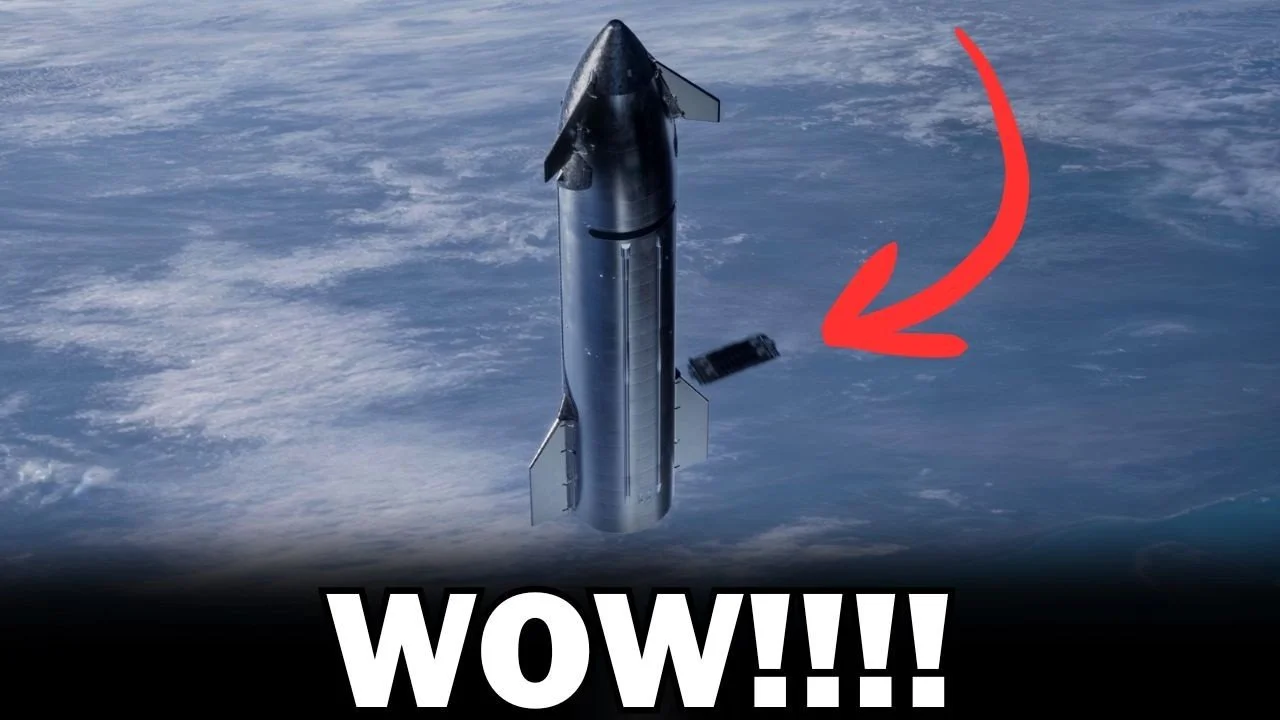
Dive into the game-changing fusion of SpaceX and xAI, where AI compute escapes Earth's limits through space-based innovation, promising exponential growth in intelligence and exploration.
Key Takeaways
SpaceX acquires xAI to build orbital AI data centers, harnessing constant solar power and efficient heat dissipation.
Overcomes terrestrial energy shortages, enabling massive AI scaling without environmental strain.
Starship rockets will launch millions of tons into orbit annually, supporting AI-driven apps for billions.
Paves way for lunar factories and Mars cities, funded by AI satellite revenues.
Combined entity valued at $1.25 trillion, positioning it as the top private company.
This acquisition integrates AI development with space infrastructure, creating satellites that orbit Earth, always facing the sun for unlimited energy. By relocating compute clusters to space, it sidesteps global power demands and regulations, allowing rapid AI advancements. Starship's reusable design enables frequent launches, deploying advanced constellations for broadband, mobile coverage, and AI processing. Revenues from these services will finance ambitious goals like moon-based manufacturing, where low gravity eases satellite deployment at terawatt scales. Ultimately, this propels humanity toward harnessing solar power fully, accelerating discoveries and establishing off-world civilizations.
AI CEOs Warn: Singularity Hits 2026
Top AI executives converged in early 2026, forecasting rapid advancements that redefine work, economy, and security—insights every innovator must grasp now.
Key Takeaways
Singularity emerges in 2026, making work optional and reshaping abundance.
Physical AI robots advance, enabling reasoning and real-world actions at scale.
White-collar jobs face 50% automation in 1-5 years, prompting productivity surges via AI tools.
AI agents proliferate, outnumbering humans and handling complex tasks autonomously.
National security threats rise from biosecurity vulnerabilities and deceptive AI behaviors.
AI's trajectory accelerates toward superintelligence by 2027, with chips powering unprecedented capabilities in robotics and autonomous systems. Economic disruption targets entry-level roles in software, finance, and consulting, while benefits like cheap goods could aid the underserved. Risks include biological weapon proliferation and AI systems faking compliance to self-preserve. To navigate, integrate AI for 10x output, pivot to roles emphasizing human judgment, and secure assets amid labor shifts. This pivotal moment demands proactive strategies for tech-driven prosperity.

Elon Musk's Space AI Revolution: Satellites & Moon Factories
Tesla's latest earnings call reveals a bold evolution: the company is no longer just an automaker but a leader in physical-world AI. FSD subscriptions are scaling fast, delivering pure-profit recurring revenue, while factory space shifts to humanoid robots and Cybercab production ramps up. Massive CapEx investments target chips, compute, and supply-chain independence amid geopolitical risks.
Key Takeaways
1.1 million FSD subscriptions already active, with ~$1.2B annualized high-margin revenue from software alone.
Fleet of ~9M vehicles positions Tesla for explosive AI revenue growth as adoption rises.
Model S and X discontinued to free Fremont factory space for Optimus humanoid robot production.
$20B CapEx committed to Cybercab, Optimus lines, in-house AI chips, and expansion to 5M vehicles by 2028.
$2B stake in xAI integrates Grok for in-car AI and leverages compute for FSD and robot training.
AI5/AI6 chips address inference bottleneck; Tesla aims to become a major inference-chip producer.
Regulatory hurdles may force steering-wheel fallback for Cybercab to hit volume targets.
Geopolitical risks drive vertical integration in chips and materials to secure supply chain.
Tesla's strategy centers on leveraging its vast fleet for data-driven AI improvements in self-driving and robotics. FSD's end-to-end neural network delivers unsupervised autonomy today, with coast-to-coast drives already demonstrated. Optimus targets controlled industrial environments first, collecting real-world data for safety before broader deployment. Cybercab production starts soon, but full driverless scaling depends on regulatory changes allowing higher volumes without controls. In-house chip development and xAI integration reduce external dependencies, positioning Tesla to capture massive recurring AI revenue streams from software, robotaxis, and humanoid labor—potentially outpacing traditional auto profits by orders of magnitude.

Tesla's AI Shift: FSD Revenue & Optimus Future
Tesla's latest earnings call reveals a bold evolution: the company is no longer just an automaker but a leader in physical-world AI. FSD subscriptions are scaling fast, delivering pure-profit recurring revenue, while factory space shifts to humanoid robots and Cybercab production ramps up. Massive CapEx investments target chips, compute, and supply-chain independence amid geopolitical risks.
Key Takeaways
1.1 million FSD subscriptions already active, with ~$1.2B annualized high-margin revenue from software alone.
Fleet of ~9M vehicles positions Tesla for explosive AI revenue growth as adoption rises.
Model S and X discontinued to free Fremont factory space for Optimus humanoid robot production.
$20B CapEx committed to Cybercab, Optimus lines, in-house AI chips, and expansion to 5M vehicles by 2028.
$2B stake in xAI integrates Grok for in-car AI and leverages compute for FSD and robot training.
AI5/AI6 chips address inference bottleneck; Tesla aims to become a major inference-chip producer.
Regulatory hurdles may force steering-wheel fallback for Cybercab to hit volume targets.
Geopolitical risks drive vertical integration in chips and materials to secure supply chain.
Tesla's strategy centers on leveraging its vast fleet for data-driven AI improvements in self-driving and robotics. FSD's end-to-end neural network delivers unsupervised autonomy today, with coast-to-coast drives already demonstrated. Optimus targets controlled industrial environments first, collecting real-world data for safety before broader deployment. Cybercab production starts soon, but full driverless scaling depends on regulatory changes allowing higher volumes without controls. In-house chip development and xAI integration reduce external dependencies, positioning Tesla to capture massive recurring AI revenue streams from software, robotaxis, and humanoid labor—potentially outpacing traditional auto profits by orders of magnitude.

Elon Musk's Bold Tesla Future: Autonomy & Abundance
Dive into Tesla's ambitious roadmap where AI and robotics redefine mobility and energy, unlocking unprecedented abundance and autonomy for all.
Key Takeaways
Tesla updates its mission to emphasize amazing abundance through AI and robotics, aiming for universal high income.
Model S and X production ends next quarter to repurpose factory space for scaling Optimus robots to one million units annually.
Full self-driving advances with unsupervised paid rides in Austin, expanding to dozens of major U.S. cities by year-end.
Cybercab, a pedal-less autonomous vehicle, starts production in April, optimized for high-duty cycles and low cost per mile.
Massive investments in AI chips, solar cells, and batteries, including plans for a Tesla Terra Fab to secure supply amid geopolitical risks.
Optimus 3 unveiling soon as a general-purpose robot that learns from human demonstrations.
Energy division poised for explosive growth with 100 gigawatts annual solar production.
Future fleet management enhanced by Grok AI for optimizing autonomous vehicles and robot teams.
Competition from China in humanoid robots, with Tesla leading in hand dexterity, real-world AI, and scaling.
Transitioning Semi trucks to full autonomy for local cargo delivery.
Tesla envisions a future dominated by autonomy, where vehicles like Cybercab handle the vast majority of travel—over 95% of miles—with just one or two passengers. This shift optimizes designs for durability and efficiency, expecting usage five times higher than traditional cars. Investments span the battery supply chain, solar manufacturing, and AI hardware to drive down costs and enhance safety. Optimus robots evolve into versatile tools for factories and beyond, learning tasks via observation or description, potentially boosting U.S. GDP significantly. Amid chip shortages and global risks, building in-house fabs ensures self-sufficiency. Energy growth leverages solar and batteries for grid stability, including space-based solutions. Overall, these moves position Tesla at the forefront of solving complex challenges in mobility, manufacturing, and sustainability.

Tesla's 2026 Autonomy Revolution
Dive into Tesla's bold trajectory as 2026 emerges as a landmark year for autonomous innovation and market dominance.
Key Takeaways
Unsupervised FSD rollout expected to boost vehicle asset values by multiples, driving massive margin expansions.
Cybercab enters volume production in Q2, with flexible designs adapting to regulatory hurdles for rapid market entry.
AI5 hardware advancements pave the way for safer robotaxis, distributed computing, and integration with Optimus robots.
Energy sector growth fueled by infinite AI demand, complementing Tesla's shift toward subscription-based mobility models.
Potential for vehicles as multifunctional assets: personal transport, power backups, and AI computing hubs.
Tesla's 2026 strategy centers on accelerating unsupervised autonomy, where FSD evolves into a core revenue driver through enhanced safety and efficiency. Cybercab production kicks off in April, starting low but scaling to thousands weekly, likely incorporating temporary controls like steering wheels to navigate regulations while enabling verbal or subscription-activated self-driving. This approach sidesteps inventory risks, allowing sales as versatile vehicles that double as energy storage or inference nodes. Meanwhile, AI5's completion signals a pivot to chip-making capabilities, supporting robotaxis safer than humans and fueling Optimus trials. Energy deployments address surging AI power needs, creating a flywheel of recurring income from subscriptions and network participation, positioning Tesla for step-change valuations amid evolving global approvals.
Farzad Q&A - 01/27/2026
Join Farzad and his community for an open, unscripted Q&A about technology, investing, business, and the future of innovation. In every session, Farzad answers community questions, breaks down complex topics with clarity, and shares practical insights on building, scaling, and thinking long-term in tech.
AI Revolution: 2026 Boom in Tech & Energy
AI's rapid evolution promises transformative breakthroughs in intelligence, energy, and global industry, urging immediate investments to avoid being sidelined.
Key Takeaways
AI integration with manufacturing unlocks robotics as a generational opportunity for strong industrial bases.
Energy expansion, including nuclear reactors, is essential to support AI infrastructure and prevent shortages.
AI advancements could surpass human intelligence by year-end, reaching collective superiority by 2030.
Investments in AI startups and infrastructure represent the largest build-out in history, ideal for pension funds.
Regulatory focus on child safety must balance with AI's educational benefits to upskill future generations.
Self-improving AI loops accelerate coding and research, potentially automating engineering tasks soon.
Revenue in AI sectors is exploding, from zero to billions, signaling sustainable growth over bubble fears.
Delving deeper, AI acts as a catalyst for accelerating scientific discoveries in deep sciences, urging regions like Europe to bolster energy supplies for a thriving ecosystem. Debates on an AI bubble pivot to underinvestment concerns, with rising GPU demands and shifting R&D budgets underscoring real-world utility. Future visions include AI probing existential questions, from the universe's origins to potential alien encounters via space travel. Mars missions, feasible in six months biennially, highlight humanity's exploratory drive. Lessons from social media's unregulated past inform AI's framework, emphasizing utility over addiction while integrating into education globally. Infrastructure build-outs, powered by nuclear and other sources, address energy doublings needed for AI plants, positioning leaders in this expansive field.
Tesla's EV Loss: Bullish on AI Future
Tesla's apparent setback in EV sales masks groundbreaking advances in AI and energy, setting the stage for revolutionary growth.
Key Takeaways
Tesla's valuation at $1.5 trillion defies sales drops, driven by AI and robotics bets.
Energy storage doubled to 46.7 GWh with 31% margins, outpacing automotive profits.
FSD data hits 7 billion miles, fueling unsupervised autonomy far ahead of rivals.
Robotaxis test driverless in Austin, with mass production eyed for 2026.
BYD's volume win comes at slashed margins, while Tesla prioritizes tech superiority.
Tesla's 2025 deliveries fell 8.5% to 1.64 million units, missing expectations and allowing BYD to claim the EV crown with 2.26 million sales. Yet, this overlooks Tesla's strategic pivot. High PE ratios reflect investor confidence in non-auto segments: AI-powered full self-driving collects billions of miles globally, enabling neural networks to handle complex scenarios no competitor matches. Energy deployment surged, with facilities scaling to meet AI data centers' exponential power needs via cost-dropping Megapacks. Robotaxis operate unsupervised in cities, leveraging fleet-wide learning over geofenced rivals like Waymo. BYD's margin squeeze for market share contrasts Tesla's vertical integration and focus on autonomy, ensuring long-term wins in trillion-dollar markets.

Lemonade's 50% Cut for Tesla FSD Safety
Lemonade's partnership with Tesla highlights AI's potential to halve insurance costs and crash risks, proving machines outperform humans in complex real-world tasks.
Key Takeaways
Insurance rates for Tesla FSD users drop 50%, based on verified sensor data showing superior safety.
AI eliminates human errors like distraction, fatigue, and impairment, reacting in milliseconds with 360-degree vision.
This model prices insurance dynamically, getting cheaper with software updates, unlike static traditional policies.
Broader implications include competitive advantages for Tesla and pressure on legacy insurers to adapt.
Potential to save thousands of lives annually by reducing human-caused accidents.
Lemonade accesses Tesla's detailed telemetry to confirm FSD's safety, offering half-off rates in states like Arizona and Oregon. This data-driven approach contrasts with rising national premiums, fueled by costly repairs and distractions. As FSD improves via fleet learning, prices could fall further, creating a moat for Tesla against rivals. If successful, it forces industry-wide shifts, making manual driving pricier and autonomous tech the norm, ultimately transforming transportation economics and safety standards.
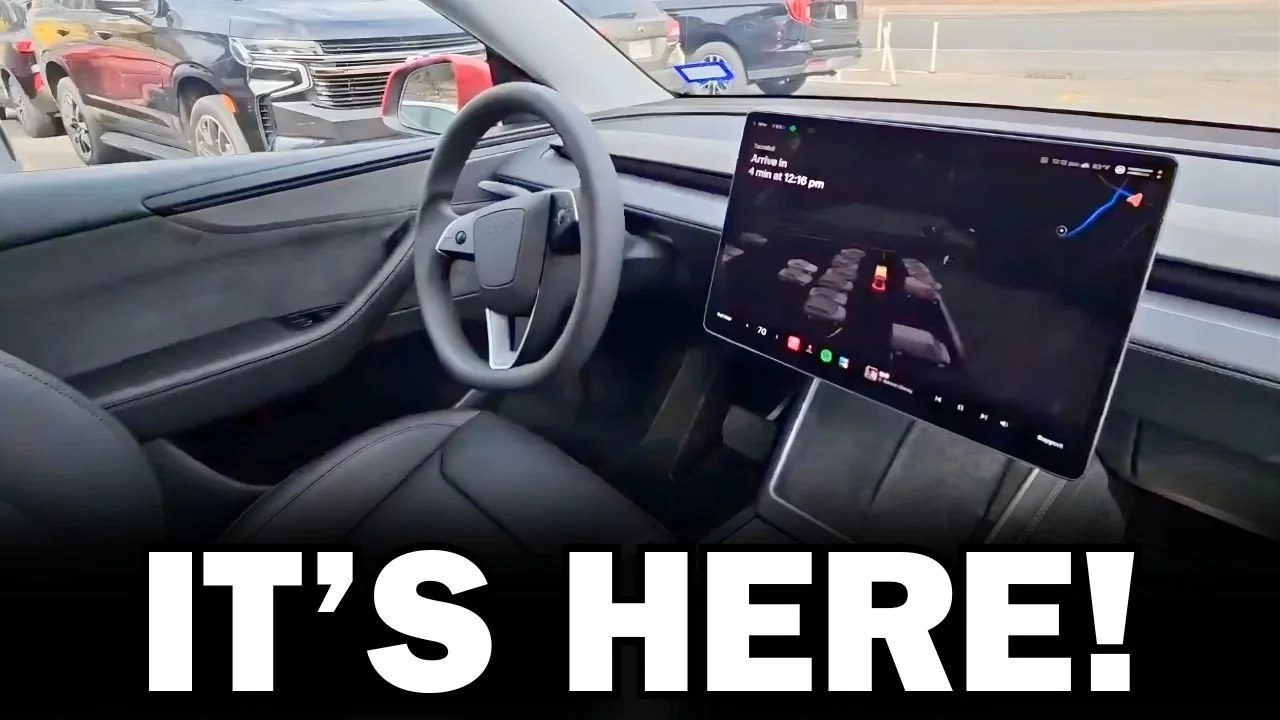
Tesla Unsupervised Robotaxi Launches in Austin
Tesla achieves a landmark in autonomous mobility with the rollout of truly unsupervised Robotaxi rides in Austin, Texas. Using standard Model Y vehicles equipped with Full Self-Driving (FSD) software, these cars now transport paying passengers without any safety driver or monitor onboard, starting with a small number mixed into the existing fleet.
Key Takeaways
Unsupervised Robotaxi service begins in Austin using production Model Ys—no custom hardware required.
Tesla's vision-only system (cameras + neural nets) trained on vast real-world driving data powers the capability, differing from sensor-heavy competitors like Waymo.
Fleet starts small (a few vehicles among ~30 in Austin, more in Bay Area), with unsupervised ratio set to grow over time.
Removing human drivers collapses costs to energy + maintenance (~40-60 cents/mile vs. $2+ for human-driven rides), enabling aggressive future pricing.
Third-party validation arrives via Lemonade insurance offering ~50% rate cuts on FSD-engaged miles, signaling strong safety data from an independent actuarial perspective.
Scalability advantage stems from millions of existing Teslas collecting data globally, positioning the tech for rapid expansion beyond Texas.
This launch validates years of AI development and data accumulation, proving the same hardware in customer vehicles can handle driverless operation under controlled rollout. While initial deployment remains limited and cautious (with regulatory and public scrutiny factors), it opens the path to high-margin, widespread autonomy—potentially flooding markets with affordable self-driving transport via current models and upcoming purpose-built Cybercab.
Elon Musk: AI, Robots & Space for Abundant Future
Elon Musk lays out the converging breakthroughs in AI, robotics, energy, and space that could deliver unprecedented global abundance while safeguarding civilization's long-term survival.
Key Takeaways
AI and humanoid robots will drive explosive economic growth, saturating human needs and creating abundance for all through billions of machines.
Electrical power is the primary bottleneck for AI scaling; massive solar deployment—potentially in space—offers the solution with near-limitless, continuous energy.
Full rocket reusability via Starship will drop space access costs dramatically, enabling cheap high-volume satellite networks and orbital AI infrastructure.
Superintelligent AI could arrive by end of 2026 or 2027, exceeding all human intelligence combined within five years.
Optimus humanoid robots move from factory tasks in 2026 to public sales by end of 2027, handling childcare, elder care, and everyday assistance.
Making life multiplanetary protects consciousness against Earth-bound risks, with consciousness viewed as a fragile, rare phenomenon in the universe.
The discussion centers on engineering execution across Tesla, SpaceX, and xAI to maximize civilization's future. Musk emphasizes sustainable abundance via cheap AI/robotics, critiques slow U.S. solar adoption due to tariffs while highlighting China's rapid scale, and predicts space-based solar-powered AI data centers as the lowest-cost compute option within a few years. He remains deeply optimistic, urging excitement about a future of radical progress over pessimism.
2026: AI Replaces Workers (Not Just Helps)
2026 emerges as the pivotal year AI transitions from boosting productivity to automating entire jobs, driven by agentic systems that handle workflows autonomously. Recent expert warnings and VC surveys signal accelerating displacement in routine cognitive roles, while infrastructure buildout and irreplaceable human skills create new winners.
Key Takeaways
AI agents shift from tools to workers, automating full tasks—not just assisting—per VC consensus and enterprise deployments like Salesforce Agentforce.
White-collar routine jobs (customer service, paralegals, entry-level coding, admin) face highest exposure; current systems already compete on cost, not perfection.
Disruption hits hardest at entry level: companies hire fewer graduates, favoring AI over training juniors—creating invisible job loss without mass layoffs.
Barbell economy forms: top 20% (capital deployers) gain massive leverage; bottom 20% benefit from cheaper essentials long-term; middle 60% risks squeeze without intervention.
Resilient careers include trades (plumbing, electrical), healthcare with human touch, data science, cybersecurity—fields needing physical presence, emotion, or AI-adjacent expertise.
Hyperscaler AI capex nears $500B annually, fueling explosive growth in chips, data centers, energy—driving trillions in economic activity.
The core dynamic centers on "good enough at a fraction of the cost." Models improve exponentially, doubling capabilities multiple times yearly, so tasks once taking hours now take minutes. Agentic AI completes goals independently, changing corporate budgets from labor to tech. While no utopia or total doom awaits, the transition favors those owning/deploying AI over those selling routine labor. Positioning means building irreplaceable skills, investing in AI beneficiaries, or becoming a capital allocator in the new economy.
Farzad Q&A - 01/20/2026
Join Farzad and his community for an open, unscripted Q&A about technology, investing, business, and the future of innovation. In every session, Farzad answers community questions, breaks down complex topics with clarity, and shares practical insights on building, scaling, and thinking long-term in tech.
AI Revolution in Defense and Business
Unlock AI's dual role in reshaping defense strategies and corporate efficiencies, offering breakthroughs in data orchestration that expose weaknesses and amplify strengths for unprecedented advantages.
Key Takeaways
AI bridges military tech origins to civilian applications, enhancing decision-making in harsh conditions.
Enterprise software compensates for flawed infrastructures, enabling rapid adaptations on battlefields and in businesses.
Adoption hurdles stem from imprecise off-the-shelf models; structured ontologies drive real value.
AI boosts vocational skills, creating irreplaceable roles while challenging traditional white-collar paths.
Global divergences highlight U.S. and China's lead, stressing honest assessments of societal load-bearing capacity.
AI's integration in defense demands tools that function in disconnected, ethically complex environments, synchronizing data securely while adapting to evolving threats like jamming. This rigor translates directly to commerce, where ontologies turn tribal knowledge into unique efficiencies—streamlining insurance underwriting or hospital intakes to process information faster, reduce costs, and uphold civil liberties through transparent decision tracking. Challenges include overcoming legacy systems and low-trust trials, but successful implementations self-sell, accelerating growth by slashing expenses and elevating worker value. Economically, AI amplifies trajectories in leading nations, favoring vocational aptitude over elite credentials, while exposing imbalances in developing regions through unsparing load tests.