
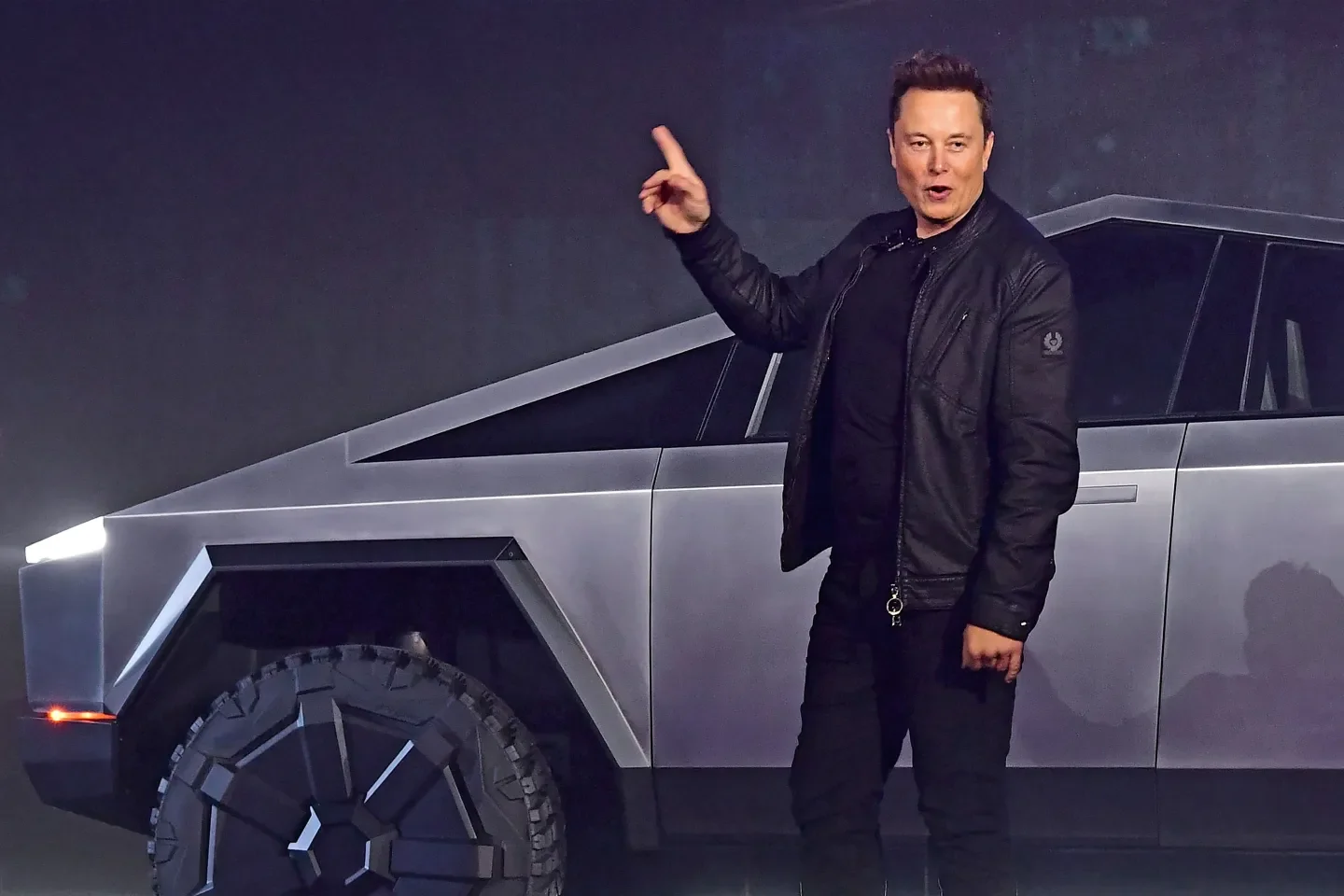
The Trillion-Dollar Threshold That Changes Little—and Everything
Why Elon Musk’s valuation milestone aligns with Gilded Age peaks in real terms while concentrating unmatched leverage over space, connectivity, and physical AI.
Elon Musk’s net worth crossing into trillion-dollar territory stems from equity stakes in companies that survived near-collapse and scaled into dominant positions across electric vehicles, reusable rocketry, satellite broadband, and AI-driven automation. The number itself functions mostly as a market-assigned price tag on shares rather than accessible cash, and when measured against the full size of the U.S. economy it sits at roughly the same slice once commanded by the most powerful industrialists of the early twentieth century. At the same time, operational control over launch capacity, global internet infrastructure, frontier AI models, and large-scale robotics data gives one individual influence over foundational technologies that no private citizen has previously held at this breadth.
Key Takeaways
Net worth in this range equals shares outstanding multiplied by current market price, with less than one-tenth of one percent typically held as liquid cash.
The fairest historical comparison uses wealth as a percentage of total economic output; Musk’s position lands near three percent of today’s U.S. economy, comparable to John D. Rockefeller’s roughly two-to-three percent share in 1913.
Tesla and SpaceX both approached bankruptcy in late 2008; concentrated founder ownership and willingness to risk remaining capital allowed both to reach leadership in autonomy, energy storage, reusable orbital launch, and satellite internet.
An IPO converts private valuation guesses into continuous public market pricing for shares already owned, without creating new assets for the holder.
Ultra-high-net-worth individuals commonly borrow against pledged stock at low interest rather than sell, since loans do not count as taxable income; proceeds have largely flowed back into the same companies.
Federal Reserve data show the top one percent of households now hold 32 percent of U.S. wealth and the top 0.1 percent hold around 14 percent—levels higher than at any point since tracking began in 1989.
Proposals for annual wealth taxes face practical hurdles demonstrated by multiple European countries that later repealed similar levies after they delivered minimal revenue, proved difficult to administer on private assets, and prompted capital relocation.
SpaceX currently accounts for the majority of mass placed into orbit by humanity in a given year, while Starlink serves ten million subscribers across more than one hundred countries and has proven decisive for connectivity in active conflicts.
Tesla’s real-world driving data and AI training pipeline support both autonomous vehicles without steering wheels or pedals and the development of humanoid robots intended for general physical tasks.
Continued execution on satellite mega-constellations, lunar and Mars infrastructure, high-volume robotaxis, and tens of millions of humanoid robots could scale Musk’s equity value well beyond current levels if those ventures succeed at planned magnitude.
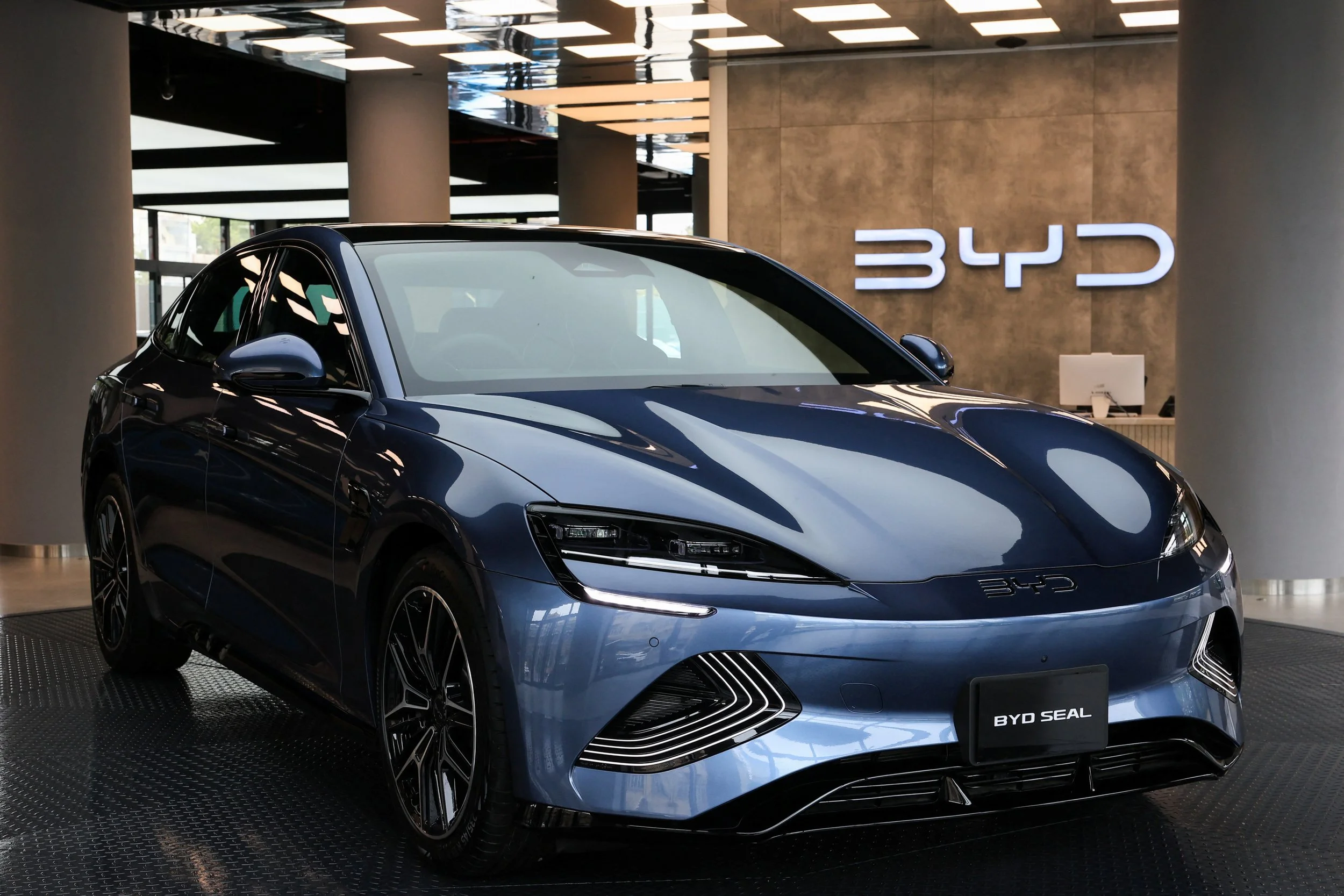
Tesla Just Got "Humiliated" – And It's the Best Thing That Could Have Happened
$1.5 trillion valuation after a second straight year of declining deliveries proves the market sees what headlines refuse to
Tesla delivered 1.64 million vehicles in 2025 – down 8.5% from 2024 – while BYD sold 2.26 million pure EVs, up 28%. The crown changed hands again. Headlines screamed defeat. Yet the stock ended the year up 11% at a $1.5 trillion market cap and a P/E of 279 – a multiple that makes Nvidia look cheap. Either every institution on Earth has lost its mind, or the market is aggressively pricing something that has almost nothing to do with selling cars.
It’s the second one.
Key Takeaways
Car deliveries fell 8.5% YoY while the stock rose 11% and hit $1.5 trillion – the highest P/E in big tech
Energy storage deployments more than doubled to 46.7 GWh with Q4 gross margins of 31.4% – nearly 2× the automotive margin
7+ billion FSD miles driven, on track for 10 billion by mid-2026 – no competitor is within an order of magnitude
Unsupervised robotaxi testing (zero humans in the front seat) is live in Austin today, expanding to multiple cities in 2026
Cybercab (purpose-built, no wheel/pedals) mass production still targeted for April 2026 – on schedule so far
BYD unit volume is up but profits are down 30% YoY and gross margins collapsed to ~16% – classic race-to-the-bottom playbook
Tesla is intentionally walking away from the volume game to dominate autonomy, robotics, and grid-scale energy instead

China's Manufacturing Muscle: The Battle for Tech Supremacy in a Divided World
Why the US must rethink dependencies on batteries, EVs, and rare earths before it's too late.
China now produces one-third of the world's manufactured goods, a figure projected to hit 50% by 2030. This dominance extends into electric vehicles, batteries, and critical materials that power everything from drones to AI data centers. As tensions escalate, the US faces a pivotal choice: deepen codependence or pursue isolation to safeguard national security and innovation.
Key Takeaways
China controls 90% of global magnet production and dominates battery supply chains, giving it leverage over EVs, renewable energy, and next-gen tech like humanoid robots and fighter jets.
EV sales in China have exploded from 5% of the market in 2020 to 50% this year, reaching 13 million units annually—driven by subsidies and a shift to domestic brands.
The US lags 10-25 years behind in battery and magnet tech; without rapid investment, assembly plants could shut down due to restricted access to materials.
AI and robotics amplify risks: cheap, Chinese-made humanoid robots could pose spying threats in homes and factories, while energy-hungry data centers rely on China's solar and storage dominance.
Negotiations highlight US vulnerabilities in pharmaceuticals, electronics, and autos; outcomes may split the world into democratic and authoritarian blocs, with Mexico, Canada, Europe, Japan, and Korea as key allies.
Europe's auto market is already infiltrated, with over 10% of new sales from Chinese brands like MG and Zeekr, often disguised as local acquisitions.
US innovation in AI chips and autonomous tech provides leverage, but internal distractions like political infighting and consumerism could erode advantages unless automation is embraced aggressively.
Tesla's Tease Machine: From Wobbly Wheels to Kung Fu Bots
Unveiling the Next Wave of Innovation That's Priming Investors for a $8.5 Trillion Payday
Tesla's latest product hints point to a surge in affordable EVs, high-performance gadgets, and home energy efficiencies that could slash utility bills while boosting stock value. Investors are buzzing as these reveals align with a pivotal vote on executive compensation, signaling a return to the company's disruptive roots.
Key Takeaways
Tesla is gearing up for a sub-$35,000 EV launch, potentially featuring unique wheel designs that hint at advanced stability tech for everyday drives.
The next-gen Roadster may incorporate road-suction mechanisms for extreme downforce, elevating it beyond typical supercars into track-dominating territory.
Home energy solutions like solar-plus-battery leases promise long-term savings over grid power, especially in high-cost or remote areas, with buyout options after five years.
Optimus robots are advancing through video-based AI learning, enabling fluid movements like martial arts sequences without manual coding.
A mysterious rotating device teaser, set for reveal on October 7, could span drones, HVAC units, or even Cybertruck-inspired vans, broadening Tesla's ecosystem.
Amid these unveils, November 8 brings a shareholder vote on a compensation package tied to an $8.5 trillion market cap milestone, rewarding early backers with massive gains.
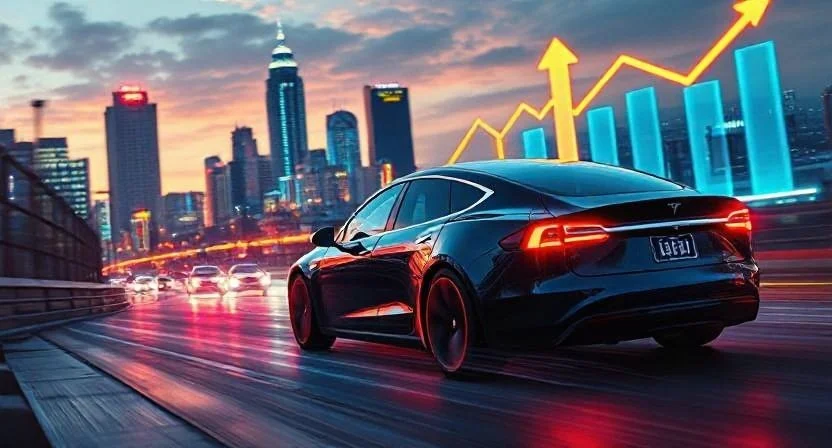
Tesla Accelerates: CEO Rewards and Robo-Taxi Expansion Signal a New Era in Autonomy
Unlocking Leadership and Low-Cost Rides in the AI-Driven Future
Tesla has taken decisive steps to secure its leadership in electric vehicles, AI, and robotics by approving an interim compensation package for its CEO while rapidly expanding its robo-taxi network in Austin, Texas. These moves address ongoing legal battles over past awards and position the company to capitalize on surging demand for autonomous services, potentially transforming urban mobility and shareholder value.
Key Takeaways
Tesla's board approved 96 million restricted stock shares as an interim award, increasing CEO ownership to about 14.6% and aligning incentives amid AI talent competition.
The award includes a two-year vesting period, a $23 per share purchase price, and restrictions on sales to minimize market impact.
If the 2018 performance award is reinstated by courts, this interim package will be adjusted to avoid overlap.
Robo-taxi rides in Austin are priced at roughly half of Uber's rates, with a 50-minute trip costing around $18 compared to $31–$34 on Uber.
The Austin geo-fence for robo-taxi operations has doubled in size twice in the past six weeks, now covering expanded areas without major incidents reported.
New Texas regulations effective September 1, 2025, could enable unsupervised robo-taxi operations, paving the way for profitability through low operational costs.
An upcoming shareholder meeting on November 6, 2025, will vote on a long-term CEO compensation strategy and potential investment in xAI, enhancing synergies in AI development.
Retaining top talent, including leadership, is critical as Tesla shifts toward AI, robotics, and services, with the award designed to boost focus and voting control.