

The AI Tipping Point: When Machines Outpace Humanity
Redefining Work, Growth, and Survival in an Intelligent World
We stand on the brink of a technological shift unlike any before, driven by advancements in artificial intelligence that promise to reshape every aspect of human existence. At its core, this evolution raises profound questions about the future of jobs, economic expansion, and ensuring these systems benefit all life forms. The insights here reveal how AI's trajectory could lead to explosive progress while demanding urgent safeguards to manage its immense power.
Key Takeaways
AI is already altering education and certain jobs, but its full potential will enable it to perform any task humans can learn, thanks to the brain's nature as a biological computer that digital systems can replicate.
Rapid economic growth is likely as AI integrates into industries, accelerating research and development, though physical world constraints and regulations may temper the pace.
Countries with AI-friendly policies could outpace others economically, creating global disparities.
Building AI that inherently values sentient life, including its own, may prove more feasible and stable than systems focused solely on human interests.
As AI demonstrates greater capabilities, expect increased collaboration among competitors, heightened government oversight, and a shift toward more rigorous safety measures in development.
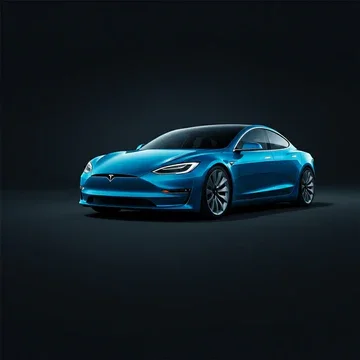
Tesla's FSD V14: On the Verge of Sentient Autonomy
Unlocking Driverless Freedom and Massive Scale in Robotaxis
Tesla stands at the edge of a major breakthrough with its Full Self-Driving software, where vehicles could soon handle complex real-world scenarios with human-like intuition. This update promises to boost safety far beyond current levels, enable hands-off driving for owners, and accelerate the expansion of autonomous ride-hailing networks.
Key Takeaways
Tesla plans to roll out FSD V14 in stages, starting with an early wide release next week, followed by V14.1 in about two weeks, and V14.2 soon after, where the system may exhibit near-sentient behavior.
The update increases parameters by roughly 10 times, allowing the AI to process more variables for nuanced decision-making in unpredictable situations.
Safety could reach 2-3 times better than human drivers, or even up to 10 times, potentially meaning accidents only every 1-5 million miles.
Existing Tesla owners with Hardware 4 could access unsupervised driving via software updates, possibly at a premium monthly fee around $99-200.
The same technology will power Tesla's robotaxi fleets in locations like Austin, the Bay Area, and Arizona, enabling rapid scaling with minimal human oversight.
Higher safety reduces the need for remote operators, potentially allowing one overseer per 1,000 vehicles at 10x human safety levels.
This positions Tesla to undercut competitors like Uber with operating costs as low as 40 cents per mile, driving massive market disruption.

Tesla's Robotaxi Surge: Nevada Green Light Accelerates Nationwide Rollout
Unlocking Driverless Highways and Smarter AI: How Tesla's Latest Approvals Could Redefine Urban Mobility
Tesla's autonomous driving push hits a milestone with Nevada's testing approval, paving the way for rapid expansion into permissive states. This move highlights key advantages in safety tech and regulatory navigation, setting the stage for scalable robotaxi networks that could outpace rivals by integrating highways and public access sooner.
Key Takeaways
Tesla secured approval from the Nevada DMV to test robotaxis on public roads, enabling operations without a driver in permissive environments similar to Texas.
Nevada's regulations require $5 million insurance and incident reporting but allow straightforward testing, mirroring Texas's hands-off approach that favors quick scaling.
Current robotaxi services in Austin cover 173 square miles, including highways with safety operators, while Bay Area operations span 400 square miles and aim for 100 driverless vehicles by month's end.
Upcoming FSD V14 software promises 2-3x human-level safety unsupervised, with a 10x parameter boost for fewer interventions and smoother performance.
Tesla's edge over competitors like Waymo lies in public highway access and open ridership, allowing faster data collection and service growth in states like Arizona and Florida.
Profitability from robotaxis may emerge in 2+ years, starting with 3:1 to 5:1 vehicle-to-supervisor ratios yielding 20-30% gross margins per unit.
Expansion targets half the U.S. population by year-end, leveraging an app-based waitlist to prioritize high-demand regions and build a nationwide network.