
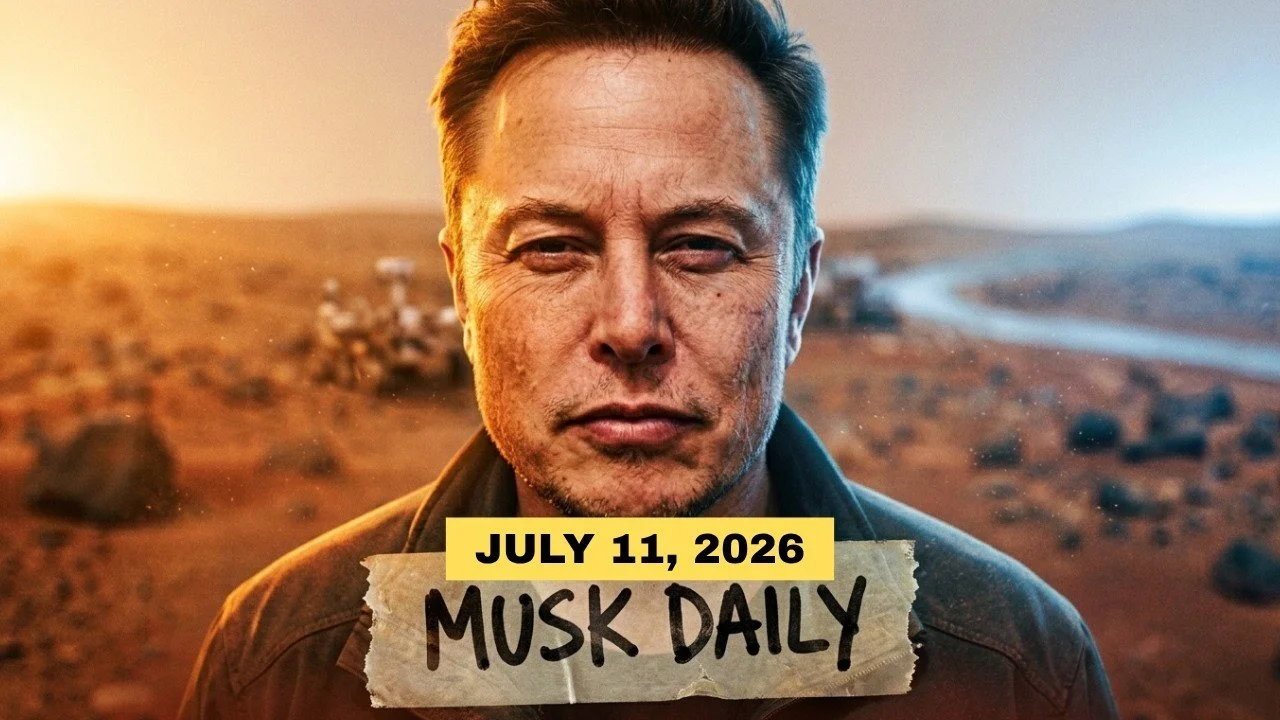
Tesla Tears Down Fremont Model S and X Lines for Optimus
A 46-day decommissioning of the original premium vehicle floor is set to free space for a humanoid line targeting as much as one million robots a year, while CyberCab rides, Starship static fire, China Model Y Performance, and Grok trials advance in parallel.

AI: The New Nuclear Arms Race Redefining Global Power
Why the race for artificial superintelligence mirrors the atomic age—and what it means for the next century of dominance
The parallels between today's AI competition and the nuclear era of 1945 are striking and unavoidable. Just as the atomic bomb reshaped alliances, economies, and military strategies overnight, AI infrastructure is forcing nations to realign around control of compute, energy, data pathways, and deployable systems. The United States holds a commanding lead in frontier models and advanced semiconductors, but China advances rapidly in scaled deployment, energy buildout, and open-source disruption. Every tariff, reactor restart, satellite constellation, and robot factory forms part of a deliberate strategy to secure civilizational advantage.
Key Takeaways
The U.S. treats advanced AI chips as strategic weapons, imposing export controls and tariffs equivalent to munitions regulations to maintain its monopoly on the "uranium" of the AI age.
Global data center power demand surges toward levels rivaling entire nations' electricity use, pulling nuclear restarts, natural gas, and renewables into service—China deploys solar and small modular reactors at unmatched speed.
Orbital infrastructure emerges as a game-changer, with plans for massive solar-powered satellite networks to host AI compute beyond earthly grid constraints.
Humanoid robots and autonomous vehicles represent the "warheads"—physical AI embodiments poised to transform a $45+ trillion global labor and transportation market.
The U.S. benefits from uncapped private innovation and capital accumulation, while China's centralized system caps individual power but excels in coordinated infrastructure scaling.
Economic disruption hits hardest in the middle class unless offset by policies like universal basic income or widespread entrepreneurship; the top and bottom socioeconomic tiers stand to gain most from abundance.
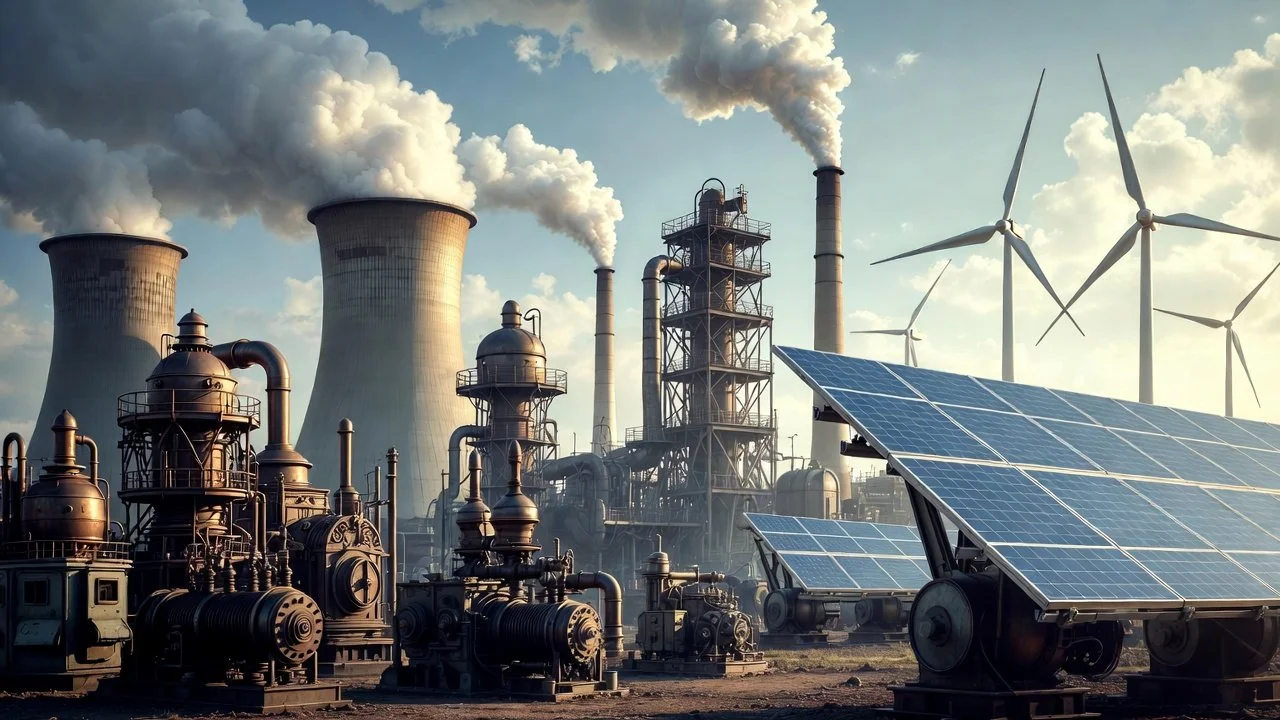
Energy: The Overlooked Force Powering the AI Explosion
Why cheap, abundant power—not just chips or models—will decide winners in the next decade
AI's hunger for electricity is reshaping global energy demand at a scale few appreciate. Massive data centers, GPU clusters, and inference at billions of queries per day require unprecedented power generation and storage. Batteries paired with renewables are emerging as the fastest path to unlocking grid capacity, while long-term visions point to space-based solar compute. Political and regulatory hurdles slow progress in the West, but the physics and economics favor rapid scaling—especially for integrated players.
Key Takeaways
AI data centers consume city-level electricity; cooling alone can eat 40% of usage, with inference scaling to billions of daily queries driving even higher demand.
Batteries + solar effectively double grid capacity by storing off-peak energy and discharging during peaks, bypassing the need for many new power plants or transmission lines.
Tesla deployed 46.7 GWh of energy storage in 2025 (up ~50% year-over-year), with energy gross margins around 29-31%—far outpacing automotive margins.
Battery costs have plummeted from over $1,000/kWh in 2010 to ~$115 today, following Wright's Law patterns of 20-30% cost drops per production doubling.
Distributed home batteries (like Powerwalls) form virtual power plants, stabilizing grids and enabling resilience without centralized failures.
Nuclear offers reliable baseload for AI, with co-location deals accelerating, but permitting delays (15-20 years) favor faster-deploy solar + storage.
China leads in solar and battery rollout; the U.S. faces grid bottlenecks, NIMBY opposition, and regulatory delays.
Space-based solar AI compute—enabled by low-cost launches, free cooling in vacuum, and constant sunlight—could become the lowest-cost path for massive inference in the coming years.
The full ecosystem convergence: solar/batteries for power, rockets for deployment, AI for workloads, and satellite networks for connectivity.

Tesla's Autonomy Revolution: Redefining Transportation, Insurance, and Beyond
Reshaping Mobility in an Autonomous World
Tesla's push into full autonomy isn't just about cars—it's set to overhaul how we move, insure vehicles, and even access healthcare, while navigating global economic shifts.
Key Takeaways
Tesla's vehicle lineup may expand with variants like mid-size pickups or vans on existing platforms, but autonomy could shrink the personal car market to niche segments.
Regional travel faces massive disruption as autonomous rides offer door-to-door convenience at lower costs than flights, bypassing airports and security hassles.
Insurance models will evolve to reward high FSD usage, potentially slashing premiums for autonomous drivers and pressuring legacy providers to adapt.
Healthcare could see AI and robots streamline services, from virtual diagnostics to mobile clinics, cutting costs tied to chronic diseases and inefficient systems.
China's aggressive EV and robotics strategies highlight global tensions, with demographic challenges and regulatory hurdles potentially limiting their long-term dominance.
The Robot Revolution: Reshaping Global Power Through AI and Space
Exploring how massive infrastructure builds, demographic crises, and robotic economies could redefine nations and unlock abundance.
The world stands at a pivotal moment where technology intersects with geopolitics in unprecedented ways. Rapid advancements in AI, robotics, and space infrastructure promise to upend traditional power structures, while countries grapple with internal challenges like economic instability and aging populations. This newsletter dives into these dynamics, revealing opportunities for tech-driven growth amid global uncertainties.
Key Takeaways
Economic pressures and youth demographics are fueling unrest in oppressive regimes, creating openings for pro-Western shifts that could weaken adversaries like Russia and China.
China's aggressive infrastructure investments in remote areas aim to secure unpopulated regions, but demographic collapse from past policies threatens long-term viability.
Surveillance-heavy governance stifles innovation and free speech, limiting a nation's potential compared to open systems that attract global talent.
Robotics will eliminate labor cost advantages for low-wage economies, positioning countries with strong AI ecosystems—like the US—for dominance.
Space-based AI and manufacturing could detach economies from Earth-bound constraints, making national borders less relevant as corporations lead exploration.
Allocating a portion of robot labor to public good—around 15%—could achieve sustainable abundance without relying on inefficient government taxation.