
Bitcoin: The Digital Fortress Redefining Wealth in a World of Infinite Energy and AI
Unlocking the Power of Scarce Digital Assets Amid Economic Shifts and Technological Leaps
Bitcoin stands out as a resilient store of value in an era where traditional currencies lose purchasing power through constant dilution, while emerging technologies like cheap energy and AI promise to disrupt everything from gold mining to global economies. This newsletter dives into how Bitcoin's fixed supply and built-in security could make it essential for preserving wealth, outperforming stocks, real estate, and even precious metals over long horizons.
Key Takeaways
Bitcoin has consistently outperformed major asset classes like stocks, bonds, and commodities over the past decade, with annualized returns often exceeding 100% in early years and stabilizing around 20-30% recently.
Traditional currencies have lost 65-99% of their purchasing power in the last 30 years across countries from the US to Venezuela due to inflation and debasement, pushing people toward assets that hold value better.
Bitcoin's capped supply at 21 million units creates deflationary pressure on goods priced in it, making items like electronics cheaper over time when viewed through its lens.
Unlike gold, which could be disrupted by asteroid mining or synthetic production via cheap energy, Bitcoin's scarcity is algorithmically enforced and resistant to physical discoveries.
As a protocol, Bitcoin functions first as a cybersecurity tool using massive computational power to deter attacks, potentially securing digital assets in cyberspace beyond just money.
In a future of AI-driven abundance and potential job displacement, governments may print more money to support populations, accelerating the flow into non-debasable assets like Bitcoin.
Corporations are increasingly adopting Bitcoin as a treasury reserve, with holdings now rivaling major tech firms, offering a hedge against currency dilution and a path to long-term capital growth.
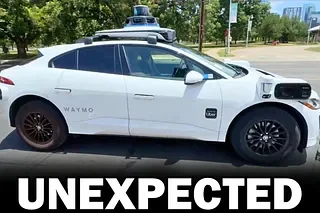
The Robotaxi Reality Check
When autonomous vehicles meet Texas barbecue, things get interesting.
Picture this: Two self-driving cars pull up to Terry Black's BBQ in Austin. One stops in the middle of the road, blocking traffic. The other glides into the parking lot. Welcome to the current state of autonomous ridesharing, where the future is already here—it just needs some work.
Key Takeaways
Waymo operates at larger scale in Austin with faster pickup times (1-3 minutes) but struggles with basic pickup/dropoff logistics, frequently stopping in active traffic lanes
Tesla's Robotaxi delivers smoother rides with more human-like driving behavior but remains limited to a smaller service area in South Austin
Integration matters: Waymo's reliance on Uber's app creates routing confusion and communication gaps between systems
Pricing dynamics reveal market expectations: Waymo charges $7-12 per ride (roughly 2x Robotaxi's introductory pricing), with consumers expecting autonomous rides to cost less than human-driven alternatives
Both services achieve core functionality: Safe arrival at destinations with minimal intervention, though execution differs significantly
The Texas factor: Autonomous vehicles must navigate unique challenges including wrong-way drivers, construction zones, and unpredictable human behavior