
Tesla's Registered Texas Robotaxi Fleet Reaches 102 Model Ys as Steering-Wheel-Free Cybercab Hits Austin Roads
Tesla has more than doubled its registered Austin-area robotaxi fleet since late May and is now road-testing a production Cybercab without a steering wheel or pedals, even as regulation, not vehicle count, remains the real gate on unsupervised service.
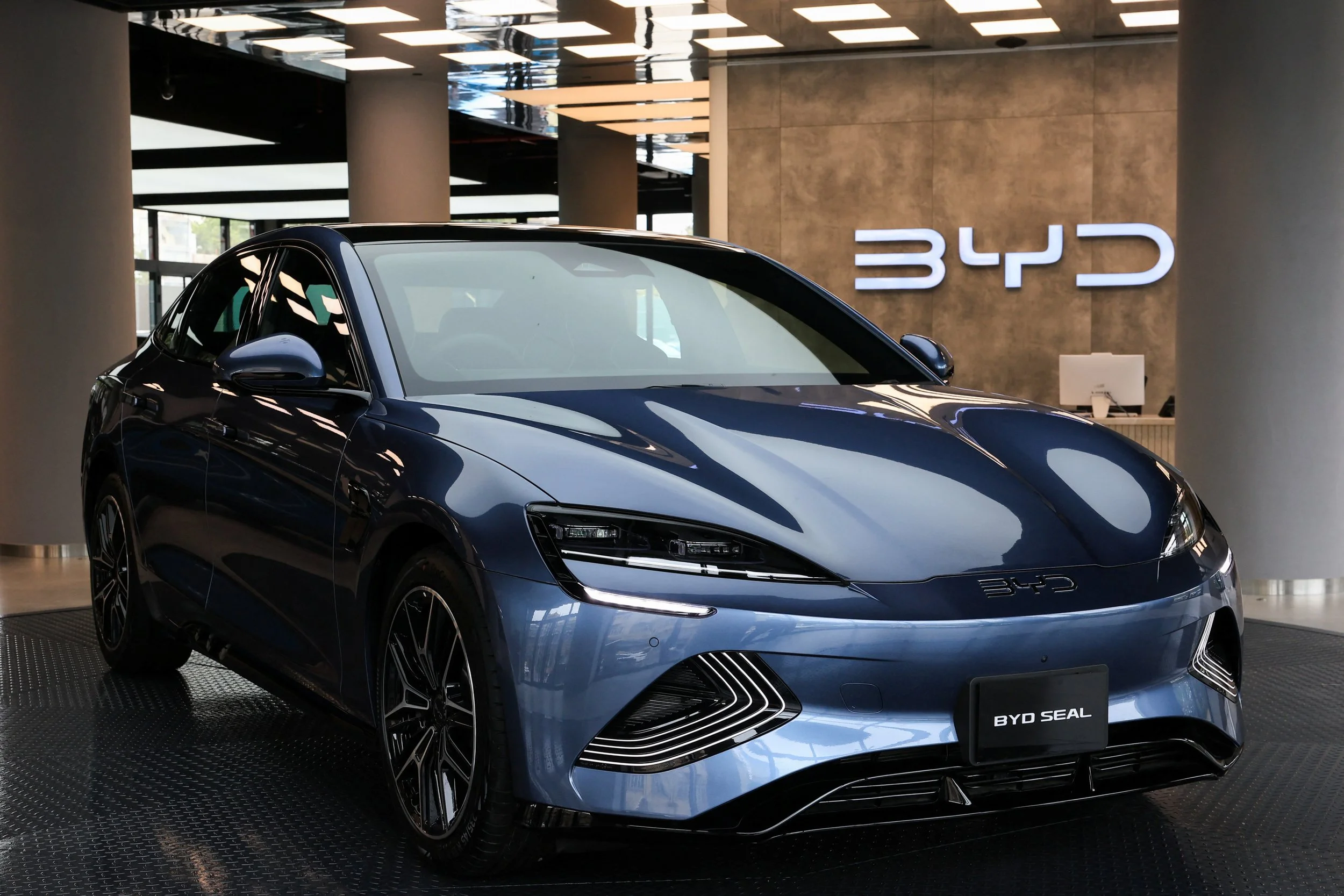
Tesla Just Got "Humiliated" – And It's the Best Thing That Could Have Happened
$1.5 trillion valuation after a second straight year of declining deliveries proves the market sees what headlines refuse to
Tesla delivered 1.64 million vehicles in 2025 – down 8.5% from 2024 – while BYD sold 2.26 million pure EVs, up 28%. The crown changed hands again. Headlines screamed defeat. Yet the stock ended the year up 11% at a $1.5 trillion market cap and a P/E of 279 – a multiple that makes Nvidia look cheap. Either every institution on Earth has lost its mind, or the market is aggressively pricing something that has almost nothing to do with selling cars.
It’s the second one.
Key Takeaways
Car deliveries fell 8.5% YoY while the stock rose 11% and hit $1.5 trillion – the highest P/E in big tech
Energy storage deployments more than doubled to 46.7 GWh with Q4 gross margins of 31.4% – nearly 2× the automotive margin
7+ billion FSD miles driven, on track for 10 billion by mid-2026 – no competitor is within an order of magnitude
Unsupervised robotaxi testing (zero humans in the front seat) is live in Austin today, expanding to multiple cities in 2026
Cybercab (purpose-built, no wheel/pedals) mass production still targeted for April 2026 – on schedule so far
BYD unit volume is up but profits are down 30% YoY and gross margins collapsed to ~16% – classic race-to-the-bottom playbook
Tesla is intentionally walking away from the volume game to dominate autonomy, robotics, and grid-scale energy instead

Tesla's Cybercab Hits Public Roads: Accelerating Toward an Autonomous Revolution
Why Legacy Automakers Are Braking While Tesla Charges Ahead
Tesla's push into fully autonomous vehicles is gaining momentum with the Cybercab now testing on public streets, signaling production readiness by mid-2026. This comes amid broader EV market challenges, including the end of federal tax credits, which are forcing competitors to scale back while Tesla builds its edge in profitable, self-driving tech.
Key Takeaways
Tesla's Cybercab prototype has begun public road testing in California, starting with sightings in Los Altos near the company's engineering headquarters.
Production is on track for Q2 2026 at Gigafactory Texas, supported by a hiring surge in manufacturing and engineering roles.
Regulatory exemptions from NHTSA could allow Tesla to produce and sell vehicles without steering wheels or pedals beyond the current 2,500-unit annual limit.
Legacy automakers like GM are laying off thousands due to slowing EV demand and the loss of tax incentives, highlighting Tesla's unique position in the market.
Tesla's integrated ecosystem—spanning vehicles, software, charging, insurance, and service—positions it to offer affordable, hands-off mobility solutions under $500 monthly.

Tesla's Affordable EV Gambit: Stripped-Down Speed at a Steep Price
Unveiling the Future of Reusable Rockets and Global Connectivity
The latest Starship test flight has once again redefined what’s possible in space exploration. From a flawless launch to daring reentry experiments, this mission showcased the resilience of SpaceX’s ambitious rocket and its role in shaping the future of interplanetary travel and global internet access. Tech enthusiasts, buckle up—this flight delivered groundbreaking insights into reusable rocket technology, thermal protection systems, and the power of Starlink’s connectivity.
Key Takeaways
Successful Hot Staging and Separation: Starship executed a precise hot staging maneuver, with the Super Heavy booster and Starship separating cleanly, marking a significant step toward reliable reusability.
Raptor Engine Reliability: All 33 Raptor engines on the Super Heavy booster and six on Starship performed nominally, with a successful in-space Raptor relight demonstrating critical deorbit capabilities.
Payload Deployment Milestone: Eight Starlink simulators were deployed, paving the way for future missions to carry up to 60 advanced V3 Starlink satellites, boosting network capacity by 60 terabits per second per launch.
Thermal Protection Testing: Intentional removal of heat shield tiles tested Starship’s resilience under extreme reentry conditions, providing valuable data for future iterations.
Starlink’s Real-Time Data Power: Starlink’s connectivity enabled uninterrupted HD video and telemetry during reentry, overcoming plasma interference to deliver critical engineering data.
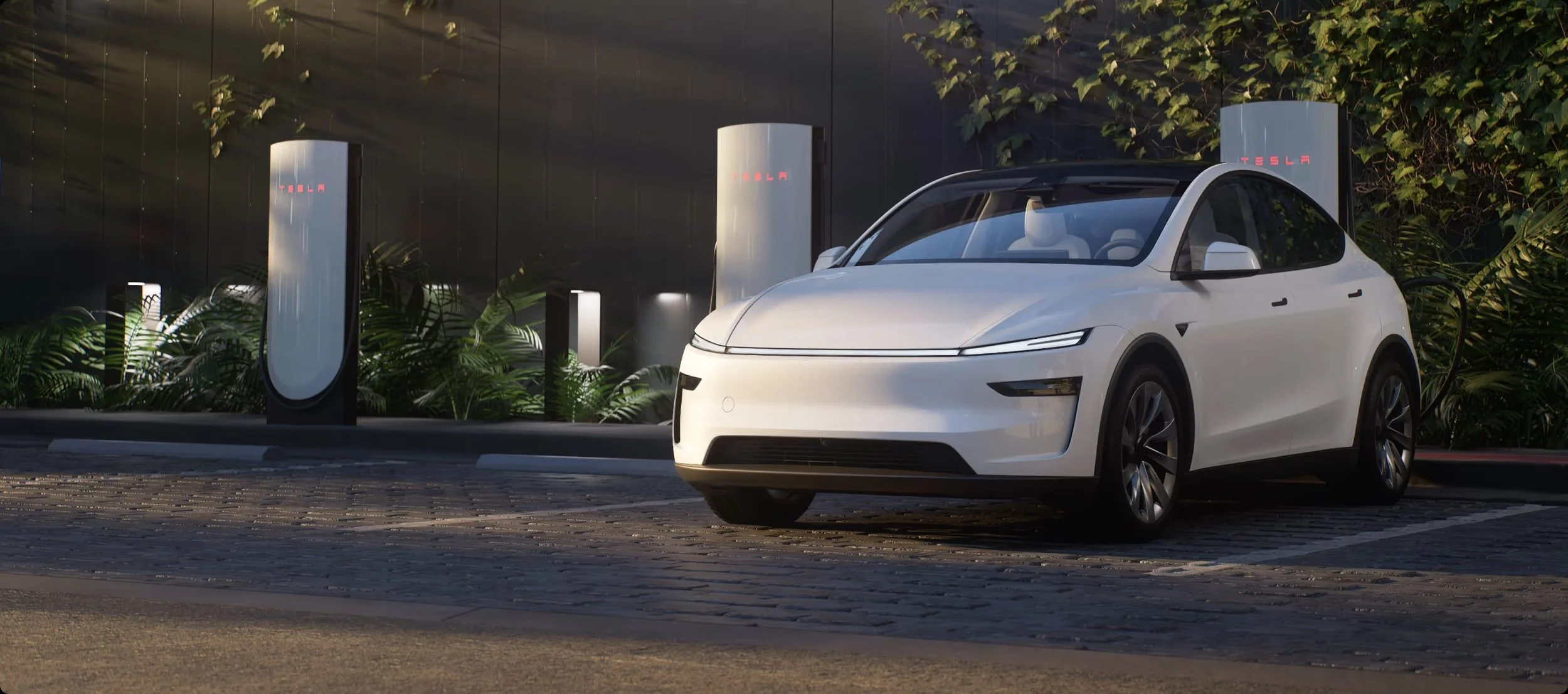
Tesla's Budget EV Breakthrough: The Affordable Model Y Uncovered
Revamping Accessibility in Electric Vehicles Amid Shifting Incentives
Spy shots from Texas highways and firmware leaks have pulled back the curtain on Tesla's push for a more budget-friendly Model Y variant. This stripped-down crossover targets everyday drivers by trimming premium features while keeping the essentials intact, all to maintain production momentum and gather vast amounts of driving data for advancing full self-driving tech.
Key Takeaways
Tesla's affordable Model Y features simplified exterior elements like no front or rear light bars, a front bumper camera, and smaller 18-inch wheels for better efficiency.
Interior cuts include no glass roof, no rear screen, cloth or basic vegan leather seats without ventilation, and a basic audio system to reduce manufacturing costs.
Expected pricing lands between $35,000 and $40,000, making it competitive without relying on expired US EV tax credits.
Production ramps up in the second half of 2025, with rear-wheel-drive as the base option and potential all-wheel-drive upgrades.
This model supports Tesla's strategy to flood roads with vehicles, accelerating data collection for autonomous systems and software revenue.

Tesla’s Record-Breaking Q3 2025: Model Y Surge and FSD Ambitions
Why Tesla’s Third Quarter Could Redefine Electric Vehicle Dominance
Tesla is poised to deliver a blockbuster third quarter in 2025, with projections pointing to a record-breaking number of vehicle deliveries, driven by skyrocketing demand for the Model Y and strategic moves to capitalize on expiring U.S. tax credits. The company’s focus on Full Self-Driving (FSD) technology and production ramps signals a bold push to reclaim its edge in the electric vehicle (EV) market, even as competition intensifies. Here’s what tech enthusiasts need to know about Tesla’s trajectory and what’s fueling this comeback.
Key Takeaways
Record Delivery Projections: Analysts forecast Tesla will deliver around 488,000 vehicles in Q3 2025, potentially nearing 500,000, a new quarterly high, driven by strong Model Y demand.
Model Y Inventory Crunch: Low inventory levels, especially in the U.S., reflect surging demand, with some regions like Austin, Texas, reporting zero new Model Y stock within a 200-mile radius.
U.S. EV Tax Credit Impact: The impending expiration of the $7,500 federal EV tax credit on September 30, 2025, is spurring a rush of orders, with buyers securing binding purchase agreements to lock in savings.
Model Y L Success in China: The six-seater Model Y L has sold out for September 2025 in China, pushing delivery dates to October, highlighting robust demand in Tesla’s second-largest market.
FSD as a Game-Changer: Tesla’s advancements in Full Self-Driving (FSD) version 14, expected in late 2025, could significantly boost demand by offering safer-than-human driving capabilities, potentially transforming the company into a leader in autonomous transportation.
Production and Pricing Adjustments: Tesla is considering increasing Model Y production and prices in response to demand, balancing profitability with market expansion.
Tesla's India Gambit: High Prices Today, Autonomous Dominance Tomorrow
Revolutionizing Mobility in the World's Largest Market Through Data and AI
Tesla's recent entry into India marks a pivotal moment for electric vehicles and self-driving technology. By starting with the Model Y at premium pricing, the company positions itself to collect vast amounts of real-world data from one of the planet's most challenging driving environments. This could accelerate advancements in autonomy, enabling cheaper models and widespread adoption that bypasses traditional car ownership patterns.
Key Takeaways
Tesla launched the Model Y in India on July 15, 2025, with prices starting at around $71,500 due to high import tariffs, limiting initial appeal to a tiny fraction of the population.
The strategy focuses on long-term data gathering in India's dense, unpredictable roads to refine self-driving software, potentially leading to tariff reductions and more affordable vehicles.
Developing nations like India may skip mass personal car ownership, jumping directly to shared autonomous fleets, similar to how cell phones bypassed landline infrastructure.
Tesla's pure AI-driven approach to autonomy allows rapid scaling, as seen in recent expansions of its supervised robo-taxi service in Austin, outpacing competitors reliant on heavy mapping and sensors.
Future developments could include cheaper models, local manufacturing, and highway-capable self-driving, expanding robo-taxi networks across urban and suburban areas.