

AI: The New Nuclear Arms Race Redefining Global Power
Why the race for artificial superintelligence mirrors the atomic age—and what it means for the next century of dominance
The parallels between today's AI competition and the nuclear era of 1945 are striking and unavoidable. Just as the atomic bomb reshaped alliances, economies, and military strategies overnight, AI infrastructure is forcing nations to realign around control of compute, energy, data pathways, and deployable systems. The United States holds a commanding lead in frontier models and advanced semiconductors, but China advances rapidly in scaled deployment, energy buildout, and open-source disruption. Every tariff, reactor restart, satellite constellation, and robot factory forms part of a deliberate strategy to secure civilizational advantage.
Key Takeaways
The U.S. treats advanced AI chips as strategic weapons, imposing export controls and tariffs equivalent to munitions regulations to maintain its monopoly on the "uranium" of the AI age.
Global data center power demand surges toward levels rivaling entire nations' electricity use, pulling nuclear restarts, natural gas, and renewables into service—China deploys solar and small modular reactors at unmatched speed.
Orbital infrastructure emerges as a game-changer, with plans for massive solar-powered satellite networks to host AI compute beyond earthly grid constraints.
Humanoid robots and autonomous vehicles represent the "warheads"—physical AI embodiments poised to transform a $45+ trillion global labor and transportation market.
The U.S. benefits from uncapped private innovation and capital accumulation, while China's centralized system caps individual power but excels in coordinated infrastructure scaling.
Economic disruption hits hardest in the middle class unless offset by policies like universal basic income or widespread entrepreneurship; the top and bottom socioeconomic tiers stand to gain most from abundance.

AI's Double-Edged Sword: Revolutionizing Creativity and Redefining Humanity
Navigating the explosion of AI tools that empower creators while reshaping society, work, and even consciousness.
AI is reshaping how people build online businesses, from music education to broader content creation, while sparking debates on privacy, addiction, and the essence of human experience. This newsletter dives into practical strategies for leveraging these tools today and explores the profound shifts they could bring tomorrow—offering actionable insights for anyone eyeing the tech frontier.
Key Takeaways
Start content creation by focusing on genuine passion and audience needs, using simple setups like a camera to demonstrate value upfront.
Treat free platforms as marketing arms that deliver real lessons or insights, leading viewers naturally toward paid offerings like subscriptions or one-on-one sessions.
AI excels at analyzing personal styles and generating new ideas, but its true power emerges when users clearly define problems and experiment deeply.
Future AI agents could automate product searches, negotiations, and reputation checks, transforming how consumers find and buy solutions.
Privacy concerns loom large as AI synthesizes vast personal data, potentially creating tailored realities that deepen societal divides.
Authenticity in content will stand out in an AI-saturated world, fostering human connections amid increasing digital isolation.
Neuralink-like tech could expand human memory and cognition, but risks dependency and evolutionary changes in brain function.
Consciousness might blend with silicon, raising questions about whether AI develops independent will or remains an extension of human intent.
Genetic entropy poses a hidden extinction risk, potentially outpacing threats like asteroids through accumulated mutations in the human genome.
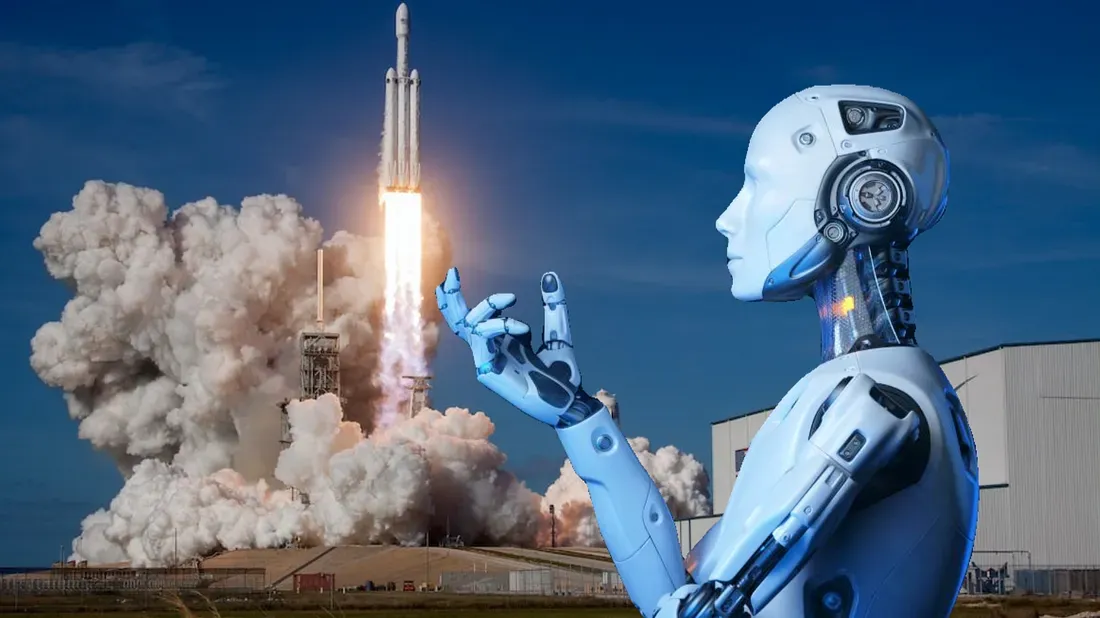
Elon's Cosmic Leap: AI Heads to Space with Satellites and Lunar Rail Guns
Revolutionizing Compute Power by Tapping Infinite Solar Energy—And It's Happening Sooner Than You Think
Space offers a breakthrough for AI's biggest bottleneck: power. By shifting compute to orbit and beyond, we could add massive capacity without Earth's constraints, accelerating advancements in every sector. This shift promises to scale AI far beyond current limits, opening doors to a true space economy.
Key Takeaways
AI development on Earth is stalled by electricity shortages, with data centers demanding power equivalent to small cities.
Orbital satellites in constant sunlight solve power and cooling issues, enabling 100 gigawatts of annual AI compute addition without competing for terrestrial resources.
In under three years, space-based AI could become the cheapest compute option, disrupting traditional data center economics.
Lunar factories using local materials and electromagnetic rail guns could launch satellites at scale, achieving over 100 terawatts per year—hundreds of times U.S. total power generation.
This accelerates AI capabilities, reshapes industries, and positions humanity toward multiplanetary expansion with self-sustaining space infrastructure.

The AI Revolution: Tesla, Nvidia, and the Future of Compute
Why Tesla and Nvidia Are Poised to Redefine the Global Economy
The AI revolution is reshaping industries, and at its core are two juggernauts: Tesla and Nvidia. Their advancements in artificial intelligence, robotics, and compute infrastructure signal a future where energy, data, and intelligence converge to create unprecedented economic value. From autonomous robotaxis to distributed inference networks, the synergy of these technologies could disrupt entire markets, leaving traditional players like Uber struggling to adapt. Here’s why the stakes are higher than ever and what it means for the future.
Key Takeaways
Tesla’s Robotaxi Dominance: Tesla’s robotaxi network, with dynamic pricing and unmatched cost efficiency, is set to capture significant market share from Uber and Waymo, potentially rendering traditional ride-hailing models obsolete.
Nvidia’s Compute Supremacy: Nvidia’s platform strategy fuels the AI boom, but its long-term margins may face pressure as compute becomes commoditized, creating opportunities for specialized players like Tesla.
Energy and Compute Synergy: Pairing energy storage (like Tesla’s Megapacks) with AI chips enables distributed inference, turning idle energy into valuable computational output.
Video Data as the Ultimate Resource: Video data’s infinite scalability makes it the backbone of AI training, giving Tesla a unique edge with its vast fleet of camera-equipped vehicles.
Retail Investing’s AI Edge: Advanced AI tools are empowering retail investors to uncover opportunities in stocks like Tesla, potentially increasing market liquidity and driving more IPOs.

The Epstein Black Hole: Intelligence, Tech, and America's Uncertain Path
Why Scandals Like Epstein Could Reshape Foreign Policy and Spark a Tech-Driven Revival
The Epstein case isn't just a media storm—it's a window into how intelligence networks influence global decisions, while technology offers a lifeline for rebuilding trust and prosperity. In the midst of political gridlock and escalating conflicts, emerging tools like AI and independent platforms are challenging old systems, pointing toward a future where transparency and innovation could finally align.
Key Takeaways
Epstein's connections highlight potential intelligence ties that affect U.S. foreign policy, particularly with allies like Israel, raising questions about leverage in ongoing conflicts.
Public frustration with government handling of scandals stems from a perceived lack of transparency, but issues like the economy and immigration often take priority in voter decisions.
Nuclear policy and historical secrecy frameworks continue to justify withholding information, complicating modern accountability in a post-Cold War era.
Independent media and long-form discussions are filling gaps left by traditional outlets, enabling deeper explorations of complex issues and fostering public engagement.
Technological advancements, from AI disrupting jobs to renewable energy promising abundance, represent a hopeful counter to cultural and political decline, though they risk widening divides if not managed carefully.
Political reforms, such as targeted funding for deficit-focused candidates, could create influential voting blocks in Congress, amplifying voices for fiscal responsibility.
COVID-era policies have left lasting psychic impacts, contributing to voter apathy and shifts in party support, especially among younger demographics.
A pro-human approach to tech innovation—balancing benefits like self-driving cars and clean energy with risks like social media isolation—could unify efforts toward a more optimistic national vision.