
SpaceX's Record IPO: The Warehouse Vision That Could Make Mars Routine
Turning slim odds and sci-fi dreams into a practical path for anyone who wants to leave Earth
SpaceX reaching the largest IPO in history after starting in a single warehouse reveals how a clear, long-term objective can survive early doubts and technical setbacks. The real value lies in what comes next: engineering that treats multi-planetary settlement as a solvable problem rather than a distant fantasy, while giving ordinary people a concrete reason to believe the future will feel more expansive than the present.
Key Takeaways
A company founded in a modest El Segundo warehouse achieved the largest IPO ever, showing that sustained focus on ambitious technical goals can overcome initial assessments of very low success probability.
The central objective is to build systems that let anyone travel to the Moon, Mars, or other solar system destinations, moving spaceflight beyond professional crews to broader participation.
Established aerospace players produce reliable rockets yet have not directed equivalent effort toward the specific technologies required for permanent multi-planetary presence.
Earth-bound problems still require attention and resources, but large-scale projects that generate excitement about what happens next supply essential motivation that pure problem-solving alone cannot provide.
Current team capabilities support confidence that vehicles and infrastructure capable of carrying people to Mars and beyond can be delivered on a practical timeline.
Sentient Cars, Robot Armies, and Restored Senses: The AI Stack That Could Deliver Abundance at Planetary Scale
How vision-native neural networks, fully reusable heavy lift, and direct brain interfaces are moving from prototypes to infrastructure that multiplies human capability.
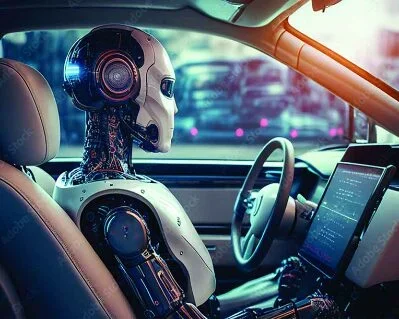
The most consequential progress right now is not in any single headline demo but in three tightly linked layers of AI: vehicles that see and reason like humans, general-purpose humanoid machines that can multiply labor, and neural interfaces that read and write directly to the nervous system. These layers are advancing on parallel tracks that reinforce each other. Camera-only autonomy is already running unsupervised in real cities. Humanoid platforms are shifting from research videos to factory deployment. Brain implants have moved from restoring basic communication to targeting limb control and artificial vision. Together they sketch a path where the majority of road distance becomes AI-driven within a decade, robot populations exceed human ones, and previously irreversible losses of mobility or sight become addressable. The common thread is a deliberate focus on scalable, biology-mimetic systems that improve through software and fleet data rather than exotic new hardware at every step.
Key Takeaways
Camera-and-neural-net autonomy, built to match human visual processing, is already operating without safety drivers or remote monitors in multiple Texas cities and is projected for broad U.S. availability before the end of the year.
The same vision-first architecture is expected to reach at least ten times human-level safety, turning self-driving from a narrow feature into the default mode for most distance traveled within roughly ten years.
Humanoid robots are forecast to outnumber people and expand total economic output by a factor of ten to one hundred, shifting the baseline from universal basic income to universal high income supported by extreme productivity gains.
Full rapid reusability on the latest heavy-lift rocket architecture, targeted for this year, removes the core economic barrier to routine transport of large payloads and is viewed as the decisive step toward self-sustaining settlements beyond Earth.
Brain-computer interfaces have already restored speech and digital control for people with complete motor disconnection; next milestones include bridging spinal injuries to reanimate limbs and delivering artificial vision, including to individuals blind from birth, with potential for superhuman precision over time.
The Operator Who Just Solved Elon Musk’s Biggest Problem
How one quiet executive is enabling the largest reorganization in tech history—and why it frees the world’s most ambitious engineer to move faster than ever.
The Musk companies are no longer operating as separate bets. They are converging into a single, vertically integrated machine built for the AI age. SpaceX and xAI have already combined. Tesla is the final piece. The person positioned to run day-to-day execution across all of them has spent nearly 25 years proving she can deliver at the hardest engineering problems on Earth. This shift lets Elon Musk leave the Tesla CEO chair he has openly disliked for years and return full-time to the work only he can do: first-principles engineering at planetary scale.
Key Takeaways
Elon Musk has repeatedly stated he does not want to remain Tesla CEO and has been searching for years for a successor he trusts to treat the company as a robotics and AI leader rather than a car company.
The February 2026 merger of SpaceX and xAI created a $1.25 trillion vertically integrated entity focused on AI, rockets, satellites, and orbital infrastructure.
Gwynne Shotwell, SpaceX president and COO since 2008, now oversees operations for the combined SpaceX-xAI business and is the clearest candidate to absorb Tesla’s execution responsibilities in the next phase of consolidation.
Her track record includes turning Falcon 9 into the most reliable launch vehicle ever, delivering Crew Dragon for NASA, scaling Starlink to tens of thousands of satellites, and negotiating critical government contracts that kept SpaceX alive in its earliest days.
The resulting structure creates the infrastructure layer of the AI era—orbital data centers, humanoid robots, autonomous vehicles, energy storage, and chip fabrication—all executing under one operational leader while Musk focuses exclusively on engineering breakthroughs.
Investors and technologists should view this not as Elon stepping away but as the company graduating to a new operating model that removes a massive constraint on his time and attention.