
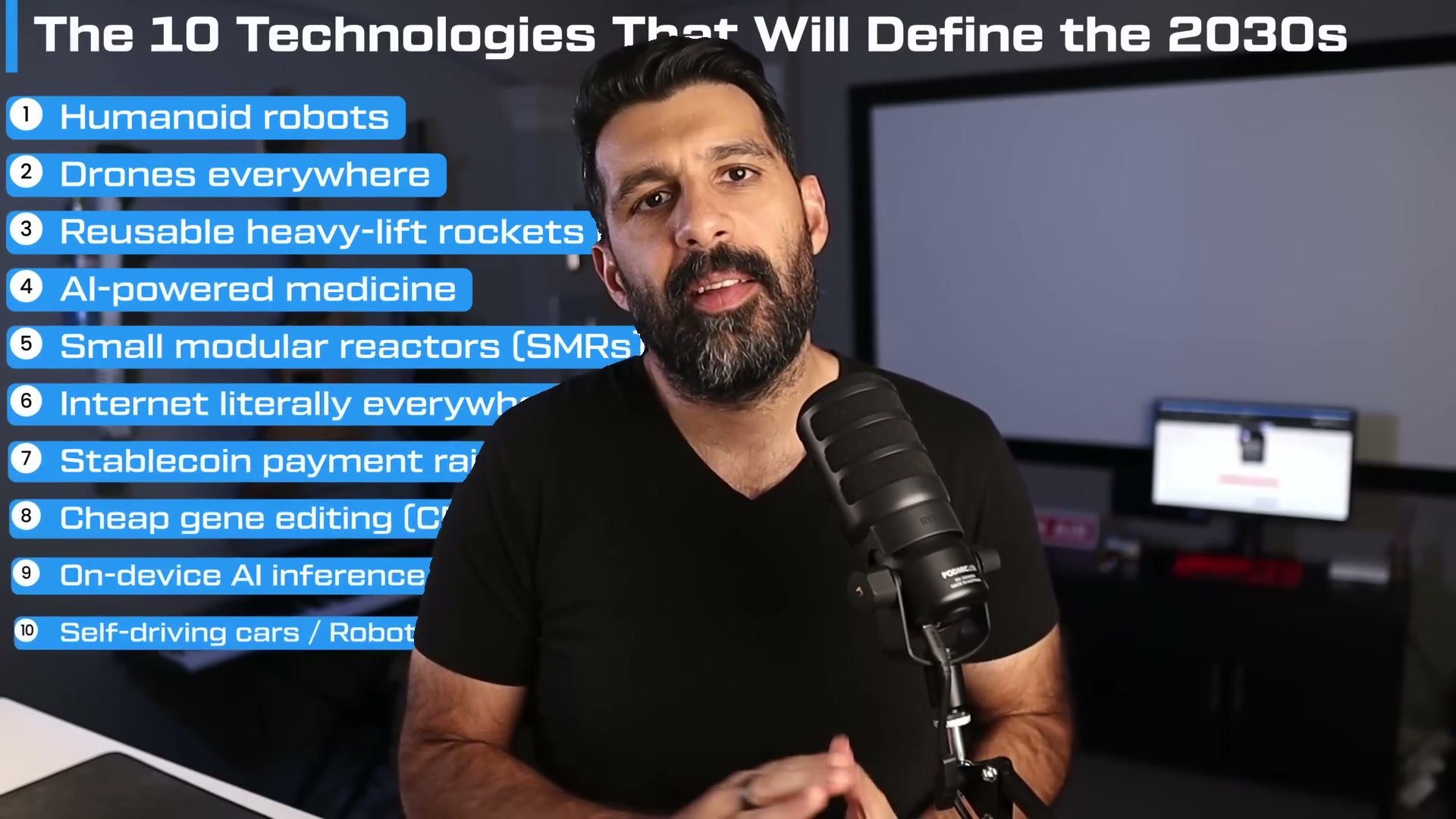
Ten Deployable Technologies Will Redefine Ordinary Life by the Mid-2030s
From robo-taxis and on-device AI chips to CRISPR, stablecoins, Starship, and humanoid labor at roughly $2 an hour, the stack that hits mass scale between 2030 and 2039 is already leaving the lab.

Five Misread Bets Across Musk’s Empire Point to Software Margins, Humanoids, and Multiplanetary Infrastructure
From $99-a-month FSD on cars people already own to Gen 3 Optimus on the old Model S/X floor, the stack that matters is recurring intelligence - not the flashiest hardware headline.
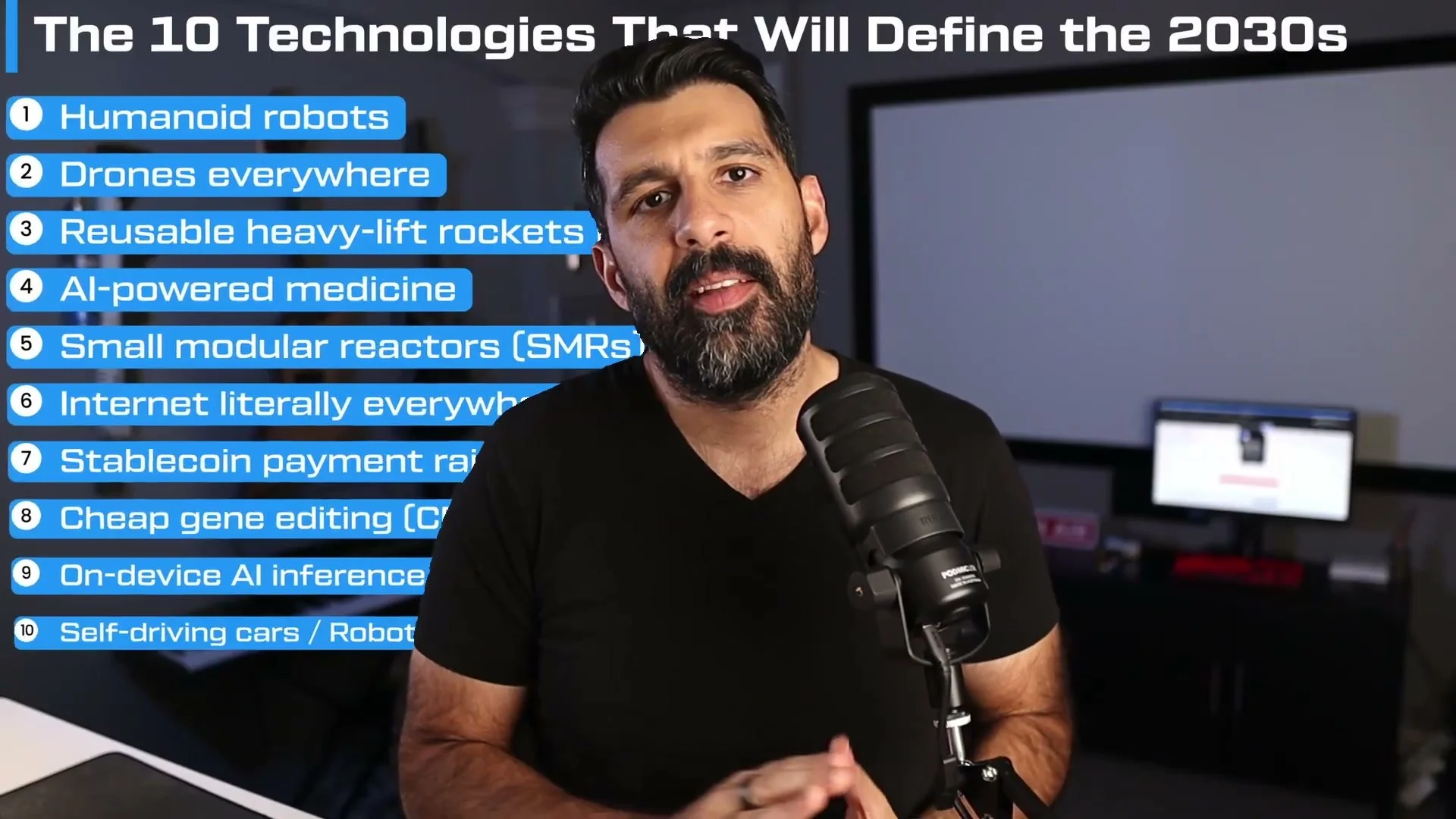
Ten Deployable Technologies Will Rewrite Ordinary Life By The Mid-2030s
From $2-an-hour humanoid labor and vision-only robotaxis to CRISPR cost curves and Starship’s 60-to-80x launch drop, the decade’s winners are specific machines hitting mass scale between 2030 and 2039.
Five Ideas That Misread the Entire Musk Empire
FSD subscriptions, Optimus, drones, one intelligence stack, and a Moon-and-Mars endgame reframe how Tesla, SpaceX, and the rest of the complex actually fit together.
Sentient Cars, Robot Armies, and Restored Senses: The AI Stack That Could Deliver Abundance at Planetary Scale
How vision-native neural networks, fully reusable heavy lift, and direct brain interfaces are moving from prototypes to infrastructure that multiplies human capability.
The most consequential progress right now is not in any single headline demo but in three tightly linked layers of AI: vehicles that see and reason like humans, general-purpose humanoid machines that can multiply labor, and neural interfaces that read and write directly to the nervous system. These layers are advancing on parallel tracks that reinforce each other. Camera-only autonomy is already running unsupervised in real cities. Humanoid platforms are shifting from research videos to factory deployment. Brain implants have moved from restoring basic communication to targeting limb control and artificial vision. Together they sketch a path where the majority of road distance becomes AI-driven within a decade, robot populations exceed human ones, and previously irreversible losses of mobility or sight become addressable. The common thread is a deliberate focus on scalable, biology-mimetic systems that improve through software and fleet data rather than exotic new hardware at every step.
Key Takeaways
Camera-and-neural-net autonomy, built to match human visual processing, is already operating without safety drivers or remote monitors in multiple Texas cities and is projected for broad U.S. availability before the end of the year.
The same vision-first architecture is expected to reach at least ten times human-level safety, turning self-driving from a narrow feature into the default mode for most distance traveled within roughly ten years.
Humanoid robots are forecast to outnumber people and expand total economic output by a factor of ten to one hundred, shifting the baseline from universal basic income to universal high income supported by extreme productivity gains.
Full rapid reusability on the latest heavy-lift rocket architecture, targeted for this year, removes the core economic barrier to routine transport of large payloads and is viewed as the decisive step toward self-sustaining settlements beyond Earth.
Brain-computer interfaces have already restored speech and digital control for people with complete motor disconnection; next milestones include bridging spinal injuries to reanimate limbs and delivering artificial vision, including to individuals blind from birth, with potential for superhuman precision over time.
Amazon's Stealth Logistics Empire: The Massive Tailwind Coming for Tesla
How opening its entire supply chain to the world is about to create explosive demand for electric semis, autonomous vans, and humanoid robots.
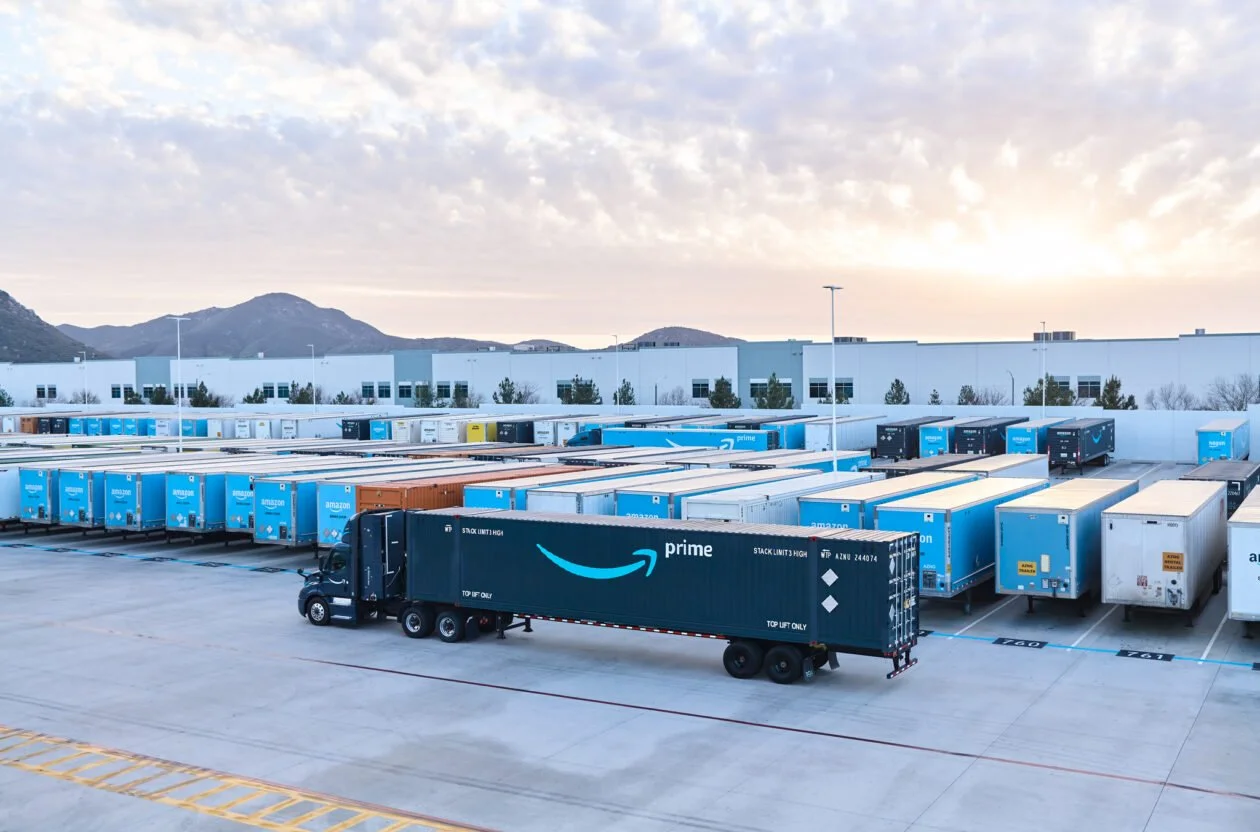
Amazon has turned its vast internal logistics machine into a full-service platform available to any business. The new offering combines freight across ocean, air, ground, and rail; warehousing and distribution; same-style parcel delivery seven days a week; and AI-driven forecasting built on the largest commercial logistics dataset in existence. This isn't a minor expansion—it's the physical-world equivalent of AWS, launched into a $9 trillion market that's already projected to hit $13 trillion by 2035. For Tesla, the implications are generational: a single customer with global scale suddenly needs far more trucks, vans, robots, and autonomy software than it can source today.
Key Takeaways
Amazon Supply Chain Services bundles freight, fulfillment, parcel delivery, and predictive AI optimization into one plug-and-play system that any company can use—exactly how AWS turned internal infrastructure into a profit engine.
The move immediately pressures traditional carriers; UPS, FedEx, and logistics stocks dropped sharply on the announcement because Amazon already operates at a scale that rivals their combined fleets.
Tesla stands to benefit across four hardware categories: electric semis for long-haul freight, autonomous delivery vans to solve driver shortages, Optimus humanoids for warehouse labor, and the unified Full Self-Driving software stack that powers everything.
Amazon's existing assets—1.56 million employees, 1,200 logistics facilities, 40,000+ owned semis, 390,000+ delivery drivers, 30,000 Rivian vans, over one million robots, and its own air fleet—provide the perfect launchpad for rapid scaling.
At scale, a single humanoid robot could deliver labor at roughly $1.50–$2 per hour versus $25–$35 for a human worker, creating economics that make widespread adoption almost inevitable.
Watch for Amazon to break out Supply Chain Services revenue separately in coming quarters; that moment will trigger the same valuation rerating AWS enjoyed.
Tesla’s 2025 Production Tsunami Is Here: Cybercab, Optimus, and Sleep-in-the-Car Autonomy Arrive
The next 12 months deliver technical readiness for unsupervised autonomy, scaled robotaxi output, and the first practical humanoid assistants—milestones that reposition Tesla at the center of AI hardware and sustainable manufacturing.
Key Takeaways
Full self-driving software reaches the level where passengers can fall asleep and wake at their destination from a purely technical standpoint this year.
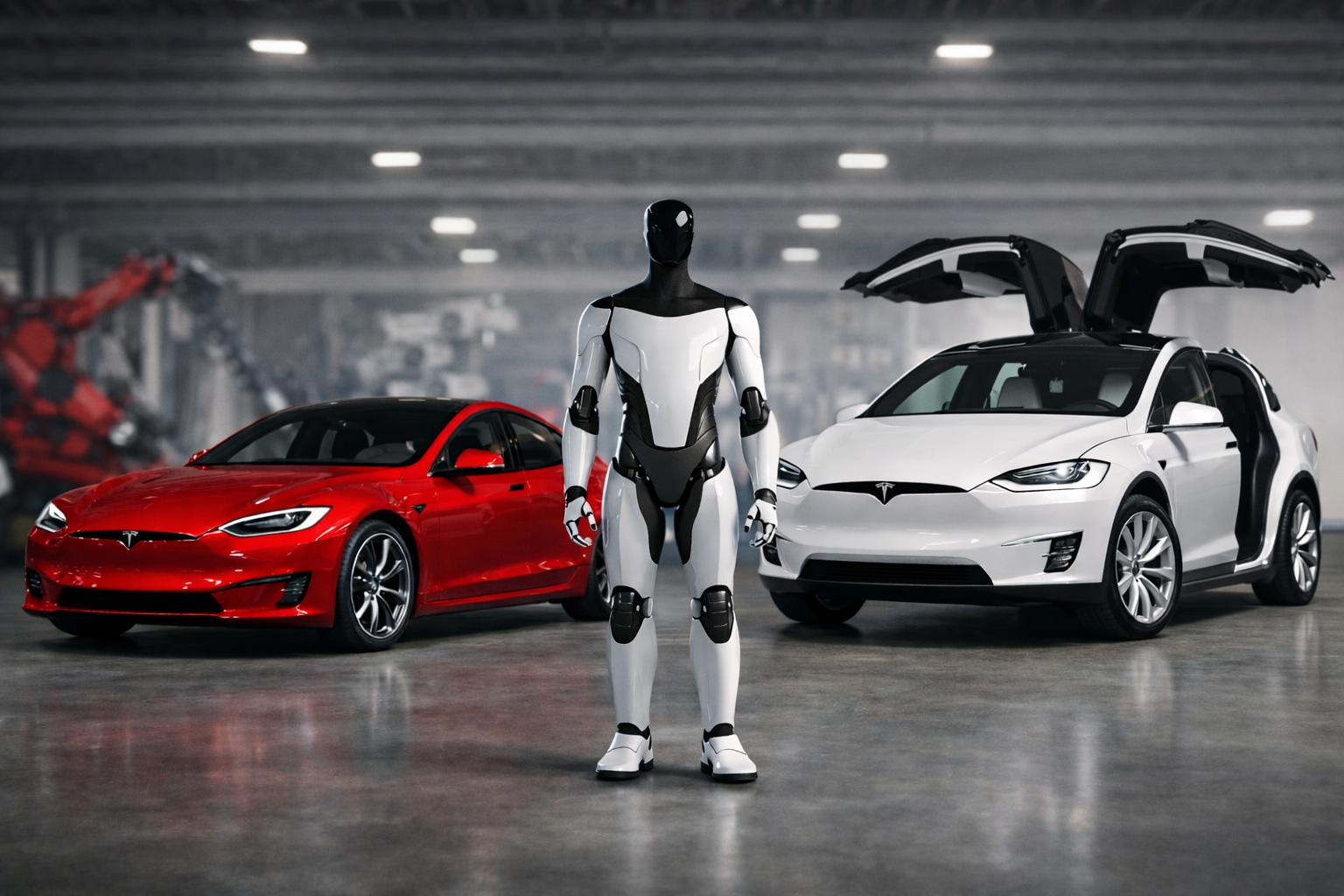
Cybercab production scales at Giga Texas starting April, targeting significant volumes by year-end, with European manufacturing under active consideration.
Optimus humanoid robots begin with household tasks such as childcare, dog walking, and elder support, progressing toward medical roles including surgery that surpass today’s human standards.
Five major production lines enter volume output across Tesla facilities, including 4680 battery cells at Giga Berlin plus lithium and nickel cathode refineries.
Legacy automakers face structural decline after years of minimal innovation and resistance to both electrification and autonomy.
Long-term vision includes Tesla factories on the Moon within 20 years and a future where work becomes optional, pursued for personal satisfaction rather than necessity.
Giga Berlin is positioned for massive expansion into batteries, Cybercab, Optimus, and additional products, potentially becoming Europe’s largest manufacturing complex if external conditions remain supportive.
Advice for the next generation emphasizes optimism, relentless learning through books and experimentation, and choosing roles that involve building tangible, useful things.
Tesla's 2026: Autonomy Takes the Wheel
Unleashing self-driving tech, surging energy storage, and humanoid robots in a rebounding economy.
Tesla wrapped up 2025 with mixed results in vehicle production and deliveries, but its energy business hit record highs. Looking ahead, 2026 promises breakthroughs in full self-driving software, Robotaxi networks, and early humanoid robot deployments, all fueled by AI advancements and favorable economic shifts.
Key Takeaways
Tesla's vehicle deliveries dropped 9% year-over-year in 2025 amid a broader auto market slowdown, but outperformed rivals like Rivian, which saw an 18% decline.
Energy storage deployments soared to 14.2 gigawatt-hours in Q4 2025, up 29% from the prior year, driven by AI data center demands.
Full self-driving (FSD) version 14 marks a turning point, enabling seamless point-to-point autonomy that mimics human driving behaviors.
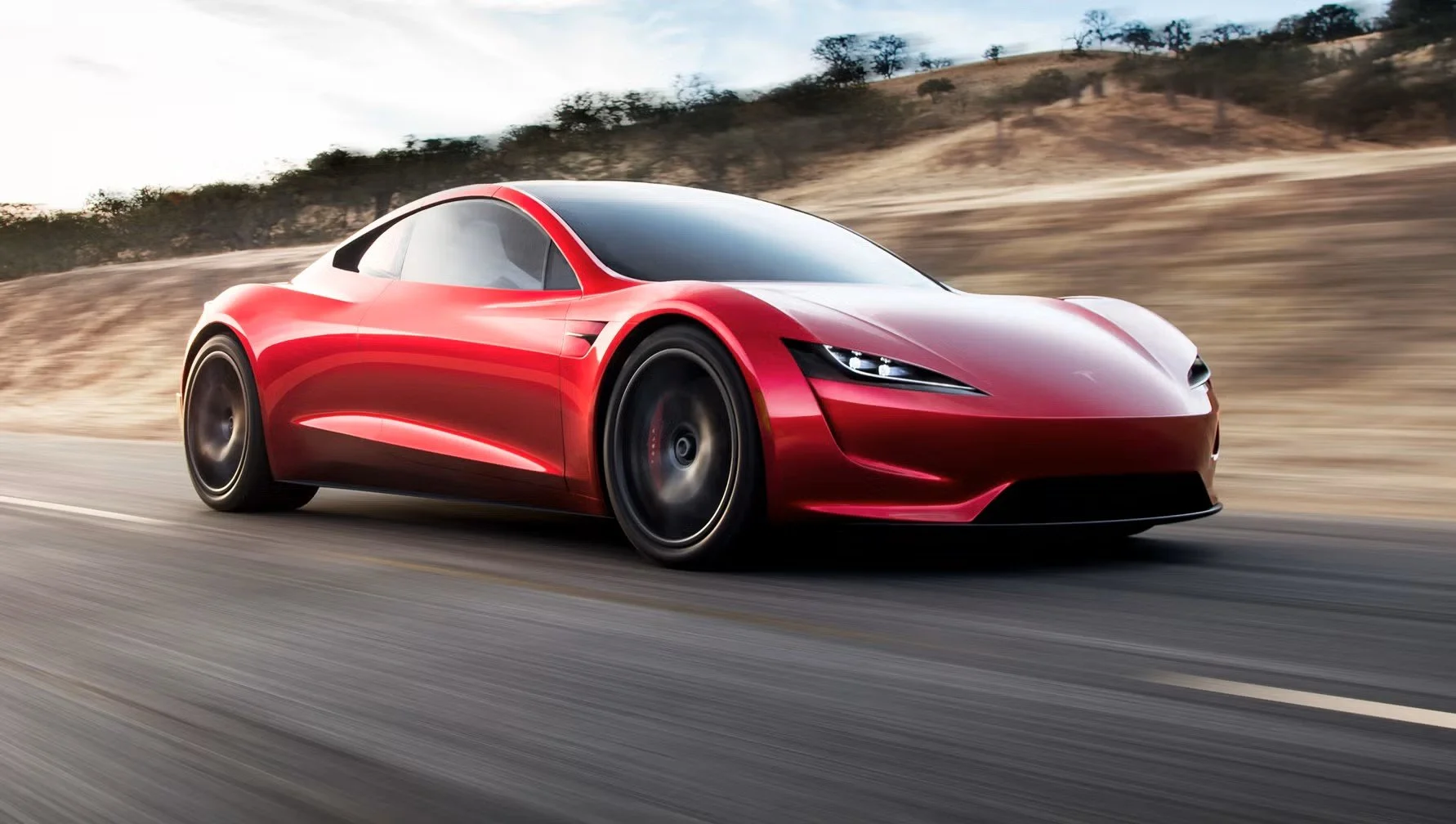
Cybercab production ramps up in April 2026, but regulatory hurdles may force adaptations like adding steering wheels to scale deployments.
Humanoid robots could debut in simple, repetitive tasks this year, transforming labor in factories and warehouses.
Economic factors like lower interest rates, tax breaks, and AI-driven growth position Tesla for strong demand in vehicles and energy solutions.

Tesla's AI Revolution: Betting Big on Autonomy and Abundance
Redefining Mobility, Energy, and Humanoid Robotics in a Post-AI World
Tesla is pushing boundaries in real-world AI, positioning itself as a frontrunner in transforming transportation, energy systems, and even daily life through advanced robotics. The company's aggressive expansion in production, coupled with breakthroughs in unsupervised full self-driving and humanoid robots, signals a shift toward a future of sustainable abundance where technology eliminates scarcity and makes work optional. These developments aren't just incremental—they promise to double energy outputs, create fleets of autonomous vehicles, and deploy millions of AI-powered robots.
Key Takeaways
Tesla leads in real-world AI density, enabling cars to operate as intelligent entities with 360-degree vision and reasoning capabilities for tasks like optimal parking.
Unsupervised full self-driving is on track for rollout in multiple U.S. states by year-end, with robotaxi operations expanding to 8-10 metro areas, prioritizing safety through cautious deployment.
Optimus humanoid robots are advancing rapidly, with production scaling to millions annually, focusing on dexterous hands and vertical integration to overcome supply chain gaps.
AI chip designs like AI5 promise 40x performance gains over predecessors, optimized for Tesla's stack, potentially creating oversupplied compute for distributed inference fleets.
Energy storage via Megapacks could double U.S. energy output without new power plants, integrating substation features for faster deployment.
Cybercab production starts in Q2 2025, designed solely for autonomy, minimizing costs per mile and allowing passengers full device use during rides.
Overall strategy aims for sustainable abundance, where AI and robotics eradicate poverty and provide universal access to advanced services like surgery.

Tesla's Autonomous Empire: Why the Game Is Already Over
Revolutionizing Mobility and Labor in Ways We Can't Ignore
The shift to fully autonomous vehicles and humanoid robots isn't just on the horizon—it's accelerating faster than most realize, with profound implications for industries, jobs, and economies. This transformation promises cheaper, safer transport and ultra-efficient labor, but it also signals massive disruptions that societies aren't prepared for. Here's what tech enthusiasts need to know about the impending changes.
Key Takeaways
Tesla's self-driving technology positions it to dominate global transportation, potentially rendering ride-sharing giants uncompetitive by the decade's end.
Humanoid robots, built on the same AI frameworks as autonomous cars, will handle repetitive tasks in factories within five years, expanding to complex jobs like cooking by 2040.
Over a billion vehicles worldwide mean the transition to autonomy will be gradual, but the total market opportunity is enormous.
Widespread adoption of robots could drive labor costs below $5 per hour, creating deflationary pressures that might counterbalance recent excessive money printing.
Governments lack the foresight and structure to proactively address job losses affecting millions, leading to reactive economic adjustments.
Competitors in self-driving tech lag far behind, with production capacities limited to thousands of units annually compared to Tesla's scale.
Tesla’s Optimus Robot: A Glimpse into a $40 Trillion Future
How Tesla’s Humanoid Robot Could Redefine Labor and Unlock Unprecedented Economic Value
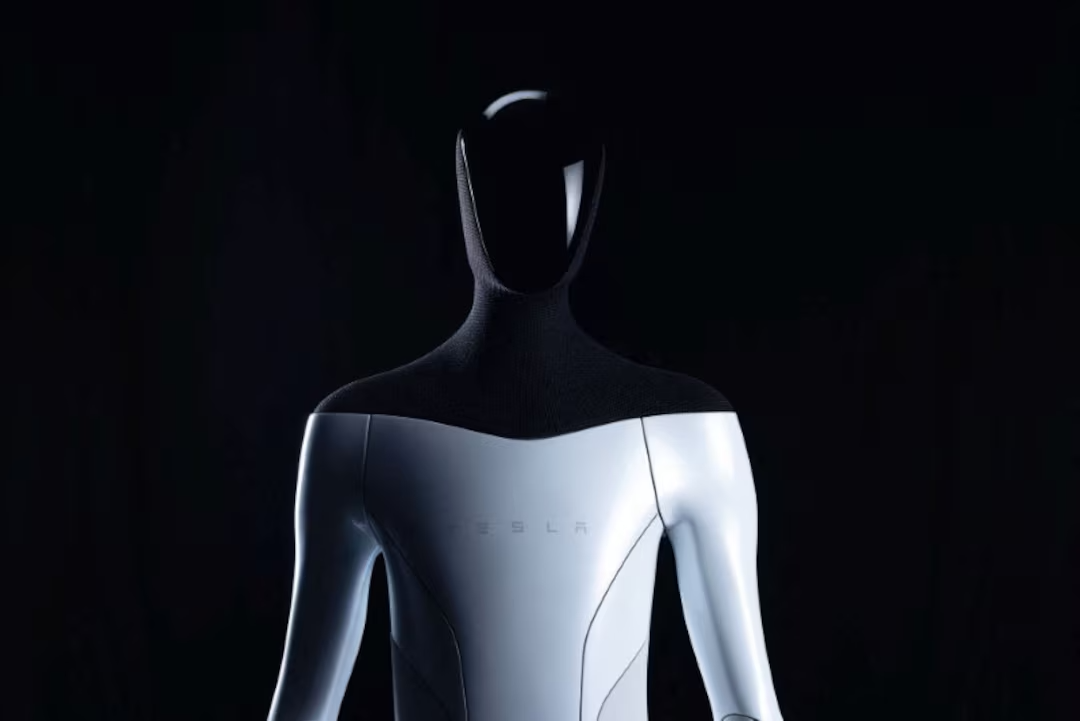
Tesla’s latest showcase of its Optimus robot signals a bold leap toward a future where humanoid robots could transform industries, economies, and daily life. The technology, still in its early stages, demonstrates nuanced capabilities like tactile feedback and precise hand movements, hinting at its potential to disrupt the massive $40 trillion global labor market. Combined with Tesla’s push for autonomous vehicles and energy solutions, Optimus could be the key to unlocking extraordinary value for the company and its investors.
Key Takeaways
Humanoid Robot Potential: Tesla’s Optimus robot showcases advanced capabilities like tactile feedback and precise manipulation, positioning it to compete in the $40 trillion global market for physical human labor.
Economic Disruption: At an estimated $3/hour operating cost, Optimus could drastically reduce labor expenses compared to human wages ($12-$30/hour), opening new markets and business models.
Massive Market Opportunity: Tesla aims to produce one million robots annually at $20,000-$25,000 each, targeting industries like warehousing and manufacturing where repetitive tasks dominate.
Broader Tesla Vision: Optimus aligns with Tesla’s autonomous vehicles and energy solutions, driving the company toward a potential $8.5 trillion market cap and $400 billion in annual revenue.
Labor and Economic Shifts: While robots promise efficiency, they could disrupt traditional labor markets, necessitating new job creation and economic adaptation.
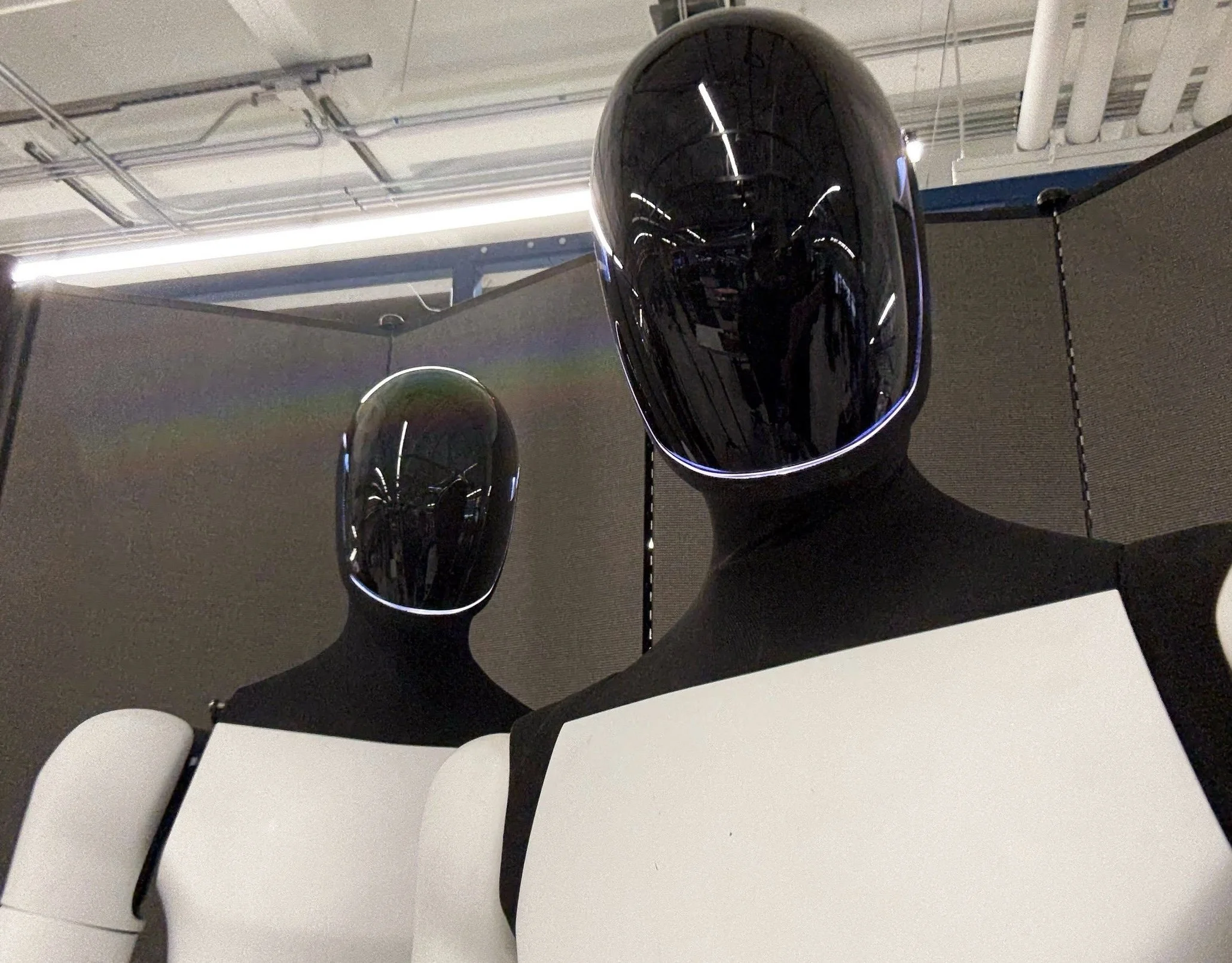
Tesla’s Optimus Robot Unveiled: A Game-Changer for Automation
Revolutionizing Industries with Humanoid Robotics
Tesla’s Optimus robot has sparked global excitement with its potential to transform industries and daily life. This humanoid robot, showcased recently, demonstrates remarkable advancements in AI, mobility, and human-robot interaction. From factory floors to household assistance, Optimus signals a bold step toward a future where robots work seamlessly alongside humans. Here’s why this unveiling has tech enthusiasts buzzing and what it means for the world of automation.
Key Takeaways
Humanoid Design Breakthrough: Optimus features a sleek, human-like form factor, enabling it to navigate environments built for humans with unprecedented ease.
AI-Powered Versatility: Advanced AI allows Optimus to perform complex tasks, from manufacturing to personal assistance, with real-time adaptability.
Cost-Effective Innovation: Tesla aims to make Optimus affordable, targeting mass-market adoption for businesses and homes.
Industry Disruption: The robot’s capabilities could reshape manufacturing, logistics, and service sectors by automating repetitive and labor-intensive tasks.
Ethical Considerations: The rise of humanoid robots raises questions about job displacement and the need for responsible AI governance.

Tesla's Robot Revolution: Unlocking Trillion-Dollar Potential in Humanoids and Beyond
Why Tesla's bets on AI-driven robots could redefine global industries—and how investors are missing the bigger picture.
Tesla stands at the forefront of transformative technologies, from humanoid robots poised to reshape labor markets to autonomous ride-sharing networks that could dominate urban mobility. These innovations aren't just incremental improvements; they're gateways to massive economic shifts, drawing on lessons from past disruptors like Nvidia and Amazon. For tech enthusiasts, understanding the underlying models and market dynamics reveals opportunities that traditional finance often overlooks.
Key Takeaways
Humanoid robots represent Tesla's most explosive growth driver, with potential unit economics suggesting profits per bot that could scale into trillions as production ramps up.
Robotaxis follow closely, offering a high-margin service model that leverages autonomous tech to disrupt transportation on a global scale.
Wall Street's short-term horizon—typically 12-18 months—blinds it to long-term disruptors, creating arbitrage for patient retail investors who model future scenarios.
Successful investments hinge on visionary leaders who tackle unsexy, high-barrier problems, building unassailable moats through persistence and innovation.
Retail investors outperform pros in innovative sectors by deeply researching theses, maintaining emotional discipline, and committing to multi-year horizons.
Disruption thrives on first-principles thinking: prioritizing mission-critical features like superior performance over perfection in non-essentials.
Historical examples show that enduring companies emerge from years of "wilderness" development, emerging with unbeatable advantages once they cross key thresholds.
Tesla’s Supply Chain Power Play: Securing the Future of AI and Robotics
Why Tesla’s $16.5B Samsung deal and strategic partnerships signal a new era for AI-driven manufacturing
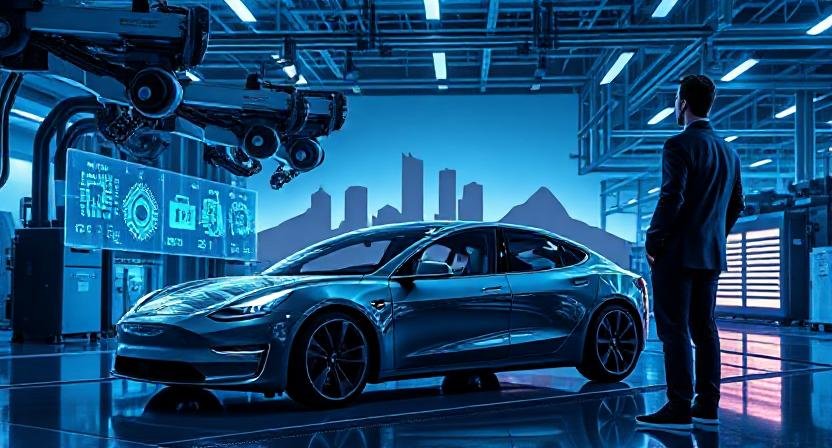
Tesla’s recent moves in the supply chain arena are nothing short of seismic. A $16.5 billion deal with Samsung for advanced AI chips and a $4 billion partnership with LG Chem for battery production are not just business transactions—they’re bold steps toward dominating the future of AI, robotics, and electric vehicles. These deals highlight Tesla’s unmatched ability to secure critical resources, localize manufacturing, and create a supply chain that’s fast, efficient, and resilient. For tech enthusiasts, this is a masterclass in how to build a technological empire in a world of geopolitical tension and supply chain uncertainty.
Key Takeaways
Strategic Partnerships Secure AI Leadership: Tesla’s $16.5B deal with Samsung prioritizes access to a dedicated chip fabrication facility, ensuring a steady supply of AI chips for vehicles, robotaxis, and humanoid robots.
Battery Supply Scaled for Growth: The $4B LG Chem deal bolsters Tesla’s battery production capacity, critical for meeting the soaring demand for electric vehicles, Megapacks, and future robotics.
Localized Manufacturing Reduces Risk: By prioritizing U.S.-based production, Tesla mitigates geopolitical risks tied to global supply chains, particularly in regions like Taiwan.
Supply Chain Flywheel Drives Efficiency: Tesla’s ability to turn inventory quickly and provide demand certainty creates a win-win for suppliers, fostering stronger partnerships and better terms.
AI and Robotics Poised for Dominance: Tesla’s integrated approach to hardware and software, combined with its supply chain prowess, positions it to lead in emerging fields like robotaxis, humanoid robots, and potentially drones.

Tesla's AI Frontier: Robots, Rides, and the Race to Superintelligence
Exploring the rapid advancements in humanoid robotics, autonomous transport, and AI that could multiply global economic output tenfold while navigating production hurdles and societal shifts
Humanoid robots are advancing faster than expected, with prototypes demonstrating precision in tasks like caregiving and factory work, while autonomous vehicles are hitting roads in select cities. These developments point to a future where machines handle dangerous jobs, boost productivity dramatically, and free humans to pursue meaning beyond labor—but scaling production and overcoming regulatory barriers remain key obstacles.
Key Takeaways
Humanoid robots could target a market of 20-50 billion units, generating trillions in revenue at scale, with initial focus on high-value roles like 24-hour medical assistance and hazardous industrial tasks.
Autonomous robotaxis, designed without steering wheels or pedals, have launched in Austin and are expanding to other U.S. cities, promising safer roads and efficiency gains, though regulatory approvals and public trust are slowing broader rollout.
AI progress is accelerating toward superintelligence, potentially curing diseases and eliminating poverty, but safety relies on rigorous truth-seeking and iterative improvements to align systems with human values.
Engineering humanoid robots demands replicating the human body's intricate mechanics, such as hand dexterity, drawing from automotive expertise to achieve lifelike precision and responsiveness.
A compelling long-term mission drives innovation, aligning teams on goals like sustainable energy and multi-planetary life, while rapid experimentation determines success over static products.
Societal challenges include job displacement for 19% of global workers in driving roles, fear of losing control in autonomous systems, and the need for policies like universal basic income to ensure equitable abundance.
By late 2025, robot production faces delays, with Tesla aiming for thousands of units despite setbacks, while AI models like Grok 4 integrate video generation and real-time search for enhanced usefulness.