
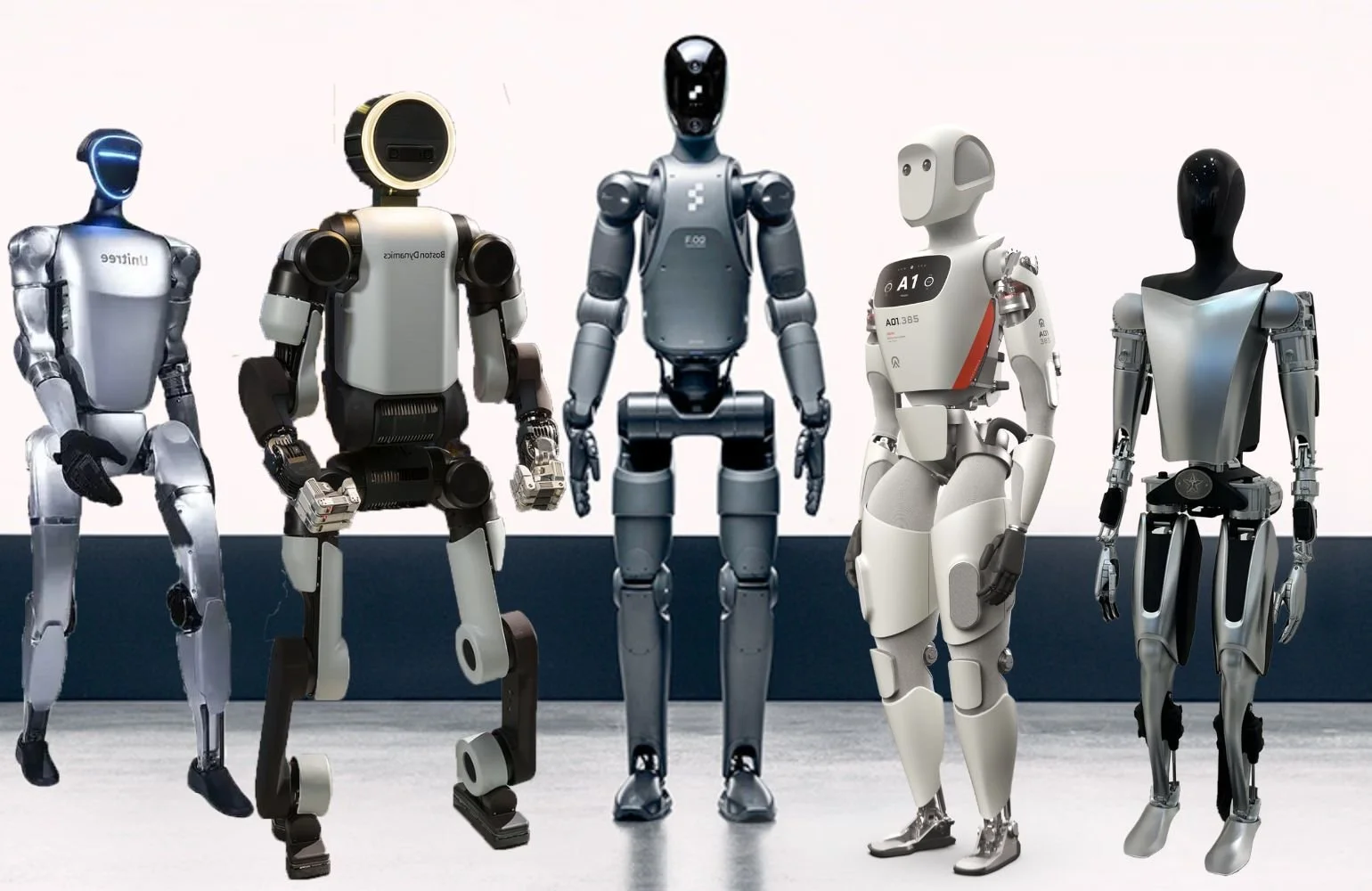
The $40 Trillion Robot Takeover Has Begun
Humanoids just hit their iPhone moment – turning sci-fi into nonstop warehouse reality and rewriting one-third of the global economy.
The convergence happened. Humanoid robots now operate 24/7 in live California warehouses, swapping batteries seamlessly and matching human speed on package sorting for over 60 straight hours. This marks the exact inflection that smartphones triggered in 2007: hardware and software finally aligned, but this time the prize is ten times larger – the entire $40 trillion pool of annual human physical labor across warehouses, farms, hospitals, factories, and every task that moves bodies through space.
Key Takeaways
Three S-curves in AI vision-language-action models, real-plus-synthetic data flywheels, and actuator costs (down 10x in six years thanks to the EV supply chain) aligned in the last 18 months, making capable, affordable humanoids possible at scale.
Robots are already deployed today in automotive body shops, sheet-metal lines, weld inspection, electronics assembly, and logistics centers, filling roles with 90-150% annual turnover where humans quit faster than companies can hire.
First wave targets demographic vacancies created by aging populations and undesirable shifts – Japan’s 3.9:1 eldercare ratio, Germany’s net worker loss in 2026, U.S. trucking shortages climbing toward 160,000 – not eager workers being fired.
Next waves hit 10+ million U.S. material-mover, assembler, and janitor jobs at $30k–$44k median wages, with potential for all three waves to compress into five years if software generalizes and costs drop faster than models predict.
A single unstoppable flywheel links AI training clusters, battery tech, vehicle production lines, and robot manufacturing; pausing it means surrendering competitiveness against China and domestic manufacturing goals.
Visible optics – named robots on livestreams, viral photos of humanoids at stations – will drive regulation, tariffs, union carve-outs, and city-vs-country races long before pure economics play out.
Winners under 35 will treat AI and robotics as the new electricity: adopt tools aggressively, align them with personal strengths, and build new categories (autonomous service fleets, hazardous-site automation) that create abundance for the bottom 20% while the adaptive middle thrives.
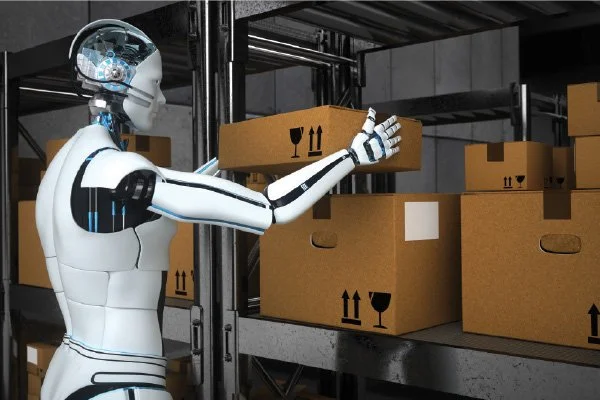
Robotaxis, Humanoids, and the New Logistics Empire: How Automation Will Make Goods and Labor Nearly Free
Inside the convergence of AI robots, autonomous fleets, and centralized supply chains reshaping the global economy.
Recent breakthroughs in humanoid robots and logistics infrastructure point to a future where physical goods move as easily as data in the cloud, while autonomous labor handles repetitive work around the clock. These shifts could drive costs toward zero for transportation, storage, and manufacturing—opening massive opportunities for businesses of any size while concentrating power in the hands of a few tech giants. The pieces are falling into place faster than most realize.
Key Takeaways
Humanoid robots are scaling production quickly, with at least one company now building a unit per day and using innovative wireless foot-charging pads that let them operate continuously without leaving their workstation.
Amazon has launched an end-to-end logistics platform that lets any business plug directly into its warehousing, shipping, and delivery network—essentially turning physical supply chains into a cloud service.
When combined with self-driving vehicles and humanoids, this infrastructure could make point-to-point movement and storage of goods extremely cheap and accessible, even for small operators with limited capital.
The result is accelerating centralization: a handful of companies could dominate labor, logistics, and data, echoing historical monopolies like railroads or oil but at global scale.
Tesla’s Robotaxi rollout faces a practical production bottleneck; early Cybercab output may include steering wheels and pedals to keep factory lines running at full capacity until unsupervised fleets can absorb volume.
Unsupervised autonomy, once achieved, unlocks enormous profit-per-mile margins—potentially $0.60–$1.00—driving rapid fleet expansion and dramatic company re-ratings.
Broader forces include corporations acting as the real power centers in geopolitics, with examples like China functioning as a single massive enterprise, alongside America’s commanding lead in AI, space launch, and defense technology.
AI Leapfrogging: El Salvador's Gamble on Humanoids and Grok to Skip Traditional Development
From cleaning up gang violence to powering education with advanced AI and investing in robotics and geothermal energy, one Central American nation is charting an unconventional path forward. Meanwhile, discussions around AI abundance highlight how human value may increasingly center on irreplaceable in-person experiences and skill-based pursuits.
El Salvador offers a compelling case study in using security reforms as a foundation for rapid technological advancement. By prioritizing AI adoption, humanoid robots, data centers, and renewable energy from its volcanoes, the country aims to bypass decades of incremental progress. This comes as AI systems promise abundance, forcing a reevaluation of human roles—not through replacement, but through new forms of meaning found in live interactions, crafts, and personal mastery aided by intelligent machines.
Key Takeaways
Heavy but non-oppressive police presence has contributed to genuine public happiness and family-friendly public spaces after removing gangs from daily life.
Strategic focus on tech leapfrogging includes humanoids for labor, AI agents, data centers, solar and geothermal power expansion, and Bitcoin mining using volcanic energy.
Public education is transitioning to systems powered by advanced AI like Grok to rapidly build workforce capabilities despite historical under-education challenges.
In an era of AI-driven abundance, premium value accrues to authentic in-person experiences that cannot be easily replicated or spoofed digitally.
AI and robots can serve as highly effective coaches and training partners for sports, crafts, and hobbies, enabling continuous human skill improvement and deeper engagement.
Tesla is progressing on robotaxi deployment with hardware enhancements like improved memory bandwidth for better reasoning in edge cases, alongside Optimus humanoid development as a key long-term driver.
Geopolitical tensions and recent conflicts are accelerating innovation in affordable drone and defense technologies, favoring agile startups over traditional contractors.
Personal branding through content creation serves as a powerful marketing tool for in-person events and services in an AI-saturated media landscape.
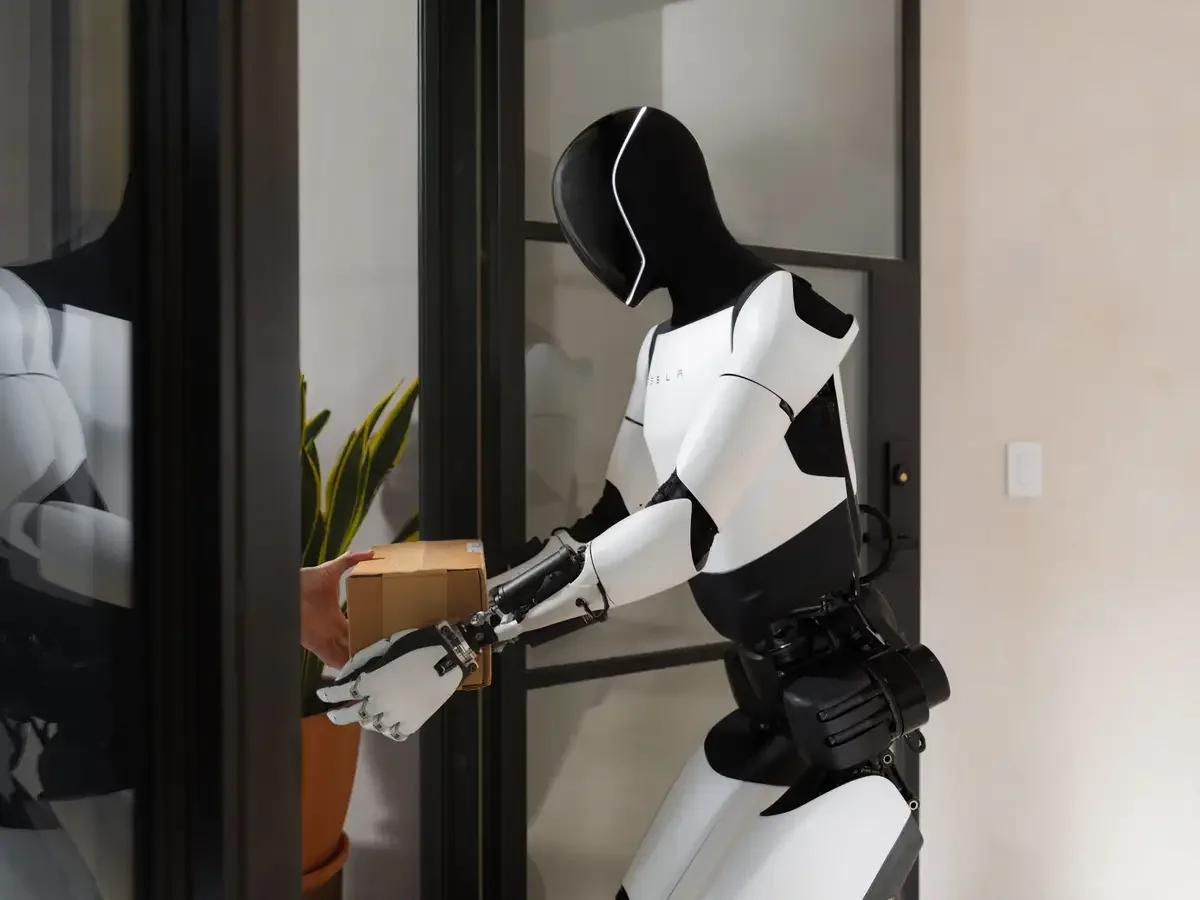
Optimus: The Robot Revolution Targeting $40 Trillion in Human Labor
How AI-Powered Humanoids Could Drive an Era of Abundance—or Economic Upheaval
Humanoid robots stand poised to transform the global economy by automating vast swaths of physical work, tapping into a $40 trillion annual labor market. Advances in AI enable these machines to learn tasks rapidly, while manufacturing expertise allows production at unprecedented scale. This shift promises lower costs and higher efficiency, but it also raises questions about job displacement and regulatory hurdles.
Key Takeaways
Humanoid robots target the $40 trillion global labor market, dwarfing industries like automotive ($3 trillion) and smartphones (under $1 trillion).
AI forms the core intelligence, drawing from self-driving tech to process visual inputs and execute physical actions.
Scaling production to millions of units leverages existing manufacturing capabilities, creating a data flywheel for rapid AI improvements.
Initial deployments focus on factories for repetitive tasks, expanding to warehousing, agriculture, construction, and healthcare.
Economic models show robots costing $20,000–$30,000 could replace human labor at a fraction of annual wages, with added savings on insurance and benefits.
Risks include timeline delays, regulatory barriers, technical challenges in dexterity, and competition from other firms.
Long-term, abundant robot labor could eliminate scarcity constraints, enabling massive economic growth, but requires careful management to avoid societal disruption.
Tesla's AI Edge: Pioneering Autonomy in a World Not Ready
Revolutionizing Transport and Labor with Self-Driving Tech and Humanoid Bots
Tesla stands on the brink of transforming daily life through advanced AI systems in vehicles and robots, outpacing current laws and sparking both innovation and societal shifts. This newsletter explores how these technologies promise safer roads, affordable mobility, and efficient labor—but only if handled with care to benefit everyone.
Key Takeaways
Tesla's self-driving software is advancing to allow drivers to disengage completely, reducing accidents through constant vigilance and 360-degree awareness.
Humanoid robots aim for mass production, starting at a million units annually, with costs dropping to enable tasks from factory work to home chores at under $3 per hour.
These innovations could slash transportation costs to below 30 cents per mile, making private, door-to-door rides as affordable as public transit.
Job displacement looms large for drivers, warehouse workers, and manual laborers, as robots handle tasks without rest or rights.
Regulations lag behind tech capabilities, creating friction, but widespread adoption could revitalize communities by lowering costs and improving access.
Success hinges on ensuring these tools uplift underserved areas, preventing backlash and fostering broad economic gains.

Tesla's AI Revolution: From Wheels to Humanoids
Redefining Mobility, Labor, and the Global Economy
Tesla's push into embodied AI isn't just incremental innovation—it's the catalyst for entirely new markets worth trillions, from autonomous fleets to robots handling everyday tasks. Dive into how this technology could generate unprecedented wealth while reshaping society, and why owning a piece of it might be the smartest move for the coming decade.
Key Takeaways
Tesla's vehicles serve as the entry point for widespread AI adoption, evolving from simple cars to intelligent systems capable of full autonomy.
Robotaxis are poised for rapid scaling, potentially undercutting traditional ride-sharing with costs below $1 per mile and immediate profitability.
Humanoid robots like Optimus could handle 50-80% of physical labor by 2030, creating a $40 trillion market and enabling new applications from factories to Mars exploration.
Wall Street is beginning to recognize Tesla's AI potential, with valuations reflecting future robotaxi and robotics revenues rather than current auto sales.
Societal shifts may require universal basic income to address job displacement, ensuring broader access to AI benefits and mitigating inequality.
Investing in Tesla stock offers a straightforward path to participate in AI-driven wealth creation, despite short-term volatility and high valuations.