

The Model Y Problem: Why AI Won't Take Your Job as Fast as the Headlines Claim
The best product on the planet still can’t get into most garages, and that same adoption friction is what gives the economy room to absorb AI - unless a slow bleed pushes unemployment to 7% and the ballot box turns.
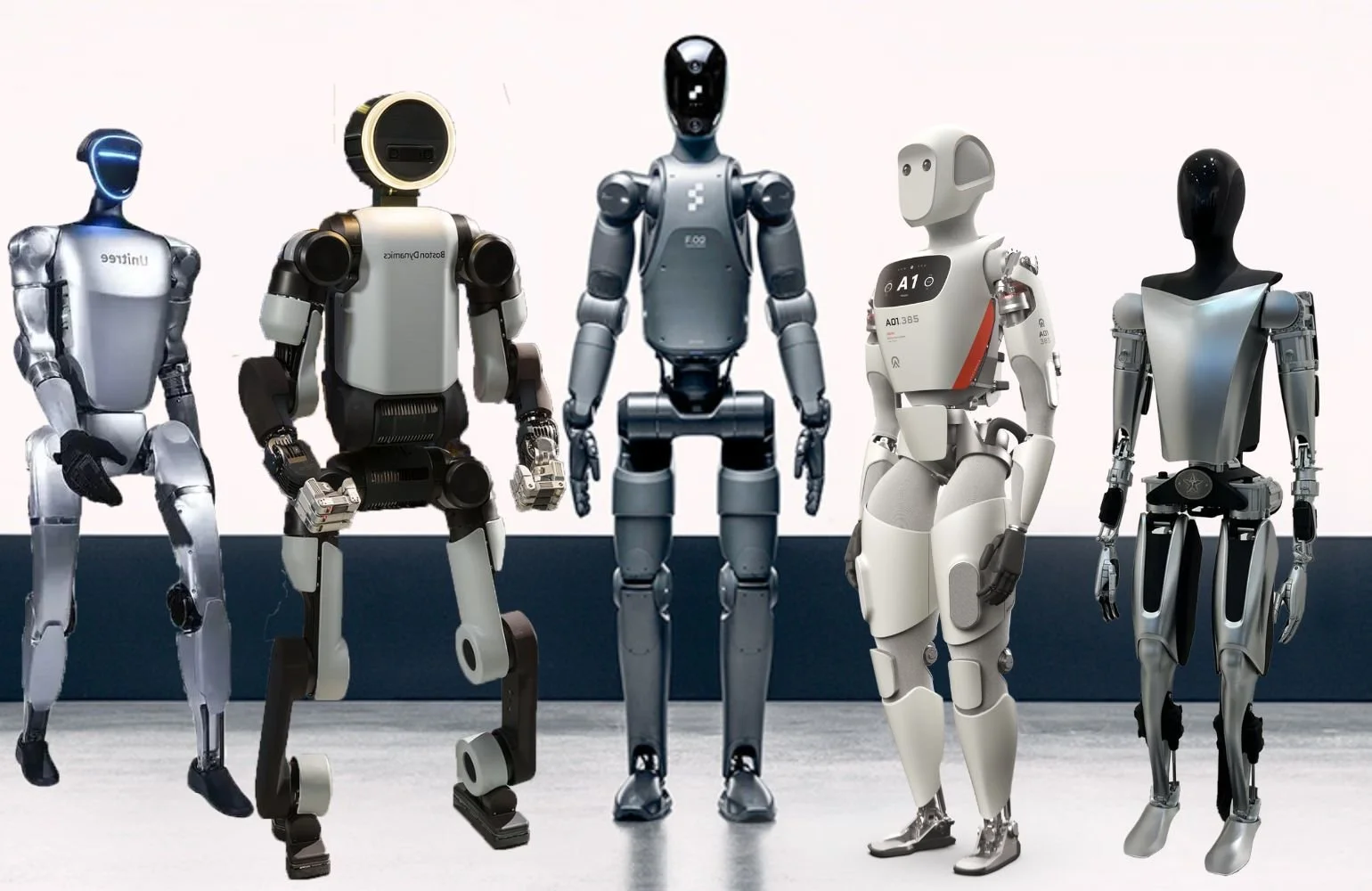
The $40 Trillion Robot Takeover Has Begun
Humanoids just hit their iPhone moment – turning sci-fi into nonstop warehouse reality and rewriting one-third of the global economy.
The convergence happened. Humanoid robots now operate 24/7 in live California warehouses, swapping batteries seamlessly and matching human speed on package sorting for over 60 straight hours. This marks the exact inflection that smartphones triggered in 2007: hardware and software finally aligned, but this time the prize is ten times larger – the entire $40 trillion pool of annual human physical labor across warehouses, farms, hospitals, factories, and every task that moves bodies through space.
Key Takeaways
Three S-curves in AI vision-language-action models, real-plus-synthetic data flywheels, and actuator costs (down 10x in six years thanks to the EV supply chain) aligned in the last 18 months, making capable, affordable humanoids possible at scale.
Robots are already deployed today in automotive body shops, sheet-metal lines, weld inspection, electronics assembly, and logistics centers, filling roles with 90-150% annual turnover where humans quit faster than companies can hire.
First wave targets demographic vacancies created by aging populations and undesirable shifts – Japan’s 3.9:1 eldercare ratio, Germany’s net worker loss in 2026, U.S. trucking shortages climbing toward 160,000 – not eager workers being fired.
Next waves hit 10+ million U.S. material-mover, assembler, and janitor jobs at $30k–$44k median wages, with potential for all three waves to compress into five years if software generalizes and costs drop faster than models predict.
A single unstoppable flywheel links AI training clusters, battery tech, vehicle production lines, and robot manufacturing; pausing it means surrendering competitiveness against China and domestic manufacturing goals.
Visible optics – named robots on livestreams, viral photos of humanoids at stations – will drive regulation, tariffs, union carve-outs, and city-vs-country races long before pure economics play out.
Winners under 35 will treat AI and robotics as the new electricity: adopt tools aggressively, align them with personal strengths, and build new categories (autonomous service fleets, hazardous-site automation) that create abundance for the bottom 20% while the adaptive middle thrives.

Optimus: The Robot Revolution Targeting $40 Trillion in Human Labor
How AI-Powered Humanoids Could Drive an Era of Abundance—or Economic Upheaval
Humanoid robots stand poised to transform the global economy by automating vast swaths of physical work, tapping into a $40 trillion annual labor market. Advances in AI enable these machines to learn tasks rapidly, while manufacturing expertise allows production at unprecedented scale. This shift promises lower costs and higher efficiency, but it also raises questions about job displacement and regulatory hurdles.
Key Takeaways
Humanoid robots target the $40 trillion global labor market, dwarfing industries like automotive ($3 trillion) and smartphones (under $1 trillion).
AI forms the core intelligence, drawing from self-driving tech to process visual inputs and execute physical actions.
Scaling production to millions of units leverages existing manufacturing capabilities, creating a data flywheel for rapid AI improvements.
Initial deployments focus on factories for repetitive tasks, expanding to warehousing, agriculture, construction, and healthcare.
Economic models show robots costing $20,000–$30,000 could replace human labor at a fraction of annual wages, with added savings on insurance and benefits.
Risks include timeline delays, regulatory barriers, technical challenges in dexterity, and competition from other firms.
Long-term, abundant robot labor could eliminate scarcity constraints, enabling massive economic growth, but requires careful management to avoid societal disruption.