
Musk Lifts Tesla Stake to 20% After SpaceX Listing, Clearing Path for Historic Merger
A June 2026 options exercise, a public SpaceX, and an xAI combination already done leave Tesla as the last piece of a roughly $4 trillion ecosystem deal.

Tesla Files Megapod Trademark for Modular AI Compute Hardware
A June 2026 USPTO filing for modular data-center systems, paired with AI5, energy storage, and a five-layer stack, points Tesla toward selling inference compute instead of only buying it.
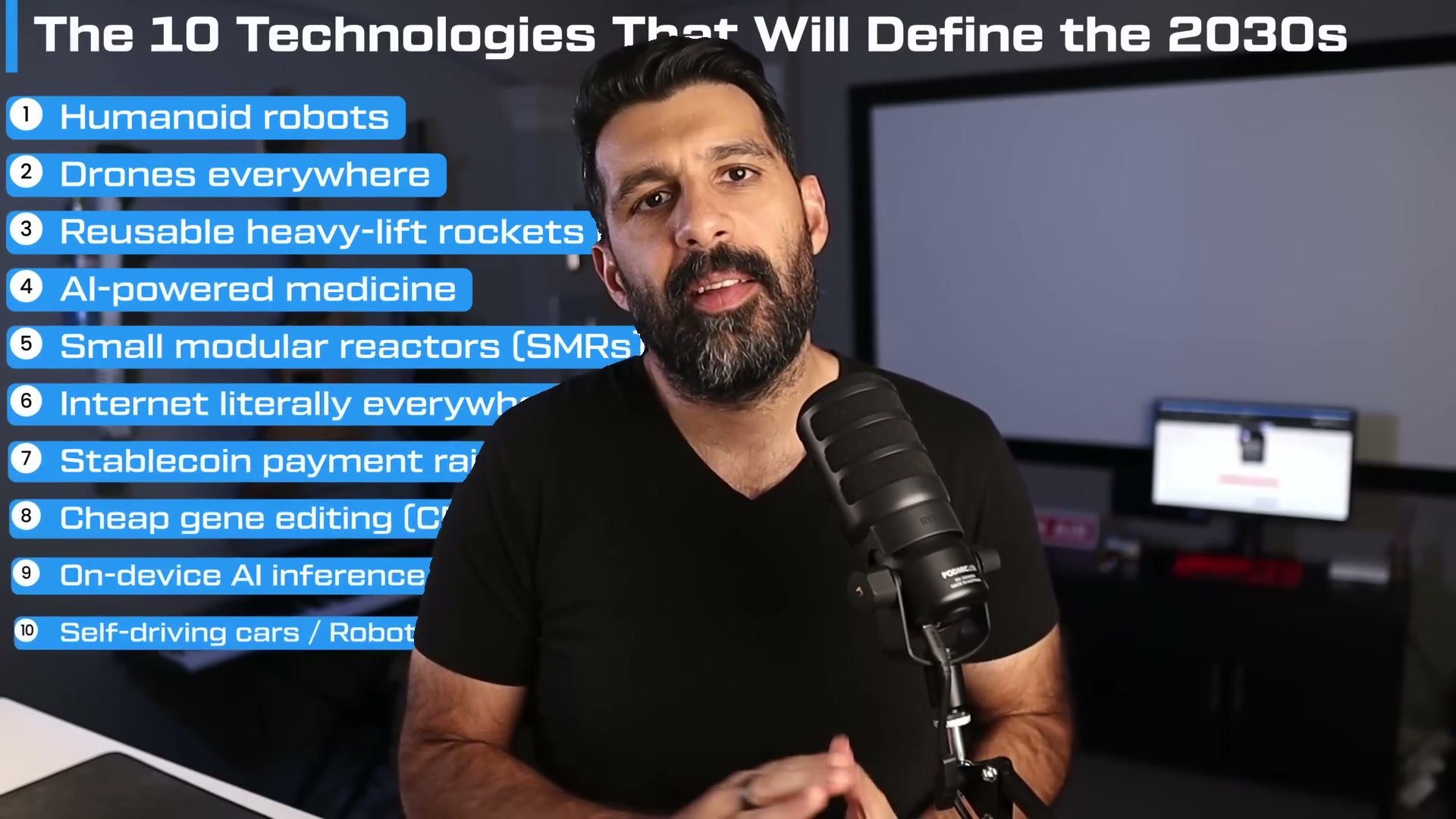
Ten Deployable Technologies Will Redefine Ordinary Life by the Mid-2030s
From robo-taxis and on-device AI chips to CRISPR, stablecoins, Starship, and humanoid labor at roughly $2 an hour, the stack that hits mass scale between 2030 and 2039 is already leaving the lab.

Five Misread Bets Across Musk’s Empire Point to Software Margins, Humanoids, and Multiplanetary Infrastructure
From $99-a-month FSD on cars people already own to Gen 3 Optimus on the old Model S/X floor, the stack that matters is recurring intelligence - not the flashiest hardware headline.
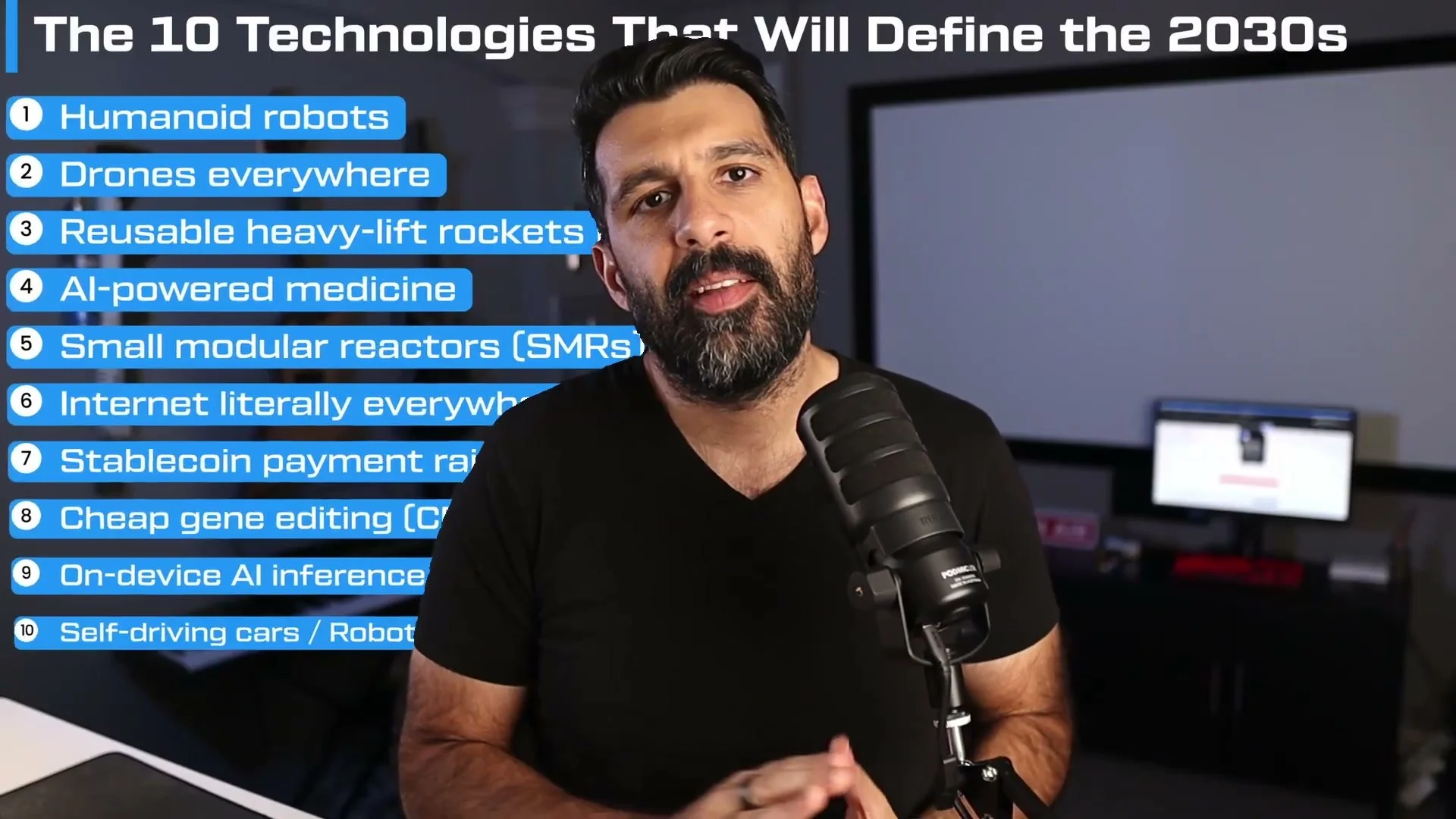
Ten Deployable Technologies Will Rewrite Ordinary Life By The Mid-2030s
From $2-an-hour humanoid labor and vision-only robotaxis to CRISPR cost curves and Starship’s 60-to-80x launch drop, the decade’s winners are specific machines hitting mass scale between 2030 and 2039.
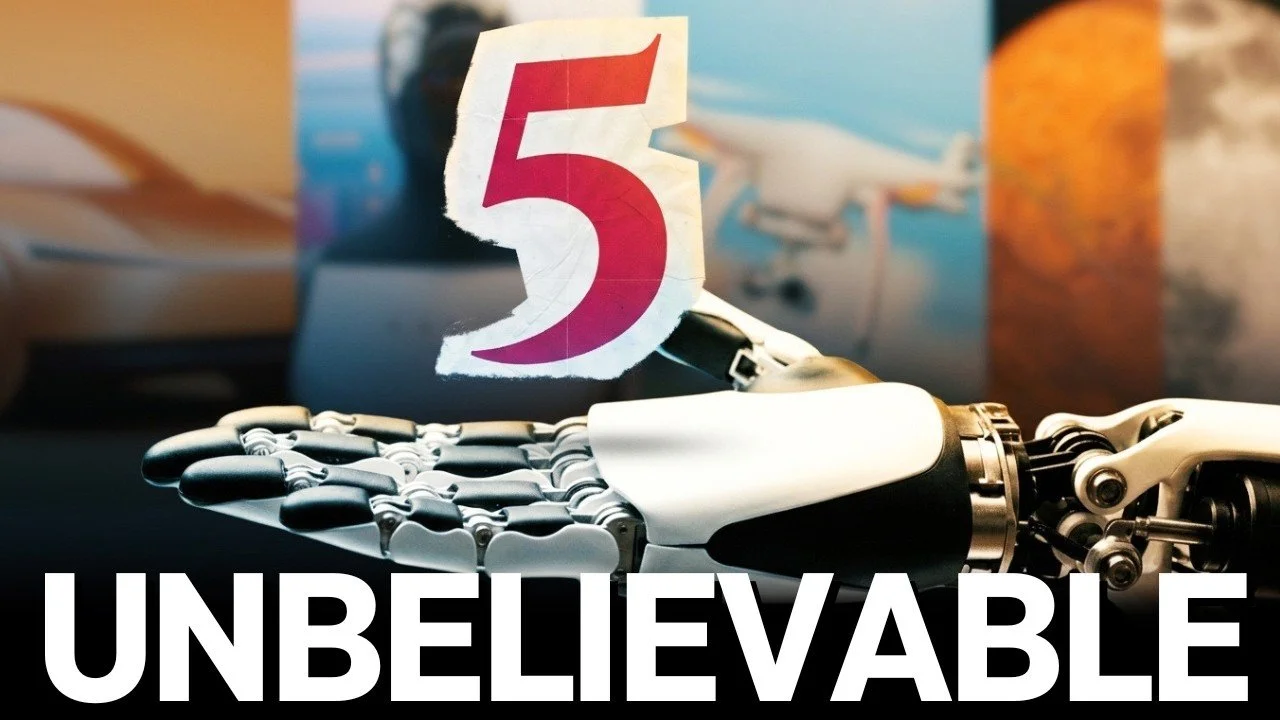
Five Ideas That Misread the Entire Musk Empire
FSD subscriptions, Optimus, drones, one intelligence stack, and a Moon-and-Mars endgame reframe how Tesla, SpaceX, and the rest of the complex actually fit together.
Tesla Tears Down Fremont Model S and X Lines for Optimus
A 46-day decommissioning of the original premium vehicle floor is set to free space for a humanoid line targeting as much as one million robots a year, while CyberCab rides, Starship static fire, China Model Y Performance, and Grok trials advance in parallel.
Musk Lifts Tesla Voting Power to 20% Days After the $1.7 Trillion SpaceX-xAI IPO
By exercising 304 million options from his 2018 award five days after the newly merged SpaceX-xAI began trading, Musk is quietly assembling the control stack needed to bolt Tesla onto a nascent $4 trillion machine.
Musk Warns Optimus Production Will Start Extremely Slow at Fremont
Tesla is building a modular Optimus line in Fremont designed for iteration before scale, and the deliberately slow start is the strongest signal yet that the humanoid robot is a twenty-year manufacturing story rather than a near-term revenue event.
SpaceX Signs $6.3 Billion AI Compute Lease With Reflection AI as Texas Court Clears Starbase Path
A $150-million-per-month lease of NVIDIA GB300 capacity to Reflection AI, a unanimous Texas Supreme Court win over Boca Chica beach closures, and United’s first wide-body Starlink transatlantic flight together reframe SpaceX as a multi-market infrastructure company while Tesla fights to control the
Tesla Job Listing Signals In-House Push Into Distributed AI Training and Inference
Two Palo Alto software engineering roles built around PyTorch and low-level GPU tooling point to Tesla owning the AI compute layer that sets how fast it can scale FSD, Optimus, and the CyberCab, even as viral crash narratives and safety scrutiny escalate alongside.

The Master Plan You Can't Unsee: Wiring Civilization's Next Foundation
How energy systems, self-driving fleets, humanoid robots, satellite networks, and orbital infrastructure are stacking into one coherent architecture for abundance—and why Mars ambitions are already reshaping what is possible on Earth.
A single Tesla completing a 13,000-mile coast-to-coast journey on full self-driving in January 2026 without any human intervention on the controls was more than an autonomy milestone. It marked the visible activation of something larger: a stacked foundation of technologies now advancing in parallel across energy, transport, labor, intelligence, connectivity, and space. The most valuable pattern is not any single product but the way these layers reinforce one another, with physics-first requirements for multi-planetary settlement acting as the forcing function that accelerates practical progress everywhere else. Cost curves in AI, robotics, and solar are collapsing at the same moment, pointing toward a period where intelligence, physical work, and energy become abundant enough to reorder how economies measure value.
Key Takeaways
Eight interlocking layers—energy generation and storage, physical transport, humanoid robotics for labor, AI agents for knowledge work, frontier model intelligence, global satellite networks, off-world transport, and direct brain-computer interfaces—are being built together rather than as isolated bets.
Reusable orbital-class rockets and mass-market electric vehicles both moved from expert consensus of impossibility to routine operation, showing that compressed timelines often precede large-scale delivery once the underlying engineering locks in.
Hardware and data integrations across projects, such as satellite antennas embedded in vehicle roofs, energy storage powering training clusters, and vehicle fleets supplying training data for robots, create closed loops that multiply progress beyond what any single company could achieve alone.
The requirement to settle Mars drives demand for electric propulsion, robotic construction crews, subsurface habitats, and reliable interplanetary links—technologies that simultaneously relieve energy, labor, infrastructure, and connectivity constraints on Earth.
Observed cost trajectories show AI inference dropping by roughly 36 times in two years, robotic labor approaching a couple of dollars per hour at scale, and solar generation costs having already fallen 99 percent over recent decades, with further declines continuing.
Physical infrastructure at new orders of magnitude, including chip fabrication targeting 100–200 billion specialized AI units per year and launch costs falling toward $10–100 per kilogram to orbit, is enabling both terrestrial AI expansion and space industrialization at the same time.
Musk's Picks and Shovels: How Autonomy and AI Will Power the Next Civilization
Tesla's FSD leaps, Model Y dominance, US-China manufacturing deals, and robotic logistics are laying the groundwork for a transformed economy.
The pace of real-world autonomy is already delivering tangible gains today, with even older versions of advanced driver-assistance systems proving reliable enough for daily commutes and family use. At the same time, high-level diplomatic meetings signal a potential trillion-dollar wave of manufacturing investment flowing back to the United States, powered by Chinese production expertise. Layer in humanoid robots, autonomous heavy trucks, and drone-enabled delivery networks, and the Musk ecosystem emerges as the foundational infrastructure—the literal picks and shovels—for the next era of economic growth.
Key Takeaways
The Tesla Model Y ranks as the best-selling vehicle on the planet for three straight years, leading sales in California and even the top three major cities in China despite aggressive local competition.
Current supervised Full Self-Driving software remains highly capable a full year after its last major update, setting the stage for unsupervised operation that eliminates the need for constant human oversight and enables entirely new use cases like sleeping during long trips.
Upcoming US-China engagements involving key technology and business leaders point toward massive onshoring deals, with Chinese manufacturers potentially bringing high-scale production know-how to American factories in exchange for market access.
Legacy US automakers face structural decline, concentrated in SUVs, trucks, and a handful of models, opening pathways for pivots into defense manufacturing amid rising national security budgets.
Add-on robotic kits already automate heavy equipment like excavators for solar-farm construction, slashing labor hours and unlocking 24/7 operation in energy infrastructure projects.
Musk companies collectively supply the core layers future civilization will run on: autonomous passenger transport, humanoid labor, long-haul freight, satellite connectivity, and energy storage.
Logistics economics shift dramatically once highway autonomy arrives—even partial adoption on interstates cuts driver costs and fuel volatility, while drone-equipped vans and warehouse robots reshape last-mile delivery speed and density.
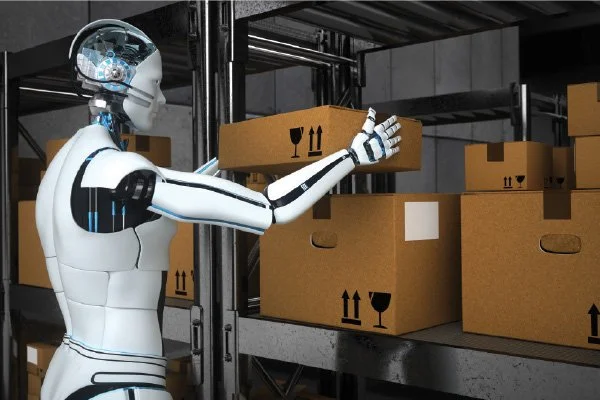
Robotaxis, Humanoids, and the New Logistics Empire: How Automation Will Make Goods and Labor Nearly Free
Inside the convergence of AI robots, autonomous fleets, and centralized supply chains reshaping the global economy.
Recent breakthroughs in humanoid robots and logistics infrastructure point to a future where physical goods move as easily as data in the cloud, while autonomous labor handles repetitive work around the clock. These shifts could drive costs toward zero for transportation, storage, and manufacturing—opening massive opportunities for businesses of any size while concentrating power in the hands of a few tech giants. The pieces are falling into place faster than most realize.
Key Takeaways
Humanoid robots are scaling production quickly, with at least one company now building a unit per day and using innovative wireless foot-charging pads that let them operate continuously without leaving their workstation.
Amazon has launched an end-to-end logistics platform that lets any business plug directly into its warehousing, shipping, and delivery network—essentially turning physical supply chains into a cloud service.
When combined with self-driving vehicles and humanoids, this infrastructure could make point-to-point movement and storage of goods extremely cheap and accessible, even for small operators with limited capital.
The result is accelerating centralization: a handful of companies could dominate labor, logistics, and data, echoing historical monopolies like railroads or oil but at global scale.
Tesla’s Robotaxi rollout faces a practical production bottleneck; early Cybercab output may include steering wheels and pedals to keep factory lines running at full capacity until unsupervised fleets can absorb volume.
Unsupervised autonomy, once achieved, unlocks enormous profit-per-mile margins—potentially $0.60–$1.00—driving rapid fleet expansion and dramatic company re-ratings.
Broader forces include corporations acting as the real power centers in geopolitics, with examples like China functioning as a single massive enterprise, alongside America’s commanding lead in AI, space launch, and defense technology.
AI Leapfrogging: El Salvador's Gamble on Humanoids and Grok to Skip Traditional Development
From cleaning up gang violence to powering education with advanced AI and investing in robotics and geothermal energy, one Central American nation is charting an unconventional path forward. Meanwhile, discussions around AI abundance highlight how human value may increasingly center on irreplaceable in-person experiences and skill-based pursuits.
El Salvador offers a compelling case study in using security reforms as a foundation for rapid technological advancement. By prioritizing AI adoption, humanoid robots, data centers, and renewable energy from its volcanoes, the country aims to bypass decades of incremental progress. This comes as AI systems promise abundance, forcing a reevaluation of human roles—not through replacement, but through new forms of meaning found in live interactions, crafts, and personal mastery aided by intelligent machines.
Key Takeaways
Heavy but non-oppressive police presence has contributed to genuine public happiness and family-friendly public spaces after removing gangs from daily life.
Strategic focus on tech leapfrogging includes humanoids for labor, AI agents, data centers, solar and geothermal power expansion, and Bitcoin mining using volcanic energy.
Public education is transitioning to systems powered by advanced AI like Grok to rapidly build workforce capabilities despite historical under-education challenges.
In an era of AI-driven abundance, premium value accrues to authentic in-person experiences that cannot be easily replicated or spoofed digitally.
AI and robots can serve as highly effective coaches and training partners for sports, crafts, and hobbies, enabling continuous human skill improvement and deeper engagement.
Tesla is progressing on robotaxi deployment with hardware enhancements like improved memory bandwidth for better reasoning in edge cases, alongside Optimus humanoid development as a key long-term driver.
Geopolitical tensions and recent conflicts are accelerating innovation in affordable drone and defense technologies, favoring agile startups over traditional contractors.
Personal branding through content creation serves as a powerful marketing tool for in-person events and services in an AI-saturated media landscape.
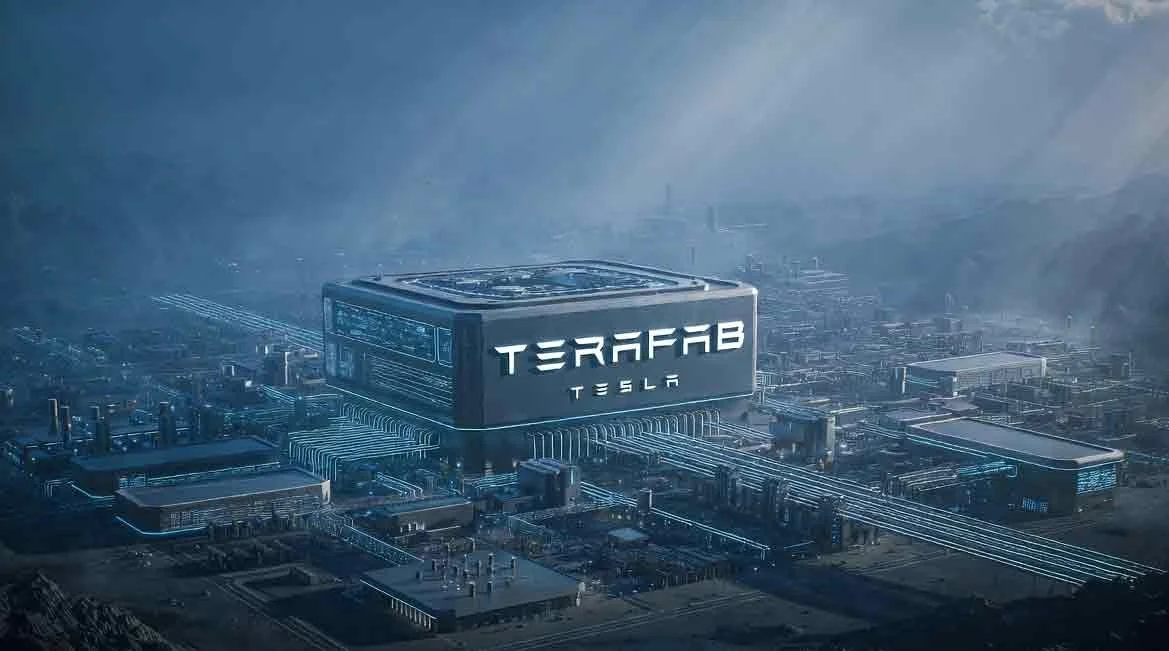
Elon Musk’s $25 Billion Chip Factory Is the Biggest Industrial Bet Ever Made
One Texas plant could crank out enough custom AI silicon to power a terawatt of compute—most of it headed to space—while rewriting the rules on design speed and efficiency.
A single factory under construction in Texas is preparing to manufacture custom AI chips at a scale that would consume more advanced semiconductor capacity than most nations currently possess. The project aims for 200 billion chips per year and one terawatt of annual compute power, with roughly 80 percent destined for orbital AI satellites launched by SpaceX. The real game-changer lies in how the factory compresses chip design cycles from months to weeks and uses advanced packaging techniques to stretch limited high-end lithography resources far beyond what traditional foundries achieve. This approach turns a seemingly impossible supply-chain bottleneck into a structural advantage for autonomous vehicles, humanoid robots, and space-based AI systems.
Key Takeaways
The factory starts at 100,000 wafer starts per month and scales to 1 million—roughly 70 percent of TSMC’s current worldwide output from all its plants combined.
Every two-nanometer chip relies on extreme ultraviolet lithography machines produced by a single company in a Dutch town of 45,000 people; global production sits at only 50 to 60 units per year, with every machine already spoken for years ahead.
In-house mask-making and rapid wafer runs shrink chip iteration cycles from three-to-four months down to one-to-two weeks, delivering five-to-ten times faster design progress than standard foundry loops.
Chiplet architecture limits expensive EUV usage to only the compute cores while sourcing memory and input/output dies on older, readily available nodes—boosting yields from 30-40 percent on monolithic dies to around 80 percent.
Custom inference silicon optimized specifically for Tesla workloads removes idle transistors, delivering major gains in power efficiency, latency, and cost—critical for extending robot runtime and lowering per-unit economics to $2 per hour of labor.
The strategy outsources heavy EUV volume work to existing foundries while owning the design-to-packaging loop, creating a compounding moat that widens each year as competitors remain locked into general-purpose chips.
Geopolitical risks around Taiwan and China’s slower EUV progress make localized, rapid-iteration capacity a strategic hedge for Western AI leadership.

Why Musk’s TeraFab Chip Factory Is Actually Insane
The lithography wall standing between today’s AI boom and tomorrow’s terawatt-scale future—and the clever paths that could smash through it.
Tesla’s TeraFab project isn’t just another factory announcement. It’s a direct assault on the single hardest problem in modern computing: turning raw silicon into the chips that will power millions of humanoid robots, autonomous vehicles, orbital AI constellations, and data-center-scale training clusters. The vision is breathtaking—terawatt-scale compute—but the physics and supply-chain math reveal why this might be the most ambitious manufacturing bet in tech history.
Key Takeaways
Cutting-edge EUV lithography machines are produced at a rate of only 50–60 per year worldwide, with plans to reach 100 by 2030—orders of magnitude short of what terawatt ambitions require.
Roughly 3.5 EUV machines are needed to sustain one gigawatt of advanced-chip output; scaling to terawatts implies a need for thousands of these machines cumulatively.
For inference-heavy workloads (robots, self-driving, satellites), mature 7 nm and larger DUV processes can be ramped far faster and with multiple suppliers, offering a practical near-term bridge.
Maskless alternatives such as multi-beam helium particle lithography promise finer features, dramatically faster design iteration, and long-term scalability beyond today’s photon-based limits.
Success hinges on a phased playbook: deep supplier partnerships for knowledge transfer, rapid internal R&D fabs, aggressive supply-chain acceleration, and AI-augmented engineering to compress decade-long timelines into years.
Tesla Just Built the Google of Atoms
The complete physical AI platform no competitor can replicate—and why it will define the next 20 years of technology
The physical world now has its dominant platform. One company has quietly assembled every critical layer—custom silicon, world-class AI models, battery chemistry, factories that scale like nothing else, vast real-estate holdings, and a global logistics network—and wired them together into a single, accelerating flywheel. The result is faster innovation, lower costs, and a data advantage that grows exponentially every day. This is not a car company with side projects. It is the infrastructure layer for the atom economy, and the implications stretch far beyond stock prices.
Key Takeaways
Tesla operates a full physical AI stack: computation, AI models, chemistry, manufacturing, land/real estate, and logistics—all internally controlled and mutually reinforcing.
Manufacturing functions as the CPU, real estate as storage, and logistics as the network in an atoms-based computer model that mirrors digital computing.
Billions of real-world driving miles feed a single neural architecture used for both autonomous vehicles and humanoid robots, creating a data flywheel no rival can match.
In-house battery chemistry, repurposed legacy factories, and continent-spanning energy assets deliver cost and infrastructure advantages that compound across every layer.
Vertical integration turns individual businesses into a cascading advantage: cheaper chips power better AI, better AI improves manufacturing, improved manufacturing lowers battery prices, and so on.
Single-layer competitors face structural economic disadvantages that widen over time, regardless of early leads in narrow domains.
Historical platform cycles suggest massive regulatory scrutiny is coming once dominance becomes obvious.
Elon's Empire Expands: The SpaceX-xAI Merger Ignites a New Era
Revolutionizing AI, Space Tech, and Global Innovation Through Bold Consolidations
The tech world just witnessed a lightning-fast merger between SpaceX and xAI, turning rumors into reality overnight. This move signals massive shifts in how advanced AI integrates with space infrastructure, paving the way for breakthroughs in compute power, robotics, and national security assets. Readers will discover how these changes could reshape industries from agriculture to defense, with practical implications for efficiency and scalability.
Key Takeaways
SpaceX and xAI's merger accelerates AI-driven advancements in space tech, potentially enabling massive inference compute via satellite networks.
Optimus robots promise versatile skills learned through global networks, with business models likely favoring subscriptions over complex tiered pricing.
AI agents are evolving to handle context without creep, allowing seamless integration across tools like drones and VR for real-world applications.
Tesla's focus on U.S.-based factories hints at prioritizing national security, limiting expansion in markets like China and Europe.
Future data centers in space could outpace earthly ones economically, drawing investments from giants like Google and Nvidia.
AI's role in fields like plant breeding could speed up innovations, such as perennial grains, reducing agricultural labor dramatically.
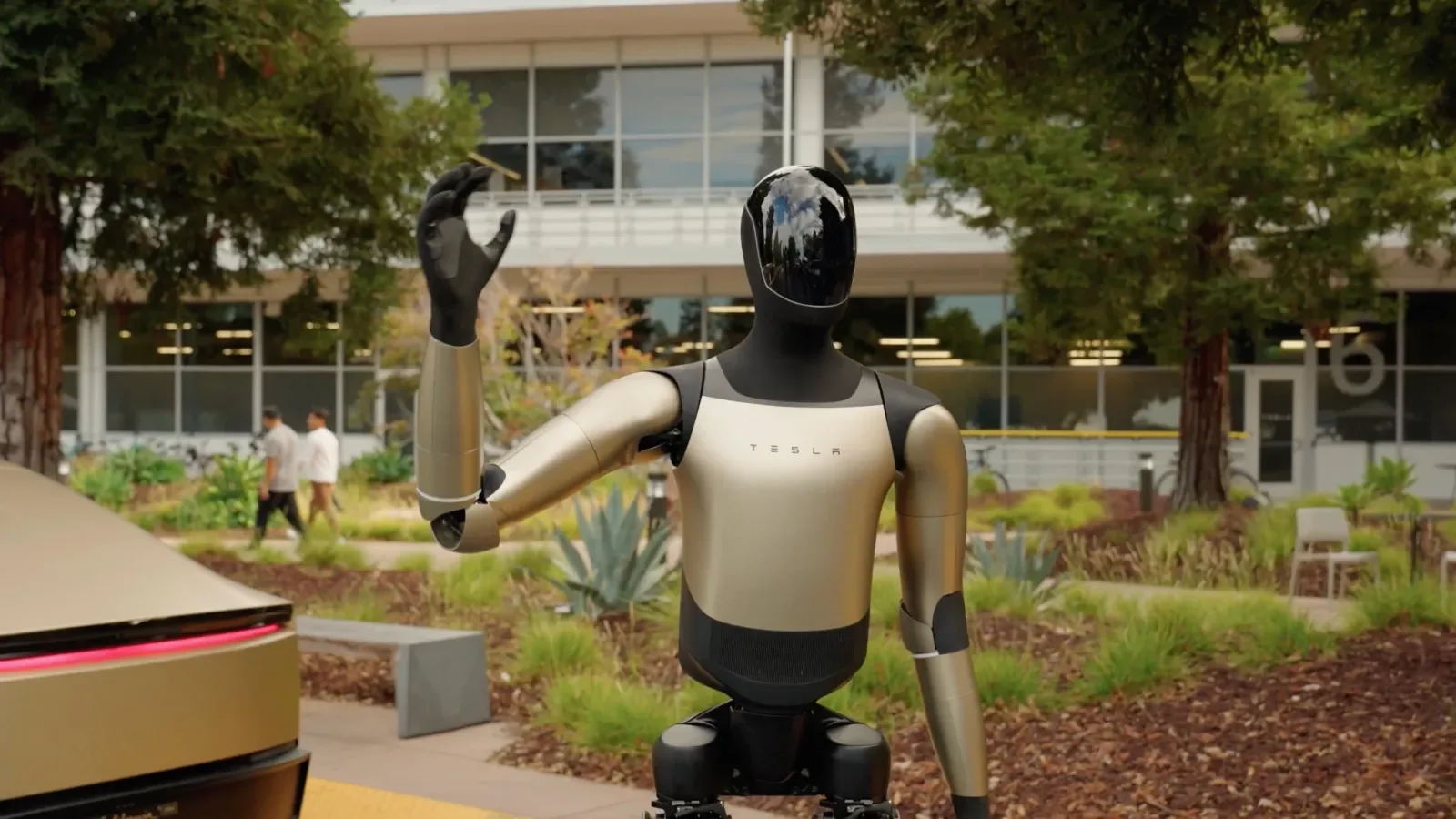
Why Tesla's Optimus Will Dominate the Robot Revolution
The Hardware Bet That's Changing Everything
Tesla's approach to building humanoid robots sets it apart by prioritizing future-proof hardware over immediate functionality. While competitors focus on simpler designs that work well today, Tesla invests in complex systems that will unlock human-like capabilities as AI advances rapidly.
Key Takeaways
Tesla designs Optimus with hands featuring 22 degrees of freedom, aiming for near-human dexterity from the start, even if it means slower short-term progress.
Other companies use simpler grippers with fewer degrees of freedom to deploy robots quickly in factories, but this limits their potential for advanced tasks.
AI improvements will allow software updates to enhance Optimus without hardware redesigns, mirroring the evolution of Tesla's self-driving technology.
Tesla's massive data collection from vehicles and future robot deployments creates a self-reinforcing cycle that accelerates AI training.
By 2028-2030, robots with true dexterity could transform industries like manufacturing and medicine, giving early adopters of advanced hardware a massive edge.