
The AI Dopamine Trap That Nobody Is Prepared For
Why infinite convenience and pleasure could redefine human purpose—and how to stay grounded
In the coming decades, AI-powered humanoid robots, self-driving delivery systems, neural interfaces, and breakthroughs in longevity will make physical effort almost obsolete. Every craving—food, entertainment, even sensory experiences—could be delivered instantly, creating a personalized dopamine engine so powerful it makes today’s social media feeds look quaint. The real question isn’t whether the technology arrives. It’s what humanity chooses to do with the freedom it unlocks.
Key Takeaways
AI and robotics will create an “infinite dopamine machine” that handles all physical labor, delivers hyper-personalized entertainment directly to the brain, and extends lifespans dramatically—turning passive entertainment into a full-time lifestyle for some.
The future delivers maximum individual freedom: people can pursue purpose, service, and creation or opt for total immersion in digital pleasure, with no external force dictating the choice.
Modern education and comfort have trained many to avoid risk, yet deep down most harbor bigger dreams; removing friction could unlock far more builders than expected.
Real-world experiences—family time, physical projects, friendships—deliver more lasting satisfaction than the machine ever can, but they require deliberate discipline because the digital alternative never runs out.
A living frontier like Mars is essential; without ambitious outlets, internal conflict over resources and status could intensify.
For parents and builders alike, the hardest challenge is self-discipline: intentionally stepping away from the infinite tool to engage with the finite, changing real world before it slips away.
AI Superpowers Are Already Here—Here’s How to Claim Yours Before the Transition Leaves You Behind
Adoption and initiative separate those building empires from those watching from the sidelines as AI turns impossible tasks into daily routines.
Artificial intelligence delivers raw leverage at a scale humanity has never seen. Early users report 10x output gains, one-person operations rivaling large teams, and businesses pivoting into entirely new valuations almost overnight. Yet polls show the majority remain deeply concerned—often without ever having used the advanced tools that actually move the needle. The gap between fear and reality is widening fast, and the winners are those who treat AI as foundational infrastructure rather than a novelty.
Key Takeaways
AI agents provide true execution power—turning ideas into completed work—far beyond what basic chat interfaces can achieve.
Most public anxiety stems from people who have never integrated advanced AI into their workflows; actual users see life-changing leverage.
Building AI directly into the foundation of your processes creates compounding advantages in speed, quality, and cost that widen with every model upgrade.
Initiative is non-negotiable: those who adopt early will outpace everyone else as AI becomes the ultimate multiplier of human uniqueness.
Businesses that delay risk total disruption—the classic Innovator’s Dilemma playing out at supersonic speed.
Driving down the cost of chips and electricity is essential for broad access and to prevent extreme wealth concentration.
Nations starting with clean slates and abundant energy resources hold a structural edge in building AI-native systems.
The technology is moving from digital agents to physical robotics and autonomy, unlocking economic mobility and productivity at previously unimaginable scales.
Ethical deployment at the individual and organizational level will determine whether AI creates abundance or chaos.
AI's Silent Takeover: Why Universal Government Checks Are Inevitable
As cognitive jobs disappear at record speed, the math of productivity and taxation is forcing a once-radical idea into mainstream policy.
The economy that powered the last 250 years—people selling their time, companies buying it, and everyone climbing the same ladder—has hit its limit. Artificial intelligence is not merely automating routine tasks. It is absorbing the very skills that once made human labor indispensable: writing, coding, analysis, judgment, and strategy. The result is already visible in hiring data, company headcounts, and government revenue models. The fix on the table is straightforward: direct cash transfers from the federal government, scaled to match the flood of AI-generated output.
Key Takeaways
AI tools have already cut the bottom rung of the career ladder for young software engineers and other cognitive roles, with entry-level hiring down nearly 20 percent in key tech fields even as industry revenue climbs.
Traditional technological shifts always created new human jobs; AI is the first to eliminate the need for human cognition itself, leaving no higher rung to climb.
Roughly 85 percent of federal revenue currently comes from taxes on wages and payroll; when AI displaces those wages, the entire funding model for Social Security, Medicare, defense, and infrastructure collapses unless the tax code shifts to capture AI and robotic production.
Real-world cash-transfer programs—Alaska’s oil-funded dividends since 1982, Stockton’s 2019 pilot, and Kenya’s large-scale randomized trial—show employment either holds steady or rises, poverty falls sharply, and inflation stays in check when production grows faster than the money supply.
The next five years will likely see federal checks issued to every citizen to offset displacement, funded by taxing AI output rather than labor; the only question is whether the system is designed deliberately or patched together during crisis.

The 5 Levers That Unlock Million-Dollar YouTube Success
How to turn scroll-stopping ideas into sustainable revenue machines on the world’s biggest video platform
Creating content that consistently racks up millions of views and generates substantial revenue isn’t about luck or viral miracles. It’s the result of a deliberate system that aligns with how viewers decide what to watch and how platforms like YouTube prioritize recommendations. By focusing on five foundational principles, creators can dramatically increase their click-through rates, viewer retention, and long-term earnings.
Key Takeaways
The quality of the core idea determines everything—make it so compelling that the thumbnail and title almost write themselves.
Thumbnails and titles must stop scrolls instantly by being visually distinct and promising high intrigue or shock value.
The opening seconds must immediately fulfill the viewer’s expectation set by the title and thumbnail to boost retention signals.
Deliver fresh insights and entertainment that respect the audience’s time, targeting viewers who stay engaged longer and attract higher ad rates.
Anchor your content in genuine passion to sustain the long hours and emotional ups and downs required for mastery and consistency.
2026: The Year AI Ignites Human Potential
Unleashing Creativity, Efficiency, and a New Era of Opportunity
AI stands poised to transform how we create, work, and compete, turning potential disruptions into pathways for growth. By augmenting human efforts, it opens doors to higher productivity and personalized innovation that were once out of reach.
Key Takeaways
AI will elevate human content by making it stand out in a sea of automated outputs, much like how chess exploded in popularity after computers dominated the game.
Embracing AI as a tool for augmentation boosts efficiency, allowing individuals to tackle ambitious projects with greater speed and quality.
Human experiences remain irreplaceable; people will continue seeking authentic human perspectives even as AI handles complex tasks flawlessly.
The transition to widespread AI adoption could lead to abundance through cheaper, smarter models, but preparation is essential to navigate short-term disruptions.
Businesses and creators can build ecosystems of products and services powered by AI, democratizing entrepreneurship on a massive scale.
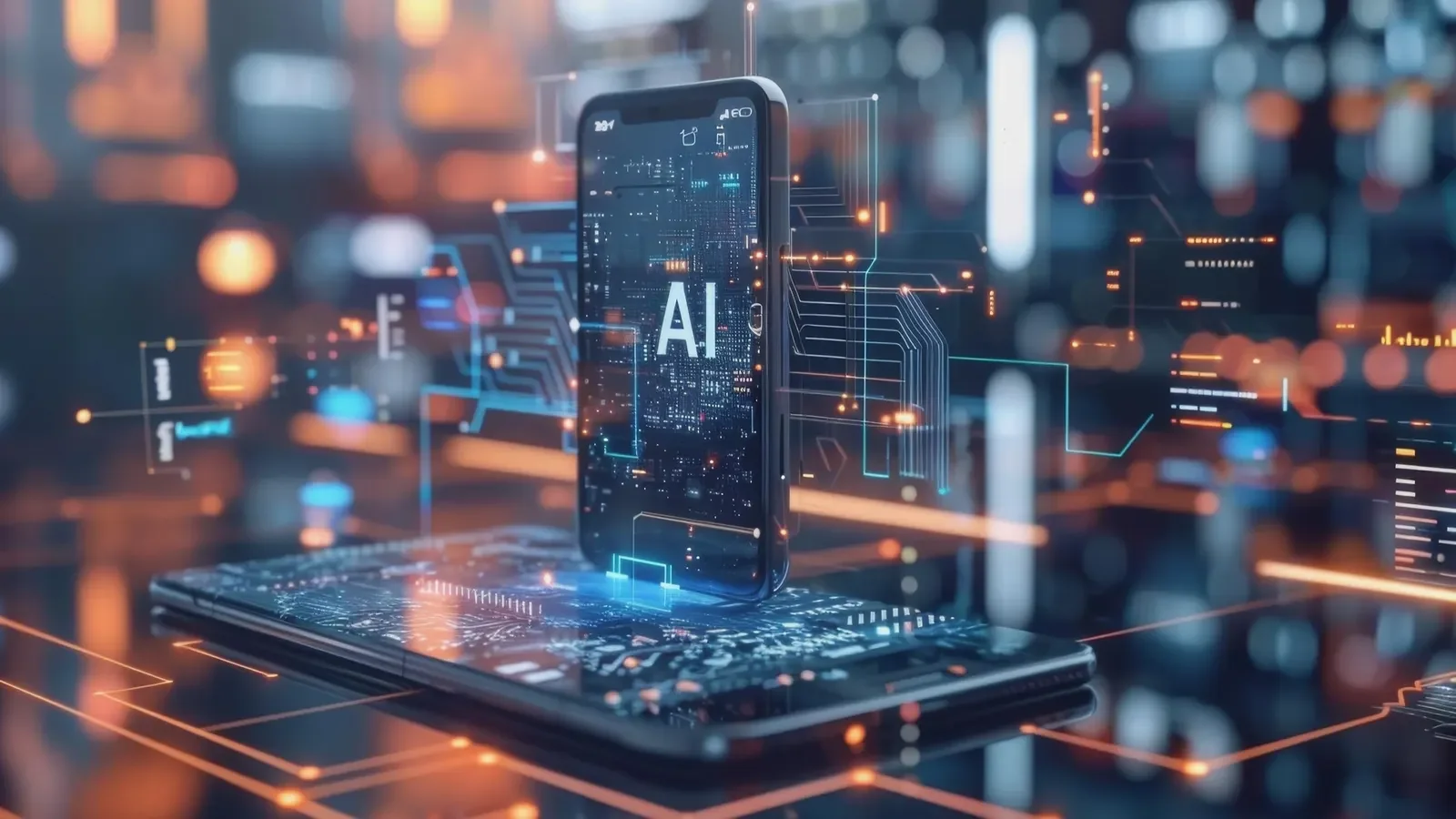
The Smartphone Apocalypse: AI Takes Over Your Pocket Computer
Unlocking Abundance Through Integrated Tech Ecosystems
A massive shift is underway in technology, where separate companies are merging their strengths to create something far larger than any single entity. At the core is a vision of robots handling all human tasks, AI anticipating needs before they're voiced, and unlimited energy powering it all. This isn't distant sci-fi—key pieces are already connecting in ways that could reshape industries and economies.
Key Takeaways
Four major companies—Tesla, SpaceX, xAI, and Neuralink—are pooling resources to form an interconnected system worth over $3 trillion in combined value.
AI from xAI is designed to power Tesla's humanoid robots, creating self-sufficient machines that outperform humans in physical and cognitive tasks.
Satellite integration from SpaceX into Tesla vehicles ensures constant global connectivity, enabling real-time data sharing for autonomous driving.
Underground tunnels from The Boring Company serve as ideal testing grounds for self-driving tech, generating valuable data to refine AI models.
Neuralink's brain interfaces aim to blend human and machine intelligence, opening doors to telepathic control of robots and devices.
Despite missed timelines, rapid progress in robot deployment, energy storage, and AI supercomputing shows convergence happening now.
This ecosystem creates unbeatable advantages, like network effects in data and hardware, that competitors can't easily match.
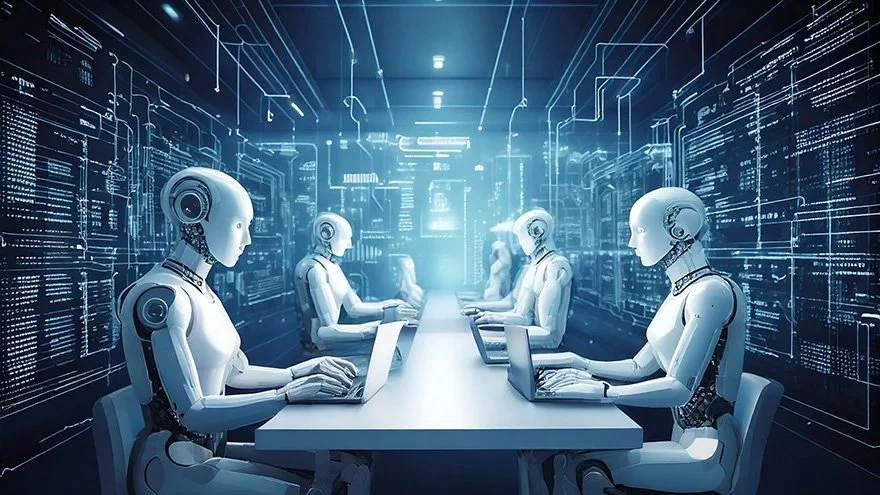
The Rise of AI Agents: Your 24/7 Digital Sidekick and the World It Creates
Revolutionizing Productivity, Redefining Work, and Accelerating Autonomous Tech
AI agents are no longer sci-fi—they're tools anyone can set up today to handle tasks autonomously. This newsletter explores how these systems boost efficiency, challenge traditional jobs, and integrate into everything from home life to electric vehicles, based on emerging trends and practical implementations.
Key Takeaways
AI agents like open-source tools can run on dedicated hardware, acting as independent employees with their own credentials for secure, round-the-clock operation.
Corporate America already operates with built-in inefficiencies, essentially providing a form of privatized universal basic income through unnecessary roles, which AI will expose and optimize over time.
As AI handles more work, societies may shift toward gamified experiences, where games, hobbies, and exploration provide meaning, potentially easing the transition away from traditional employment.
Tesla's 2026 focus likely includes unsupervised full self-driving, ramping Cybercab production, and leveraging AI hardware for broader applications like energy storage and distributed computing.
Humanity's adaptability offers hope: awareness of AI's risks is growing, paving the way for balanced integration rather than catastrophe.
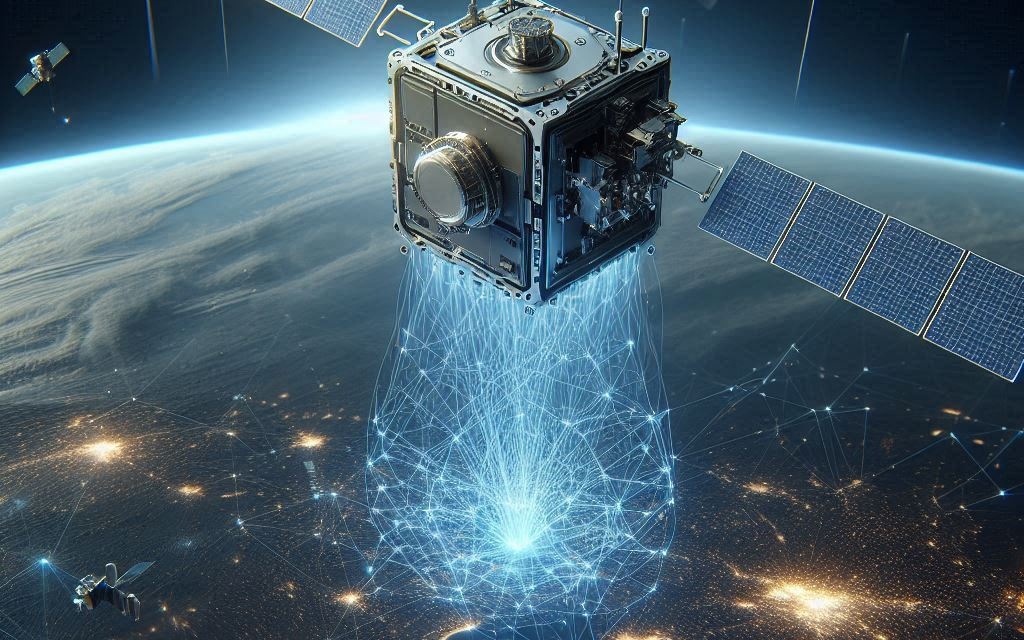
AI Revolution: From Earthbound Factories to Space-Powered Compute
Unlocking abundance through robotics, generative intelligence, and orbital supercomputers
The push toward advanced AI and robotics is accelerating, promising transformations in productivity, energy use, and even the fabric of daily life. Recent developments highlight how these technologies could make work optional, eradicate scarcity, and extend computing power beyond planetary limits, all while fostering new industries and global partnerships.
Key Takeaways
Humanoid robots stand poised to become the largest product category ever, surpassing cell phones by enabling widespread personal and industrial assistance.
AI factories represent a shift from retrieval-based to generative computing, requiring dedicated infrastructure to produce real-time, context-aware content worldwide.
Work may become optional within the next decade or two, akin to hobbies like gardening, as AI handles mundane tasks and boosts overall productivity.
Major collaborations are underway to build massive AI data centers, starting with 500-megawatt facilities, involving key players in tech and energy.
AI in space emerges as the ultimate solution for scalable computing, leveraging solar power and radiative cooling to achieve terawatt-level operations impossible on Earth.
Technological trends consistently create net positives for humanity, shifting workforces to higher-value pursuits like advanced diagnostics in medicine.

How Self-Driving Cars Will Redesign Our Entire World
The Urban Revolution Hiding in Autonomous Tech
Self-driving vehicles stand ready to overhaul daily life by freeing up vast swaths of urban land, slashing noise and risks on roads, and handing back hours of wasted time to people everywhere. This shift promises quieter, greener cities and a surge in productivity that could redefine how societies function.
Key Takeaways
Urban areas could reclaim 30-50% of land currently tied up in parking, turning asphalt into parks, housing, and community spaces for better living.
Roads will narrow and become more efficient as vehicles communicate seamlessly, reducing the need for wide lanes and buffer zones.
Noise pollution drops dramatically with quiet electric autonomous fleets, making neighborhoods more peaceful and enjoyable.
Safety improves vastly, cutting annual deaths from 40,000 in the US alone, allowing for designs that mix pedestrian and vehicle spaces more freely.
Commuting time—about an hour daily per person—turns productive, unlocking mental energy for work, reading, or rest across billions of hours yearly.
Delivery costs plummet, enabling faster, cheaper logistics that reshape retail, inventory, and how people access goods.
This multi-decade transition will create new cities built from scratch around autonomy, but it brings challenges like job losses and privacy issues.

ChatGPT’s New Trick: Ordering Your Groceries with a Click
How AI Agents Are Simplifying Everyday Tasks for Tech Enthusiasts
Imagine planning a potluck and realizing you don’t have the ingredients—or the time to figure out what you need. Now, AI can handle it for you, from calculating ingredient quantities to ordering them online. Recent advancements in AI agents, particularly those integrated with browser tools, are transforming how we tackle daily tasks. This newsletter dives into how these agents work, their potential, and the critical balance between convenience and control.
Key Takeaways
AI agents can analyze recipes, scale ingredient lists for any serving size, and create organized shopping lists.
Browser-based AI can navigate online stores, add items to carts, and streamline grocery ordering.
User control is prioritized with options to approve actions, limit access, and manage data privacy.
These tools are evolving to anticipate user needs, pulling relevant information proactively.
Safety measures restrict AI to browser tabs, preventing unauthorized access to devices or files.

Humanoid Robots: The Warehouse Revolution That's About to Explode
Unlocking 20% Productivity Boosts and Infinite Scalability in Logistics
Humanoid robots are poised to transform warehouse operations by automating tedious tasks, adapting to dynamic inventory needs, and eliminating human limitations like fatigue and emotion-driven decisions. This shift could deliver immediate efficiency gains, reshape company cultures, and create barriers for laggards in the industry—insights that every tech-savvy operator needs to grasp now.
Key Takeaways
Humanoid robots enable dynamic inventory slotting, moving high-demand items closer to picking areas automatically, reducing travel time and boosting daily output by up to 20%.
By handling repetitive, physically demanding jobs without complaint, these robots free human workers for higher-value roles, improving morale and reducing turnover.
Implementation requires rethinking packaging and processes to suit robotic capabilities, such as pre-opening boxes, which minimizes errors and waste.
Early adopters will accelerate ahead, creating a competitive edge through emotion-free decision-making and 24/7 operation.
Barriers like initial setup costs and cultural resistance exist, but the potential for infinite demand makes humanoid robots a game-changer for small and large warehouses alike.