

Blue Origin’s Money Cannot Buy SpaceX’s Flight Cadence
A billion dollars a year funded New Glenn’s first orbit, but Falcon’s reuse loop, Starlink demand, and spare capacity still define who treats low Earth orbit as routine work.
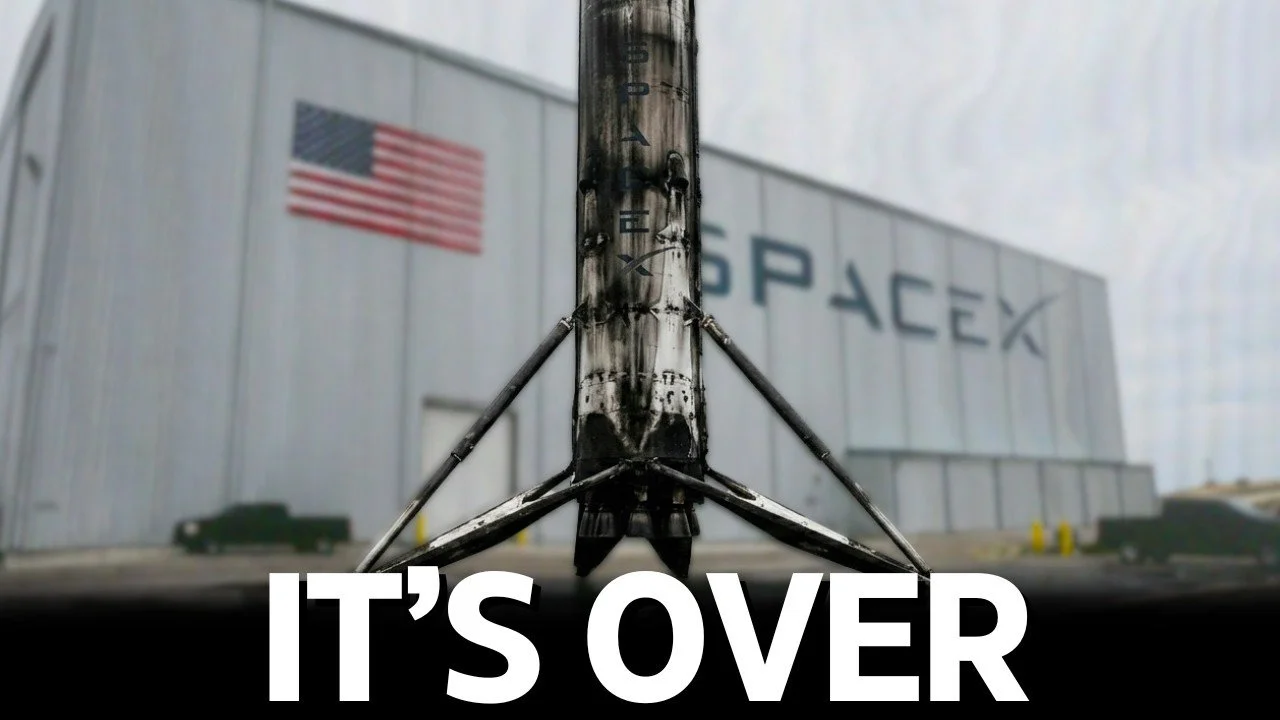
Why a Billion Dollars a Year Still Cannot Buy Blue Origin a SpaceX Flight Cadence
After New Glenn’s first orbit in 2025 and a pad-wrecking test failure in 2026, launch practice and captive Starlink demand - not founder wealth - still separate Falcon 9’s factory rhythm from Blue Origin’s early orbital path.

SpaceX's Record IPO: The Warehouse Vision That Could Make Mars Routine
Turning slim odds and sci-fi dreams into a practical path for anyone who wants to leave Earth
SpaceX reaching the largest IPO in history after starting in a single warehouse reveals how a clear, long-term objective can survive early doubts and technical setbacks. The real value lies in what comes next: engineering that treats multi-planetary settlement as a solvable problem rather than a distant fantasy, while giving ordinary people a concrete reason to believe the future will feel more expansive than the present.
Key Takeaways
A company founded in a modest El Segundo warehouse achieved the largest IPO ever, showing that sustained focus on ambitious technical goals can overcome initial assessments of very low success probability.
The central objective is to build systems that let anyone travel to the Moon, Mars, or other solar system destinations, moving spaceflight beyond professional crews to broader participation.
Established aerospace players produce reliable rockets yet have not directed equivalent effort toward the specific technologies required for permanent multi-planetary presence.
Earth-bound problems still require attention and resources, but large-scale projects that generate excitement about what happens next supply essential motivation that pure problem-solving alone cannot provide.
Current team capabilities support confidence that vehicles and infrastructure capable of carrying people to Mars and beyond can be delivered on a practical timeline.
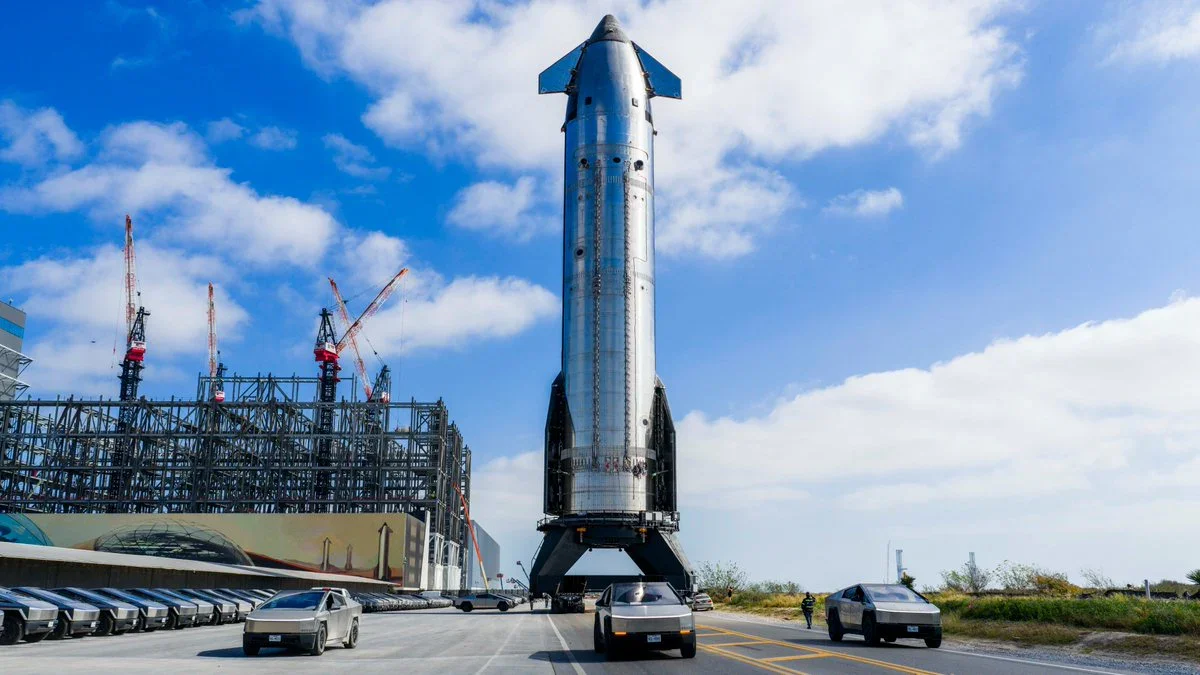
Starship V3: Doubling Saturn V Thrust to Unlock Million-Ton Orbital Capacity and Space AI
How rapid reusability and purpose-built satellites shift compute infrastructure from ground constraints to solar-powered orbital scale
Starship Version 3 produces more than twice the thrust of the Saturn V rocket that powered the Apollo program. Version 4 extends that margin toward three times the historic benchmark. These gains, paired with flight rates exceeding one per hour, move annual mass delivery to orbit from roughly 2,500 tons industry-wide today to the million-ton range within about three years. The same vehicles that enable this throughput also support a new generation of satellites optimized for AI workloads, where solar arrays generate power and radiators reject heat directly into space.
Key Takeaways
Starship V3 thrust exceeds twice the Saturn V level, with Version 4 approaching three times that output, directly multiplying payload mass per flight.
Mature operations target launch cadence above one flight per hour, turning space access into high-volume industrial activity rather than episodic events.
SpaceX currently delivers 85–90 percent of all mass placed into Earth orbit; Starship operations aim to expand total global capacity by orders of magnitude.
Annual mass to orbit could scale from approximately 2,500 tons to over one million tons per year within roughly three years once Starship reaches full cadence.
Recent record payloads represent only a small fraction of what operational V3 vehicles will carry routinely on each flight.
Orbital AI platforms take the form of compact satellites rather than conventional data-center buildings lifted into space, focusing on integrated power generation and thermal rejection.
AI satellites require less hardware complexity than Starlink units, needing primarily solar cells, radiators, and laser links instead of large phased-array antenna systems.
Early AI satellite designs target 150 kilowatts peak power while sustaining about 120 kilowatts of continuous compute, based on actual large-scale AI cluster performance.

AI Infrastructure Takes Flight: Building Compute Capacity in Orbit to Approach Stellar Energy Scales
Reusable heavy-lift systems and purpose-built satellites with integrated solar power and thermal management offer a route to scale AI far beyond what terrestrial grids and land can support, while advancing an objective benchmark for civilizational capability.
Earth’s surface imposes hard limits on power generation and heat dissipation that become increasingly binding as AI workloads grow. Shifting key elements of compute infrastructure into low Earth orbit allows direct collection of solar energy and efficient radiation of waste heat into the vacuum of space. Achieving this at meaningful scale depends on the ability to deliver enormous quantities of hardware to orbit at low cost, which in turn rests on achieving full rapid reusability for the largest launch vehicles ever developed. Over longer horizons, establishing production and launch capabilities on the Moon could multiply the feasible throughput by additional orders of magnitude.
Key Takeaways
Civilizational advancement can be tracked objectively by the share of available energy harnessed, beginning with a planet’s resources and progressing to a star’s output and ultimately a galaxy’s.
Human activity currently captures only a tiny fraction of Earth’s incident solar power and a vanishingly small portion of the Sun’s total energy production.
Orbital placement removes the need for massive ground-based power infrastructure and simplifies cooling, since heat can radiate freely into space without atmospheric interference or large cooling towers.
Full and rapid reusability of launch vehicles transforms the economics of space access, making it possible to move from thousands of tons to millions of tons delivered to orbit each year within a short timeframe.
Satellites dedicated to AI compute can be engineered with fewer complex subsystems than communications satellites, centering on large solar arrays, double-sided radiators, and dense racks of high-power chips linked by laser communications.
Early orbital units are sized around 150 kilowatts of peak power and 120 kilowatts of sustained compute, comparable to a single advanced GPU rack, with laser connections providing low-latency integration into broader networks.
Meeting the chip volumes required for terawatt-scale orbital compute will necessitate fabrication facilities on a scale far exceeding today’s largest plants, targeting output equivalent to a billion kilowatt-class chips annually.
Extending operations to the lunar surface enables local manufacturing of solar arrays and radiators plus electromagnetic acceleration systems that can launch finished satellites into space without traditional rockets, opening pathways to thousandfold further growth.
SpaceX’s Massive Scale-Up: From Reusable Rockets to Orbital AI Empires
Unlocking multi-trillion-dollar markets through vertical integration and relentless iteration.
SpaceX is executing a tightly integrated strategy that turns orbital dominance into advantages in global broadband and frontier AI. By driving down launch costs through reusability and scaling production at unprecedented speeds, the company is positioning itself to capture enormous value across space transportation, connectivity, and compute infrastructure. This isn’t incremental progress—it’s a compounding flywheel that accelerates capability while slashing expenses.
Key Takeaways
Starship is poised to deliver roughly 100 metric tons to orbit initially, with Version 4 designs targeting 200 metric tons, while achieving full reusability to drive another order-of-magnitude cost reduction beyond Falcon’s already industry-leading economics.
Starlink’s V3 satellites promise a 20X capacity leap per launch compared to current V2 on Falcon, scaling toward petabyte-scale annual network throughput and closing the digital divide for billions.
The company is building the world’s largest coherent supercomputer clusters and pioneering orbital AI compute using solar power and radiative cooling for near-zero operating costs.
Revenue reached approximately $19 billion in 2025 with nearly $7 billion in positive adjusted EBITDA, while investing heavily in future infrastructure; connectivity alone showed 50% year-over-year growth.
Direct-to-device (Gen 2) 5G-quality service and specialized government constellations like Starshield expand addressable markets dramatically, backed by vertical integration that competitors struggle to match.
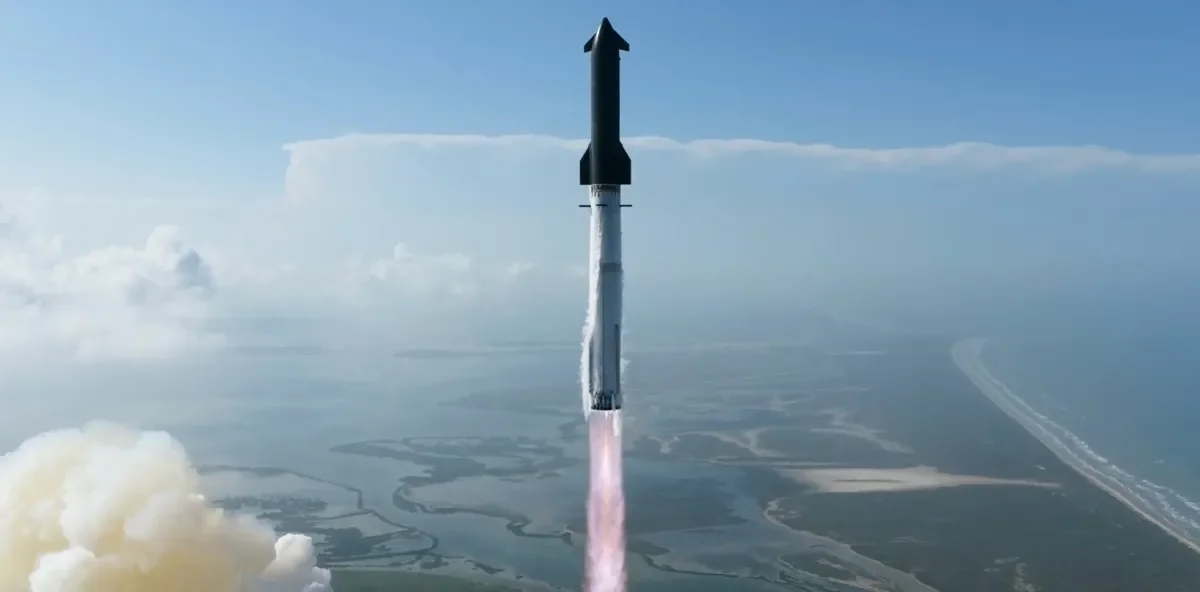
Starship V3 Takes Flight: The Dawn of a New Era in Reusable Spaceflight
Hot staging success, in-space heat shield imaging, and flap stress tests mark major milestones in the push for rapid reusability and massive Starlink deployment.
Starship Version 3 just completed its first flight test, delivering a masterclass in engineering progress. The redesigned vehicle lifted off flawlessly, executed a textbook hot staging separation, deployed a full payload of next-generation satellites while in orbit, and survived an intentionally aggressive reentry that tested its heat shield and structural limits—all while streaming live views back to Earth. These results accelerate the timeline for fully reusable heavy-lift operations and the kind of Starlink constellation scale that changes global connectivity economics.
Key Takeaways
All 33 Raptor 3 engines ignited cleanly on the Super Heavy booster at liftoff, carrying the stack through maximum dynamic pressure without issue.
Hot staging worked on the first attempt for Version 3: the ship’s six engines lit while still attached to the booster, clamps retracted safely, and separation occurred cleanly.
The ship demonstrated strong engine-out capability after losing one Raptor Vacuum engine mid-ascent, gimbaling the remaining engines to maintain trajectory and completing a suborbital mission on five engines.
An upgraded PEZ dispenser deployed 22 satellites—20 Starlink mass simulators plus two specialized “Dodger Dog” units—in record time, previewing the system’s ability to handle up to 60 full V3 Starlink satellites per flight.
Two free-flying satellites equipped with cameras and high-powered flashlights successfully imaged Starship’s heat shield from orbit in real time, a critical data point for future tower catches.
The ship intentionally stressed its aft flaps with a high-Mach “flap slap” maneuver, passed peak heating and peak dynamic pressure, executed a return-to-launch-site-style banking turn, and performed a two-engine landing burn before a soft splashdown in the Indian Ocean.
Experimental heat-shield tiles bonded with new methods on the leeward side held firm through ascent and reentry, delivering actionable data for future flights.

Sentient Cars, Robot Armies, and Restored Senses: The AI Stack That Could Deliver Abundance at Planetary Scale
How vision-native neural networks, fully reusable heavy lift, and direct brain interfaces are moving from prototypes to infrastructure that multiplies human capability.
The most consequential progress right now is not in any single headline demo but in three tightly linked layers of AI: vehicles that see and reason like humans, general-purpose humanoid machines that can multiply labor, and neural interfaces that read and write directly to the nervous system. These layers are advancing on parallel tracks that reinforce each other. Camera-only autonomy is already running unsupervised in real cities. Humanoid platforms are shifting from research videos to factory deployment. Brain implants have moved from restoring basic communication to targeting limb control and artificial vision. Together they sketch a path where the majority of road distance becomes AI-driven within a decade, robot populations exceed human ones, and previously irreversible losses of mobility or sight become addressable. The common thread is a deliberate focus on scalable, biology-mimetic systems that improve through software and fleet data rather than exotic new hardware at every step.
Key Takeaways
Camera-and-neural-net autonomy, built to match human visual processing, is already operating without safety drivers or remote monitors in multiple Texas cities and is projected for broad U.S. availability before the end of the year.
The same vision-first architecture is expected to reach at least ten times human-level safety, turning self-driving from a narrow feature into the default mode for most distance traveled within roughly ten years.
Humanoid robots are forecast to outnumber people and expand total economic output by a factor of ten to one hundred, shifting the baseline from universal basic income to universal high income supported by extreme productivity gains.
Full rapid reusability on the latest heavy-lift rocket architecture, targeted for this year, removes the core economic barrier to routine transport of large payloads and is viewed as the decisive step toward self-sustaining settlements beyond Earth.
Brain-computer interfaces have already restored speech and digital control for people with complete motor disconnection; next milestones include bridging spinal injuries to reanimate limbs and delivering artificial vision, including to individuals blind from birth, with potential for superhuman precision over time.
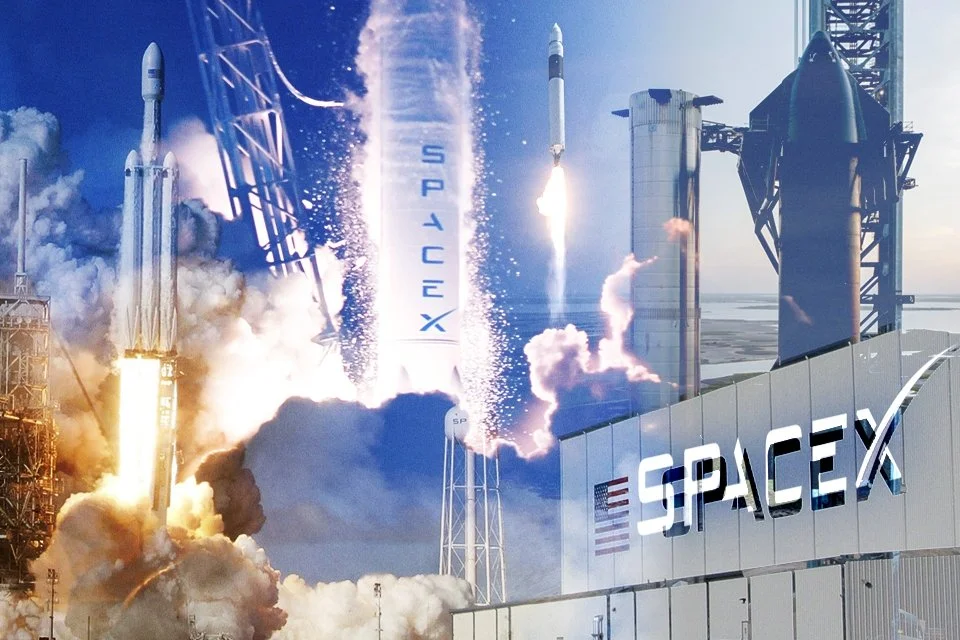
SpaceX at $2 Trillion: The Rocket Company That's About to Reshape Everything
Starship's cost revolution, Starlink dominance, and the potential Tesla merger signal the dawn of a multi-trillion-dollar space and AI empire.
SpaceX's confidential filing for a roughly $2 trillion valuation isn't just big news for investors. It marks the moment a private rocket company becomes one of the most valuable businesses on Earth, potentially raising $50–75 billion in the largest IPO in history. The numbers tell only part of the story. This is a company that already controls the majority of commercial launches, runs the world's largest satellite internet network, and is preparing to open entirely new frontiers in orbital computing, manufacturing, and global logistics through Starship.
Key Takeaways
SpaceX now handles 82% of the global commercial launch market and completed 165 Falcon 9 missions in 2025 alone.
Starlink has grown into the company's main business, with more than 10,000 satellites serving over 9 million paying subscribers and generating roughly $10–12 billion of the company's $15–16 billion total revenue last year.
Starship targets launch costs of $10–100 per kilogram to orbit—30 to 300 times cheaper than today's Falcon 9—through full reusability of both stages.
The economics unlock orbital AI data centers, space-based pharmaceutical and materials manufacturing, point-to-point Earth transport in under 45 minutes, and space solar power systems.
A $25 billion joint chip fabrication plant with Tesla and xAI already under construction in Texas will devote 80% of its output to space and orbital applications.
Merger speculation with Tesla could combine EVs, humanoid robots, AI training infrastructure, global satellite communications, and reusable rockets into a single vertically integrated entity.
The IPO would create thousands of new millionaires among employees while opening ownership to everyday retail investors for the first time.
The move strengthens U.S. strategic positioning in the renewed space race against rapidly advancing international competitors.