

Tesla's Robotaxi Push Gains Momentum: Arizona Unlocks Statewide Access
Regulatory Wins Fuel Autonomous Ride-Hailing Growth
Tesla's latest permit in Arizona marks a critical advancement in scaling robotaxi services, enabling paid autonomous rides across an entire state and positioning the company for broader U.S. deployment amid improving software capabilities.
Key Takeaways
Tesla obtained a Transportation Network Company permit from Arizona authorities, allowing legal operation of paid robotaxi services without city-specific limits.
The approval process was expedited, with the application submitted and granted within days, highlighting efficient navigation of regulatory requirements.
This development supports plans to reach multiple new metro areas nationwide by the end of the year, leveraging existing vehicle fleets.
Initial launches will incorporate safety monitors and teleoperators to ensure reliability, with software updates driving toward unsupervised operations.
Similar statewide frameworks in places like Texas could enable quick expansions to cities such as Dallas and Houston.

Tesla's Robo-Taxi Edge: Slashing Prices and Paving the Path to Profit
Decoding how autonomous rides are undercutting traditional services and what it means for the future of mobility
Tesla's robo-taxi service is transforming urban travel with fares that undercut Uber by up to 50%, based on early deployments in key U.S. cities. This pricing power stems from low-cost hardware baked into millions of existing vehicles, pointing toward profitability at scale while delivering safer, more private rides. Yet, as adoption grows, it raises urgent questions about workforce displacement in a driving-dependent economy.
Key Takeaways
Tesla's robo-taxi rides average around $1 per mile, compared to Uber's $2 or more, making it a cost-effective alternative even in early stages with safety oversight.
Operating costs for autonomous vehicles could fall to $0.20-$0.40 per mile once fleets optimize, enabling profits of 40-80 cents per mile at current pricing levels.
Deployments vary by region: Austin operates with a safety rider in the passenger seat and remote monitoring, while the Bay Area requires an active driver due to stricter regulations.
Riders gain privacy, full control over in-car features like climate and entertainment, and superior safety from always-attentive systems that reduce accident risks tied to distraction or impairment.
The technology promises economic unlocks like affordable transport for underserved groups, but it risks displacing millions of drivers, necessitating proactive policy responses to manage labor shifts.
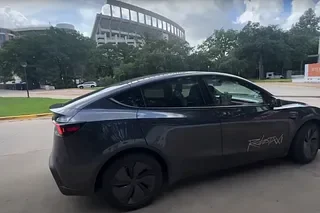
Tesla's Robotaxi Takes Austin by Storm: Rapid Expansion and Real-World Mastery
Pushing Boundaries in Autonomous Mobility: Why This Expansion Signals a Game Changer for Urban Transport
Tesla's Robotaxi service is accelerating its footprint in Austin, demonstrating how AI-driven autonomy can scale quickly and handle complex urban environments with ease. From navigating construction zones to making smart maneuvers in tight spots, the latest tests reveal a system that's not only reliable but also poised to outpace competitors in flexibility and efficiency. For tech enthusiasts tracking the evolution of self-driving tech, this update highlights key advancements in mapping, decision-making, and user experience that could reshape ride-hailing worldwide.
Key Takeaways
Tesla expanded its RoboTaxi network in Austin in just three weeks, covering new areas like North Austin and suburban spots, shaped humorously like a meme-inspired cowboy hat.
The service excels in challenging scenarios, including K-turns in dead-end parking lots, reversing out of tight spaces, and yielding to emergency vehicles.
Compared to rivals like Waymo, Tesla's approach relies less on detailed mapping and more on AI, enabling faster, non-strategic expansions into low-density areas.
Performance remains smooth and confident, avoiding highways for now but handling construction, pedestrians, and traffic with minimal hesitation.
Future potential includes highway access, fleet growth, and undercutting traditional ride-hailing prices once teleoperator ratios improve.