
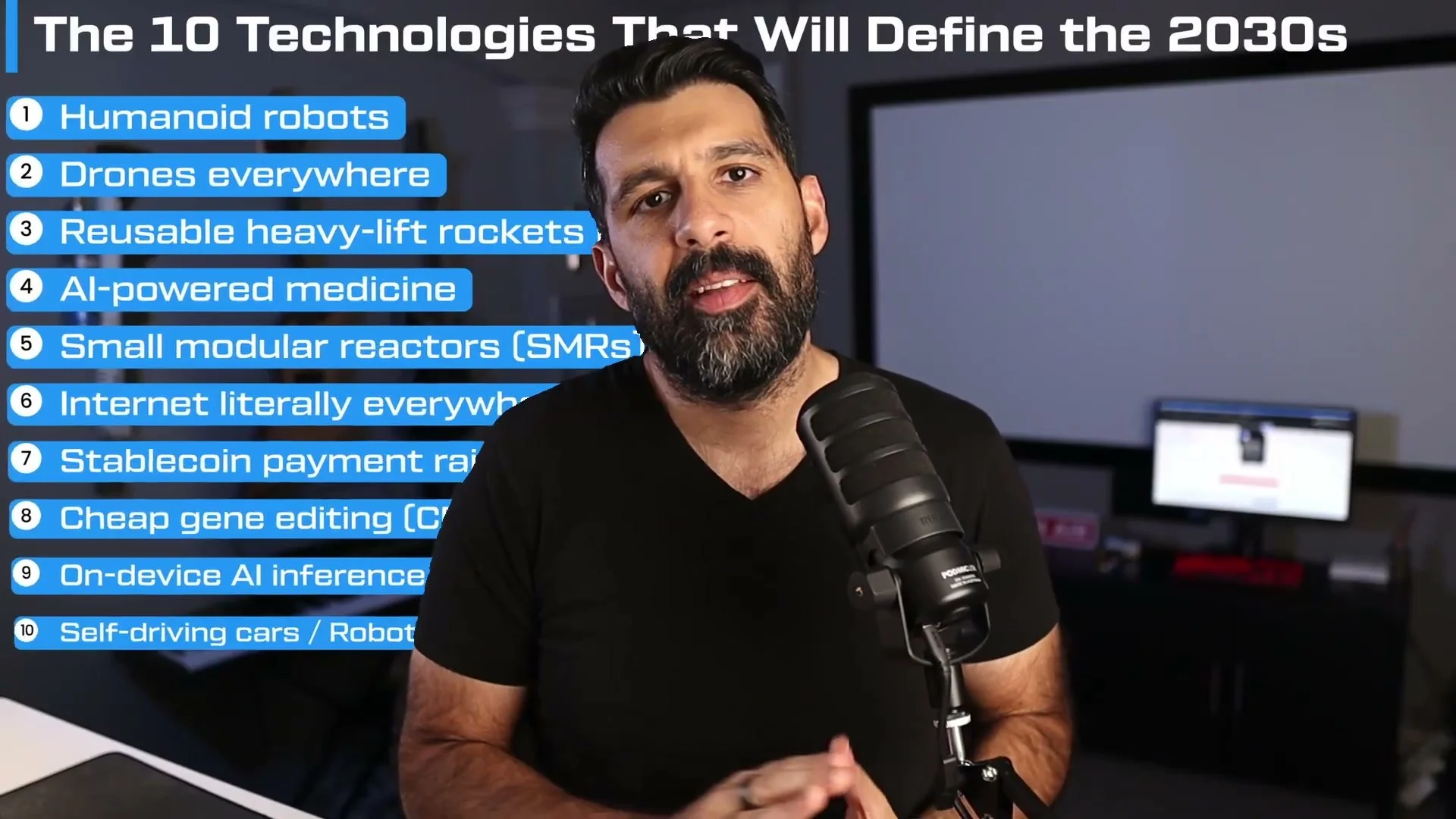
Ten Deployable Technologies Will Rewrite Ordinary Life By The Mid-2030s
From $2-an-hour humanoid labor and vision-only robotaxis to CRISPR cost curves and Starship’s 60-to-80x launch drop, the decade’s winners are specific machines hitting mass scale between 2030 and 2039.
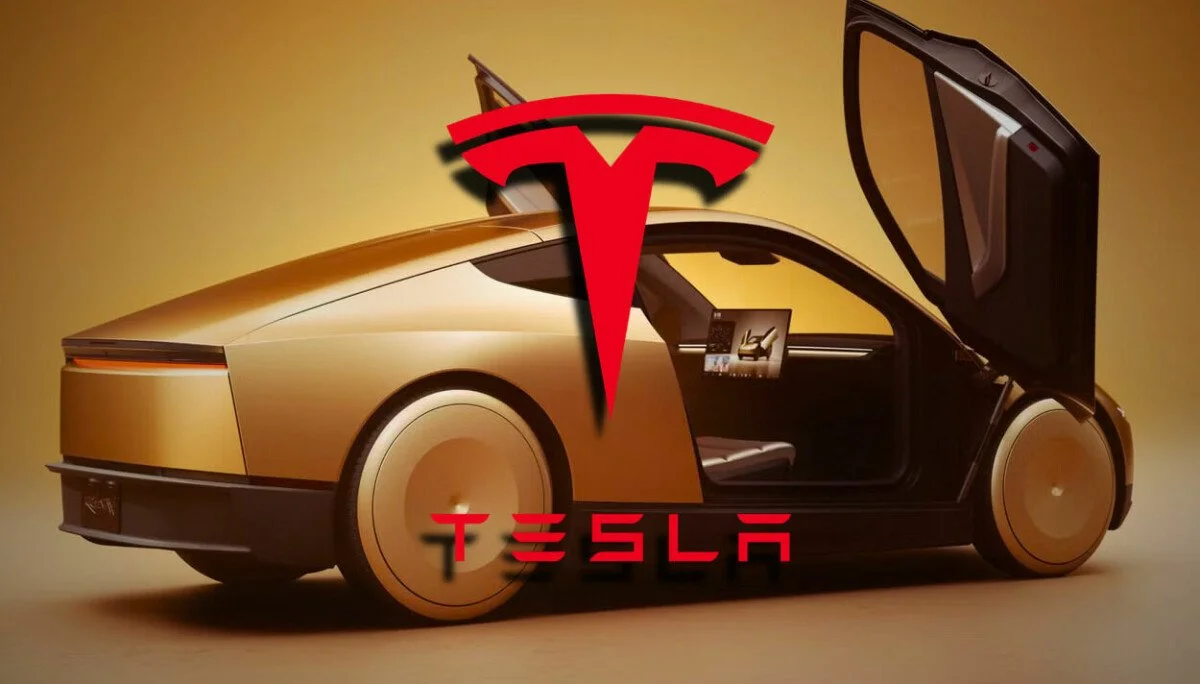
Tesla's Cybercab: The Bet That Could Upend Global Transportation
Slashing the Cost of Mobility to Pocket Change and Unleashing Unprecedented Demand
Transportation costs dictate how cities function, how people live, and how economies grow. A new vehicle rolling off production lines promises to drop the cost per mile to just 20 cents, unlocking waves of new usage patterns, from spontaneous errands to affordable rides for underserved groups. This shift mirrors historical transformations where cheaper access exploded markets, creating suburbs, air travel booms, and digital content floods. Backed by innovative manufacturing and full autonomy, it positions one company to dominate while disrupting entrenched industries.
Key Takeaways
Transportation's core metric—the cost per mile—stands to fall from 60-80 cents for personal cars to 20 cents with autonomous electric vehicles, eliminating driver costs and simplifying maintenance.
Historical parallels like the Model T's assembly line show how production innovations cut prices by 70%, leading to exponential demand growth via Jevons Paradox, where efficiency boosts total consumption.
Vertical integration in design, software, chips, and charging gives a massive edge over competitors reliant on suppliers and geofenced operations.
Regulatory changes aim for national standards, enabling nationwide rollout and preempting fragmented state rules.
Industries like insurance, parking, gas stations, and auto repair face shrinkage, while new models allow individuals to own revenue-generating vehicles.
Job displacements for millions of drivers loom, but opportunities arise in fleet management and emerging services fueled by cheaper mobility.
Global market projections see robotaxis growing from $400 million in 2023 to $45 billion by 2030, driven by software-optimized flywheels.
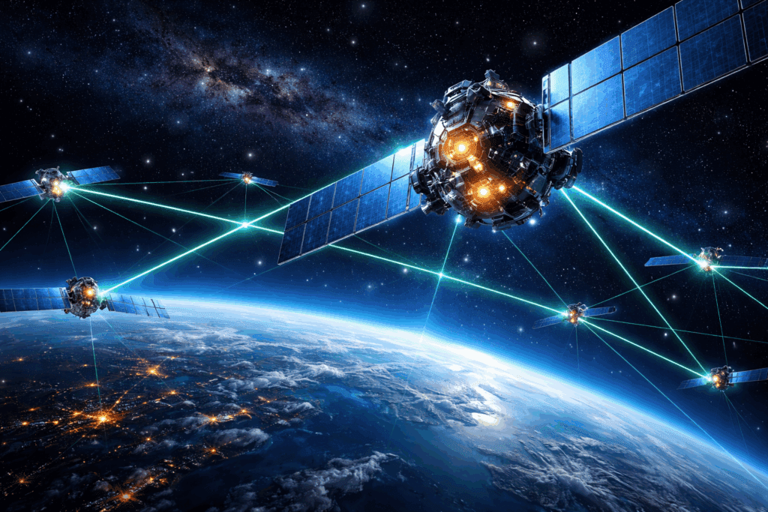
The Orbital AI Boom: Musk's Master Plan for Infinite Compute
Merging Rockets and Intelligence to Fuel the Future
The convergence of space tech and AI is accelerating at a pace that could transform global industries. Recent developments point to orbital data centers becoming a reality, powered by unlimited demand for intelligence and energy. Robotaxis are scaling fast, promising to disrupt transportation with low costs and high safety. These shifts open up massive economic opportunities, from cheaper compute to redefined urban mobility.
Key Takeaways
Orbital AI data centers leverage space for unlimited compute, driven by endless demand for intelligence and energy.
Robotaxis could scale to millions of vehicles, undercutting ride-hail prices and expanding to new use cases like mobile businesses.
SpaceX's launch capacity enables rapid deployment of satellites, potentially shifting focus from Earth networks to space-based AI.
Regulatory frameworks at the federal level will accelerate adoption, prioritizing safety data over hardware specs.
Tesla's vertical integration gives it a cost edge, enabling profitable pricing as low as 25 cents per mile at scale.
Unlimited energy and intelligence create a flywheel for growth, with space as the ideal environment for AI expansion.
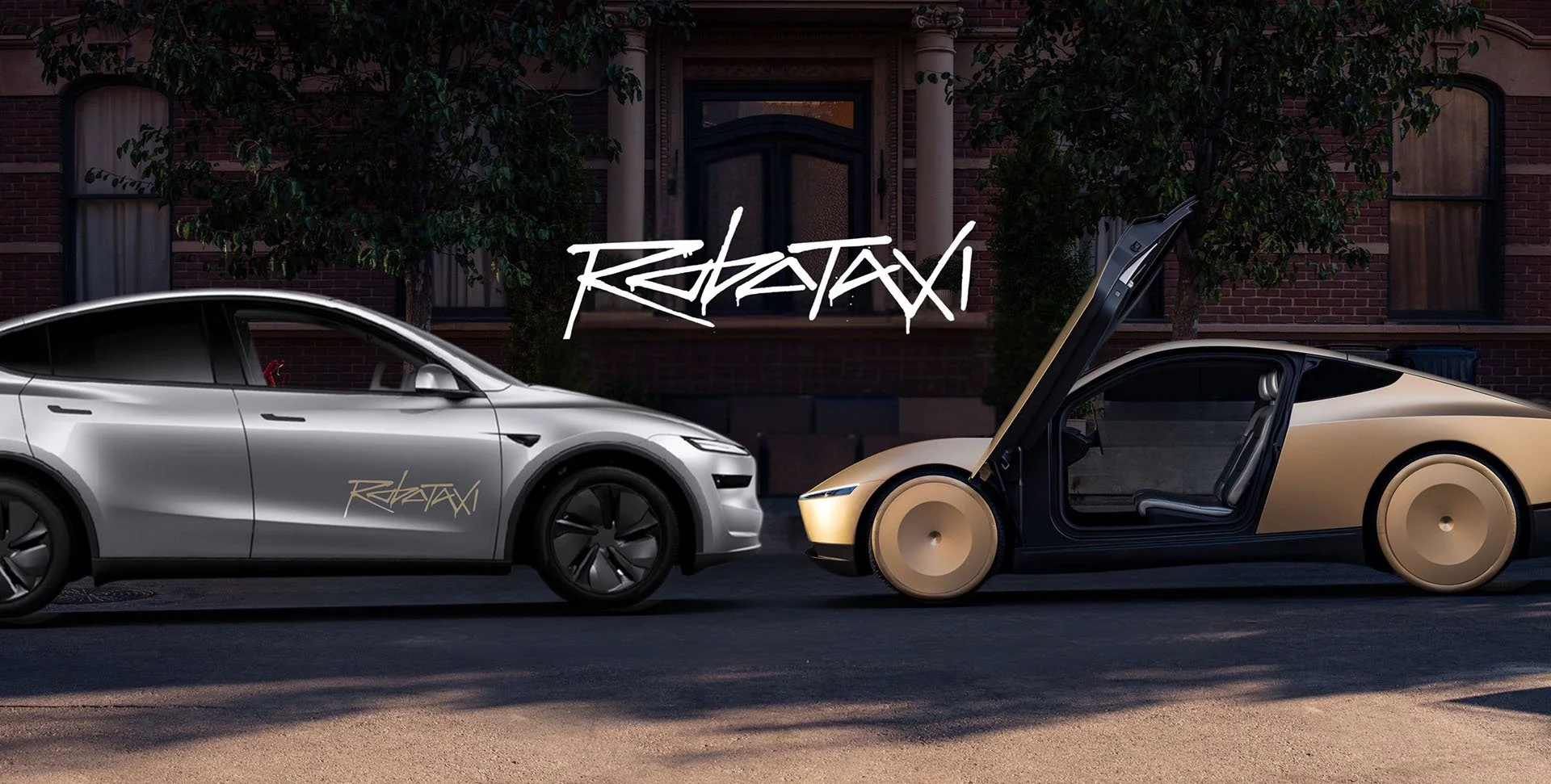
Tesla's 2026 Leap: Unlocking Robotaxis and AI Dominance
Revolutionizing Transportation and Compute in One Bold Year
Tesla's trajectory heads into overdrive as unsupervised self-driving tech nears reality, Cybercab production ramps up, and AI hardware reshapes the company's future. These shifts promise massive value unlocks for vehicles, energy, and beyond, setting the stage for explosive growth.
Key Takeaways
Unsupervised full self-driving (FSD) could multiply vehicle values by five times through higher margins and new revenue streams.
Cybercab enters volume production in April, starting slow but scaling to thousands per week, with flexible designs to navigate regulations.
AI hardware advancements pave the way for safer robotaxis, distributed computing, and pathways to bots and satellites.
Energy demand surges infinitely due to AI needs, bolstering Tesla's bottom line.
Subscription models for vehicles and software could transform ownership, blending transport, power backup, and personal AI computing.

The Robot Driver Bet: Insurance Giants Stake Billions on AI Outdriving Humans
Why a 50% insurance slash for self-driving Teslas signals the end of human error on roads—and massive savings ahead
Autonomous driving tech has reached a tipping point where data shows machines handle roads far safer than people, leading to dramatic insurance cuts that could reshape transportation economics for everyone.
Key Takeaways
Insurance rates for Tesla owners drop 50% when the car drives itself, based on verified data showing AI reduces crash risks significantly.
Average US car insurance costs $2,300 yearly and keeps rising due to repair expenses and distractions, but AI could halve accidents and reverse that trend.
Machines eliminate common crash causes like fatigue, impairment, and poor judgment, reacting faster with full 360-degree awareness.
This partnership accesses real-time vehicle data for precise risk pricing, setting a model where software updates make cars safer—and cheaper to insure—over time.
Broader impact: Traditional insurers must adapt or lose customers, while Tesla gains a competitive edge no other automaker matches yet.
Long-term shift: Human-driven cars may face higher premiums as AI proves safer, potentially saving thousands of lives annually by cutting US road deaths in half.
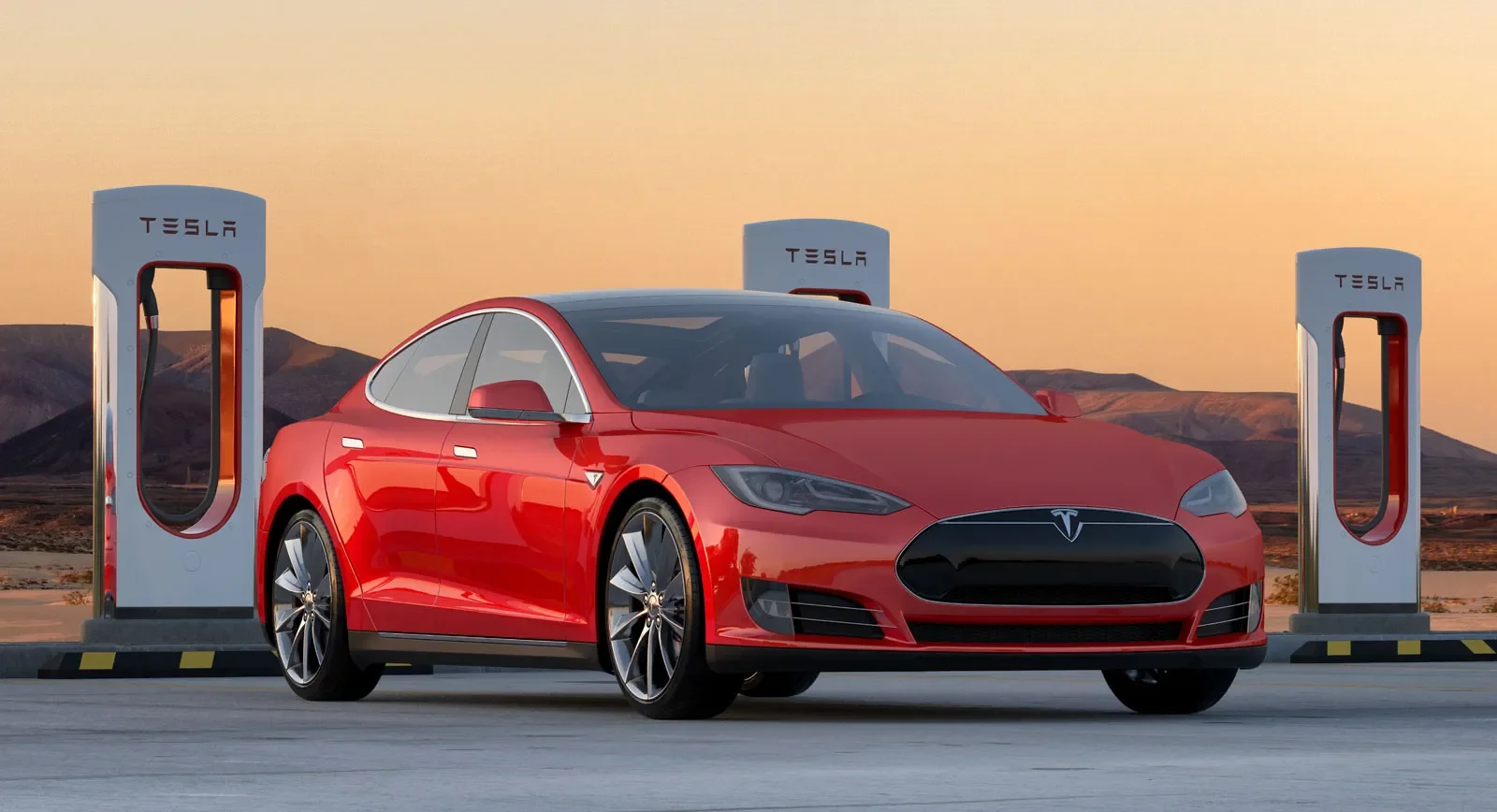
Tesla's Hidden Moat in Self-Driving Tech: Why the Race Isn't Even Close
The Data Wall NVIDIA Can't Climb—Yet
The battle for autonomous vehicles is intensifying, with new players stepping up to challenge established leaders. At its core, success hinges on mastering rare, unpredictable scenarios that no simulation can fully capture. Tesla's vast real-world data collection sets it apart, creating a lead that could take competitors years to close, while pushing the entire field forward through fierce rivalry.
Key Takeaways
Autonomous driving requires handling not just common scenarios but an endless array of rare edge cases, known as the long-tail problem, which demands exponential effort to solve.
Tesla's fleet of millions of vehicles has accumulated billions of miles of real-world data, giving it a decisive edge in training AI for these unpredictable situations.
NVIDIA's new AI system for self-driving, set to debut in production vehicles soon, represents a bold open-source approach aimed at widespread adoption, but it starts with limited data compared to Tesla.
Competition in this space accelerates innovation, improves safety, and compresses timelines, benefiting consumers even if one company maintains a lead.
Achieving human-level safety in self-driving tech means reaching reliability rates of 99.9998% or better, a benchmark that has delayed timelines across the industry.
Ford's $19.5 Billion EV Surrender: Legacy Auto's Road to Irrelevance
Why This Massive Write-Down Signals the Endgame for Traditional Carmakers in the Electric and Autonomous Era
Ford's recent $19.5 billion impairment on its electric vehicle operations exposes deep cracks in legacy automakers' strategies, while highlighting how companies built around EVs from the start are pulling ahead in profitability and future tech like autonomy.
Key Takeaways
Ford has lost $13 billion on EVs since 2023 and is now scrapping plans for larger electric models, including the F-150 Lightning, due to persistent unprofitability.
The pivot to hybrids and gas vehicles prioritizes short-term certainty over long-term innovation, leaving Ford without a viable path to full vehicle autonomy.
Legacy automakers' approach of retrofitting EV tech into gas-designed platforms fails economically, contrasting with vertically integrated EV-native companies that achieve strong margins.
Autonomy will reshape transportation economics, favoring EV fleets for Robotaxis over hybrids, which carry higher maintenance and complexity.
This decision foreshadows broader industry retreat, positioning Tesla and select others as dominant players in a market shifting toward transportation as a service.