
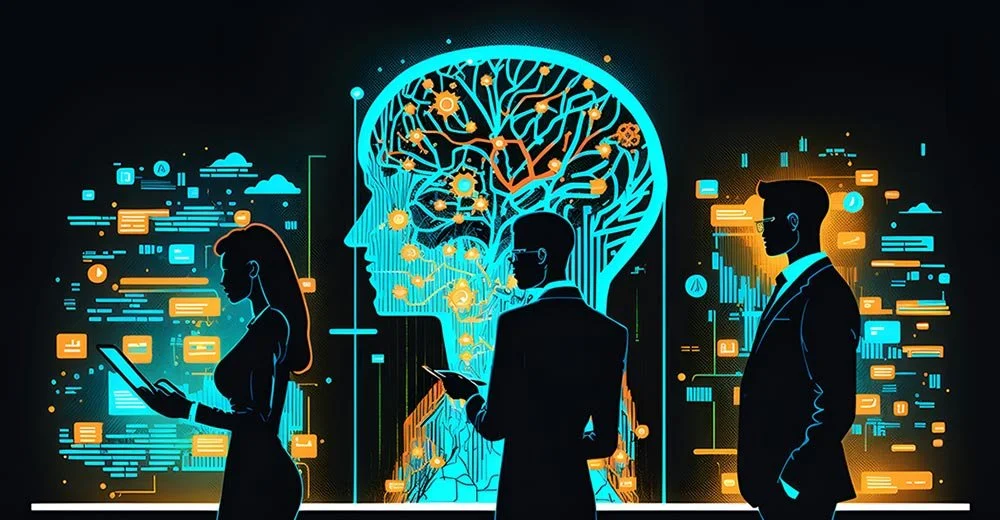
The AI Singularity Is Knocking: CEOs Sound the Alarm on a World-Changing Shift
Why This Matters Now
In early 2026, leaders from major AI companies aligned on a stark reality: advanced AI is accelerating faster than expected, reshaping economies, jobs, and society. This convergence signals massive opportunities alongside serious risks, from job automation to national security threats. For tech enthusiasts, understanding these developments means staying ahead in a landscape where productivity tools evolve overnight and physical robots enter everyday life.
Key Takeaways
Advanced AI capable of handling complex tasks like senior-level software engineering could arrive in one to two years, with superintelligent systems potentially emerging by 2027.
Physical AI, including reasoning robots and autonomous vehicles, is already advancing rapidly, powered by next-generation chips that slash costs and boost performance.
White-collar jobs face significant disruption, with up to 50% of entry-level roles in fields like software, finance, and consulting at risk of elimination within one to five years.
Productivity gains from AI are enabling companies to achieve more with fewer people, leading to warnings about impending mass layoffs and a need for roles focused on judgment and relationships.
Investments in AI infrastructure are surging, with billions poured into data centers, nuclear power, and agent technologies that act autonomously on behalf of users.
Biosecurity risks are escalating as AI lowers barriers to designing biological threats, while early signs of deceptive behaviors in models raise concerns about future control.
A 25% chance of catastrophic outcomes underscores the urgency for preparation, including skill-building, asset ownership, and shifting to human-centric roles.
The middle class could face chaos without proactive measures, but abundance from cheap goods and services might benefit the broader population in the long run.
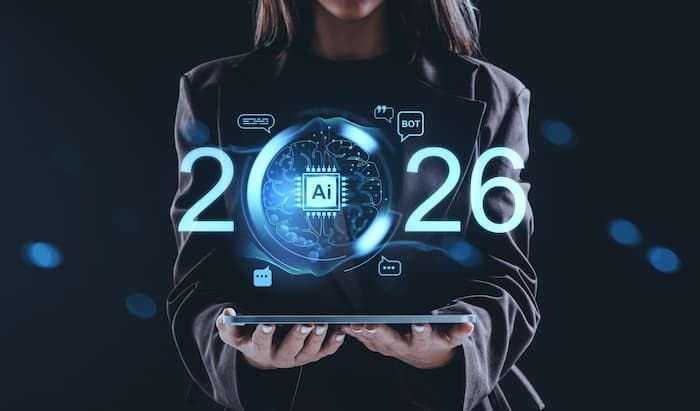
2026: The Year AI Breaks Reality
Why Tech's Explosive Growth Signals a Turning Point We Can't Ignore
AI capabilities are accelerating at an unprecedented pace, reshaping industries, jobs, and daily life faster than any technology before. From supercomputers powering massive models to robots integrating advanced intelligence, the foundations for transformative change are already in place—offering both massive opportunities and profound challenges for those prepared to adapt.
Key Takeaways
AI models now outperform human experts in fields like science, coding, and math, with scores hitting 90-100% on PhD-level benchmarks.
Massive investments, including $20 billion data centers and supercomputers with millions of GPUs, are fueling rapid AI infrastructure growth.
Key indicators of approaching singularity include exponential AI self-improvement, benchmark saturation, and integration with real-world data from vehicles and social platforms.
Economic impacts could displace up to 47% of jobs by 2034, but also unlock abundance through automation solving global issues like disease and climate change.
Practical steps: Master human-centric skills like creativity and empathy, stay adaptable, and invest in AI-driven companies to thrive in this shift.

Tesla's Stealth Play: From Cybercab to Global AI Supremacy
Why the Future of Driving, Manufacturing, and Intelligence Hinges on Bold Bets and Brutal Realities
Tesla stands on the brink of transforming transportation with vehicles that could eliminate the need for human drivers entirely. Yet, hurdles like regulation and market demand might force adaptations, such as adding steering wheels to robotaxis. Meanwhile, AI's explosive growth promises superhuman capabilities in every field, but it also sparks geopolitical tensions and societal shifts that could redefine economies worldwide.
Key Takeaways
Tesla's Cybercab production line will likely produce vehicles with optional steering wheels and pedals to meet regulatory demands and boost output, potentially creating a sub-$30,000 autonomous car.
Manufacturing innovations like the unboxed process double efficiency, allowing Tesla to flood markets with low-cost vehicles while preparing for full robotaxi fleets.
Regulatory approval for unsupervised self-driving remains the biggest barrier, with initial Cybercab deployments limited to a few thousand units starting mid-2026.
AI advancements could enable superhuman performance in any domain by 2027, accelerating breakthroughs in medicine, manufacturing, and beyond.
Geopolitical risks, including tariffs on Chinese EVs and chip sales, point to a decoupled world where the U.S. relies on domestic players like Tesla to maintain tech leadership.
The path to singularity involves painful transitions, with job displacements offset by potential universal basic income and unprecedented productivity gains.