
Brazil Clears Six Spectrum Bands for Starlink Direct-to-Cell — But Only Through a Carrier
Anatel’s July 2 allocation of six secondary mobile bands hands SpaceX a regulatory opening in one of its largest markets, yet a mandatory Brazilian carrier partner and 90 days of pending technical rules leave the business case unresolved.
SpaceX's Record IPO: The Warehouse Vision That Could Make Mars Routine (Copy)
A government database now holds the strongest real-world evidence for Tesla's self-driving in Europe. The figure that decides what happens next is the one Spain hasn't named yet.
For about two years, the thing blocking Tesla's supervised Full Self-Driving in Europe was never really the software. It was paperwork. The cars could do it; the regulators had not signed off. So the Tesla story I keep coming back to this week isn't a new FSD build or a flashy demo. It is a spreadsheet sitting inside a Spanish government agency. To me, that is the more important development.
Spain's national traffic authority - the Dirección General de Tráfico, or DGT - has published data showing Tesla's supervised test fleet has covered roughly 275,000 kilometers on public roads. Call it 171,000 miles, run by 30 cars since November 2025, with no serious incidents on file. The cars operate under a national permit that clears them for any road in the country and runs through November 2027.
Key Takeaways
275,000 km. That is the supervised distance Tesla's 30-car fleet has put on Spanish public roads since November 2025 with no serious incidents logged by the DGT - roughly 171,000 miles.
The figure comes from a government registry, not a Tesla safety report. Third-party numbers held by a regulator are the kind of evidence a European approval case actually runs on.
Tesla's distance dwarfs the rest of Spain's top testing tier - the pre-deployment phase, the one cleared for fleets of more than 10 vehicles. The next-biggest entry, a set of ALSA buses, has covered about 1,400 km. The only other Level 2 tester on file, Wayve, is running three cars.
Every one of those miles had a human behind the wheel, fully responsible. This is supervised driving, not a robotaxi, and the DGT has never publicly defined what counts as a serious incident.
One clean government record becomes a reference other regulators can cite. That second-order effect is how a slow European approval timeline could compress faster than almost anyone expects.
The Netherlands logged 1.8 million km over 18 months in its own program. That hints at how much clean data Spain might want before it lets Tesla go customer-facing.
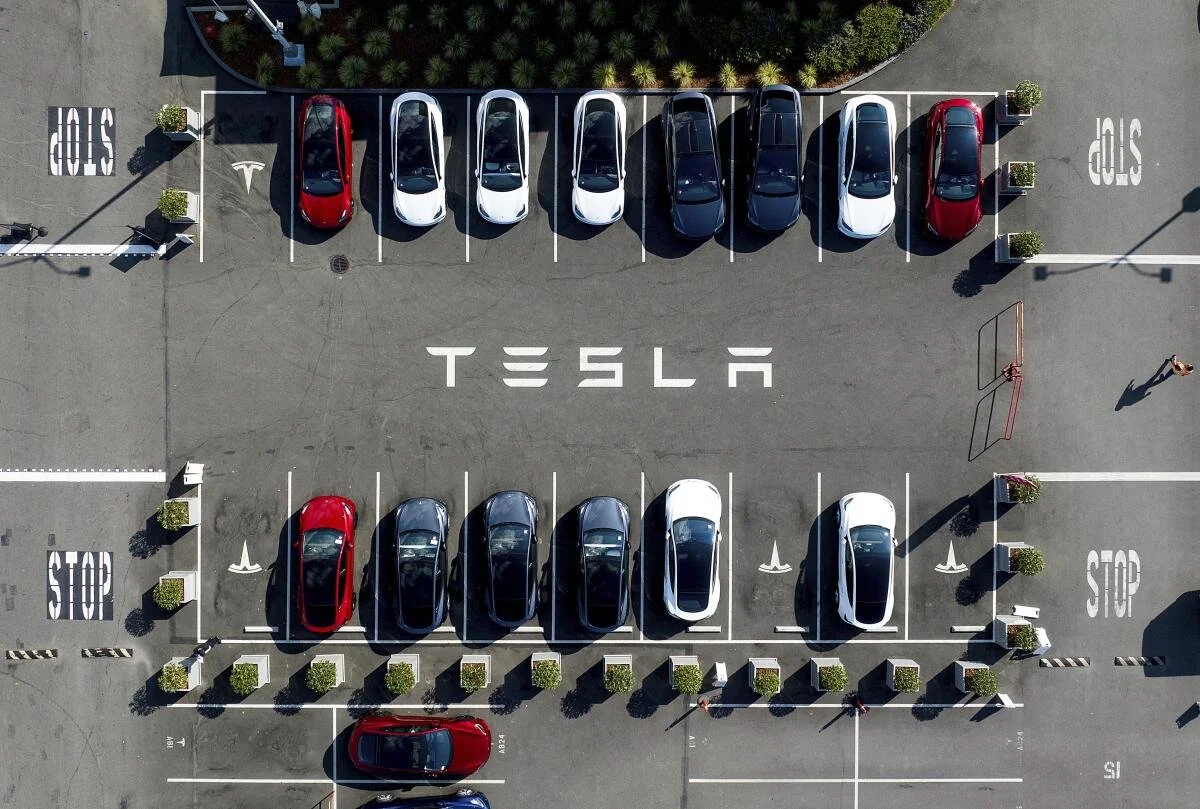
The Tesla Tsunami: How Self-Driving Cars Are About to Upend Transportation Forever
Redefining Mobility in a World of Autonomous Machines
Tesla's full self-driving technology is reaching a tipping point, delivering flawless performance over long distances without human input. This isn't just incremental progress—it's setting the stage for a massive shift where cars become robots on wheels, slashing costs and reshaping how we move from place to place.
Key Takeaways
Tesla's supervised full self-driving software already handles hours-long trips without touching the wheel or pedals, normalizing what once felt like science fiction.
Unsupervised autonomy is imminent, enabling cars to operate without constant attention, similar to ongoing trials in select cities.
Steer-by-wire systems make it simple to remove traditional controls, paving the way for affordable vehicles that blend human and robotic driving.
At under 30 cents per mile, autonomous transport undercuts human-driven options, disrupting ride-hailing, taxis, and legacy automakers.
Urban areas, where most miles are driven, stand to benefit most from this tech, eliminating the hassle of traffic and distracted drivers.
Analyst upgrades reflect growing recognition of this potential, with stock targets climbing amid a 50% rise over six months.