

Tesla's Robotaxi Revolution: Accelerating Autonomy in Austin and Beyond
Redefining Urban Mobility with Self-Driving Tech at Scale
Tesla's rapid rollout of its Robotaxi network in Austin marks a pivotal shift in autonomous transportation, blending AI-driven expansion with practical strategies to navigate regulatory landscapes. This development unlocks new ways for everyday users to experience self-driving vehicles, from city-wide coverage to affordable personal ownership models that could outpace fleet operations.
Key Takeaways
Tesla's Robotaxi network in Austin expanded from a small South Austin area to cover about 80% of the city in just four months, now including high-traffic zones like the Domain in the northwest and a large portion of east Austin.
Current challenges include long wait times due to a limited fleet of around 18-20 vehicles, far short of the 50-100 needed to service the expanded area effectively.
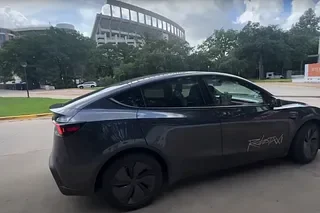
The network uses standard Model Y vehicles, which Tesla produces at a rate of over 1.2 million units annually, enabling quick scaling once safety data supports it.
Regulatory limits cap production of steering-wheel-free vehicles at 2,500 per year without exemptions, pushing Tesla toward models with optional steering wheels and pedals to comply with federal and state rules.
Future strategy focuses on selling low-cost autonomous vehicles (around $20,000 to build) on subscription plans of $400-600 monthly, including maintenance, insurance, and self-parking features, potentially generating more revenue than robotaxi fleets in the next 3-5 years.
Advanced AI in the latest Full Self-Driving (FSD) software allows seamless operation across diverse U.S. environments, setting the stage for unsupervised autonomy that lets vehicles handle everything from parking to service visits independently.
Tesla's Robotaxi Takes Austin by Storm: Rapid Expansion and Real-World Mastery
Pushing Boundaries in Autonomous Mobility: Why This Expansion Signals a Game Changer for Urban Transport
Tesla's Robotaxi service is accelerating its footprint in Austin, demonstrating how AI-driven autonomy can scale quickly and handle complex urban environments with ease. From navigating construction zones to making smart maneuvers in tight spots, the latest tests reveal a system that's not only reliable but also poised to outpace competitors in flexibility and efficiency. For tech enthusiasts tracking the evolution of self-driving tech, this update highlights key advancements in mapping, decision-making, and user experience that could reshape ride-hailing worldwide.
Key Takeaways
Tesla expanded its RoboTaxi network in Austin in just three weeks, covering new areas like North Austin and suburban spots, shaped humorously like a meme-inspired cowboy hat.
The service excels in challenging scenarios, including K-turns in dead-end parking lots, reversing out of tight spaces, and yielding to emergency vehicles.
Compared to rivals like Waymo, Tesla's approach relies less on detailed mapping and more on AI, enabling faster, non-strategic expansions into low-density areas.
Performance remains smooth and confident, avoiding highways for now but handling construction, pedestrians, and traffic with minimal hesitation.
Future potential includes highway access, fleet growth, and undercutting traditional ride-hailing prices once teleoperator ratios improve.